Reinterpreting History: How Historical Assessments Change over Time - Böcker
Visar alla böcker i serien Reinterpreting History: How Historical Assessments Change over Time. Handla med fri frakt och snabb leverans.
12 produkter
12 produkter
Making Sense of the Vietnam Wars
Local, National, and Transnational Perspectives
Inbunden, Engelska, 2008
634 kr
Skickas inom 5-8 vardagar
Making sense of the wars for Vietnam has had a long history. The question why Vietnam? dominated American and Vietnamese political life for much of length of the Vietnam wars and has continued to be asked in the three decades since they ended. The essays in this inaugural volume of the National History Centres book series Reinterpreting History examine the conceptual and methodological shifts that mark the contested terrain of Vietnam war scholarship. They range from top-down reconsiderations of critical decision-making moments in Washington, Hanoi, and Saigon to microhistories of the war that explore its meanings from the bottom up. Some draw on recently available Vietnamese-language archival materials. Others mine new primary sources in the United States or from France, Great Britain, the former Soviet Union, China, and Eastern Europe. Collectively, these essays map the interpretative histories of the Vietnam wars: past, present, and future. They also raise questions about larger meanings and the ongoing relevance of the wars for Vietnam in American, Vietnamese, and international histories of the twentieth and twenty-first centuries.
Making Sense of the Vietnam Wars
Local, National, and Transnational Perspectives
Häftad, Engelska, 2008
356 kr
Skickas inom 5-8 vardagar
Making sense of the wars for Vietnam has had a long history. The question why Vietnam? dominated American and Vietnamese political life for much of length of the Vietnam wars and has continued to be asked in the three decades since they ended. The essays in this inaugural volume of the National History Centres book series Reinterpreting History examine the conceptual and methodological shifts that mark the contested terrain of Vietnam war scholarship. They range from top-down reconsiderations of critical decision-making moments in Washington, Hanoi, and Saigon to microhistories of the war that explore its meanings from the bottom up. Some draw on recently available Vietnamese-language archival materials. Others mine new primary sources in the United States or from France, Great Britain, the former Soviet Union, China, and Eastern Europe. Collectively, these essays map the interpretative histories of the Vietnam wars: past, present, and future. They also raise questions about larger meanings and the ongoing relevance of the wars for Vietnam in American, Vietnamese, and international histories of the twentieth and twenty-first centuries.
1 684 kr
Skickas inom 5-8 vardagar
The second volume in the OUP/National History Center series, Reinterpreting History, this book offers an incisive look at how interpretations of the Atlantic world have changed over time and from a variety of national perspectives. Atlantic history, which developed in the 1970s and has become very popular in the past several years, looks at the transnational interconnections between Europe, North America, South America, and Africa, particularly in the early modern/colonial period, rather than understanding nations/states absent a broader global context. This volume discusses key areas of the Atlantic world, including the British, Dutch, French, Iberian, and African Atlantic, as well as the movement of ideas, peoples, and goods. It also offers critical perspectives of the concept itself, juxtaposing it with global and Continental history. The cast of contributors is stellar and international, including scholars who have been at the forefront of teaching and research in this area. Together they will create a volume that introduces inexperienced students and general readers to Atlantic history, as well as offers new perspectives for scholars. Atlantic history is taught as its own course at a variety of universities, and Atlantic perspectives are incorporated into courses on early modern Europe, British history, colonial America, colonial Latin America, and African history.
334 kr
Skickas inom 5-8 vardagar
The second volume in the OUP/National History Center series, Reinterpreting History, this book offers an incisive look at how interpretations of the Atlantic world have changed over time and from a variety of national perspectives. Atlantic history, which developed in the 1970s and has become very popular in the past several years, looks at the transnational interconnections between Europe, North America, South America, and Africa, particularly in the early modern/colonial period, rather than understanding nations/states absent a broader global context. This volume discusses key areas of the Atlantic world, including the British, Dutch, French, Iberian, and African Atlantic, as well as the movement of ideas, peoples, and goods. It also offers critical perspectives of the concept itself, juxtaposing it with global and Continental history. The cast of contributors is stellar and international, including scholars who have been at the forefront of teaching and research in this area. Together they will create a volume that introduces inexperienced students and general readers to Atlantic history, as well as offers new perspectives for scholars. Atlantic history is taught as its own course at a variety of universities, and Atlantic perspectives are incorporated into courses on early modern Europe, British history, colonial America, colonial Latin America, and African history.
1 682 kr
Skickas inom 7-10 vardagar
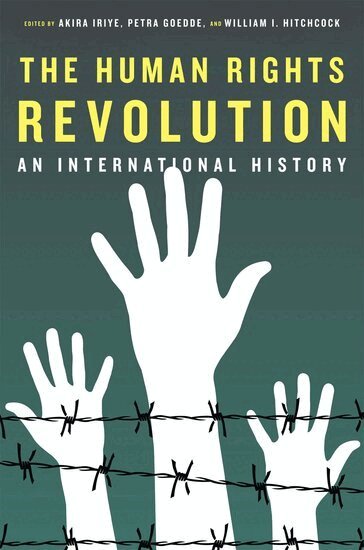
The third volume for the OUP/National History Center series, Reinterpreting History, this book offers a critical look at the political movement encompassed by human rights, a term rarely used before the 1940s. An agenda for human rights, with particular attention to international justice in the wake of crimes against humanity, women's rights, indigenous rights, the right to health care, all developed in the second half of the 20th century. Drawing on the work of legal scholars, political scientists, journalists, activists, and historians, human rights as a field of research has been characterized by analysis of natural rights, study of key documents like the UN Universal Declaration of Human Rights, discussion of activism and NGOs, and analysis of rhetoric. This volume will take a case study approach that will shed light on different perspectives, methodologies, and conceptualizations for the study of human rights history.The contributors to this volume look at the wave of human rights legislation emerging out of World War II, including the UN Declaration of Human Rights, the Nuremberg trial, and the Geneva Conventions, and the flowering of human rights activity in the 1970s and beyond, including anti-torture campaigns and Amnesty International, Indonesia and East Timor, international scientists and human rights, and female genital mutilation. The book concludes with a look at the UN Declaration at its 60th anniversary. Together the group of renowned senior and junior scholars create a volume that can introduce students from a range of disciplines to this topic, as well as offer new perspectives for scholars.
559 kr
Skickas inom 7-10 vardagar
The third volume for the OUP/National History Center series, Reinterpreting History, this book offers a critical look at the political movement encompassed by human rights, a term rarely used before the 1940s. An agenda for human rights, with particular attention to international justice in the wake of crimes against humanity, women's rights, indigenous rights, the right to health care, all developed in the second half of the 20th century. Drawing on the work of legal scholars, political scientists, journalists, activists, and historians, human rights as a field of research has been characterized by analysis of natural rights, study of key documents like the UN Universal Declaration of Human Rights, discussion of activism and NGOs, and analysis of rhetoric. This volume will take a case study approach that will shed light on different perspectives, methodologies, and conceptualizations for the study of human rights history.The contributors to this volume look at the wave of human rights legislation emerging out of World War II, including the UN Declaration of Human Rights, the Nuremberg trial, and the Geneva Conventions, and the flowering of human rights activity in the 1970s and beyond, including anti-torture campaigns and Amnesty International, Indonesia and East Timor, international scientists and human rights, and female genital mutilation. The book concludes with a look at the UN Declaration at its 60th anniversary. Together the group of renowned senior and junior scholars create a volume that can introduce students from a range of disciplines to this topic, as well as offer new perspectives for scholars.
446 kr
Skickas inom 5-8 vardagar
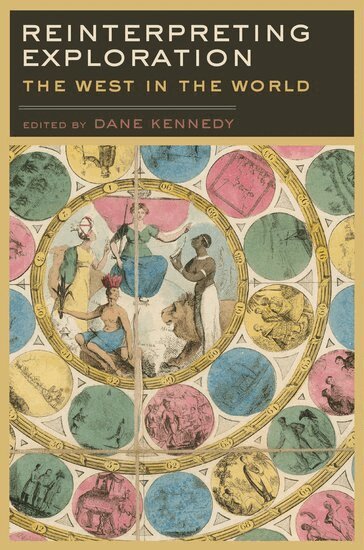
Exploration was a central and perhaps defining aspect of the West's encounters with other peoples and lands. Rather than reproduce celebratory narratives of individual heroism and national glory, this volume focuses on exploration's instrumental role in shaping a European sense of exceptionalism and its iconic importance in defining the terms of cultural engagement with other peoples. In chapters offering broad geographic range, the contributors address many of the key themes of recent research on exploration, including exploration's contribution to European imperial expansion, Western scientific knowledge, Enlightenment ideas and practices, and metropolitan print culture. They reassess indigenous peoples' responses upon first contacts with European explorers, their involvement as intermediaries in the operations of expeditions, and the complications that their prior knowledge posed for European claims of discovery. Underscoring that exploration must be seen as a process of mediation between representation and reality, this book provides a fresh and accessible introduction to the ongoing reinterpretation of exploration's role in the making of the modern world.
1 855 kr
Skickas inom 5-8 vardagar
Exploration was a central and perhaps defining aspect of the West's encounters with other peoples and lands. Rather than reproduce celebratory narratives of individual heroism and national glory, this volume focuses on exploration's instrumental role in shaping a European sense of exceptionalism and its iconic importance in defining the terms of cultural engagement with other peoples. In chapters offering broad geographic range, the contributors address many of the key themes of recent research on exploration, including exploration's contribution to European imperial expansion, Western scientific knowledge, Enlightenment ideas and practices, and metropolitan print culture. They reassess indigenous peoples' responses upon first contacts with European explorers, their involvement as intermediaries in the operations of expeditions, and the complications that their prior knowledge posed for European claims of discovery. Underscoring that exploration must be seen as a process of mediation between representation and reality, this book provides a fresh and accessible introduction to the ongoing reinterpretation of exploration's role in the making of the modern world.
1 989 kr
Skickas inom 5-8 vardagar
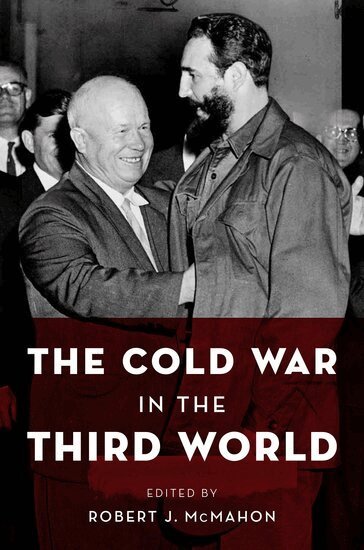
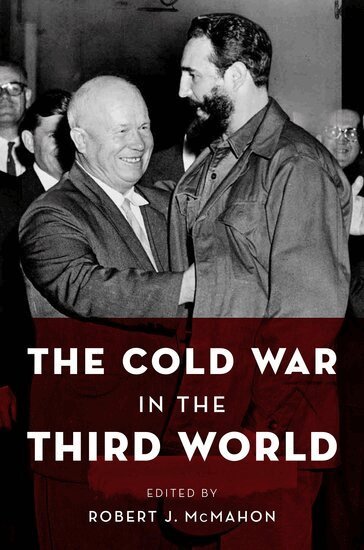
THE COLD WAR IN THE THIRD WORLD explores the complex interrelationships between the Soviet-American struggle for global preeminence and the rise of the Third World. Those two distinct but overlapping phenomena placed a powerful stamp on world history throughout the second half of the twentieth century. Featuring original essays by twelve leading scholars, this collection examines the influence of the newly emerging states of the Third World on the course of the Cold War and on the international behavior and priorities of the two superpowers. To what extent, it asks, did the Third World help determine the course of the Cold War? It also analyzes the impact of the Cold War on the developing states and societies of Asia, Africa, the Middle East, and Latin America. To what extent, it asks, did the Cold War make a difference within non-Western nations and regions. Blending the new, internationalist approaches to the Cold War with the latest research on the global south in a tumultuous era of decolonization and state-building, The Cold War in the Third World bring together diverse strands of scholarship to address some of the most compelling issues in modern world history.
374 kr
Skickas inom 5-8 vardagar
THE COLD WAR IN THE THIRD WORLD explores the complex interrelationships between the Soviet-American struggle for global preeminence and the rise of the Third World. Those two distinct but overlapping phenomena placed a powerful stamp on world history throughout the second half of the twentieth century. Featuring original essays by twelve leading scholars, this collection examines the influence of the newly emerging states of the Third World on the course of the Cold War and on the international behavior and priorities of the two superpowers. To what extent, it asks, did the Third World help determine the course of the Cold War? It also analyzes the impact of the Cold War on the developing states and societies of Asia, Africa, the Middle East, and Latin America. To what extent, it asks, did the Cold War make a difference within non-Western nations and regions. Blending the new, internationalist approaches to the Cold War with the latest research on the global south in a tumultuous era of decolonization and state-building, The Cold War in the Third World bring together diverse strands of scholarship to address some of the most compelling issues in modern world history.
Beyond the Cold War
Lyndon Johnson and the New Global Challenges of the 1960s
Inbunden, Engelska, 2014
1 855 kr
Skickas inom 5-8 vardagar
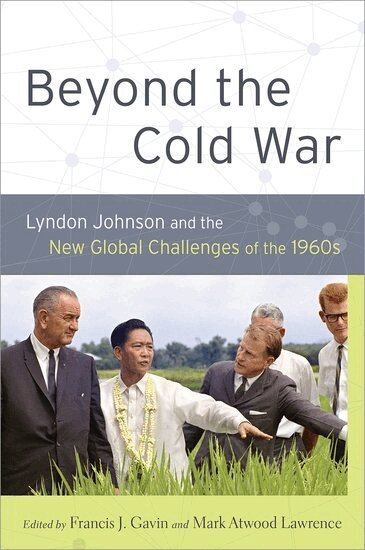
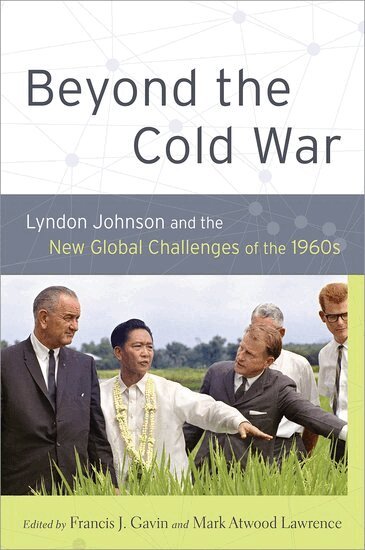
In writing about international affairs in the 1960s, historians have naturally focused on the Cold War. The decade featured perilous confrontations between the United States and the Soviet Union over Berlin and Cuba, the massive buildup of nuclear stockpiles, the escalation of war in Vietnam, and bitter East-West rivalry throughout the developing world.Only in recent years have scholars begun to realize that there is another history of international affairs in the 1960s. As the world historical force of globalization has quickened and deepened, historians have begun to see that many of the global challenges that we face today - inequality, terrorism, demographic instability, energy dependence, epidemic disease, massive increases in trade and monetary flows, to name just a few examples - asserted themselves powerfully during the decade. The administration of President Lyndon B. Johnson confronted tectonic shifts in the international environment and perhaps even the beginning of the post-Cold War world. While the ideologically infused struggle between the United States and the Soviet Union was indisputably crucial, new forces and new actors altered international relations in profound and lasting ways. This book asks how the Johnson administration responded to this changing landscape. To what extent did U.S. leaders understand the changes that we can now see clearly with the benefit of hindsight? How did they prioritize these issues alongside the geostrategic concerns that dominated their daily agendas and the headlines of the day? How successfully did Americans grapple with these long-range problems, with what implications for the future? What lessons lie in the efforts of Johnson and his aides to cope with a new and inchoate agenda of problems? This book reconsiders the 1960s and suggests a new research agenda predicated on the idea that the Cold War was not the only - or perhaps even the most important - feature of international life in the period after World War II.
491 kr
Skickas inom 5-8 vardagar
In writing about international affairs in the 1960s, historians have naturally focused on the Cold War. The decade featured perilous confrontations between the United States and the Soviet Union over Berlin and Cuba, the massive buildup of nuclear stockpiles, the escalation of war in Vietnam, and bitter East-West rivalry throughout the developing world. As the world historical force of globalization has quickened and deepened, however, historians have begun to see that many of the global challenges that we face todayinequality, terrorism, demographic instability, energy dependence, epidemic disease, massive increases in trade and monetary flows, to name just a few examples asserted themselves powerfully during the decade.Beyond the Cold War examines how the administration of President Lyndon B. Johnson responded to this changing international landscape. To what extent did U.S. leaders understand these changes? How did they prioritize these issues alongside the geostrategic concerns that dominated their daily agendas and the headlines of the day? How successfully did Americans grapple with these long-range problems, with what implications for the future? What lessons lie in the efforts of Johnson and his aides to cope with a new and inchoate agenda of problems? By reconsidering the 1960s, this work suggests a new research agenda predicated on the idea that the Cold War was not the only or perhaps even the most important feature of international life in the postwar period.