• Fri frakt över 249 kr
  • •
  • Snabba leveranser
  • •
  • Billiga böcker
Kundservice

Du är på sajten för privatpersoner.

Företag, bibliotek eller offentlig verksamhet?

Du handlar på classic.bokus.com, där alla dina funktioner finns intakta.
Till classic.bokus.com
Bokus logotyp. Gå till startsidan.
  • Erbjudanden
  • Student
  • Topplistor
  • Barn & ungdom
  • Bokus Play
  • E-böcker
  • Ljudböcker
  • Pocketböcker
  • Spel och pussel

5% studentrabatt – använd koden KURSBOK27 →

Sidfot

Mina sidor

    Hjälp

    • Kundservice
    • Vanliga frågor och svar
    • Frakt och leverans
    • Retur vid ångerrätt
    • Reklamera vara
    • Betalning
    • Köpvillkor
    • Allmänna villkor
    • Information om webbplatsens tillgänglighet

    Om Bokus

    • Om oss
    • Pressrum
    • För studenter
    • För företag
    • För bibliotek och offentlig verksamhet
    • För leverantörer
    • Hållbarhet

    Populärt

    • Aktuella erbjudanden
    • Presentkort
    • Studentlitteratur
    • Nya böcker
    • Topplistor
    • Signerade böcker
    • Engelska böcker

    Inspiration

    • Boktips
    • BookTok
    • Barnbokskaraktärer
    • Populära författare
    Logotyp för Bokus
    Följ oss på Facebook (extern länk)Följ oss på Instagram (extern länk)Följ oss på YouTube (extern länk)Följ oss på TikTok (extern länk)
    bokus @ CookiesAnpassa cookiesIntegritetspolicyKöpvillkor
    Till Citymail hemsida (extern länk)Till Budbee hemsida (extern länk)Till Postnord hemsida (extern länk)Till Schenker hemsida (extern länk)Till Early Bird hemsida (extern länk)Till Walleys hemsida (extern länk)
    1. Samhälle och politik
    2. Politik och statsskick

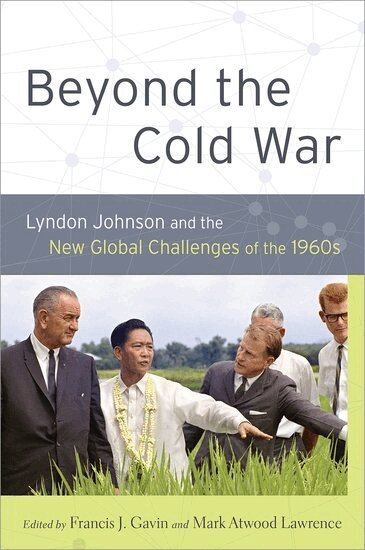
    Beyond the Cold War

    Lyndon Johnson and the New Global Challenges of the 1960s

    AvGAVIN,Francis J. Gavin

    Inbunden, Engelska, 2014

    Del i serien Reinterpreting History: How Historical Assessments Change over Time

    2 849 kr

    Beställningsvara. Skickas inom 5-8 vardagar. Fri frakt över 249 kr.

    Beskrivning

    In writing about international affairs in the 1960s, historians have naturally focused on the Cold War. The decade featured perilous confrontations between the United States and the Soviet Union over Berlin and Cuba, the massive buildup of nuclear stockpiles, the escalation of war in Vietnam, and bitter East-West rivalry throughout the developing world.Only in recent years have scholars begun to realize that there is another history of international affairs in the 1960s. As the world historical force of globalization has quickened and deepened, historians have begun to see that many of the global challenges that we face today - inequality, terrorism, demographic instability, energy dependence, epidemic disease, massive increases in trade and monetary flows, to name just a few examples - asserted themselves powerfully during the decade. The administration of President Lyndon B. Johnson confronted tectonic shifts in the international environment and perhaps even the beginning of the post-Cold War world. While the ideologically infused struggle between the United States and the Soviet Union was indisputably crucial, new forces and new actors altered international relations in profound and lasting ways. This book asks how the Johnson administration responded to this changing landscape. To what extent did U.S. leaders understand the changes that we can now see clearly with the benefit of hindsight? How did they prioritize these issues alongside the geostrategic concerns that dominated their daily agendas and the headlines of the day? How successfully did Americans grapple with these long-range problems, with what implications for the future? What lessons lie in the efforts of Johnson and his aides to cope with a new and inchoate agenda of problems? This book reconsiders the 1960s and suggests a new research agenda predicated on the idea that the Cold War was not the only - or perhaps even the most important - feature of international life in the period after World War II.

    Produktinformation

    • Utgivningsdatum:2014-01-30
    • Mått:239 x 163 x 20 mm
    • Vikt:692 g
    • Format:Inbunden
    • Språk:Engelska
    • Serie:Reinterpreting History: How Historical Assessments Change over Time
    • Antal sidor:316
    • Förlag:OUP USA
    • ISBN:9780199790692

    Utforska kategorier

    • Politik och statsskick inom Samhälle och politik
    • Allmän historia och världshistoria inom Historia och arkeologi

    Mer om författaren

    Francis J. Gavin is the Tom Slick Professor of International Affairs and the Director of the Robert S. Strauss for International Security and Law at the University of Texas. He is the author of Gold, Dollars, and Power: The Politics of International Monetary Relations, 1958-1971 and Nuclear Statecraft: History and Strategy in America's Atomic Age. From 2005 to 2010, he directed The American Assembly's Next Generation Project: U.S. Global Policy and the Future of International Institutions. Mark Atwood Lawrence, a native of Westport, Massachusetts, earned his BA from Stanford University in 1988 and his PhD from Yale University in 1999. He joined the History Department at the University of Texas at Austin in 2000 and was promoted to Associate Professor in 2006. He is author of Assuming the Burden: Europe and the American Commitment to War in Vietnam and The Vietnam War: A Concise International History.

    Recensioner i media

    Distinguished historians Frank Gavin and Mark Lawrence have assembled an all-star cast of young scholars of U.S. foreign relations to shed new light on the 1960s, a decade we thought we already knew perhaps too well. These excellent essays focus on contemporary global issues of the greatest importance-environmental change, energy, poverty and disease, human rights, religion, globalization-and trace them back to their emergence as policy concerns during the Lyndon Johnson administration. The authors challenge and expand our understanding of national security in a global age. This is some of the best of the new U.S. international history.

    Innehållsförteckning

    • Acknowledgments ; Contributors ; Introduction, Francis J. Gavin and Mark Atwood Lawrence ; Part I: Thinking Beyond East and West ; 1. Lyndon Johnson and the Challenges of Economic Globalization, Daniel Sargent ; 2. Toward a New Deal for the World? Lyndon Johnson's Aspirations to Renew the Twentieth Century's Pax Americana, Patrick O. Cohrs ; 3. Moving Beyond the Cold War: The Johnson Administration, Bridge-Building, and Detente, Thomas A. Schwartz ; Part II: Internationalizing the Great Society ; 4. One Global War on Poverty: The Johnson Administration Fights Poverty at Home and Abroad, 1964-1968, Sheyda Jahanbani ; 5. LBJ's Third War: The War on Hunger, Nick Cullather ; 6. LBJ and World Population: Planning the Greater Society One Family at a Time, Matthew Connelly ; 7. Globalizing the Great Society: Lyndon Johnson and the Pursuit of Smallpox Eradication, Erez Manela ; Part III: Adapting to a World of Scarcity ; 8. Thinking Globally: U.S. Foreign Aid, Paul Ehrlich, and the Emergence of Environmentalism in the 1960s, Tom Robertson ; 9. "More a Gun at Our Heads than Theirs": The 1967 Arab Oil Embargo, Third World Raw Materials Sovereignty, and American Diplomacy, Christopher R.W. Dietrich ; Part IV: Shifting Moralities ; 10. The Rise of Human Rights during the Johnson Years, Sarah B. Snyder ; 11. Globalized Faith, Radicalized Religion, and the Domestic Sources of U.S. Foreign Policy, Andrew Preston