Russian Literature and Thought Series - Böcker
Visar alla böcker i serien Russian Literature and Thought Series. Handla med fri frakt och snabb leverans.
13 produkter
13 produkter
618 kr
Skickas inom 5-8 vardagar
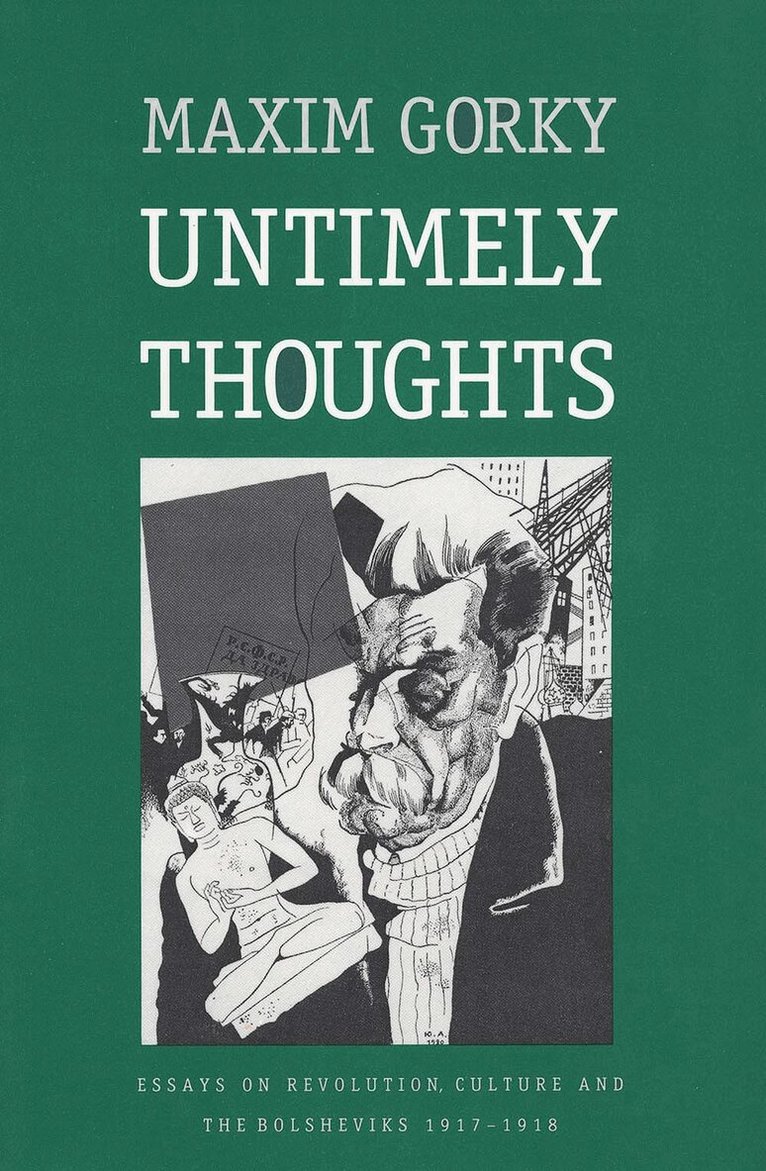
One of the most renowned Soviet writers of the twentieth century, Maxim Gorky was an early supporter of the Bolsheviks who became disillusioned with the turn of events after the 1917 revolution. This brilliant and controversial book is a collection of the critical articles Gorky wrote that describe the Russian national character, condemn the Bolshevik methods of government, and provide a vision of the future.
1 039 kr
Skickas inom 5-8 vardagar
Believing that human actions could be controlled by a totalitarian government, Stalin and his followers subjected millions of Soviet citizens to acts of state terrorism and imprisonment in labor camps. But this was not enough. Seeking to control human thought as well, Soviet authorities provided official words and images to legitimize the gulag, distort its moral nature, and even glorify its "necessary" violence. This fascinating book is the first in English to examine official Soviet concentration camp literature from the early 1920s through the mid-1960s. Dariusz Tolczyk probes the evolution of this literature, the totalitarian thinking that inspired it, and the scandalous role played by Russian literary intellectuals who collaborated in its creation.The author considers how Soviet novelists and poets in the 1920s dealt with the Leninist notion that ethics is entirely utilitarian and relative; analyzes the official glorification of the gulag in the early 1930s in such works as White Sea Canal, a composite volume by 36 famous authors praising the use of slave labor; and examines why the subject of the camps became taboo from 1937 to the Khrushchevian thaw of the early 1960s. Tolczyk also provides a masterful account of the problem posed for Soviet censors by Aleksandr Solzhenitsyn’s One Day in the Life of Ivan Denisovich and shows how the failure of the Soviet regime to come to terms with the ethical legacy of the gulag signaled the decline of the totalitarian project.
626 kr
Skickas inom 5-8 vardagar
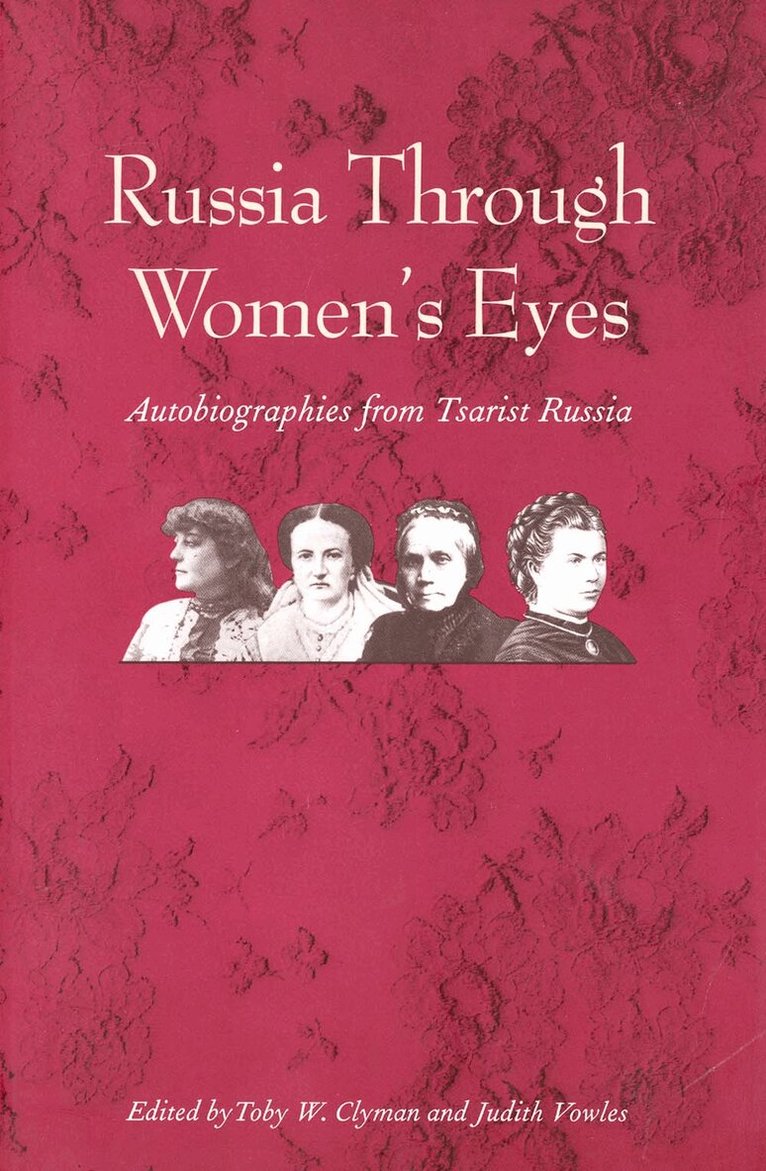
Nineteenth-century Russia has been known to the West mainly through the writings of men. Russian women, however, were far from silent and have left vivid testimony about their families, their education, their careers, and their country. This collection presents, for the first time in English, the lives of eleven remarkable Russian women as told in their own words.These autobiographies span the century and cover a wide range of classes and professions. Among the authors are women of the gentry (Natalia Grot), the merchant class (Aleksandra Kobiakova), the lower bureaucracy (Praskovia Tatlina), and the serf class (Liubov Nikulina-Kositskaia). They include writers (Elizaveta Lvova, Anastasia Verbitskaia), a journalist (Emilia Pimenova), an actress in the provincial theater (Liubov Nikulina-Kositskaia), and two physicians (Varvara Kashevarova-Rudneva, Ekaterina Slanskaia)—one the first woman to earn a medical degree in Russia, the other a doctor in the slums of St. Petersburg. Their memoirs show their fierce engagement in the debate over woman's nature, her duties and responsibilities, her upbringing, and her place in society.Each autobiography is introduced and annotated by Toby Clyman and Judith Vowles, who also provide a general introduction that situates these writings within the Russian and Western autobiographical traditions.
1 179 kr
Skickas inom 5-8 vardagar
In this thought-provoking book, an internationally acclaimed scholar writes about the passion for ideology among nineteenth- and twentieth-century Russian intellectuals and about the development of sophisticated critiques of ideology by a continuing minority of Russian thinkers inspired by libertarian humanism. Aileen Kelly sets the conflict between utopian and anti-utopian traditions in Russian thought within the context of the shift in European thought away from faith in universal systems and "grand narratives" of progress toward an acceptance of the role of chance and contingency in nature and history.In the current age, as we face the dilemma of how to prevent the erosion of faith in absolutes and final solutions from ending in moral nihilism, we have much to learn from the struggles, failures, and insights of Russian thinkers, Kelly says. Her essays—some of them tours de force that have appeared before as well as substantial new studies of Turgenev, Herzen, and the Signposts debate—illuminate the insights of Russian intellectuals into the social and political consequences of ideas of such seminal Western thinkers as Schopenhauer, Nietzsche, and Darwin. Russian Literature and Thought Series
1 092 kr
Skickas inom 5-8 vardagar
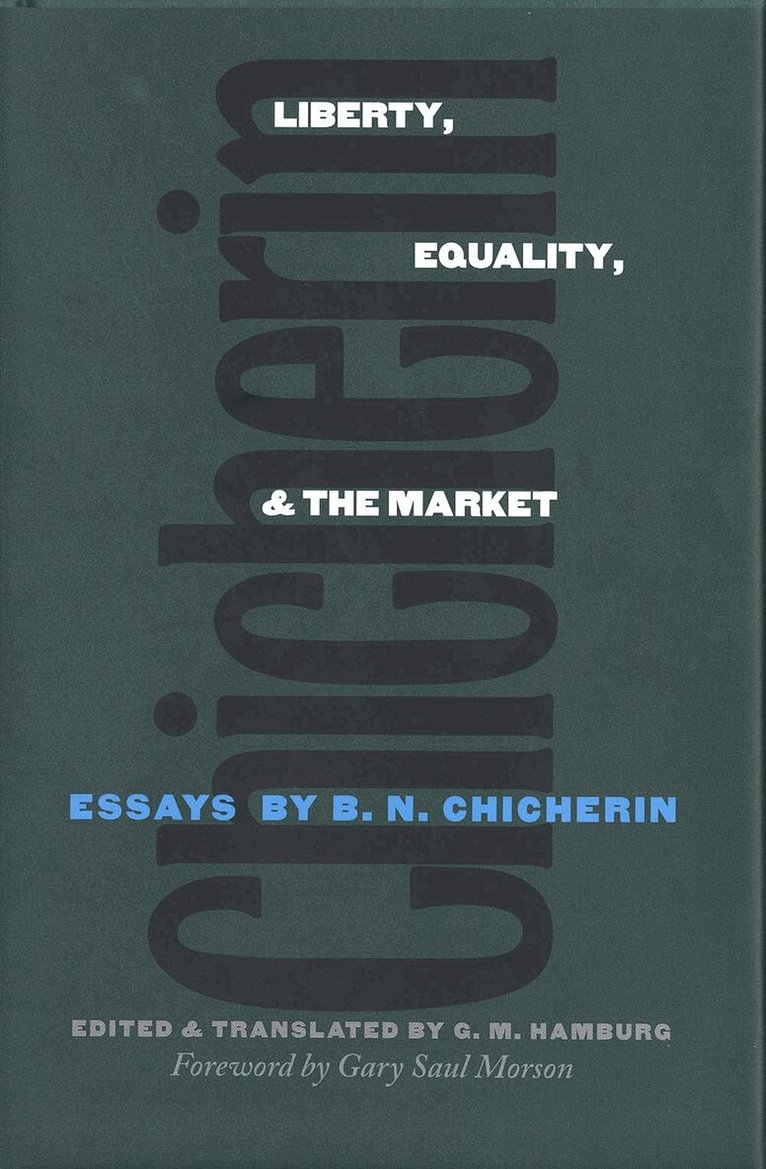
This volume brings the remarkable writings of Russian liberal thinker Boris Nikolaevich Chicherin (1828–1904) to English-language readers for the first time. The collection includes key essays in which Chicherin addresses the central political and social problems that confronted Russia from 1855 to the opening years of the twentieth century. Chicherin’s ideological alternatives to the Bolshevik plan for revolutionary transformation of Russia not only provide valuable historical insights, but also are highly relevant to current political discussion of liberalism in Russia and in the West.In a comprehensive introduction to the book, G. M. Hamburg discusses the development of Chicherin’s thought and places it in historical context. Chicherin, Hamburg says, was a powerful and sophisticated but often misunderstood defender of civil and political rights. Like his fellow liberals in Russia, Chicherin was heavily influenced by German idealism and particularly by Hegel. He departed from many, however, in favoring a market economy and advocating that reform efforts be tailored to local conditions and traditions. In this collection Chicherin explores such contemporary issues as the abolition of serfdom, Russian education, and the need for a constitution. He also tackles broad philosophical problems—the nature of liberty and equality, styles of political discourse—and comments on such philosophers as Plato, Aristotle, More, Machiavelli, Montesquieu, Hegel, and Marx.
478 kr
Skickas inom 5-8 vardagar
In a major burst of creativity, Russian poet Alexander Pushkin during just three months in 1830 completed Eugene Onegin, composed more than thirty lyric poems, wrote several short stories and folk tales, and penned the four short dramas in verse that comprise the “little tragedies.” The “little tragedies” stand among the great masterpieces of Russian literature, yet they were last translated into English a quarter-century ago and have in recent years been out of print entirely. In this outstanding new translation, Nancy K. Anderson preserves the cadence and intensity of Pushkin’s work while aligning it with today’s poetic practices and freer approach to metrics. In addition she provides critical essays examining each play in depth, a discussion of her approach to translating the plays, and a consideration of the genre of these dramatic pieces and their performability.The four “little tragedies”—Mozart and Salieri, The Miserly Knight, The Stone Guest, and A Feast During the Plague—are extremely compressed dialogues, each dealing with a dominant protagonist whose central internal conflict determines both the plot and structure of the play. Pushkin focuses on human passions and the interplay between free will and fate: though each protagonist could avoid self-ruin, instead he freely chooses it.
841 kr
Skickas inom 5-8 vardagar
In this eagerly anticipated book, Boris Gasparov gazes through the lens of music to find an unusual perspective on Russian cultural and literary history. He discusses six major works of Russian music from the nineteenth and twentieth centuries, showing the interplay of musical texts with their literary and historical sources within the ideological and cultural contexts of their times. Each musical work becomes a tableau representing a moment in Russian history, and together the works form a coherent story of ideological and aesthetic trends as they evolved in Russia from the time of Pushkin to the rise of totalitarianism in the 1930s.Gasparov discusses Glinka’s Ruslan and Ludmilla (1842), Mussorgsky’s Boris Godunov (1871) and Khovanshchina (1881), Tchaikovsky’s Eugene Onegin (1878) and The Queen of Spades (1890), and Shostakovich’s Fourth Symphony (1934). Offering new interpretations to enhance our understanding and appreciation of these important works, Gasparov also demonstrates how Russian music and cultural history illuminate one another.
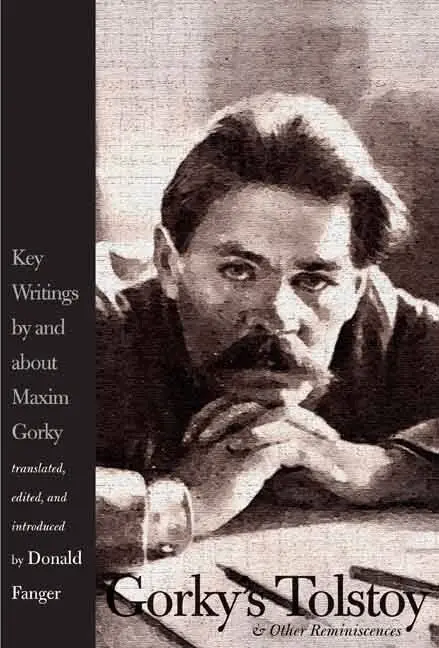
Gorky's Tolstoy and Other Reminiscences
Key Writings by and about Maxim Gorky
Inbunden, Engelska, 2008
913 kr
Skickas inom 5-8 vardagar
Superb new translations of Gorky’s classic memoirs of Tolstoy and other remarkable Russians, along with unforgettable characterizations of Gorky himself by his contemporariesMaxim Gorky (1868-1936) enjoyed worldwide fame of a kind unmatched by that of any other writer in the first half of the twentieth century. Prodigiously gifted and prolific, riddled with contradictions, praised increasingly for political rather than literary reasons, he left a vast body of writing that contains acknowledged masterpieces alongside many currently neglected works that still await impartial assessment.Taken together, the pieces in this book (many of them based on fuller texts than those of previously published translations) present a surprising and unfamiliar Gorky—a figure who, once the clichés are stripped away from him, becomes ever more fascinating and enigmatic as man, as writer, and as historical figure. Among the volume’s selections are portraits of Gorky by four particularly astute observers: poet Vladislav Khodasevich, critics Boris Eikhenbaum and Georgy Adamovich, and novelist Evgeny Zamiatin.Fanger’s generous annotations and brilliant introduction will make this book indispensable to every reader with an interest in Tolstoy, Gorky, modern Russian literature and politics, or the art of the memoir.
738 kr
Skickas inom 5-8 vardagar
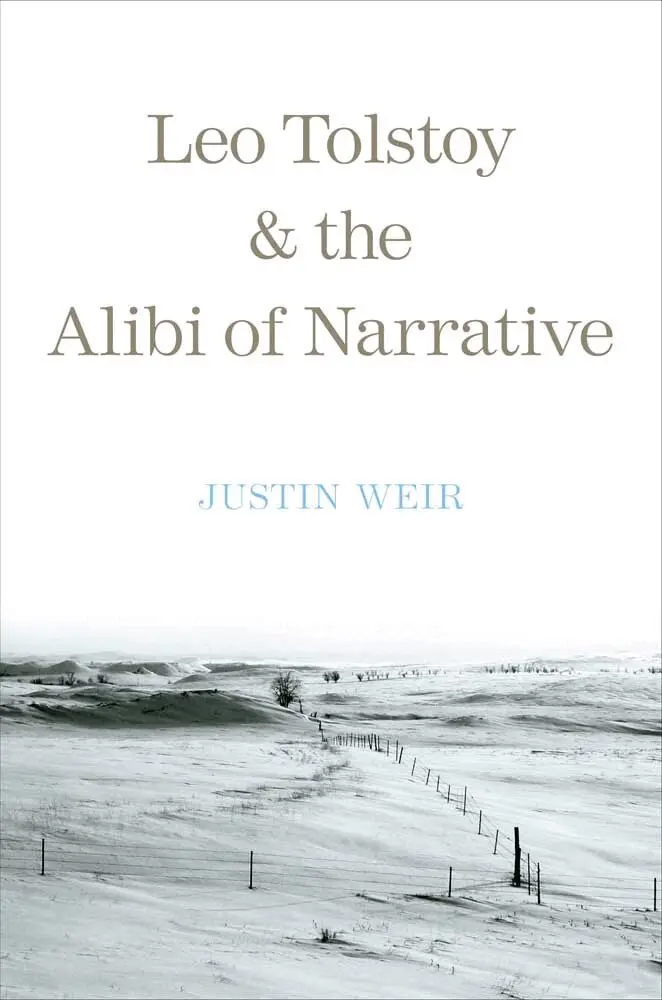
One hundred years after his death, Tolstoy still inspires controversy with his notoriously complex narrative strategies. This original book explores how and why Tolstoy has mystified interpreters and offers a new look at his most famous works of fiction.
578 kr
Skickas inom 5-8 vardagar
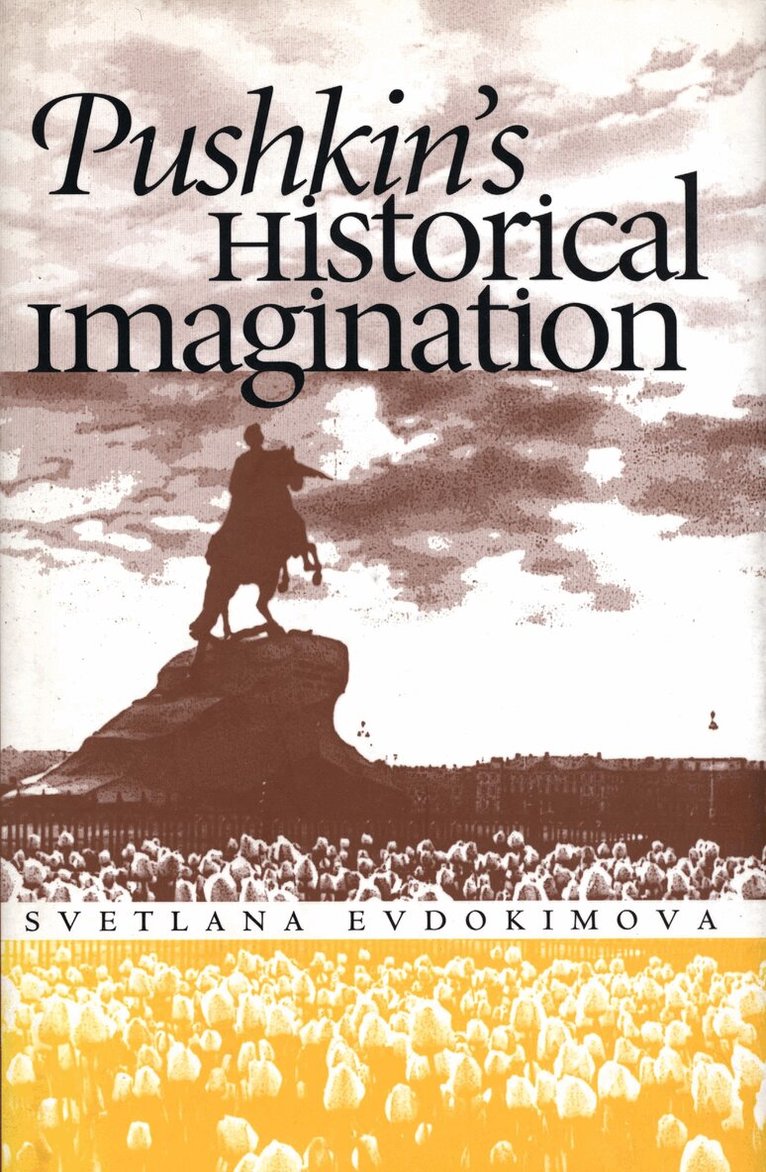
This book explores the historical insights of Alexander Pushkin (1799-1837), Russia’s most celebrated poet and arguably its greatest thinker. Svetlana Evdokimova examines for the first time the full range of Pushkin’s fictional and nonfictional writings on the subject of history—writings that have strongly influenced Russians’ views of themselves and their past. Through new readings of his drama, Boris Godunov; such narrative poems as Poltava, The Bronze Horseman, and Count Nulin; prose fiction, including The Captain’s Daughter and Blackamoor of Peter the Great; lyrical poems; and a variety of nonfictional texts, the author presents Pushkin not only as a progenitor of Russian national mythology but also as an original historical and political thinker. Evdokimova considers Pushkin within the context of Romantic historiography and addresses the tension between Pushkin the historian and Pushkin the fiction writer . She also discusses Pushkin’s ideas on the complex relations between chance and necessity in historical processes, on the particular significance of great individuals in Russian history, and on historical truth.
464 kr
Skickas inom 5-8 vardagar
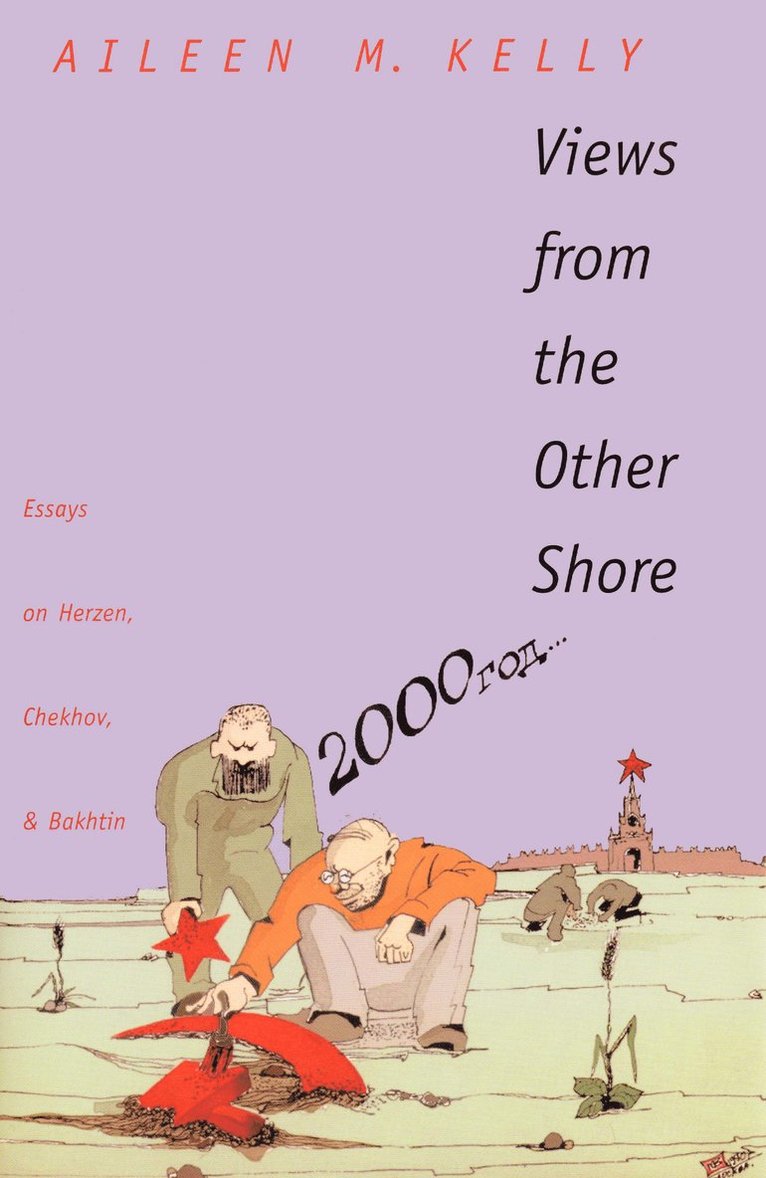
In this brilliant companion volume to her highly praised Toward Another Shore: Russian Thinkers Between Necessity and Chance, Aileen M. Kelly closely examines a humanist strand of Russian thought that has until now received little notice or understanding. She finds in the writings of Aleksandr Herzen, Anton Chekhov, and Mikhail Bakhtin a pioneering emphasis on the role of chance and contingency in nature and history. Their writing on this theme, she argues, establishes the importance of these humanists in the development of European thought.Herzen, the principal subject of the book, was among the first nineteenth-century thinkers to challenge the assumptions underlying doctrines of universal progress. Kelly links Herzen’s outlook to the work of such Western humanists and scientists as Francis Bacon, Schiller, Proudhon, J. S. Mill, and Darwin. She shows how the view of freedom that Herzen shared with Chekhov and Bakhtin provides an antidote both to traditional absolutes and to the boundless relativism of much postmodern theory. As such it offers an answer to the question now besetting intellectuals in Russia and the West: how to ground morality after the collapse of ideological certainties.
555 kr
Skickas inom 5-8 vardagar
The writings of Sergei Bulgakov (1871–1944), like those of other major social thinkers of Russia’s Silver Age, were obliterated from public consciousness under Soviet rule. Discovered again after eighty years of silence, Bulgakov’s work speaks with remarkable directness to the postmodern listener. This outstanding translation of Philosophy of Economy brings to English-language speakers for the first time a major work of social theory written by a critical figure in the Russian tradition of liberal thought.What is unique about Bulgakov, Catherine Evtuhov explains in her introduction to this book, is that he bridges two worlds. His social thought is firmly based in the Western tradition, yet some of his ideas reflect a specifically Russian way of thinking about society. Though arguing strenuously in favor of political and social liberty, Bulgakov repudiates the individualistic basis of Western liberalism in favor of a conception of human dignity that is compatible with collectivity. His economic theory stresses the spiritual content of life in the world and imagines national life as a kind of giant household. Bulgakov’s work, with its singularly postmodern balance between Western and non-Western, offers fascinating implications for those in the process of reevaluating ideologies in post-Soviet Russia and in America as well.
555 kr
Skickas inom 5-8 vardagar
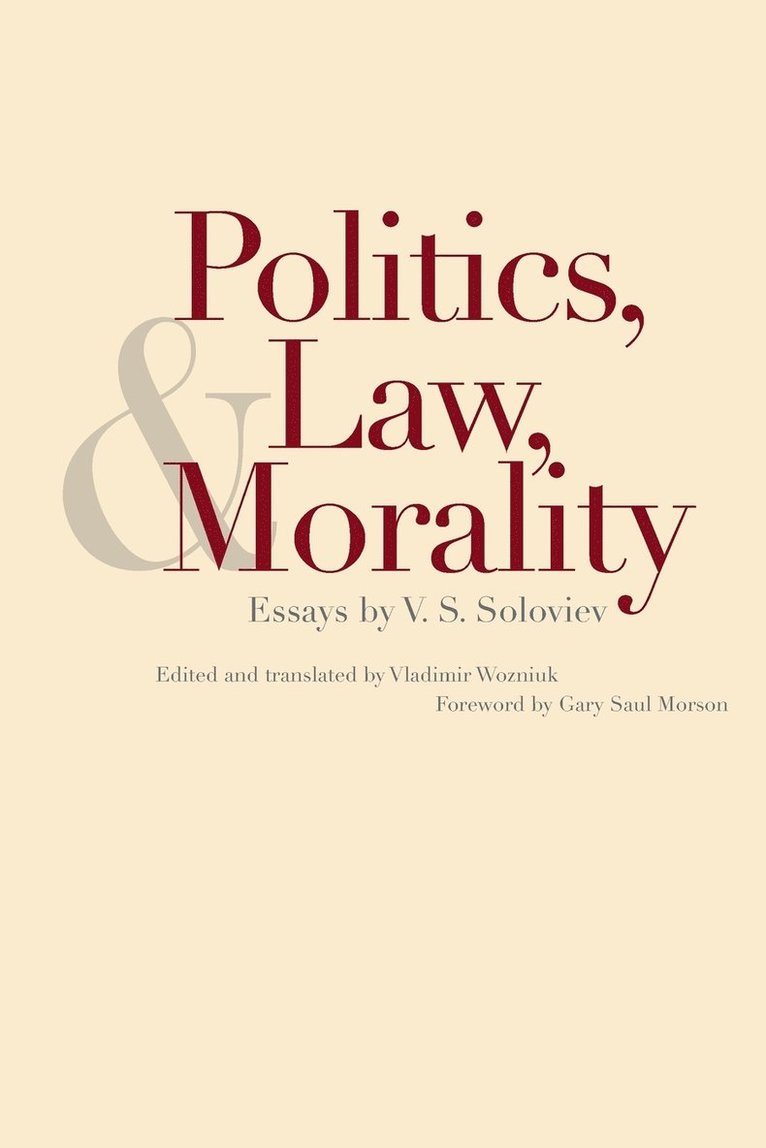
Considered one of Russia’s greatest philosophers, Vladimir Soloviev (1853–1900) was also a theologian, historian, poet, and social and political critic. His works have emerged to enjoy renewed attention in post–Soviet Russia, and his concerns echo in contemporary discussions of politics, law, and morality. In this collection of Soloviev’s essays—many translated into English for the first time—the philosopher explores an array of social issues, from the death penalty to nationalism to women’s rights.Soloviev reacts against the tradition of European rationalist thought and seeks to synthesize religious philosophy, science, and ethics in the context of a universal Christianity. In these writings he reveals the centrality of human rights in his Christian worldview, not only as an abstract theory but also as an inspiration in everyday life. In a substantive introduction and copious annotations to the essays, Vladimir Wozniuk points out distinctive and often overlooked features of Soloviev’s works while illuminating his place within both the Russian and Western intellectual traditions.