Rutgers Films in Print Series - Böcker
Visar alla böcker i serien Rutgers Films in Print Series. Handla med fri frakt och snabb leverans.
10 produkter
10 produkter
410 kr
Skickas inom 5-8 vardagar
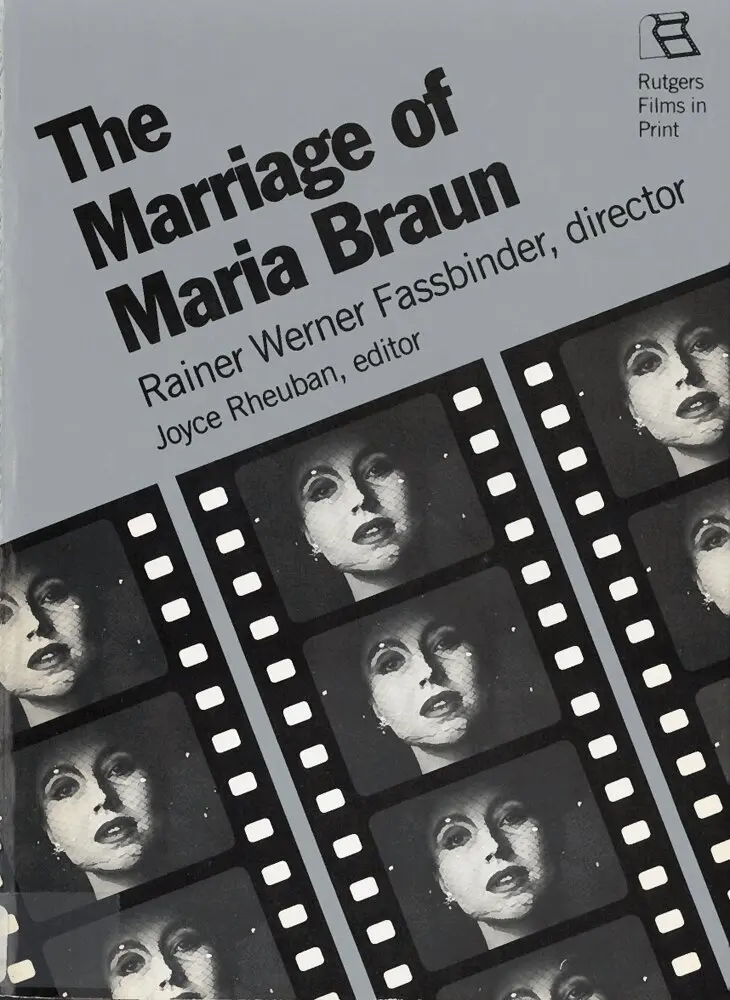
The Marriage of Maria Braun is the fourth volume in the Rutgers Films in Print Series and the most contemporary of those to appear in it thus far. Because of the enormous influence of New German Cinema and the importance of Fassbinder himself, the film is already considered a classic. "Maria Braun" is its director's attempt to recount and assess postwar German history through the personal example of his main character, played brilliantly by Hanna Schygulla. It is also a tribute to the Hollywood directors of the women's movies of the thirties and forties. Maria, and in the loose allegory Fassbinder has constructed, Germany itself, in their cold acquisitiveness and materialism, melodramatically rise from the ashes of World War II only to veer toward an inevitable doom that takes the film full circle, recalling the film's opening shots of a city reduced to rubble.This volume contains the editor's introduction, a chronology of the the years 1943-1954, a biographical sketch of Fassbinder, the full transcript of the film as released, notes on the shooting script, interviews with the scriptwriter and director, commentary on Douglas Sirk by Fassbinder, reviews, commentaries by Thomas Elsaesser and Sheila Johnston, a filmography, and a bibliography. --This text refers to the Paperback edition.
410 kr
Skickas inom 5-8 vardagar
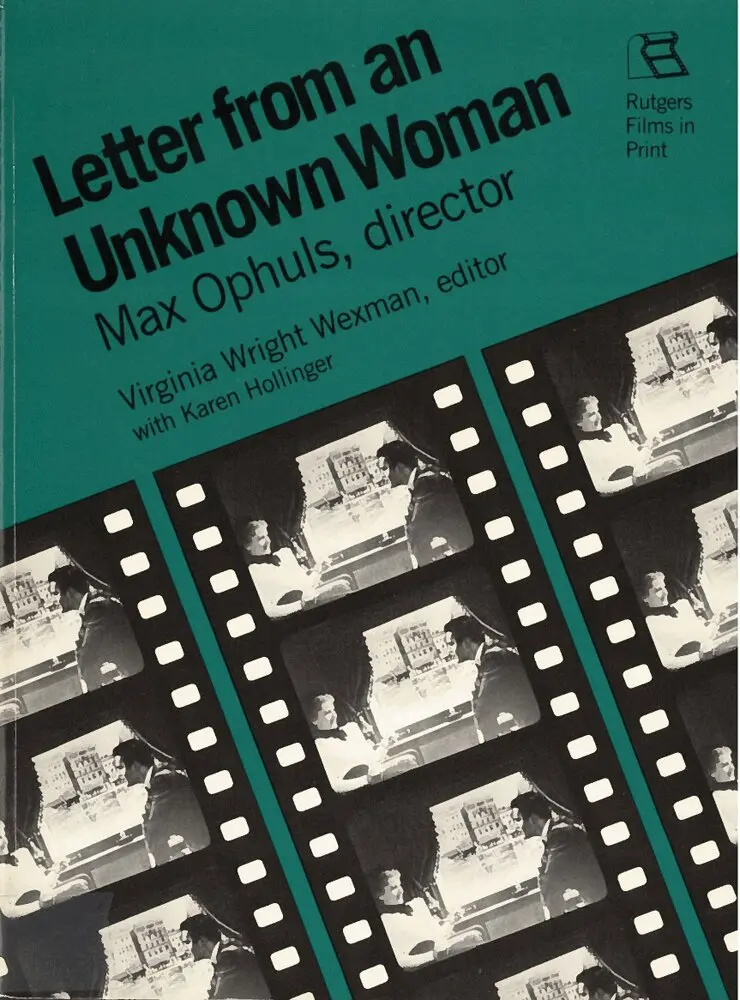
The fifth title in the Rutgers Films in Print Series, "Letter from an Unknown Woman" is directed by Max Ophuls and based on the novella by Stefan Zweig. It is the story of Lisa, a young girl who rejects the constricting life of her small town and family in order to dedicate her life to a musician, Stefan. The film's elegant fin-de-siecle Viennese setting, lyrical camera work, dispassionate and ironic point of view, and fine performances by Joan Fontaine and Louis Jourdan elevate what could have been a mere tearjerker into one of Ophuls's finest works.This volume provides a detailed transcription of the 1948 film. Notes appended to the film's continuity script detail all the significant differences between the finished film and the shooting script.Wexman's introductions to each of the book's sections discuss the history of the film's reception and provide an overview of the central issues the film has raised. A cross section of commentary by well-known critics attests to the film's enduring position as a central text for cinema study. These essays acknowledge the film's significance as a preeminent example of Ophuls's art, as an important woman's film, and as a representative of the classic Hollywood style. A biographical sketch of Ophuls, the entire Zweig novella, a bibliography and other background materials are also included.
393 kr
Skickas inom 5-8 vardagar
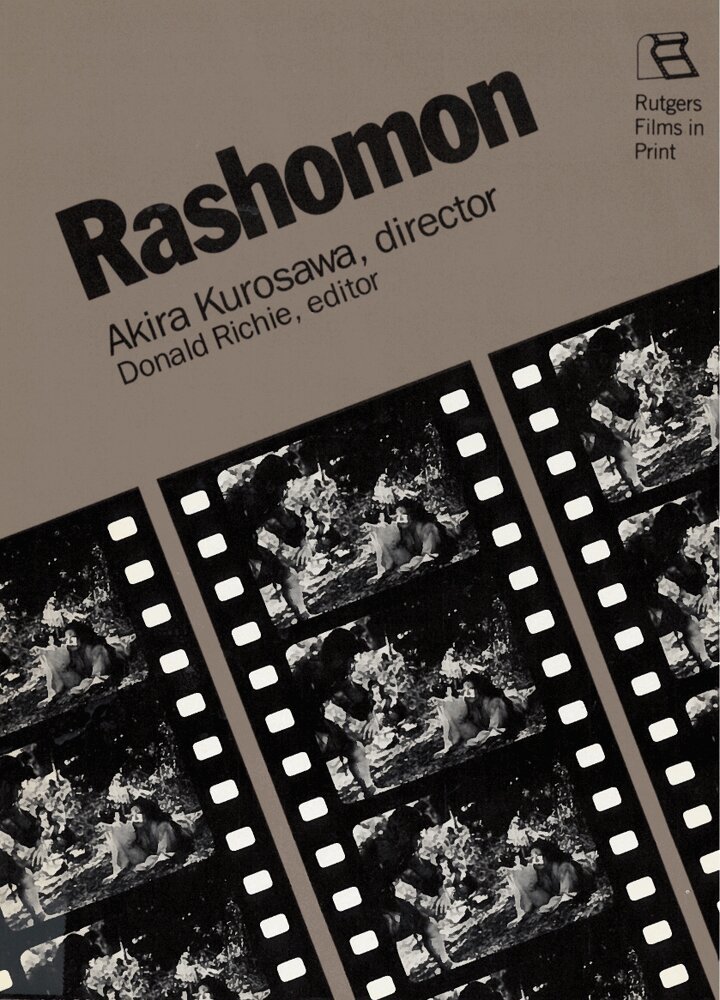
Rashomon is one of the greatest of Japanese director Akira Kurosawa's films, the winner of the 1951 Venice Festival prize and the Academy Award for best foreign film in 1952. It features Toshiru Mifune, the best-known Japanese actor in the West, as the bandit, an accused rapist and murderer. At the beginning of the film, a woodcutter, priest, and commoner happen to meet at the ruined gate--Rashomon--outside the city of Kyoto. This tale of rape and murder is first seen through the eyes of the woodcutter and the priest, both of whom have been touched by the events. The cynical, detached commoner, "everyman," listens to and comments upon their stories. The central section of the film, a series of flashbacks and tales within tales, consists of the same events retold by the husband (speaking through a medium, from the grave), the wife, the bandit, and the woodcutter. Each tells what happened--or possibly, what should have happened. The film deals with multiple truths; Richie summarizes the director's point of view in the introduction: "the world is illusion, you yourself make reality, but this reality undoes you if you submit to being limited by what you have made."The sixth title in the Rutgers Film in Print Series and the first Japanese film, this volume brings together for the first time the full continuity script of Rashomon; an introductory essay by Donald Richie; the Akutagawa stories upon which the film is based; critical reviews and commentaries on the film; a filmography; and a bibliography.
410 kr
Skickas inom 5-8 vardagar
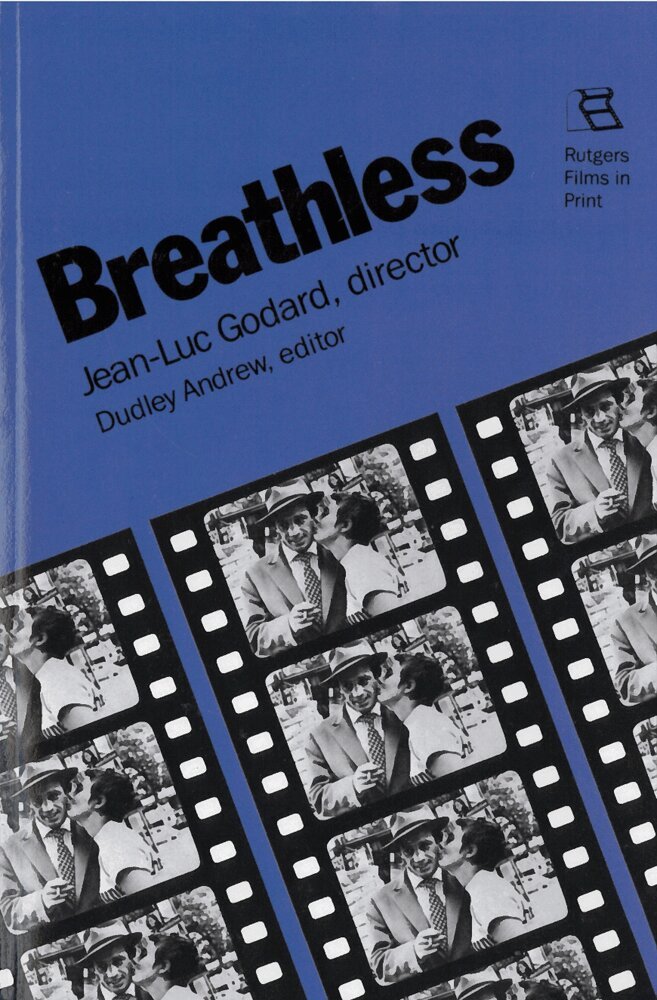
Breathless, a low-budget film, came to be regarded as one of the major accomplishments of the French New Wave cinema of the early sixties. It had a tremendous influence on French filmmakers and on world cinema in general. Beyond its significance in film history, it was also a film of considerable cultural impact. In Breathless, Jean-Luc Godard captured the spirit of a disillusioned generation and fashioned a style, which drew on the past, to parade that disillusionment.In his introduction, Dudley Andrew brilliantly explains what Godard set out to accomplish in Breathless. He illuminates the intertextual and cultural references of the film and the tensions within it between tradition and innovation. This volume also features, for the first time in English, the complete and accurate continuity script of Breathless, together with Francois Truffaut's surprisingly detailed original treatment. Also included are an in-depth selection of reviews and criticism in French and English; a brief biographical sketch of the director's life that covers the development of his career, as well as a filmography and selected bibliography.
410 kr
Skickas inom 5-8 vardagar
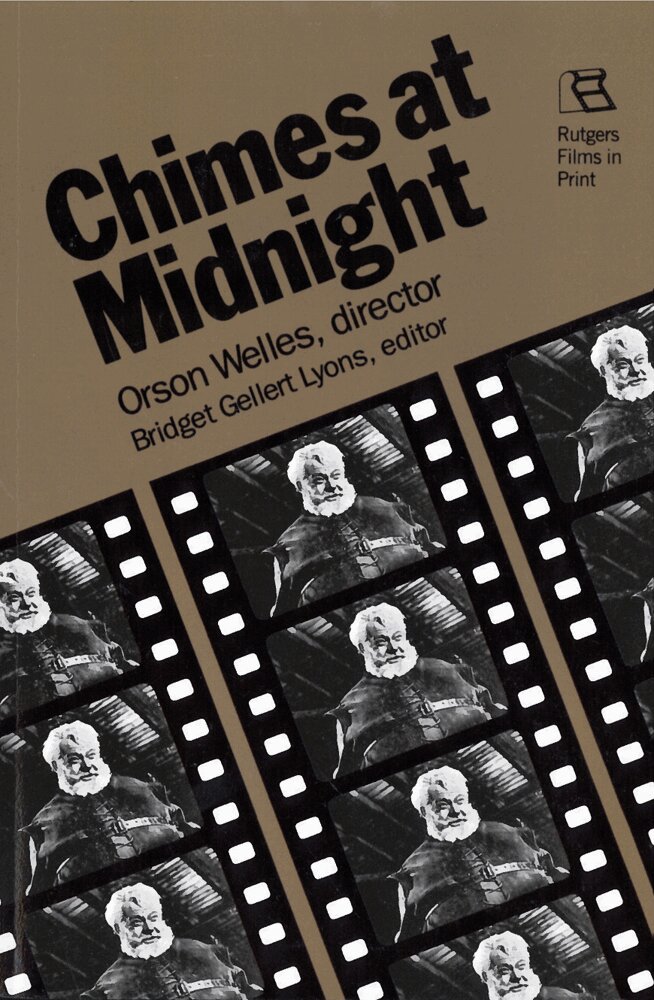
Among the films inspired by Orson Welles's lifelong involvement with Shakespeare, the greatest is Chimes at Midnight (1966). It is a masterly conflation of the Shakespearean history plays that feature Falstaff, the great comic figure played by Welles himself in the film. For Welles, the character was also potentially tragic: the doomed friendship between Falstaff and Prince Hal becomes an image of the end of an age. To this epic subject Welles brings the innovative film techniques that made him famous in Citizen Kane, The Lady from Shanghai,"and Touch of Evil.This volume offers a complete continuity script of Chimes at Midnight, including its famous battle sequence. Each shot is described in detail and is keyed to the original Shakesperian sources, thus making the volume an invaluable guide to Welles as an adaptor and creator of texts. The first complete transcription of the continuity script of Chimes is accompanied by the editor's critical introduction on Welles's transformation of Shakespeare; a special interview with Keith Baxter, one of the film's principal actors, which discusses its production history; reviews and articles; and a biographical sketch of Welles, a filmography, and a bibliography.
410 kr
Skickas inom 5-8 vardagar
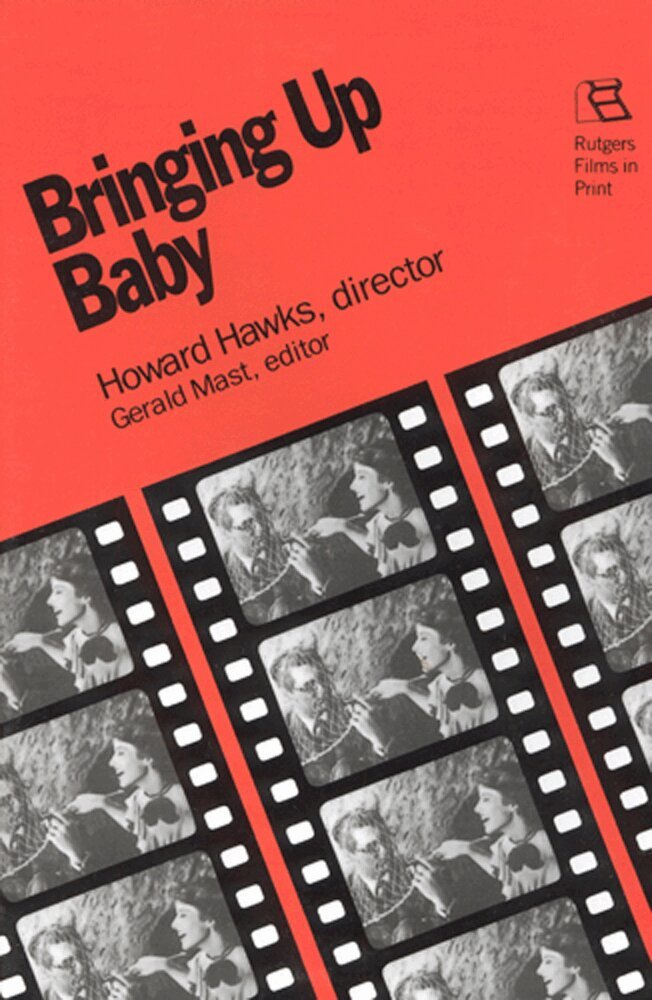
Bringing Up Baby (1938) is the essence of thirties screwball comedy. It is also quintessential Howard Hawks, treating many of the director's favorite themes, particularly the loving war between the sexes. Bringing Up Baby features Katharine Hepburn as a flaky heiress and Cary Grant as an absentminded paleontologist, roles in which they come into their own as stars and deliver particularly fine comic performances. Pauline Kael has called the film the "American movies' closest equivalent to Restoration comedy." The comparison is based on the quick repartee and witty dialogue, a hallmark of Hawks's work and well conveyed here by Gerald Mast's transcription from the screen.
386 kr
Skickas inom 5-8 vardagar
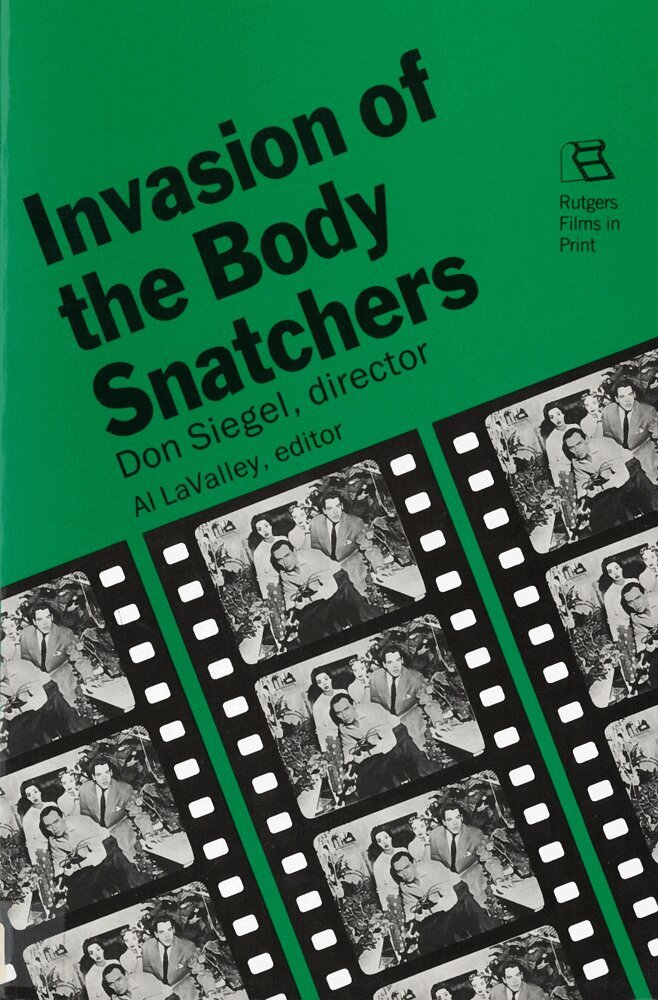
Invasion of the Body Snatchers (1956) is a low-budget science fiction film that has become a classic. The suspense of the film lies in discovering, along with Miles, the central character (played by Kevin McCarthy), who is "real" and who is not, and whether Miles and Becky (played by Dana Wynter) will escape the pod takeover. As the center of the film moves outward from a small-town group of neighbors to the larger political scene and institutional network (of police, the FBI, hospital workers), the ultimate question is whether "they" have taken over altogether. Although Invasion can be interpreted in interesting ways along psychological and feminist lines, its importance as a text has centered primarily on political and sociological readings. In his introduction to this volume, Al LaValley explores the politics of the original author of the magazine serial story on which the film is based, Don Siegel; and of its screenwriter, Daniel Mainwaring. And he looks at the ways the studio (Allied Artists) tried to neutralize certain readings by tacking on an explanatory frame story. The commentary section includes readings by Stephen King, Peter Biskind, Nora Sayre, and Peter Bogdanovich. A section of postproduction documents reproduced here (many for the first time) includes many written by Wanger and Siegel. The volume also contains two previously unpublished framing scripts written for Orson Welles. For students and individual enthusiasts, the contextual materials are particularly interesting in showing how crucial the postproduction history of a film can be. A filmography and bibliography are also included in the volume. Al LaValley is the director of film studies at Dartmouth. He is the author of many articles on film and editor of Mildred Pierce in the Wisconsin screenplay series.
444 kr
Skickas inom 5-8 vardagar
Memories of Underdevelopment was the first great international success of Cuban cinema. The film provides a complex portrait of Sergio, a disaffected bourgeois intellectual who remains in Havana after the Revolution, suspended between two worlds. He can no longer accept the values of his family's reactionary past and yet boredom and the conditioning of his early life prevent him from committing himself to the new revolutionary society. Sergio's story is played out in the turbulent period of the Bay of Pigs invasion and the 1962 missile crisis, events he can only watch on his television screen or from his apartment balcony.The film, initially banned by the U.S. government as part of its trade quarantine of Cuba, was shown here five years after its original release. But American critics responded enthusiastically to it and the National Society of Film Critics bestowed an award on its director.This double volume includes the complete continuity script of Memories, as well as the complete novel, Inconsolable Memories, upon which the film is based. An interview with Alea is reproduced here, as well as documentation of the political controversy that surrounded the film in this country. Michael Chanan's introduction places the film in the context of Cuban political and cultural history. The volume also includes a biographical sketch of Alea, a chronology of the Cuban Revolution, reviews, commentary, a filmography, and a bibliography.Michael Chanan lives in England, where he teaches and writes on film. He is the author of The Cuban Image: Cinema and Cultural Politics in Cuba.
410 kr
Skickas inom 5-8 vardagar
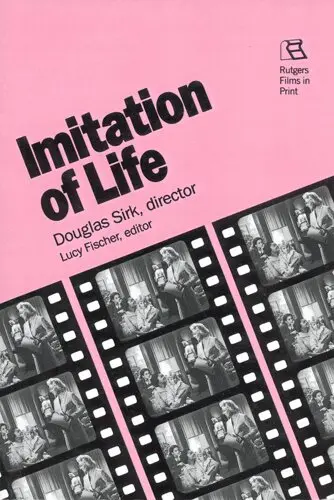
Douglas Sirk (Claus Detler Sierck) was born in Hamburg, Germany, in 1900. He made nine films before fleeing Nazi Germany, eventually coming to America. His best-known films, made during the 1950s-all of them melodramas-were Magnificent Obsession, All That Heaven Allows, The Tarnished Angels, Written on the Wind, and Imitation of Life (made in 1958, released in 1959).Because of the special stamp he put on his melodramas, Sirk's best works transcend the constraints of their genre. In them, he both exemplified and critiqued postwar, conservative, materialistic life and its false value systems. There is much in Sirk, particularly in Imitation of Life, that is of interest to us today. The time seems to be right for a new look at the film, its reception amidst scandal over the affairs of its star-Lana Turner-the relationships between its mothers and daughters, the tensions between its men and its women, the friendships between its black and white women, and the ambiguous, controversial approach of Sirk to his material.This volume includes the complete continuity script of the film, critical commentary and published reviews, interviews with the director, and a filmography and bibliography. It also includes an excellent introduction by Lucy Fischer.
418 kr
Skickas inom 5-8 vardagar
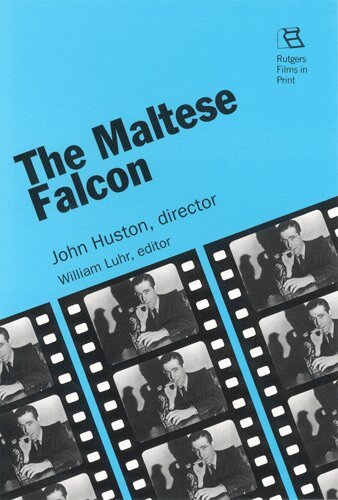
Few films have had the impact or retained the popularity of The Maltese Falcon. An unexpected hit upon its release in 1941, it helped establish the careers of John Huston and Humphrey Bogart while also helping both to transform the detective genre of movies and to create film noir. This volume includes an introduction by its editor and a shot-by-shot continuity of the film, as well as essays on its production, on literary and film traditions it drew upon, and on its reputation and influence over the last half century. Included are reviews from the time of the film's original release, the enthusiastic French response in 1946 that helped define film noir, and a close formal anaylsis of the film. In addition, the volume contains a comparison of this version to earlier film versions of the Dashiell Hammett novel, and helpful explorations of cultural, historical, and psychoanalytic issues. Like Casablanca, The Maltese Falcon has attained iconic status; this volume will contribute to the pleasure its many fans find in viewing the film again and again. William Luhr is a professor of English at St. Peter's College in New Jersey. He is the author of Raymond Chandler and Film and co-author of Blake Edwards and other books.