
Science and Culture in the Nineteenth Century – serie
Visar alla böcker i serien Science and Culture in the Nineteenth Century. Handla med fri frakt och snabb leverans.
5 produkter
5 produkter
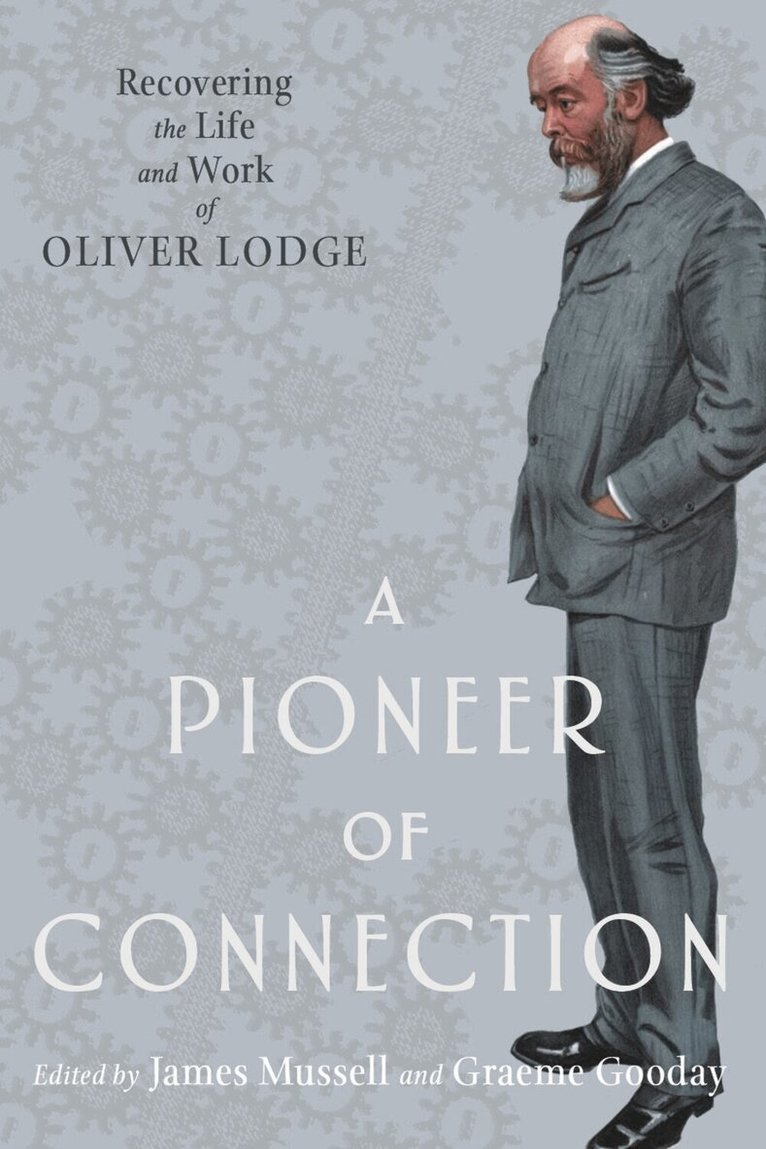
Inbunden, Engelska, 2020
791 kr
Skickas inom 5-8 vardagar
Sir Oliver Lodge was a polymathic scientific figure who linked the Victorian Age with the Second World War, a reassuring figure of continuity across his long life and career. A physicist and spiritualist, inventor and educator, author and authority, he was one of the most famous public figures of British science in the late nineteenth and early twentieth centuries. A pioneer in the invention of wireless communication and later of radio broadcasting, he was foundational for twentieth-century media technology and a tireless communicator who wrote upon and debated many of the pressing interests of the day in the sciences and far beyond. Yet since his death, Lodge has been marginalized. By uncovering the many aspects of his life and career, and the changing dynamics of scientific authority in an era of specialization, contributors to this volume reveal how figures like Lodge fell out of view as technical experts came to dominate the public understanding of science in the second half of the twentieth century. They account for why he was so greatly cherished by many of his contemporaries, examine the reasons for his eclipse, and consider what Lodge, a century on, might teach us about taking a more integrated approach to key scientific controversies of the day.
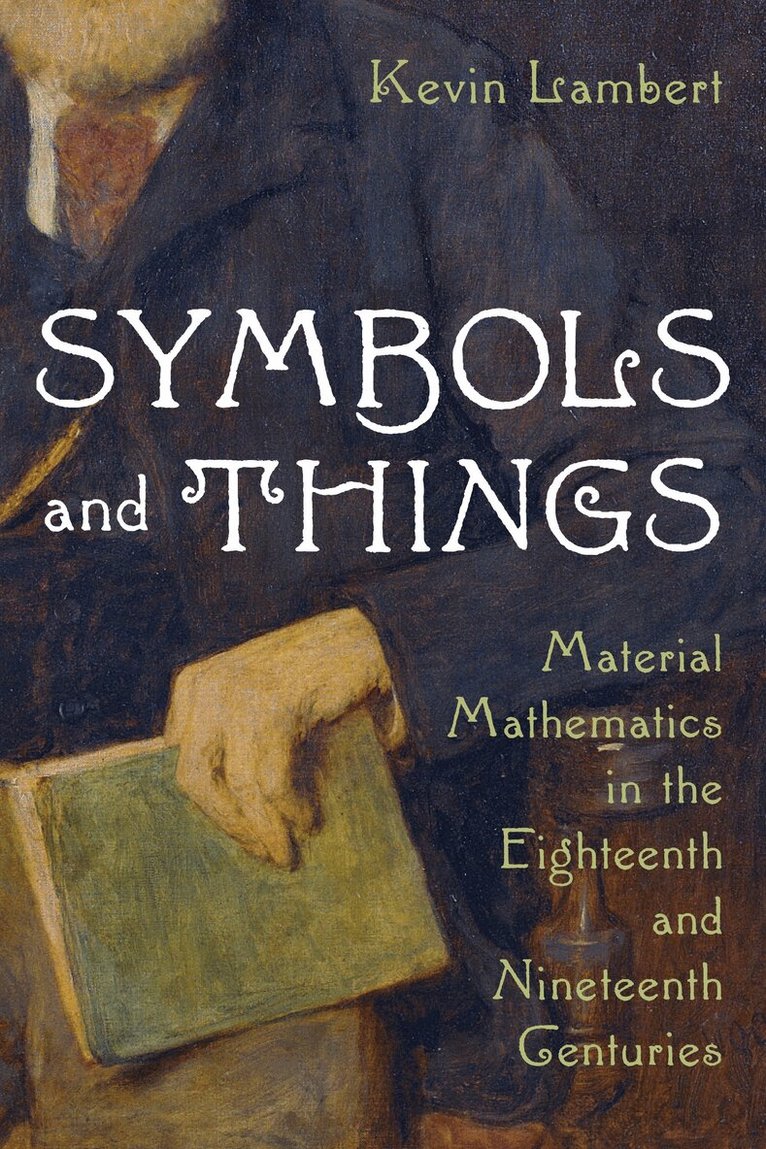
Inbunden, Engelska, 2021
811 kr
Skickas inom 5-8 vardagar
In the steam-powered mechanical age of the eighteenth and nineteenth centuries, the work of late Georgian and early Victorian mathematicians came to depend on far more than the properties of number. British mathematicians came to rely on industrialized paper and pen manufacture, railways and mail, and the print industries of the book, disciplinary journal, magazine, and newspaper. Although not always physically present with one another, the characters central to this book—from George Green to William Rowan Hamilton—relied heavily on communication technologies as they developed their theories in consort with colleagues. The letters they exchanged, together with the equations, diagrams, tables, or pictures that filled their manuscripts and publications, were all tangible traces of abstract ideas that extended mathematicians into their social and material environment. Each chapter of this book explores a thing, or assembling of things, needed by mathematicians to do their work—whether a textbook, museum, journal, library, diagram, notebook, or letter—all characteristic of the mid-nineteenth-century British taskscape, but also representative of great change to a discipline brought about by an industrialized world in motion.
Häftad, Engelska, 2021
653 kr
Skickas inom 5-8 vardagar
Elwick explores how the concept of "compound individuality" brought together life scientists working in pre-Darwinian London. Scientists conducting research in comparative anatomy, physiology, cellular microscopy, embryology and the neurosciences repeatedly stated that plants and animals were compounds of smaller independent units. Discussion of a "bodily economy" was widespread. But by 1860, the most flamboyant discussions of compound individuality had come to an end in Britain. Elwick relates the growth and decline of questions about compound individuality to wider nineteenth-century debates about research standards and causality. He uses specific technical case studies to address overarching themes of reason and scientific method.
Häftad, Engelska, 2020
711 kr
Skickas inom 5-8 vardagar
Higgitt examines Isaac Newton's changing legacy during the nineteenth century. She focuses on 1820–1870, a period that saw the creation of the specialized and secularized role of the "scientist." At the same time, researchers gained better access to Newton's archives. These were used both by those who wished to undermine the traditional, idealised depiction of scientific genius and those who felt obliged to defend Newtonian hagiography. Higgitt shows how debates about Newton's character stimulated historical scholarship and led to the development of a new expertise in the history of science.
Häftad, Engelska, 2021
653 kr
Skickas inom 5-8 vardagar
Indian scientific achievements in the early twentieth century are well known, with a number of heralded individuals making globally recognized strides in the field of astrophysics. Covering the period from the foundation of the Asiatick Society in 1784 to the establishment of the Indian Association for the Cultivation of Science in 1876, Sen explores the relationship between Indian astronomers and the colonial British. He shows that from the mid-nineteenth century, Indians were not passive receivers of European knowledge, but active participants in modern scientific observational astronomy.