James Elwick – författare
Visar alla böcker från författaren James Elwick. Handla med fri frakt och snabb leverans.
16 produkter
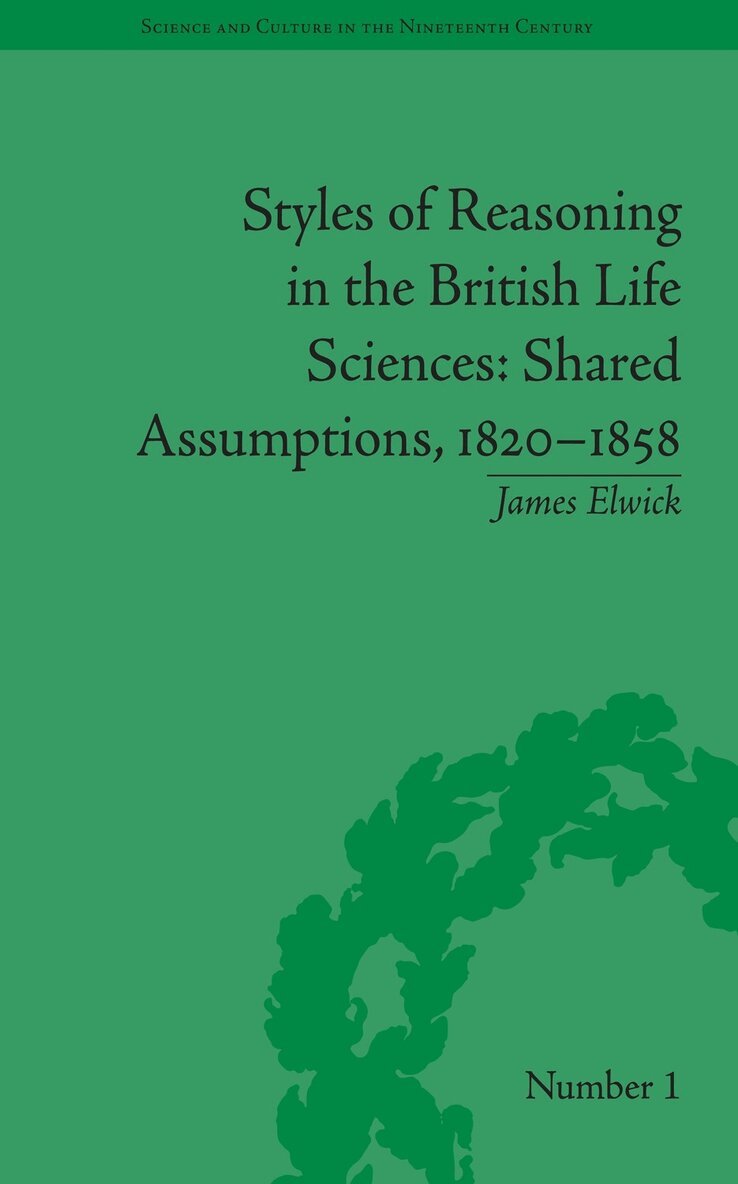
Styles of Reasoning in the British Life Sciences
Shared Assumptions, 1820–1858
Av James Elwick
Häftad, 2020
684 kr
Lägg i varukorg
Elwick explores how the concept of "compound individuality" brought together life scientists working in pre-Darwinian London. Scientists conducting research in comparative anatomy, physiology, cellular microscopy, embryology and the neurosciences repeatedly stated that plants and animals were …
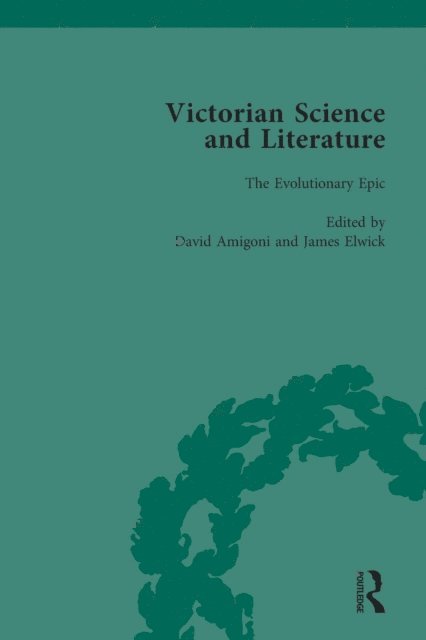
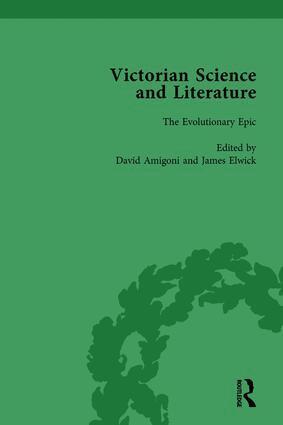
Victorian Science and Literature, Part I Vol 3
Av James Elwick, David Amigoni m. fl.
E-bok, 2024
994 kr
Lägg i varukorg
This eight-volume, reset edition in two parts collects rare primary sources on Victorian science, literature and culture. The sources cover both scientific writing that has an aesthetic component – what might be called ''the literature of science'' – and more overtly literary texts that deal …
Victorian Science and Literature, Part I Vol 4
Av James Elwick, David Amigoni m. fl.
E-bok, 2024
3448 kr
Lägg i varukorg
This eight-volume, reset edition in two parts collects rare primary sources on Victorian science, literature and culture. The sources cover both scientific writing that has an aesthetic component – what might be called ''the literature of science'' – and more overtly literary texts that deal …
Victorian Science and Literature, Part I Vol 1
Av James Elwick, David Amigoni m. fl.
E-bok, 2024
910 kr
Lägg i varukorg
This eight-volume, reset edition in two parts collects rare primary sources on Victorian science, literature and culture. The sources cover both scientific writing that has an aesthetic component – what might be called ''the literature of science'' – and more overtly literary texts that deal …
Victorian Science and Literature, Part I Vol 2
Av James Elwick, David Amigoni m. fl.
E-bok, 2024
3088 kr
Lägg i varukorg
This eight-volume, reset edition in two parts collects rare primary sources on Victorian science, literature and culture. The sources cover both scientific writing that has an aesthetic component – what might be called ''the literature of science'' – and more overtly literary texts that deal …
Victorian Science and Literature, Part I Vol 3
Av James Elwick, David Amigoni m. fl.
E-bok, 2024
994 kr
Lägg i varukorg
This eight-volume, reset edition in two parts collects rare primary sources on Victorian science, literature and culture. The sources cover both scientific writing that has an aesthetic component – what might be called ''the literature of science'' – and more overtly literary texts that deal …
Victorian Science and Literature, Part I Vol 1
Av James Elwick, David Amigoni m. fl.
E-bok, 2024
890 kr
Lägg i varukorg
This eight-volume, reset edition in two parts collects rare primary sources on Victorian science, literature and culture. The sources cover both scientific writing that has an aesthetic component – what might be called ''the literature of science'' – and more overtly literary texts that deal …
Victorian Science and Literature, Part I Vol 2
Av James Elwick, David Amigoni m. fl.
E-bok, 2024
3448 kr
Lägg i varukorg
This eight-volume, reset edition in two parts collects rare primary sources on Victorian science, literature and culture. The sources cover both scientific writing that has an aesthetic component – what might be called ''the literature of science'' – and more overtly literary texts that deal …
Victorian Science and Literature, Part I Vol 4
Av James Elwick, David Amigoni m. fl.
E-bok, 2024
3448 kr
Lägg i varukorg
This eight-volume, reset edition in two parts collects rare primary sources on Victorian science, literature and culture. The sources cover both scientific writing that has an aesthetic component – what might be called ''the literature of science'' – and more overtly literary texts that deal …
Victorian Science and Literature, Part I Vol 1
Av Gowan Dawson, Bernard Lightman m. fl.
Inbunden, 2011
787 kr
Lägg i varukorg
This eight-volume, reset edition in two parts collects rare primary sources on Victorian science, literature and culture. The sources cover both scientific writing that has an aesthetic component – what might be called 'the literature of science' – and more overtly literary texts that deal with …
Victorian Science and Literature, Part I Vol 2
Av Gowan Dawson, Bernard Lightman m. fl.
Inbunden, 2011
2825 kr
Lägg i varukorg
This eight-volume, reset edition in two parts collects rare primary sources on Victorian science, literature and culture. The sources cover both scientific writing that has an aesthetic component – what might be called 'the literature of science' – and more overtly literary texts that deal with …
Victorian Science and Literature, Part I Vol 3
Av Gowan Dawson, Bernard Lightman m. fl.
Inbunden, 2011
878 kr
Lägg i varukorg
This eight-volume, reset edition in two parts collects rare primary sources on Victorian science, literature and culture. The sources cover both scientific writing that has an aesthetic component – what might be called 'the literature of science' – and more overtly literary texts that deal with …
Victorian Science and Literature, Part I Vol 4
Av Gowan Dawson, Bernard Lightman m. fl.
Inbunden, 2011
3154 kr
Lägg i varukorg
This eight-volume, reset edition in two parts collects rare primary sources on Victorian science, literature and culture. The sources cover both scientific writing that has an aesthetic component – what might be called 'the literature of science' – and more overtly literary texts that deal with …
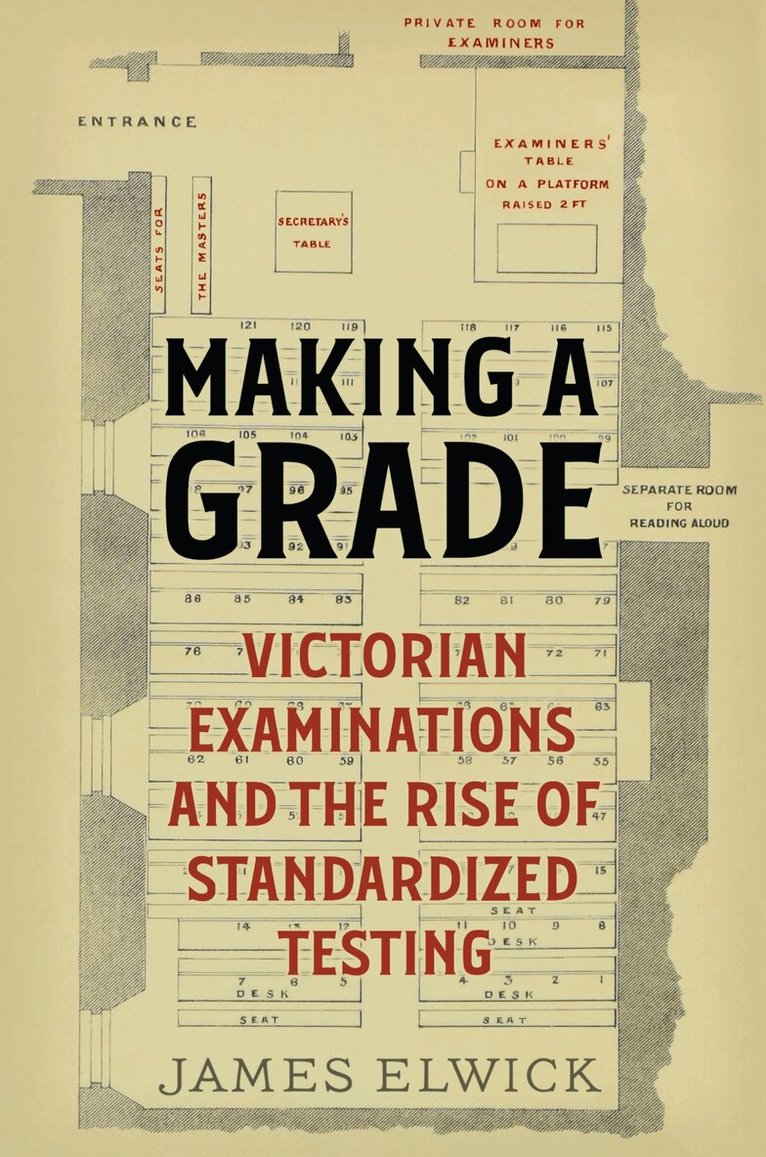
Making a Grade
Victorian Examinations and the Rise of Standardized Testing
Av James Elwick
Inbunden, 2021
650 kr
Lägg i varukorg
Starting in the 1850s achievement tests became standardized in the British Isles, and were administered on an industrial scale. By the end of the century more than two million people had written mass exams, particularly in science, technology, and mathematics. Some candidates responded to this …
Making a Grade
Victorian Examinations and the Rise of Standardized Testing
Av James Elwick
E-bok, 2021
815 kr
Lägg i varukorg
Starting in the 1850s achievement tests became standardized in the British Isles, and were administered on an industrial scale. By the end of the century more than two million people had written mass exams, particularly in science, technology, and mathematics. Some candidates responded to this …
Making a Grade
Victorian Examinations and the Rise of Standardized Testing
Av James Elwick
E-bok, 2021
815 kr
Lägg i varukorg
Starting in the 1850s achievement tests became standardized in the British Isles, and were administered on an industrial scale. By the end of the century more than two million people had written mass exams, particularly in science, technology, and mathematics. Some candidates responded to this …