Shearsman Classics - Böcker
Visar alla böcker i serien Shearsman Classics. Handla med fri frakt och snabb leverans.
12 produkter
12 produkter
340 kr
Kommande
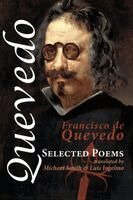
Francisco Gómez de Quevedo y Santibáñez Villegas (1580-1645), was a nobleman, whose parents were both at the royal court, and one of the most important poets of Spain's literary golden age, the siglo de oro. Quevedo was lame, had deformed feet, and was also overweight and shortsighted, but took refuge in books as a student in the Jesuit school in Madrid. In 1596 he went on to study at the University of Alcalá de Henares, after which he studied theology in Valladolid.He was already well-known as a poet by this time, and went on to establish a formidable reputation as both poet and novelist. He was a disputatious character, and engaged in many a public battle of words with his main poetic rival, Góngora, as well as with Alarcón and Pérez de Montalbán, all of whom were to feel the impact of Quevedo's bile. It must be admitted however, that Góngora, at least, repaid him with equal (verbal) measure.Quevedo was involved in a conspiracy in Venice in 1618, after which he was put under house arrest. In 1620, he was exiled, following the death of his patron, but he was pardoned when Philip IV came to the throne. Quevedo accompanied the young King on some of his journeys, but fell afoul of the Inquisition when some of his satiric verses were printed without permission. His private life seems to have been somewhat disordered, and Góngora accused him in a satire of being a drunk, referring to him as Francisco de Quebebó (i.e. Francis WhatamIdrinking).He was to be constantly involved in controversies, both political and literary, and incurred the wrath of the Count-Duke of Olivares, the most powerful nobleman in Spain, through his criticism of the government. This led to his imprisonment in León for four years from 1639. He died two years after his release.His oeuvre offers a bewildering range: theological works, literary and critical commentaries, satires, and novels. His poetry fills over a thousand pages in modern editions, and he is without doubt one of the great literary figures of his age.
219 kr
Skickas inom 5-8 vardagar
Clearly suggesting the influence of poets such as Robert Browning, Emily Bronte and Christina Rossetti, and paralleling the techniques of more modern poets such as Thomas Hardy, Charlotte Mew and D.H. Lawrence, the poems of Mary Coleridge (1861-1907) have much to tell us about the shifting nature of poetry and poetics in the Victorian fin-de-siecle and early twentieth century and they certainly deserve to be more widely known than they currently are. This is the first single volume of Mary Coleridge's poetry to be published for over fifty years. It includes ninety of her most compelling pieces along with explanatory notes and a substantial introduction which places the poems in their cultural and intellectual contexts.
281 kr
Skickas inom 5-8 vardagar
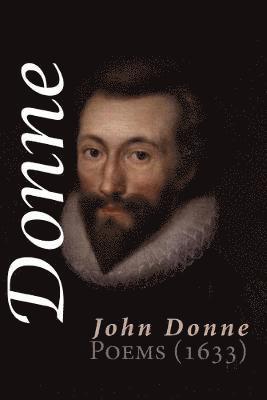
This volume-presented in the original spelling, with all its inconsistencies-reproduces the text of Poems by J.D. With Elegies on the Authors Death, published in 1633, two years after Donne's death. Very little of Donne's poetry had been published during his lifetime but it was much prized and many manuscript copies survive from the period, although only one is in the author's hand. This first edition of Poems by J.D. remains a monument and-unusually for posthumous publications of this kind-very little of the contents was not Donne's work, only two poems having been incorrectly attributed.
328 kr
Skickas inom 5-8 vardagar
A reproduction of Herrick's only publication during his lifetime, seen through the press by the author himself in 1648. The book contains more than a thousand poems by one of the great lyric poets of the Caroline era, many of whose poems were set to music by William Lawes and other luminaries of the London musical scene. This edition reproduces the original spelling, in all its quirkiness, and copies the layout, albeit in a larger page-size.
219 kr
Skickas inom 5-8 vardagar
Swinburne was born in 1837 in London and spent his childhood on the Isle of Wight and in Northumberland. He attended Eton and then Balliol College, Oxford, where he became friends with the Pre-Raphaelites Rossetti, Morris and Burne-Jones. Atalanta in Calydon was released in 1865 to considerable acclaim, but the following year his Poems and Ballads generated a firestorm of critical and public controversy on account of their licentiousness and anti-theism. His publisher withdrew the book within days of publication, and he was forced to transfer his works to another house.His next collection Songs Before Sunrise (1870), the plays Bothwell (1874) and Erectheus (1876), and the 1878 Poems and Ballads, Second Series were far more favourably received than the first Poems and Ballads had been. Swinburne was prodigiously active through the 1870s, but his personal life was in alarming disarray, and his alcoholic dissipation forecast an almost certain early grave. In 1879, he was `rescued' by the lawyer and writer Theodore Watts-Dunton, who took him to a suburban retreat in Putney, weaned him from his drinking habit, and became his companion and de facto guardian for the rest of his life, which was productive and largely uneventful. He died in 1909.No Victorian poet suffered a more precipitous decline in reputation in the twentieth century than Swinburne. His formal and musical mastery, however, have never been denied, and more recent readers have found in his work a surprising precision of language and subtlety and complexity of thought.Our Lady of Pain is the first selection of Swinburne's poetry to focus precisely on what early readers found most objectionable: erotic passion, in both its `normal' and `perverse' varieties. Swinburne's treatment of physical passion, and the varieties of passion about which he chose to write, retain the power to shock. Swinburne's early work explores same-sex desire, necrophilia, transexualism, and even bestiality, and throughout his writing is an obsession with the conjunction of `pleasure' and `pain'. Included here are many of the most transgressive poems from Poems and Ballads, along with a selection of other works that make a strong argument for the Swinburne as the greatest nineteenth-century English poet of sexual desire.
188 kr
Skickas inom 5-8 vardagar
Luis Vaz de Camoes (ca.1524/25-1580) is reckoned the greatest poet in the Portuguese language, granting him a position in the national literature akin to that of Dante, Shakespeare, or Goethe. He wrote a considerable amount of lyric poetry and at least three dramas, but is best remembered for his epic poem Os Lusiadas (The Lusiads), which set out to be, and succeeded in being, a Portuguese epic of the nation that can stand alongside Virgil's Aeneid. As Jonathan Griffin ably demonstrates in this volume, however, his shorter works, mostly sonnets and redondilhas (roundels), are fine lyrics and ought to be given the same serious attention that the epic receives as of right. Little is known of Camoes' life, other than what we see "reported" in the Lusiads, but we do know that he served as a common soldier in the East, serving in India, Africa and Macau.
270 kr
Skickas inom 5-8 vardagar
Camoes (ca.1524/25-1580) is the national poet of Portugal, with a status in the Lusophone world akin to that of Shakespeare, Dante, Cervantes and Goethe elsewhere. A wonderful lyric poet, and also an occasional dramatist, his masterpiece is Os Lusiadas (The Lusiads), an epic poem on the beginnings of the Portuguese maritime empire, for which the author himself had fought as a common soldier - in North Africa - where he lost an eye in battle, in India, in southern Africa, the Red Sea, India and Macau - where the grotto in which he wrote some of the poem is a tourist attraction. As Dante took Virgil as his guide in the Divine Comedy, so Camoes uses the great navigator, Vasco da Gama, as his tutelary spirit, while also aping Virgil's approach in the Aeneid, fashioning a national epic on the empire's origins in much the same way as Virgil had done for the Rome of Augustus.The translation here, dating from 1655, is one of the great translations of the 17th century, made while Sir Richard Fanshawe (1608-1666), a supporter of Charles I and Charles II, was under house arrest during the Cromwellian inter-regnum. Fanshawe also translated two Spanish plays and a number of Spanish sonnets from the period around 1600-1630, with some of the finest being from the baroque master Luis de Gongora. Unlike many of his successors, Fanshawe tries to stay close to the original, occasionally at the cost of having to twist the English to fit the rhyme and metre, the target language having, even in this more flexible era, far fewer resources for rhyme than the Portuguese. The results, nonetheless, are something of a monument, giving voice to a very long and complex poem and making it work, almost, as an English epic. Fanshawe, when not at his desk, was an accomplished diplomat, having served in the Madrid embassy and, after the Restoration, as Ambassador in Lisbon, where he negotiated the marriage of Charles II to Catherine of Braganza.
Del 32 - Shearsman Classics
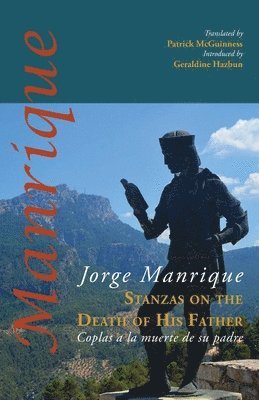
Stanzas on the Death of His Father
Coplas a la muerte de su padre
Häftad, Engelska, 2021
188 kr
Skickas inom 5-8 vardagar
Coplas a la muerte de su padre by Jorge Manrique (c.1440-79) is one of the most celebrated poems in the Spanish language. Written shortly before the poet's death, it is a dignified elegy that speaks not just of a personal loss, that of the poet's father Rodrigo Manrique (d.1476), but of the evanescence of all things. Its popularity is aided by memorable lines, not least the two opening metaphors: man's life is a river meandering unto the sea of death, and this world is the road to the next, the lasting dwelling place. The poem replicates these reflections in its wending form. Its forty stanzas each comprise four tercets; each tercet is made up of two longer octosyllabic verses combined with one four-syllable half-line known as pie quebrado. These regular broken lines, like beats of a heart, invest the poem with a resonant quality befitting the injunction at the opening of the poem to awaken one's slumbering soul to the passage of time.
219 kr
Skickas inom 5-8 vardagar
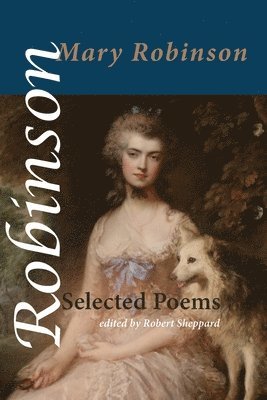
The range of Robinson's poetic work is astonishing: from impassioned lyrics to 'Lyrical Tales', from sonnets to odes, from political poetry, reacting both for and against the French Revolution, to representations of various outsider figures (slaves, madmen and political exiles), from jocular parodies of contemporary 'Grub Street' writers to satires on the callousness of the rich, fashionable and famous. Whether speaking or writing in her own voice (serially bidding farewell to her lover Tarleton) or in the voice of others (dramatising the distress of Marie Antoinette, for instance) she was a poetic innovator, as capable as handling Popean couplets as the freshest blank verse. Robert Sheppard selects the best of Mary Robinson's poetry for a general audience, while attempting to demonstrate the range of her work. He includes the complete text of Sappho and Phaon (1796), which was the first sonnet sequence to be published in English since the Renaissance. He relates her late work, particularly the forceful political blank verse epic 'The Progress of Liberty', to the emergence of the first generation of Romantics, upon whom she was a notable influence. He also briefly narrates her extraordinary life and introduces the work in his selection.
181 kr
Skickas inom 5-8 vardagar
Robert Herrick (1591-1674) was perhaps the greatest poet to have worked in Devon. Born in London, the son of a goldsmith, he studied at Cambridge and later fell in with the London poets who had gathered around the magnetic figure of Ben Jonson. In order to make a living - since he had not pursued the family trade - he entered the Church and in 1627 was appointed chaplain to the Duke of Buckingham, whom he accompanied on an unsuccessful military expedition in 1627. In 1629 he was appointed to the living of Dean Prior, a village on the edge of Dartmoor, about half way between Exeter and Plymouth. He was to remain there for the rest of his life, with the exception of the Cromwellian period from 1647-1660, during which he was expelled for his royalist sympathies and, no doubt, also doctrinal disagreements. His only book, Hesperides, was published in 1648. This is a large collection of lyrics and odes, coupled with a book of religious poems (His Noble Numbers), but it would seem that his work was already somewhat out of date by this time and the edition took some time to sell out.His reputation recovered in the 19th Century, and decisively in the 20th, when he was finally recognised as one of the greatest lyric poets of the Caroline era, an era, moreover, when England was well supplied with fine poets - Herrick's contemporaries include Shakespeare, Jonson, Marvell, Donne, Herbert, Vaughan, Lovelace, Suckling, Carew and many others.
219 kr
Skickas inom 5-8 vardagar
Alexander Barclay, Richard Carew, Humfrey Gifford, Anne Dowriche, Sir Walter Ralegh, Sir Arthur Gorges, Joseph Hall, John Ford, Robert Herrick, Sidney Godolphin, William Strode, William Browne, Mary, Lady Chudleigh, John Gay, Samuel Taylor Coleridge. All of these are poets born in the two westernmost counties of England, or - like Hall and Herrick - poets who were active there. In time we stretch from the very beginning of the 16th century until the early 19th century. We begin with Barclay, a priest at Ottery St. Mary, and we close with Coleridge, the son of a priest at Ottery St. Mary, his birthplace. We have names that echo down through the ages (Ralegh), great writers central to the development of English poetry (Herrick, Coleridge), we have divines (Hall, Herrick), we have cavaliers (Godolphin), we have balladeers (Gay), we have under-recognised talents (Gorges, Strode, Browne, Chudleigh), we have virtuoso translators (Barclay, Carew) and we have two women poets (Dowriche, Chudleigh), one of whom influenced Marlowe and another whose work was admired by Dryden.This anthology presents an unusual collection of some fine poets from the south-west corner of England and inaugurates a new Classics series from Shearsman Books.
219 kr
Skickas inom 5-8 vardagar
In the 16th and 17th centuries, Spain experienced a literary Renaissance akin to that in England, with great poets, dramatists and novelists establishing new forms and blazing new trails: Garcilaso de la Vega, Gongora, Quevedo amongst the poets, Lope de Vega & Calderon de la Barca amongst the dramatists (although both were also poets), Cervantes - of course - amongst the prose writers. The Renaissance in England was also a time when translations of contemporary European literature became more common, beginning with contemporary Italian works, and the importation of the Petrarchan sonnet, and then Montemayor's Spanish version of arcadian pastoral. While Spanish literature was not the main focus of English translators during this period - no doubt affected by the strained political relations bnetween the two countries - it did attract some particularly fine writers to try their hand.This selection is driven by what is available, but it also manages to cover some of the greatest Spanish writers of the Renaissance and the Siglo de Oro: Juan Boscan, Garcilaso de la Vega, Jorge de Montemayor, Miguel Cervantes (some poems from 'Don Quixote'), Bartolome & his brother Lupercio Leonardo de Argensola, Luis de Gongora, Francsico de Quevedo, Antonio Hurtado de Mendoza and Juan Peerez de Montalban. The translators are Herbert Aston, Philip Ayres, William Drummond of Hawthornden, Sir Richard Fanshawe, Thomas Shelton, Sir Philip Sidney, Thomas Stanley and Bartholomew Yong. The translations are never less than effective and, especially in the case of Fanshawe's Gongora, often show rare genius at work.