Studies Comparative Energy and Environ - Böcker
Visar alla böcker i serien Studies Comparative Energy and Environ. Handla med fri frakt och snabb leverans.
4 produkter
4 produkter
1 531 kr
Skickas inom 5-8 vardagar
The potential conflict among economic and ecological goals has formed the central fault line of environmental politics in the United States and most other countries since the 1970s. The accepted view is that efforts to protect the environment will detract from economic growth, jobs, and global competitiveness. Conversely, much advocacy on behalf of the environment focuses on the need to control growth and avoid its more damaging effects. This offers a stark choice between prosperity and growth, on the one hand, and ecological degradation on the other. Stopping or reversing growth in most countries is unrealistic, economically risky, politically difficult, and is likely to harm the very groups that should be protected. At the same time, a strategy of unguided "growth above all" would cause ecological catastrophe.Over the last decade, the concept of green growth -- the idea that the right mix of policies, investments, and technologies will lead to beneficial growth within ecological limits -- has become central to global and national debates and policy due to the financial crisis and climate change. As Daniel J. Fiorino argues, in order for green growth to occur, ecological goals must be incorporated into the structure of the economic and political systems. In this book, he looks at green growth, a vast topic that has heretofore not been systematically covered in the literature on environmental policy and politics. Fiorino looks at its role in global, national, and local policy making; its relationship to sustainable development; controversies surrounding it (both from the left and right); its potential role in ameliorating inequality; and the policy strategies that are linked with it. The book also examines the political feasibility of green growth as a policy framework. While he focuses on the United States, Fiorino will draw comparisons to green growth policy in other countries, including Germany, China, and Brazil.
424 kr
Skickas inom 5-8 vardagar
The potential conflict among economic and ecological goals has formed the central fault line of environmental politics in the United States and most other countries since the 1970s. The accepted view is that efforts to protect the environment will detract from economic growth, jobs, and global competitiveness. Conversely, much advocacy on behalf of the environment focuses on the need to control growth and avoid its more damaging effects. This offers a stark choice between prosperity and growth, on the one hand, and ecological degradation on the other. Stopping or reversing growth in most countries is unrealistic, economically risky, politically difficult, and is likely to harm the very groups that should be protected. At the same time, a strategy of unguided "growth above all" would cause ecological catastrophe.Over the last decade, the concept of green growth -- the idea that the right mix of policies, investments, and technologies will lead to beneficial growth within ecological limits -- has become central to global and national debates and policy due to the financial crisis and climate change. As Daniel J. Fiorino argues, in order for green growth to occur, ecological goals must be incorporated into the structure of the economic and political systems. In this book, he looks at green growth, a vast topic that has heretofore not been systematically covered in the literature on environmental policy and politics. Fiorino looks at its role in global, national, and local policy making; its relationship to sustainable development; controversies surrounding it (both from the left and right); its potential role in ameliorating inequality; and the policy strategies that are linked with it. The book also examines the political feasibility of green growth as a policy framework. While he focuses on the United States, Fiorino will draw comparisons to green growth policy in other countries, including Germany, China, and Brazil.
Who Speaks for Nature?
Indigenous Movements, Public Opinion, and the Petro-State in Ecuador
Inbunden, Engelska, 2019
1 043 kr
Skickas inom 5-8 vardagar
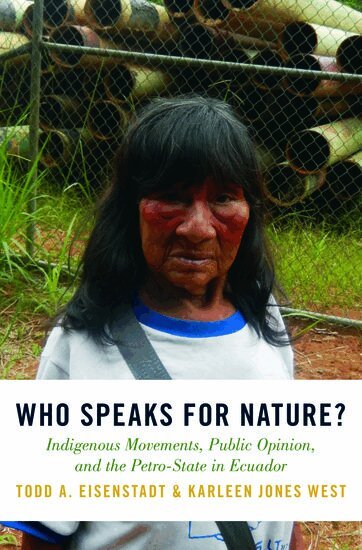
In 2009, Ecuador became the first nation ever to enshrine rights for nature in its constitution. Nature was accorded inalienable rights, and every citizen was granted standing to defend those rights. At the same time, the government advanced a policy of "extractive populism," buying public support for mineral mining by promising that funds from the mining would be used to increase public services.This book, based on a nationwide survey and interviews about environmental attitudes among citizens as well as indigenous, environmental, government, academic, and civil society leaders in Ecuador, offers a theory about when and why individuals will speak for nature, particularly when economic interests are at stake. Parting from conventional social science arguments that political attitudes are determined by ethnicity or social class, the authors argue that environmental dispositions in developing countries are shaped by personal experiences of vulnerability to environmental degradation. Abstract appeals to identity politics, on the other hand, are less effective. Ultimately, this book argues that indigenous groups should be the stewards of nature, but that they must do so by appealing to the concrete, everyday vulnerabilities they face, rather than by turning to the more abstract appeals of ethnic-based movements.
Democracy in the Woods
Environmental Conservation and Social Justice in India, Tanzania, and Mexico
Häftad, Engelska, 2018
363 kr
Skickas inom 5-8 vardagar
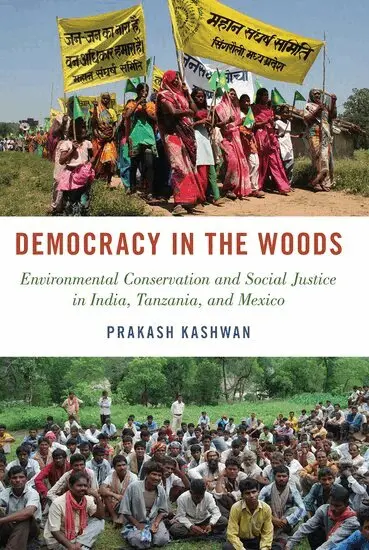
How do societies negotiate the apparently competing agendas of environmental protection and social justice? Why do some countries perform much better than others on this front?Democracy in the Woods addresses these question by examining land rights conflicts--and the fate of forest-dependent peasants--in the context of the different forest property regimes in India, Tanzania, and Mexico. These three countries are prominent in the scholarship and policy debates about national forest policies and land conflicts associated with international support for nature conservation. This unique comparative study of national forestland regimes challenges the received wisdom that redistributive policies necessarily undermine the goals of environmental protection. It shows instead that the form that national environmental protection efforts take--either inclusive (as in Mexico) or exclusive (as in Tanzania and, for the most part, in India)--depends on whether dominant political parties are compelled to create structures of political intermediation that channel peasant demands for forest and land rights into the policy process. This book offers three different tests of this theory of political origins of forestland regimes. First, it explains why it took the Indian political elites nearly sixty years to introduce meaningful reforms of the colonial-era forestland regimes. Second, it successfully explains the rather counterintuitive local outcomes of the programs for formalization of land rights in India, Tanzania, and Mexico. Third, it provides a coherent explanation of why each of these three countries proposes a significantly different distribution of the benefits of forest-based climate change mitigation programs being developed under the auspices of the United Nations.In its political analysis of the control over and the use of nature, this book opens up new avenues for reflecting on how legacies of the past and international interventions interject into domestic political processes to produce specific configurations of environmental protection and social justice. Democracy in the Woods offers a theoretically rigorous argument about why and in what specific ways politics determine the prospects of a socially just and environmentally secure world.