Studies in Comparative Energy and Environmental Politics - Böcker
Visar alla böcker i serien Studies in Comparative Energy and Environmental Politics. Handla med fri frakt och snabb leverans.
6 produkter
6 produkter
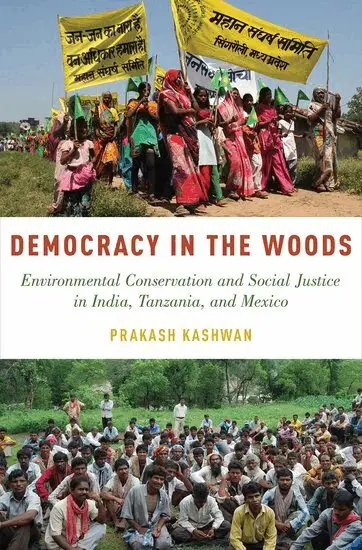
Democracy in the Woods
Environmental Conservation and Social Justice in India, Tanzania, and Mexico
Inbunden, Engelska, 2017
1 217 kr
Skickas inom 5-8 vardagar
How do societies negotiate the apparently competing agendas of environmental protection and social justice? Why do some countries perform much better than others? Democracy in the Woods answers these questions by explaining the trajectories of forest and land rights--and the fate of forest-dependent peasants--in the forested regions of India, Tanzania, and Mexico. To organize a comparative inquiry that straddles the fields of comparative politics, historical institutionalism, and policy studies, this book develops a political economy of institutions framework. It shows that differences in structures of political intermediation--venues that help peasant groups and social movements engage in political and policy processes--explain the varying levels of success in combining the pursuits of social justice and environmental conservation. The book challenges the age-old notion that populist policies produce uniformly deleterious environmental consequences that must be mitigated via centralized systems of environmental regulation. It shows instead that the national leaders and dominant political parties that must compete for popular support in the political arena are more likely to fashion interventions that pursue conservation of forested landscapes without violating the rights of forest-dependent people. Mexico demonstrates the potential for win-win outcomes, India continues to stumble on both environmental and social questions despite longstanding traditions of popular mobilization for forestland rights, and Tanzania's government has failed its forest-dependent people despite a lucrative wildlife tourism sector. This book's political analysis of the control over and use of nature opens up new avenues for reflecting on nature in the Anthropocene.
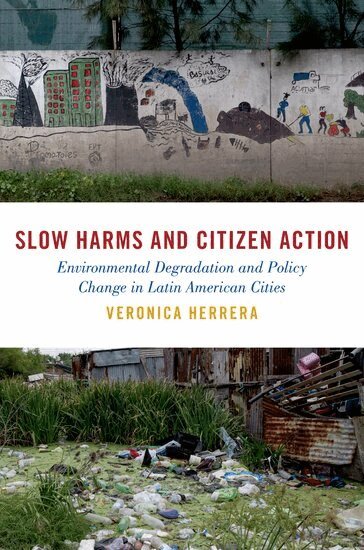
Slow Harms and Citizen Action
Environmental Degradation and Policy Change in Latin American Cities
Inbunden, Engelska, 2024
875 kr
Skickas inom 7-10 vardagar
Environmental degradation is not new, yet the impact of pollution on human health and wellbeing is growing. According to the World Health Organization, 12.6 million people die annually from living or working near toxic pollution, amounting to one-quarter of global deaths. Ninety-two percent of these deaths occur in middle or low-income countries, where the majority of the global population lives. For the millions of communities around the world where pollution is a slow moving, long-standing problem, residents born into toxic exposure often perceive pollution as part of the everyday landscape, particularly in low-resource settings. Local communities may also be both victims of pollution and complicit in perpetrating it themselves. When and how do people mobilize around slow harms? Moreover, when does citizen action around slow harms unlock policy action?In Slow Harms and Citizen Action, Veronica Herrera chronicles the struggle against toxic exposure in urban Latin America. Comparing advocacy movements for river pollution remediation in the capital regions of Argentina, Colombia, and Peru, Herrera explains how citizen-led efforts helped create environmental governance through networks that included impacted communities (bonding mobilization) and resourced allies (bridging mobilization). Through bonding and bridging mobilization, citizen advocacy for slow harms activated the state's regulatory capacity. Moreover, Herrera illustrates how the most successful environmental movements occurred in settings where established human rights movements had previously helped dismantle state-sponsored militarized violence. By unpacking human rights movements as thoroughfares for environmental activism, Slow Harms and Citizen Action sheds new light on the struggles for environmental justice in Latin America.
Slow Harms and Citizen Action
Environmental Degradation and Policy Change in Latin American Cities
Häftad, Engelska, 2024
268 kr
Skickas inom 5-8 vardagar
Environmental degradation is not new, yet the impact of pollution on human health and wellbeing is growing. According to the World Health Organization, 12.6 million people die annually from living or working near toxic pollution, amounting to one-quarter of global deaths. Ninety-two percent of these deaths occur in middle or low-income countries, where the majority of the global population lives. For the millions of communities around the world where pollution is a slow moving, long-standing problem, residents born into toxic exposure often perceive pollution as part of the everyday landscape, particularly in low-resource settings. Local communities may also be both victims of pollution and complicit in perpetrating it themselves. When and how do people mobilize around slow harms? Moreover, when does citizen action around slow harms unlock policy action?In Slow Harms and Citizen Action, Veronica Herrera chronicles the struggle against toxic exposure in urban Latin America. Comparing advocacy movements for river pollution remediation in the capital regions of Argentina, Colombia, and Peru, Herrera explains how citizen-led efforts helped create environmental governance through networks that included impacted communities (bonding mobilization) and resourced allies (bridging mobilization). Through bonding and bridging mobilization, citizen advocacy for slow harms activated the state's regulatory capacity. Moreover, Herrera illustrates how the most successful environmental movements occurred in settings where established human rights movements had previously helped dismantle state-sponsored militarized violence. By unpacking human rights movements as thoroughfares for environmental activism, Slow Harms and Citizen Action sheds new light on the struggles for environmental justice in Latin America.
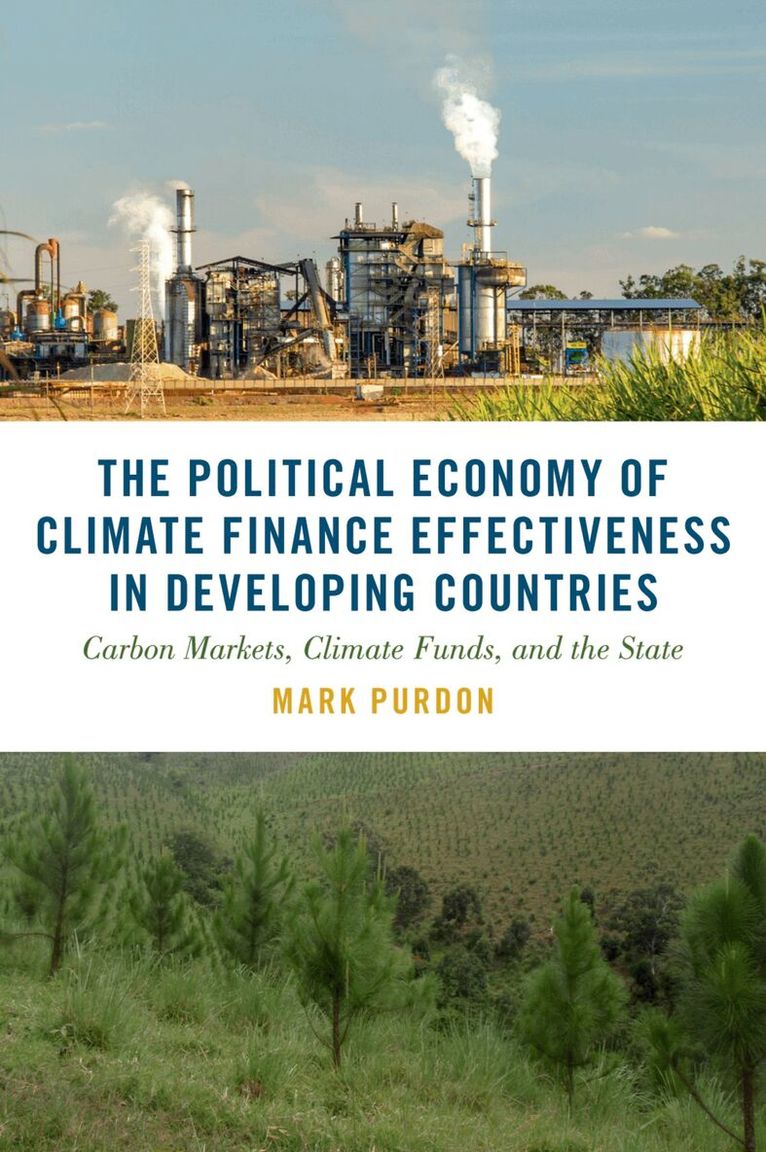
The Political Economy of Climate Finance Effectiveness in Developing Countries
Carbon Markets, Climate Funds, and the State
Inbunden, Engelska, 2024
739 kr
Skickas inom 5-8 vardagar
There is ample evidence that engaging developing countries on climate change mitigation would have significant, positive impacts on global climate efforts. There is much debate, however, on the most effective strategy for unlocking these low-cost mitigation opportunities. While the Clean Development Mechanism (CDM) emerged as the main climate finance instrument for engaging developing countries under the Kyoto Protocol, the carbon market approach it embodied would largely be replaced by a new array of climate finance instruments based on climate funds.In The Political Economy of Climate Finance Effectiveness in Developing Countries, Mark Purdon shows that the effectiveness of climate finance instruments to reduce emissions under either strategy has depended on the interaction between prevailing ideas about how to develop a nation's economy, as well as state interests in various economic sectors. Based on multiple field visits over a decade in three countries, the author demonstrates that climate finance instruments have been more effectively implemented when the state treats them as vehicles for addressing priority development issues. Climate finance instruments were more consistently and effectively implemented in Uganda and Moldova than Tanzania, despite differences in state capacity between countries. This pattern held for the CDM, as well as subsequent instruments largely based on climate funds, such as Reducing Emissions from Deforestation and Forest Degradation (REDD+) and other national mitigation actions.Contributing to broader debates on international climate cooperation, Purdon's findings inform international efforts to support national climate plans and catalyze low-carbon development by emphasizing the importance of domestic politics and the state.
875 kr
Skickas inom 5-8 vardagar
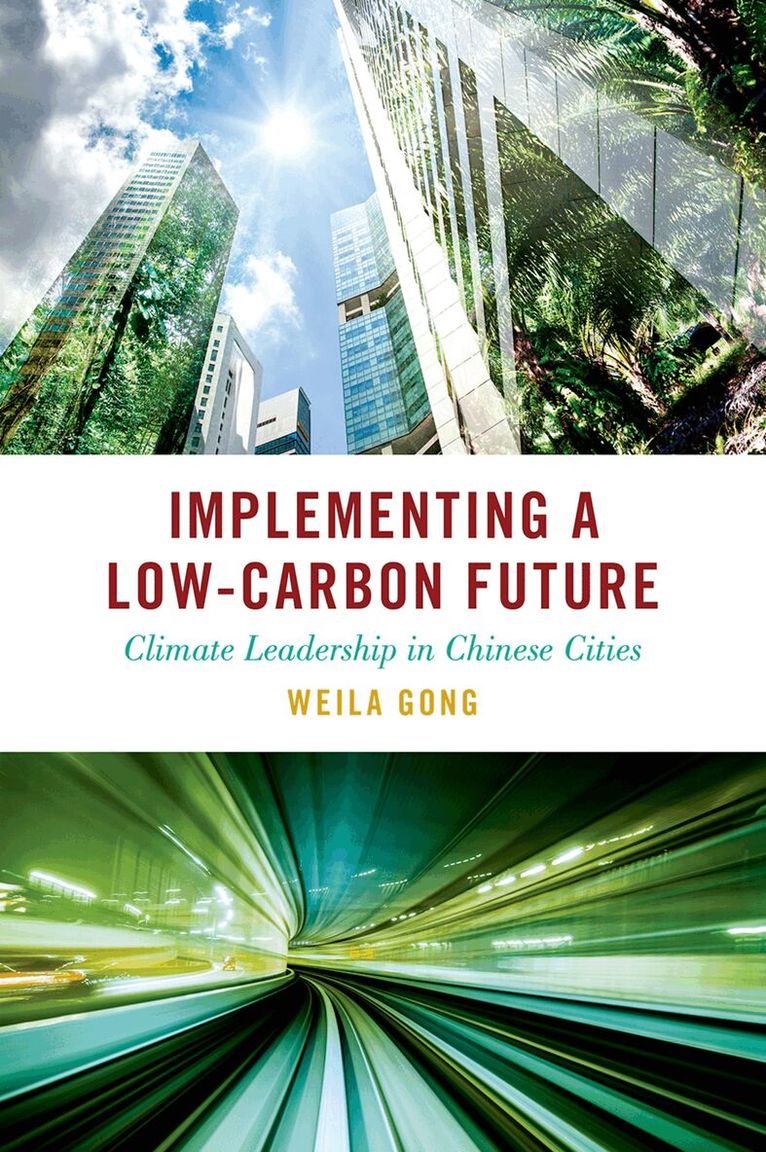
In an era of intensified geopolitics and of national-level political gridlock, subnational governments can potentially play an essential role in combating global climate change. Can subnational governments introduce and sustain climate policy actions through changes in political leadership? Why do some local areas continue to deliver on their climate goals while others struggle to do so?Despite being the world's largest carbon emitter, China has pledged to attain peak carbon before 2030 and carbon neutrality before 2060. Since the early 2010s, Beijing has selected more than one hundred local low-carbon pilots at the township, municipal, and provincial levels engage in policy experimentation. Their aim is policy solutions to decouple local economic growth from the increased use of fossil fuels. In Implementing a Low-Carbon Future, Weila Gong examines four cases of such policy experimentation and finds that local implementation outcomes were mixed. Notably, Gong finds variation in levels of low-carbon policy institutionalization across the case studies. This includes varying successes of the standards, regulations, and laws put into place through these policy experiments. Based on original research ncluding expert interviews, comparative case studies, and process tracing of the low-carbon policy experimentation in these pilot cities, comparative case studies, and process-tracing of Gong opens the black box of the subnational climate policy process in China's centralized political system and identifies mid-level local bureaucrats as playing an essential "bridge leader" role in successful implementation.
The Politics of Extraction
Territorial Rights, Participatory Institutions, and Conflict in Latin America
Häftad, Engelska, 2025
454 kr
Skickas inom 5-8 vardagar
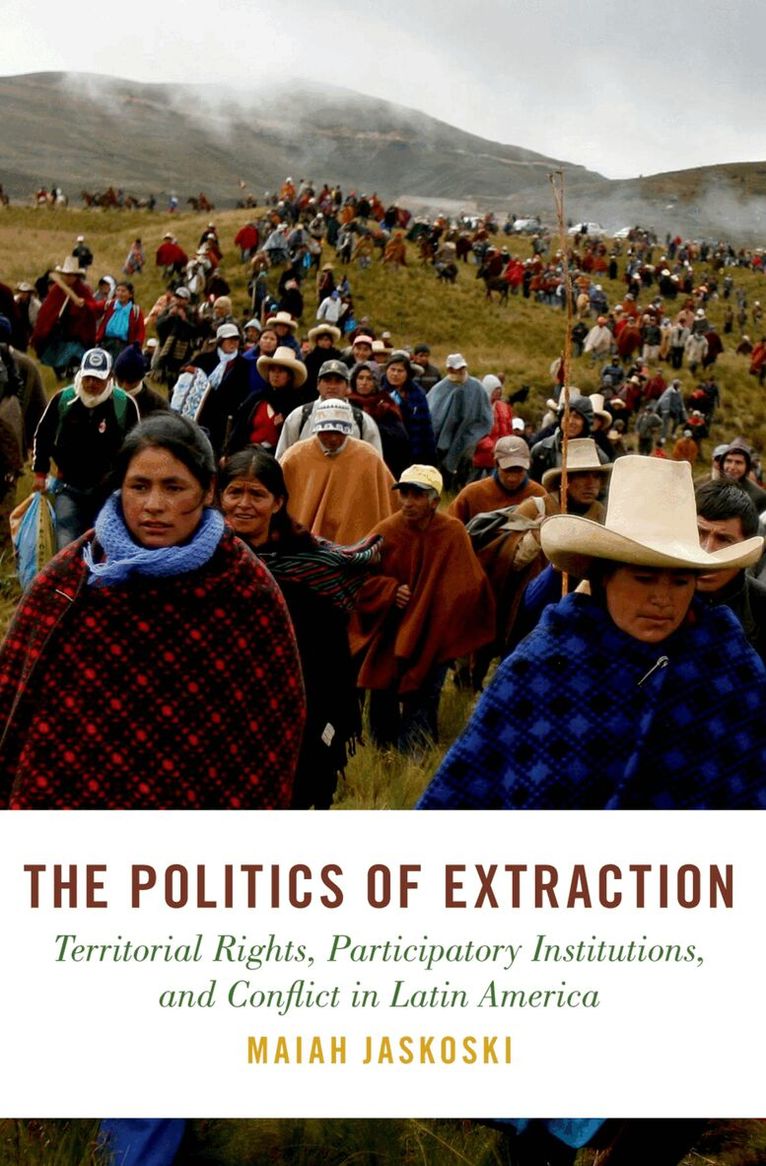
Mining and hydrocarbon production in Latin America is high-stakes for extractive firms, communities in resource-rich zones, and states. Amid global commodity price increases and liberal economic policies, the sectors have expanded dramatically in recent decades. This surge has made private investors and governments in the region ever more committed to extraction. It also has increased alarm within local communities, which have organized around the environmental, cultural, and social impacts of mining and hydrocarbons. Moreover, activists have mobilized to demand material benefits, in the forms of royalty distributions and direct company investment in local services and infrastructure. These conflicts take the form of legal battles, large-scale protests, and standoffs that pit communities against companies and the state, and consequently have suspended production, destabilized politics, and expended state security resources. In The Politics of Extraction, Maiah Jaskoski looks at how mobilized communities in Latin America's hydrocarbon and mining regions use participatory institutions to challenge extraction. In some cases, communities act within formal participatory spaces, while in others, they organize "around" or "in reaction to" these institutions, using participatory procedures as focal points in the escalation of conflict. Based on analysis of thirty major extractive conflicts in Bolivia, Colombia, and Peru in the 2000s and 2010s, Jaskoski examines community uses of public hearings built into environmental licensing, state-led prior consultation with native communities affected by large-scale development, and local popular consultations or referenda. She finds that communities select their strategies in response to the specific participatory challenges they confront: the trials of initiating participatory processes, gaining inclusion in participatory events, and, for communities with such access, expressing views about extraction at the participatory stage. Surprisingly, the communities least likely to channel their concerns through state institutions are the most unified and have the strongest guarantee of participation. Including a wealth of data and complex stories, Jaskoski provides the first systematic study of how participatory institutions either channel or exacerbate conflict over extraction.