• Fri frakt över 249 kr
  • •
  • Snabba leveranser
  • •
  • Billiga böcker
Kundservice

Du är på sajten för privatpersoner.

Företag, bibliotek eller offentlig verksamhet?

Du handlar på classic.bokus.com, där alla dina funktioner finns intakta.
Till classic.bokus.com
Bokus logotyp. Gå till startsidan.
  • Erbjudanden
  • Nyheter
  • Student
  • Topplistor
  • Barn & ungdom
  • Bokus Play
  • E-böcker
  • Pocketböcker
  • Spel & pussel

Må bättre, för mindre! Upp till 50% rabatt på hälsoböcker

Sidfot

Mina sidor

    Hjälp

    • Kundservice
    • Vanliga frågor och svar
    • Frakt och leverans
    • Retur vid ångerrätt
    • Reklamera vara
    • Betalning
    • Köpvillkor
    • Allmänna villkor
    • Information om webbplatsens tillgänglighet

    Om Bokus

    • Om oss
    • Pressrum
    • För studenter
    • För företag
    • För bibliotek och offentlig verksamhet
    • För leverantörer
    • Hållbarhet

    Populärt

    • Aktuella erbjudanden
    • Presentkort
    • Studentlitteratur
    • Nya böcker
    • Topplistor
    • Signerade böcker
    • Engelska böcker

    Inspiration

    • Boktips
    • BookTok
    • Populära bokserier
    • Barnbokskaraktärer
    • Populära författare
    Logotyp för Bokus
    Följ oss på Facebook (extern länk)Följ oss på Instagram (extern länk)Följ oss på YouTube (extern länk)Följ oss på TikTok (extern länk)
    bokus @ CookiesAnpassa cookiesIntegritetspolicyKöpvillkor
    Till Citymail hemsida (extern länk)Till Budbee hemsida (extern länk)Till Postnord hemsida (extern länk)Till Schenker hemsida (extern länk)Till Early Bird hemsida (extern länk)Till Walleys hemsida (extern länk)
    1. Samhälle och politik
    2. Samhälle och kultur
    3. Kultur och medier
    4. Referensverk och tvärvetenskap

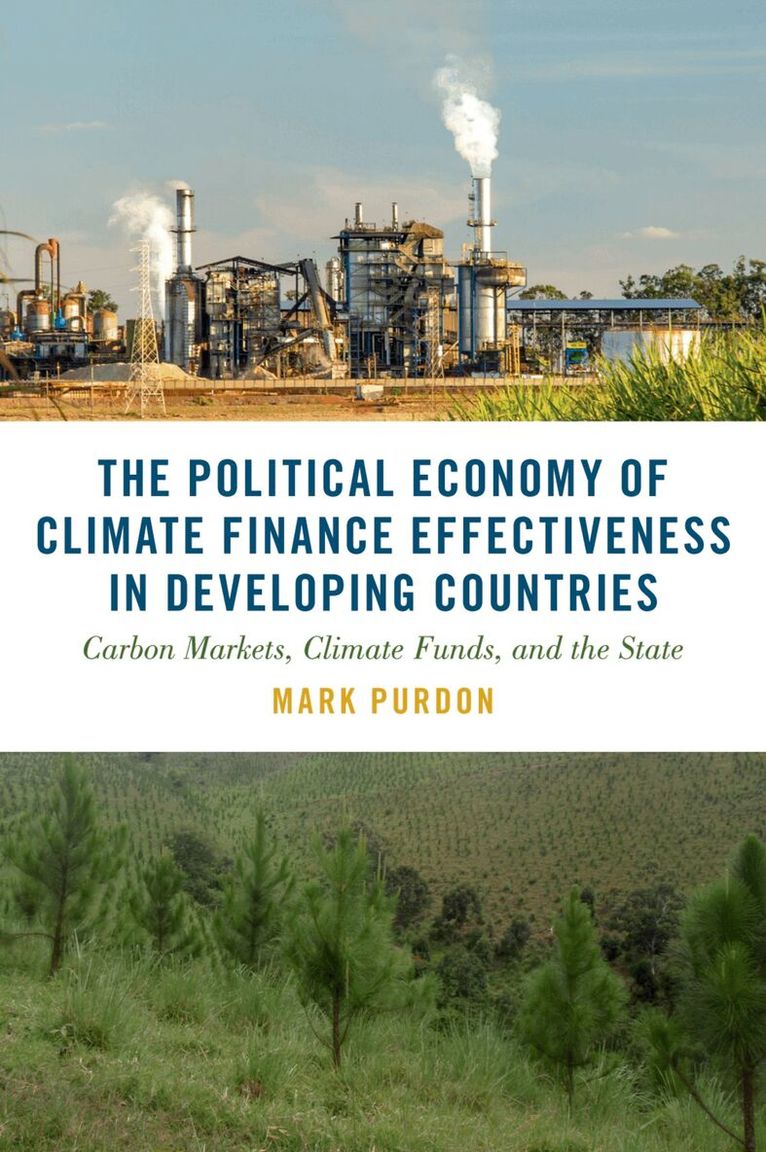
    The Political Economy of Climate Finance Effectiveness in Developing Countries

    Carbon Markets, Climate Funds, and the State

    AvMark Purdon

    Inbunden, Engelska, 2024

    Del i serien Studies in Comparative Energy and Environmental Politics

    794 kr

    Beställningsvara. Skickas inom 5-8 vardagar. Fri frakt över 249 kr.

    Beskrivning

    There is ample evidence that engaging developing countries on climate change mitigation would have significant, positive impacts on global climate efforts. There is much debate, however, on the most effective strategy for unlocking these low-cost mitigation opportunities. While the Clean Development Mechanism (CDM) emerged as the main climate finance instrument for engaging developing countries under the Kyoto Protocol, the carbon market approach it embodied would largely be replaced by a new array of climate finance instruments based on climate funds.In The Political Economy of Climate Finance Effectiveness in Developing Countries, Mark Purdon shows that the effectiveness of climate finance instruments to reduce emissions under either strategy has depended on the interaction between prevailing ideas about how to develop a nation's economy, as well as state interests in various economic sectors. Based on multiple field visits over a decade in three countries, the author demonstrates that climate finance instruments have been more effectively implemented when the state treats them as vehicles for addressing priority development issues. Climate finance instruments were more consistently and effectively implemented in Uganda and Moldova than Tanzania, despite differences in state capacity between countries. This pattern held for the CDM, as well as subsequent instruments largely based on climate funds, such as Reducing Emissions from Deforestation and Forest Degradation (REDD+) and other national mitigation actions.Contributing to broader debates on international climate cooperation, Purdon's findings inform international efforts to support national climate plans and catalyze low-carbon development by emphasizing the importance of domestic politics and the state.

    Produktinformation

    • Utgivningsdatum:2024-09-25
    • Mått:152 x 229 x 30 mm
    • Vikt:680 g
    • Format:Inbunden
    • Språk:Engelska
    • Serie:Studies in Comparative Energy and Environmental Politics
    • Antal sidor:376
    • Förlag:OUP USA
    • ISBN:9780197756836

    Utforska kategorier

    • Referensverk och tvärvetenskap inom Samhälle och politik
    • Miljövetenskap och miljöpolitik inom Naturvetenskap och teknik
    • Statsvetenskap och politisk teori inom Samhälle och politik

    Mer om författaren

    Mark Purdon is Associate Professor in the Department of Strategy, Social and Environmental Responsibility at the Université du Québec à Montréal (UQAM) where he holds the Chair in Decarbonization. He is an expert in the emerging field of comparative environmental policy, which combines elements of comparative politics, comparative public policy and international relations. He is particularly interested in the relationship between climate change policy and political economy and has extensive research experience in both developing and developed countries. Purdon earned a PhD in political science at the University of Toronto in 2013 and completed a Postdoctoral Fellowship at the London School of Economics in 2014.

    Recensioner i media

    With careful attention to domestic politics, Professor Purdon provides a detailed, nuanced, and timely contribution to the increasingly contested question of how climate finance instruments are best implemented in lower-income countries.

    Innehållsförteckning

    • Chapter 1: Introduction PART 1: Global Ideas About Climate and Development Cooperation Chapter 2: The CDM and Liberal Environmentalism Chapter 3: The Shift to Developmental Environmentalism PART 2: Comparative Political Economy of DevelopmentChapter 4: Development Policy Paradigms in Historical Perspective Chapter 5: Political Settlements in Tanzania, Uganda, and Moldova Chapter 6: State Development Interests in Tanzania, Uganda, and Moldova Chapter 7: Development Policy Paradigms in Tanzania, Uganda, and Moldova PART 3: Evaluating Climate Finance Effectiveness Chapter 8: Pockets of CDM Effectiveness Chapter 9: Explaining REDD+ Effectiveness Chapter 10: Explaining NAMA Effectiveness Chapter 11: Conclusion Appendix 1: Supplementary Information about Carbon Offset Projects Appendix 2: Evaluation Criteria by DNA and by State Investment Agencies ReferencesNotesIndex