Studies in Global Archaeology - Böcker
Visar alla böcker i serien Studies in Global Archaeology. Handla med fri frakt och snabb leverans.
15 produkter
15 produkter
Del 14 - Studies in Global Archaeology
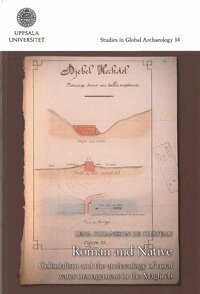
Roman and native : colonialism and the archaeology of rural water management in the Maghreb
Häftad, Engelska, 2009
273 kr
Skickas inom 5-8 vardagar
This thesis considers the archaeology of rural water management in the Maghrcb in relation to modern colonialism. An attempt is made to recover the attitudes to people and landscape expressed in the archaeological literature, and to analyse them in a colonial/postcolonial context. The primary focus lies on works relating to early water management in Algeria, Morocco, Tunisia and Libya. The study consists of three parts. In the first part, colonial legacies in the archaeology of the rural Maghrcb are considered, and the archaeological material related to rural water management is summarised. Common issues of geography, history and archaeology with relevance to the study of ancient water management arc addressed. In the second and main part of the thesis, a selection of archaeological works arc examined with respect to the representation of Roman and indigenous people and attitudes to landscape. The three chapters deal respectively with early colonial writings from the turn of the nineteenth century, post-Second World War writings from the late 1940s through the 1950s, and archaeological survey publications produced during the period of political independence in the Maghrt'b, from c. 1960 to the present. In the last part of the study, the survey of archaeological scholarship on rural water management is brought together in a concluding analysis of its relation to modern colonialism, including tlw process of decolonisation. The production of krnnvlcdgc, the ideologies of nationalism and colonialism, the use of stereotypes in representing the Other, and Western attitudes to landscape manifest in the archaeological writings are brought forward. Finally, the concept of creolisation is suggested as an alternative interpretive framework for rural water management in the Roman-period Maghrcb.
275 kr
Skickas inom 5-8 vardagar
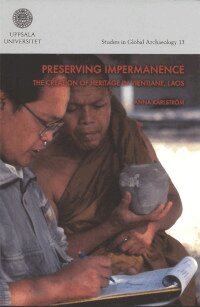
This thesis is about the heritage in Vientiane. In an attempt to go beyond a more traditional descriptive approach, the study aims at bringing forward a discussion about the definition, or rather the multiplicity of definitions, of the concept of heritage as such. The unavoidabe tension emanating from a modern western frame of thought being applied to the geographical and cultural setting of the study provides an opportunity to develop a criticism of some of the assumptions underlying our current definitions of heritage. For this particular study, heritage is defined as to include stories, places and things. It is a heritage that is complex and ambiguous, because the stories are parallel, the definitions and perceptions of place are manifold and contested, and the things and their meaning appear altered, depending on what approach to materiality is used. The objective is not to propose how to identify and manage such a complex heritage. Rather, it is about what causes this complexity and ambiguity and what is in between the stories, places and things. In addition, the study aims to critically deconstruct the contemporary heritage discourse, which privileges material authenticity, form and fabric and the idea that heritage values are universal and should be preserved for the future and preferably forever. In Laos, Buddhism dominates as religious practice. In this context, the notion of material impermanence also governs the perception of reality. Approaches to materiality in Buddhism are related to the general ideas that things are important from a contemporary perspective and primarily as containers for spiritual values, that the spiritual values carry the connection to the past, and that heritage is primarily spiritual in nature and has little to do with physical structure and form. By exploring the concepts of restoration, destruction and consumption in such a perspective, we understand that preservation and restoration are active processes of materialisation. We also understand that destruction and consumption are necessary for the appreciation of certain heritage expressions, and that heritage is being constantly created. With this understanding, this book is an argument for challenging contemporary western heritage discourse and question its fundamental ideology of preservationism.
Del 15 - Studies in Global Archaeology
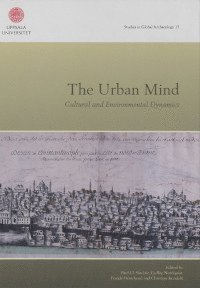
The urban mind : cultural and environmental dynamics
Inbunden, Engelska, 2010
275 kr
Skickas inom 5-8 vardagar
Del 16 - Studies in Global Archaeology
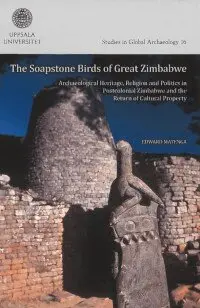
The soapstone birds of Great Zimbabwe : archaeological heritage, religion and politics in postcolonial Zimbabwe and the return of cultural property
Häftad, Engelska, 2011
275 kr
Skickas inom 5-8 vardagar
At least eight soapstone carvings of birds furnished a shrine, Great Zimbabwe, in the 19th century. This large stonewalled settlement, once a political and urban centre, had been much reduced for four centuries, although the shrine continued to operate as local traditions dictated. The Zimbabwe Birds were handed down from a past that has only been partially illuminated by archaeological inquiry and ethnography, as has the site as such. This thesis publishes the first detailed catalogue of the Birds and attempts to reconstruct their provenance at the site based on the earliest written accounts. A modern history of the Birds unfolds when the European settlers removed them from the site in dubious transactions, claiming them as rewards of imperial conquest. As the most treasured objects from Great Zimbabwe, the fate of the Birds has been intertwined with that of the site in a matrix of contested meanings and ownership. This thesis explores how the meanings of cultural objects have a tendency to shift and to be ephemeral, demonstrating the ability of those in power to appropriate and determine such meanings. In turn, this has a bearing on ownership claims, and gives rise to an “authorized heritage discourse” syndrome. The forced migrations of the Zimbabwe Birds within the African continent and to Europe and their subsequent return to their homeland decades later are characterised by melodramatic episodes of manoeuvring by traders, politicians and theologians, and of the return of stolen property cloaked as an amicable barter deal, or a return extolled as an act of generosity. International doctrines that urge the return of cultural property are influenced by Western hegemonic ideologies. Natural justice is perverted, as stolen property acquires a (superior) significance in its new context, which merits the extinction of the original provenance. This leaves “generosity” and goodwill as the promises of the future, holding the fate of one Zimbabwe Bird still kept in exile in South Africa.
Del 17 - Studies in Global Archaeology
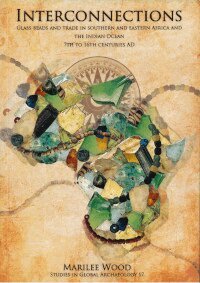
Interconnections : glass beads and trade in southern and eastern Africa and the Indian Ocean - 7th to 16th centuries AD
Häftad, Engelska, 2011
275 kr
Skickas inom 5-8 vardagar
Glass beads comprise the most frequently found evidence of trade between southern Africa and the greater Indian Ocean between the 7th and 16th centuries AD. In this study beads recovered from southern African archaeological sites are organized into series, based on morphology and chemical composition determined by LA-ICP-MS analysis. The results are used to interpret the trade patterns and partners that linked eastern Africa to the rest of the Indian Ocean world, as well as interconnections between southern Africa andEast Africa. Comprehensive reports on bead assemblages from several archaeological sites are presented, including: Mapungubwe, K2 and Schroda in the Shashe-Limpopo Basin; Chibuene in southern Mozambique; Hlamba Mlonga in eastern Zimbabwe; Sibudu Cave in KwaZulu-Natal, Kaole Ruins in Tanzania and Mahilaka in northwest Madagascar. The conclusions reached show that trade relationships and socio-political development in the south were different from those on the East Coast and that changes in bead series in the south demonstrate it was fully integrated into the cycles of the Eurasian and African world-system.
275 kr
Skickas inom 5-8 vardagar
In Andean cognition the embodiment of the past is different from many other ways to spatially relate the position of the body to time. This epistemology is for instance expressed in the Quechua word ñawpa, which signifies that the past is “in front of us;” it is known and can be seen. Seeing and knowing the past in this way reverberates within the historical ecological argument that the present is contingent with the past and is explicitly reflected within the contributions to this volume. “The Past Ahead: Language, Culture, and Identity in the Neotropics” forms a collection of reworked papers originally presented in shorter format by archaeologists, anthropologists, and linguists at the research symposium “Archaeology and Society in Bolivia” organized at Uppsala University bythe editor. The volume includes chapters by Jan-Åke Alvarsson, Lisbet Bengtsson, Roger Blench,Sergio Calla, Christian Isendahl, Carla Jaimes, John Janusek, Adriana Muñoz, Heiko Prümers,Walter Sánchez, Per Stenborg, Juan Marcelo Ticona, and Charlotta Widmark examining a series of different aspects of agriculture, complex societies, identities, landscape, languages, and urbanism in the highland and lowland Neotropics that all highlight the significance of the past in the present.
Del 21 - Studies in Global Archaeology
Archaeological and historical reconstructions of the foraging and farming communities of the Lower Zambezi : from the mid-Holocene to the second Millennium AD
Häftad, Engelska, 2015
275 kr
Skickas inom 5-8 vardagar
New archaeological surveys and excavations combined with historical and ethnographic sources, to construct a long term settlement history and historical ecology of the lower Zambezi River valley and delta region, in Mozambique. In total eight new archaeological sites have been located in archaeological surveys and two sites have been excavated. Lumbi has continous settlement from the Late Stone Age (LSA) to Early Farming Communities (EFC); representing a phase of an amalgamation of LSA communities into the EFC and Late Farming Community (LFC) occupation. The research in Sena provides new evidence of trade and treade networks from the mid second millenium AD and also of the Afro-Portuguese interactions. With these investigations, it is now possible to better understand an area, which for a long time has been neglected. The lower Zambezi River valley and delta presents a vast cultural and archaeological heritage which needs conversation work and extended programs of research.
The resilience of heritage : cultivating a future of the past : essays in honour of Professor Paul J.J. Sinclair
Inbunden, Engelska, 2018
249 kr
Skickas inom 5-8 vardagar
Throughout his career, Paul Sinclair has encouraged students to pursue a concerned archaeology that goes beyond establishing cultural chronologies to formulating critical inquiries fundamental to our world and for our future. This book explores urbanism, resilience and livelihoods, contacts and trade, and heritage and landscape, and expands the scope of archaeology, addressing past and present interactions between people and landscape.
Archaeological Perspectives on Risk and Community Resilience in the Baringo Lowlands, Kenya
Häftad, Engelska, 2018
275 kr
Skickas inom 5-8 vardagar
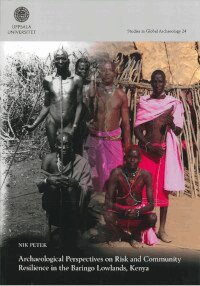
This historical ecological research provides a detailed insight into the risk avoidance and resilience building strategies in the Lake Baringo basin in Kenya through the lens of archaeology. It explores how changes in subsistence, habitation, and landscape shaped each other and how that affected the available strategies of risk avoidance and resilience building. While the focus is on the history and archaeology of the Ilchamus, a Maa community currently occupying the area, the research additionally investigated the late Holocene of the Baringo lowlands to provide a basis for the discussion on risk and resilience. A combination of remote sensing, foot surveys, excavation, and spatial statistic methods establishes a culture history for the region, showing that the Lake Baringo basin has been part of the pastoralist cultural sphere for the past three millennia and that the Rift Valley bottom possibly acted as a frontier between different archaeological cultures. By the end of the 18th or the beginning of the 19th century the area was occupied by Ilchamus. They established densely aggregated settlements and a vast irrigation system in order to enmesh themselves into the local, regional, and global exchange system. Through the exchange system, they would ensure their ‘social survival’ and build social contracts as part of their resilience building strategies, which continued to be practiced even as the Ilchamus subsistence and habitation practices as well as the political situation changed. However, as archaeological assemblages and ethnoarchaeological and historical data show, throughout their 200-year history community conformity and consolidation were central forces in the formation of an Ilchamus identity and a strong community resilience. The environmental degradation of the Lake Baringo area has been the subject of studies for almost a century with the subsistence practices of the local communities seen as a key cause for it. This research moves beyond blame but instead explores the options available and choices taken by the Ilchamus community in specific environmental and political contexts. I hope that this thesis provides some insights into new avenues of exploration of how we can develop and strengthen the resilience of vulnerable communities, such as Ilchamus.
Swahili Social Landscapes
Häftad, Engelska, 2021
460 kr
Skickas inom 5-8 vardagar
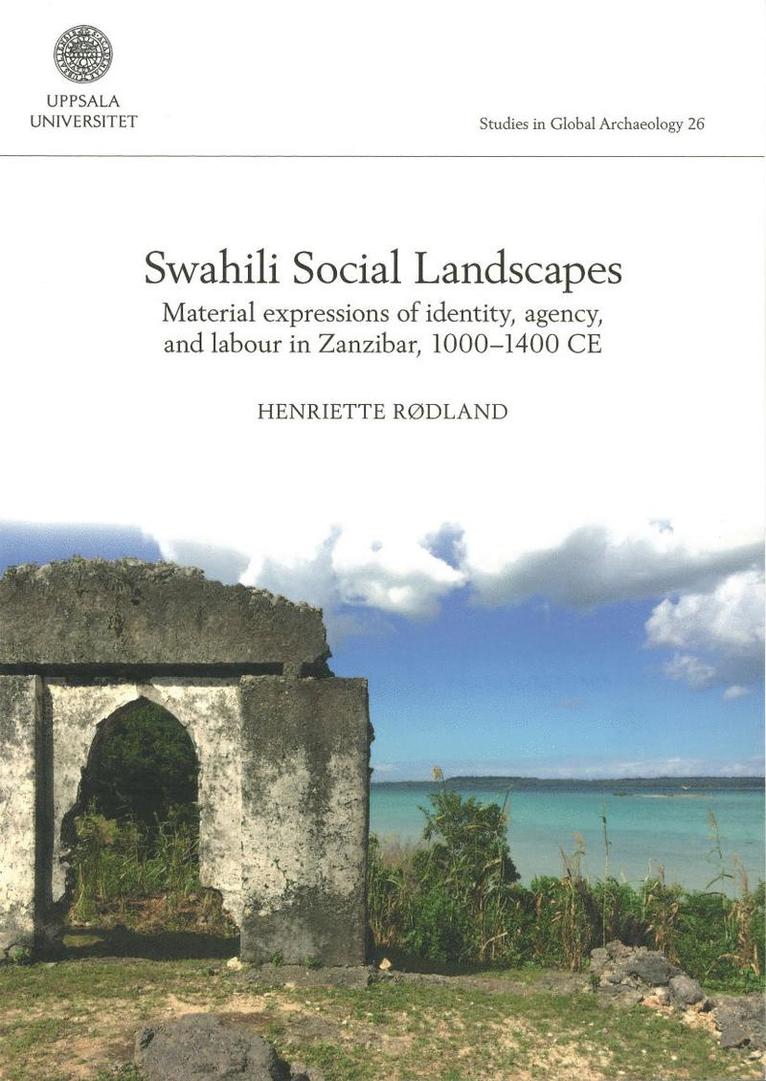
This thesis explores the social and productive landscapes of Tumbatu and Mkokotoni, two neighbouring Swahili sites in the Zanzibar Archipelago, Tanzania, which are dated to the 11th to 15th centuries CE. Emerging on the East African coast around the 7th century CE, the Swahili culture has traditionally been associated with vast Indian Ocean trade networks, stone towns, and a cosmopolitan hierarchical Islamic society, within which social status was negotiated through imported prestige goods and stone architecture. Departing from this traditional view, this thesis seeks to investigate how social identity and status were expressed and negotiated through labour, foodways, and different types of material culture, with a view to examine (and question) the hierarchies so often assumed to have been present in Swahili towns of the second millennium. Two seasons of archaeological fieldwork were carried out in Tumbatu and Mkokotoni; the former was a large town with extensive stone architecture, while the latter was a smaller settlement with few extant architectural features. Shovel Test Pit surveys covering the known habitation areas at both sites allowed for site-wide comparisons of material culture and food remains, while targeted excavations uncovered the remains of two domestic structures on Tumbatu and a glass bead workshop in Mkokotoni - the first of its kind. Analyses of the data from the two sites revealed a large and economically homogenous urban landscape, within which the two sites can be considered as two neighbourhoods of the same town, each with their own distinct role: Tumbatu was as a trading settlement with links to regional and long-distance networks, while Mkokotoni functioned as a productive area. Crucially, the sites yielded little material evidence for status distinction, indicating that trade wealth and imported material culture were not monopolised by a small group of elites or integral to maintaining social hierarchies. lnstead, this study approaches social identities and structures through the lens of activity and labour, and highlights how socio-economic differentiation was expressed and negotiated through knowledge, production, the use of space, and adherence to various group identities.
275 kr
Skickas inom 5-8 vardagar
Although researchers have made advances in understanding the meanings behid southern African San rock art over the past 25 years, there are still many unresolved issues. The most significant of these concerns the manner in which rock paintings can be used in the construcion of San history. As there is only limited chronological control over the rock art, the inclusion of San imagery into history is necessarily a theoretical concern. While previous efforts to include the art in the writing of a past have included functionalist, structuralmarxist abd structuration approaches, in this work, it is argued that body and embodiment offer better theoretical tools for integrating the images into history. These concepts are applied to newly discovered - and already known - rock painting sites from an area previously known as Nomansland, in South Africa. There are detailed historical records for this area that allow us to link these pictures to people and to known places of historical significance. Although some of the material is well-known, this work presents new archival evidence and, for the first time in southern African archaeology, shows how this material is related to a richly painted landscape. By drawing on new theoretical concerns, newly discovered images and new archival material, Nqabayo's Nomansland contributes to broader theoretical debates in southern African archaeology, anthropology, rock art research and history.
273 kr
Skickas inom 5-8 vardagar
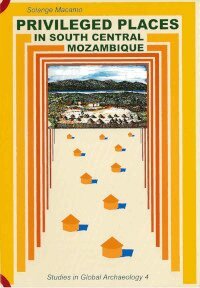
Privileged places in south central Mozambique : the archaeology of Manyikeni, Niamara, Songo and Degue-Mufa
Häftad, Engelska, 2006
249 kr
Skickas inom 5-8 vardagar
Throughout the 20th century, archaeologists in southern Africa have focused upon visible architectural features of stone built Madzimbabwe settlements as indicators of prestige and power. Solange Macamo proposes a concept of “privileged place” based on a wide range of archaeological and environmental evidence, oral and documentary historical sources. This concept includes strategic location e.g. in relation to water, soils for agriculture, pasture, resource areas for mining and trade opportunities.Two sites are used to illustrate this concept. The privileged position of the 17th century site of Degue-Mufa in the Zambezi Valley is indicated by finds such as local and Indian Ocean trade goods, whereas the 18th century stone enclosure of Songo is an example of a trading post with direct contact to the hinterland. Excavated materials and documentary sources illustrate how the meaning of privileged places changed over time.
275 kr
Skickas inom 5-8 vardagar
This study analyses the long-term interactions of social history and biophysical processes in the Chibuene landscape, the coastal plain of southern Mozambique, 400 AD to the present. The changing socio-natural relationships and preactices of environmental management are discussed on the basis of vegetation and landuse history, the archaeological material from the Chibuene site complex, written sources and interviews with the elders of the village Chibuene, adressing current debates on environmental change in the region of southern Africa and the Chibuene village itself.
273 kr
Skickas inom 5-8 vardagar