Visual Conversations in Art and Archaeology Series - Böcker
Visar alla böcker i serien Visual Conversations in Art and Archaeology Series. Handla med fri frakt och snabb leverans.
7 produkter
7 produkter
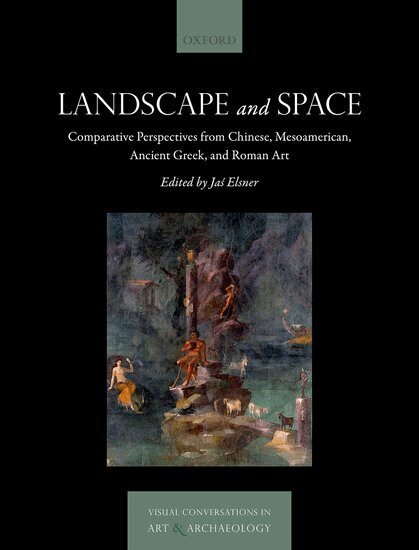
Landscape and Space
Comparative Perspectives from Chinese, Mesoamerican, Ancient Greek, and Roman Art
Inbunden, Engelska, 2021
1 057 kr
Skickas inom 7-10 vardagar
Landscape has been a key theme in world archaeology and trans-cultural art history over the last half century, particularly in the study of painting in art history and in all questions of human intervention and the placement of monuments in the natural world within archaeology. However, the representation of landscape has been rather less addressed in the scholarship of the archaeologically-accessed visual cultures of the ancient world. The kinds of reliefs, objects, and paintings discussed here have a significant purchase on matters concerned with landscape and space in the visual sphere, but were discovered within archaeological contexts and by means of excavation. Through case studies focused on the invention of wilderness imagery in ancient China, the relation of monuments to landscape in ancient Greece, the place of landscape painting in Mesoamerican Maya art, and the construction of sacred landscape across Eurasia between Stonehenge and the Silk Road via Pompeii, this book emphasises the importance of thinking about models of landscape in ancient art, as well as the value of comparative approaches in underlining core aspects of the topic. Notably, it explores questions of space, both actual and conceptual, including how space is configured through form and representation.
1 236 kr
Skickas inom 5-8 vardagar
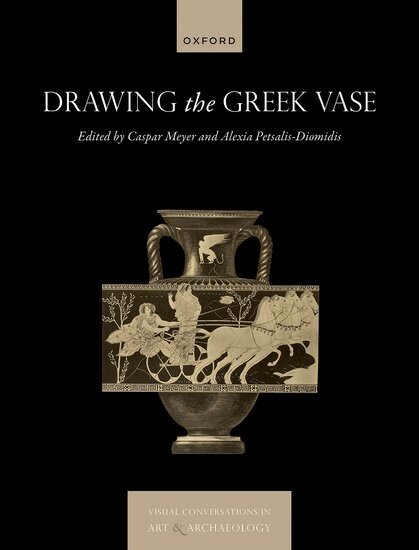
How have two-dimensional images of ancient Greek vases shaped modern perceptions of these artefacts and of the classical past? This is the first scholarly volume devoted to the exploration of drawings, prints, and photographs of Greek vases in modernity. Case studies of the seventeenth to the twentieth century foreground ways that artists have depicted Greek vases in a range of styles and contexts within and beyond academia. Questions addressed include: how do these images translate three-dimensional ancient utilitarian objects with iconography central to the tradition of Western painting and decorative arts into two-dimensional graphic images carrying aesthetic and epistemic value? How does the embodied practice of drawing enable people to engage with Greek vases differently from museum viewers, and what insights does it offer on ancient producers and users? And how did the invention of photography impact the tradition of drawing Greek vases? The volume addresses art historians of the seventeenth to twentieth centuries, archaeologists and classical reception scholars.
1 136 kr
Skickas inom 3-6 vardagar
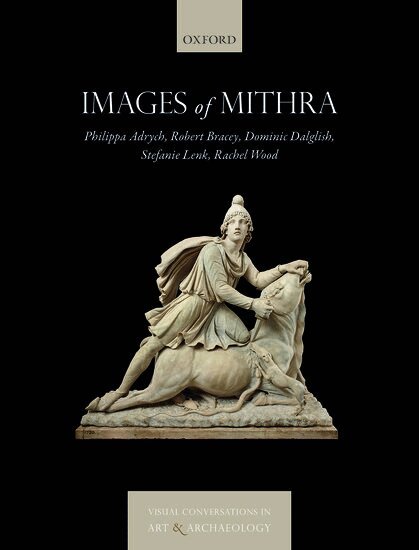
With a history of use extending back to Vedic texts of the second millennium BC, derivations of the name Mithra appear in the Roman Empire, across Sasanian Persia, and in the Kushan Empire of southern Afghanistan and northern India during the first millennium AD. Even today, this name has a place in Yazidi and Zoroastrian religion. But what connection have Mihr in Persia, Miiro in Kushan Bactria, and Mithras in the Roman Empire to one another?Over the course of the volume, specialists in the material culture of these diverse regions explore appearances of the name Mithra from six distinct locations in antiquity. In a subversion of the usual historical process, the authors begin not from an assessment of texts, but by placing images of Mithra at the heart of their analysis. Careful consideration of each example's own context, situating it in the broader scheme of religious traditions and on-going cultural interactions, is key to this discussion. Such an approach opens up a host of potential comparisons and interpretations that are often side-lined in historical accounts.What Images of Mithra offers is a fresh approach to the ways in which gods were labelled and depicted in the ancient world. Through an emphasis on material culture, a more nuanced understanding of the processes of religious formation is proposed in what is but the first part of the Visual Conversations series.
573 kr
Skickas inom 7-10 vardagar
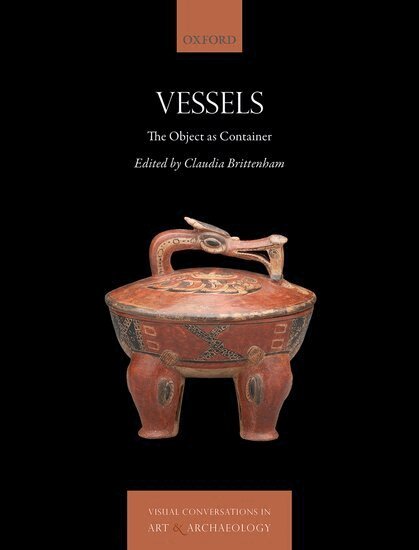
Vessels can take many forms: as objects made for human interaction and handling, they both contain and are bounded by space. They can be constructed of a wide variety of materials. But the range of vessels - across history and across cultures - are unified in their potential for practical functioning, whether or not a particular object is in fact made to be used in its particular context. In this volume, four essays by leading scholars tackle the category of the vessel in a comparative conversation between classical Greece, late antique Rome, pre-Columbian Mesoamerica, and ancient China. By considering the material properties of the object as container, the interactions between user and artefact, and the power of the vessel as both conceptual category and material metaphor, they argue that many vessels - and assemblages of vessels - were sites of remarkable workmanship and considerable ingenuity, smart and sophisticated commentaries on the very categories that they embody. In placing these individual case studies in dialogue, the volume offers an art historical and cross-cultural study of vessels in ancient societies, considering both objects and their archaeological contexts. Its aim is to make illuminating comparisons, contrasts, and interpretations by juxtaposing traditions. In keeping with the aims of the series, it serves as a model for a new kind of comparative art history, one which emphasizes material culture and is attentive to questions of evidence and method, yet remains historically grounded and contextually sensitive.
384 kr
Skickas inom 7-10 vardagar
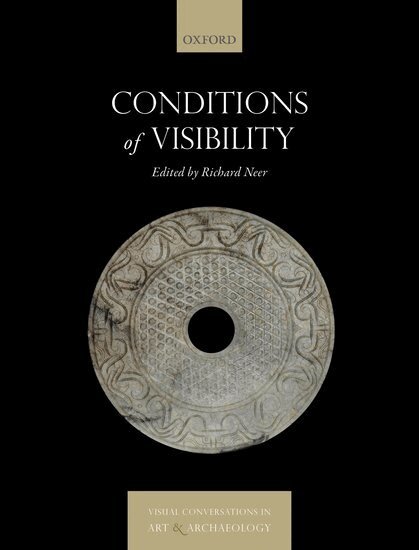
We often assume that works of visual art are meant to be seen. Yet that assumption may be a modern prejudice. The ancient world - from China to Greece, Rome to Mexico - provides many examples of statues, paintings, and other images that were not intended to be visible. Instead of being displayed, they were hidden, buried, or otherwise obscured. In this third volume in the Visual Conversations in Art & Archaeology series, leading scholars working at the intersection of archaeology and the history of art address the fundamental question of art's visibility. What conditions must be met, what has to be in place, for a work of art to be seen at all? The answer is both historical and methodological; it concerns ancient societies and modern disciplines, and encompasses material circumstances, perceptual capacities, technologies of visualization, protocols of classification, and a great deal more. The emerging field of archaeological art history is uniquely suited to address such questions. Intrinsically comparative, this approach cuts across traditional ethnic, religious, and chronological categories to confront the academic present with the historical past. The goal is to produce a new art history that is at once cosmopolitan in method and global in scope, and in doing so establish new ways of seeing - new conditions of visibility - for shared objects of study.
546 kr
Skickas inom 5-8 vardagar
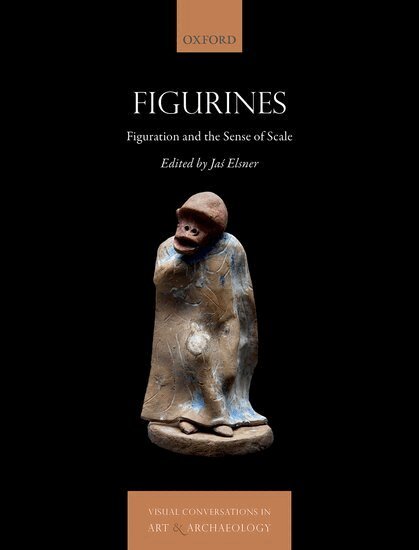
Figurines are objects of handling. As touchable objects, they engage the viewer in different ways from flat art, whether relief sculpture or painting. Unlike the voyeuristic relationship of viewing a neatly framed pictorial narrative as if from the outside, the viewer as handler is always potentially and without protection within the narrative of figurines. As such, they have potential for a potent, even animated, agency in relation to those who use them.This volume concerns figurines as archaeologically-attested materials from literate cultures with surviving documents that have no direct links of contiguity, appropriation, or influence in relation to each other. It is an attempt to put the category of the figurine on the table as a key conceptual and material problematic in the art history of antiquity. It does so through comparative juxtaposition of close-focused chapters drawn from deep art-historical engagement with specific ancient cultures - Chinese, pre-Columbian Mesoamerican, and Greco-Roman. It encourages comparative conversation across the disciplines that constitute the art history of the ancient world through finding categories and models of discourse that may offer fertile ground for comparison and antithesis. It extends the rich and astute literature on prehistoric figurines into understanding the figurine in historical contexts, where literary texts and documents, inscriptions, or surviving terminologies can be adduced alongside material culture. At stake are issues of figuration and anthropomorphism, miniaturization and portability, one-off production and replication, and substitution and scale at the interface of archaeology and art history.
1 200 kr
Skickas inom 5-8 vardagar
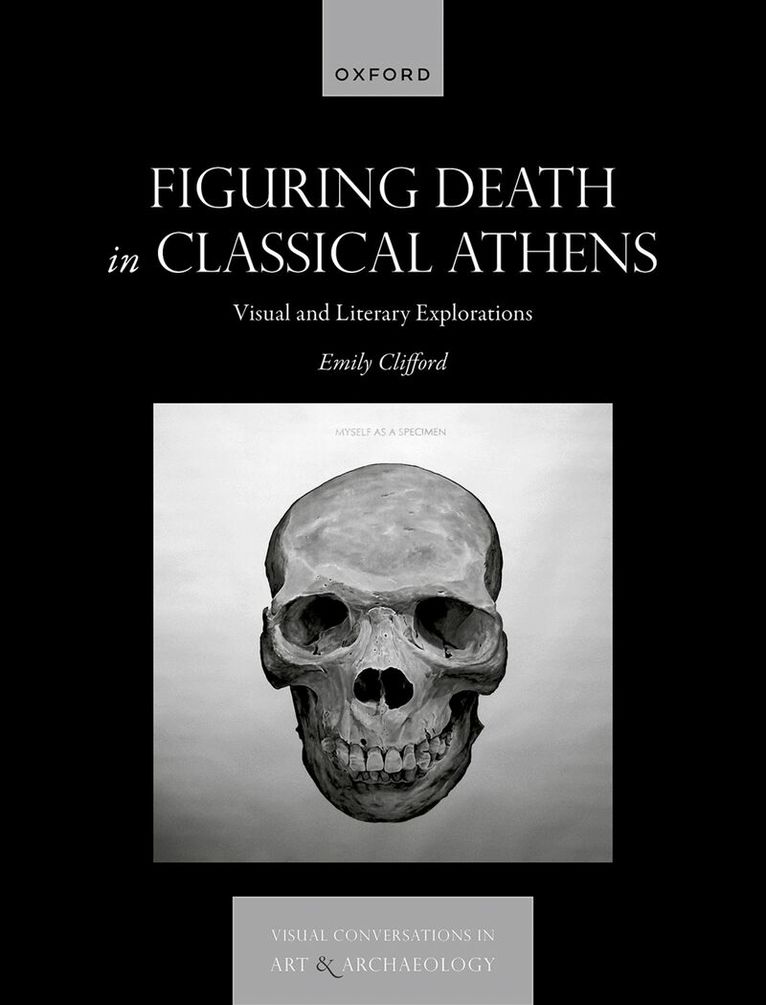
Figuring Death in Classical Athens puts art and literature in conversation to explore how ancient Athenians grappled with the uncertainties of death. How did objects and texts generate thinking about what death is and might be like? Were Athenians aware of the imaginative frameworks that underpinned their thinking? Did they worry not just about death, but whether they could figure it out?Death in the ancient world has long been a subject of interest. Studies abound that examine its social and ideological dimensions, funerary practices, and changing attitudes and beliefs. This book takes a fresh approach, cutting across sub-disciplines (art, text, philosophy, and so on) to build a picture of how ancient art and literature got their audiences thinking-thinking not just about death but about its knowability. Whether in the theatre, at the symposium, or on the Acropolis, representations of death challenged Athenians by presenting problems of exteriority (how can the living know what dying might be like?) and particularity (can one person's experience hold for another? is death truly a 'leveller'?).The material covered is wide ranging. Unlike other studies, which often focus on either art or text and on one category of objects or one literary genre, the book pulls together exemplary texts and objects (including Plato, drinking cups, Sophocles, temple sculpture, and Thucydides) and makes each accessible to readers from multiple sub-disciplines and, indeed, from beyond Classics.It will be critical reading for those interested in ancient attitudes to death, as well as those interested in cultural imagination and intellectual history. As a multi-media study, it will appeal to those working on ancient image and text (and their intersection), and, more broadly, to those in other disciplines working on visuality, mediality, materiality, and culturally situated ideas.