Richard Neer – författare
Visar alla böcker från författaren Richard Neer. Handla med fri frakt och snabb leverans.
11 produkter
11 produkter
E-bok
PDF, Engelska, 2019268 kr
Läs direkt efter köp
We often assume that works of visual art are meant to be seen. Yet that assumption may be a modern prejudice. The ancient world - from China to Greece, Rome to Mexico - provides many examples of statues, paintings, and other images that were not intended to be visible. Instead of being displayed, they were hidden, buried, or otherwise obscured. In this third volume in the Visual Conversations in Art & Archaeology series, leading scholars working at the intersection of archaeology and the history of art address the fundamental question of art''s visibility. What conditions must be met, what has to be in place, for a work of art to be seen at all? The answer is both historical and methodological; it concerns ancient societies and modern disciplines, and encompasses material circumstances, perceptual capacities, technologies of visualization, protocols of classification, and a great deal more. The emerging field of archaeological art history is uniquely suited to address such questions. Intrinsically comparative, this approach cuts across traditional ethnic, religious, and chronological categories to confront the academic present with the historical past. The goal is to produce a new art history that is at once cosmopolitan in method and global in scope, and in doing so establish new ways of seeing - new conditions of visibility - for shared objects of study.
E-bok
Engelska, 2019268 kr
Läs direkt efter köp
We often assume that works of visual art are meant to be seen. Yet that assumption may be a modern prejudice. The ancient world - from China to Greece, Rome to Mexico - provides many examples of statues, paintings, and other images that were not intended to be visible. Instead of being displayed, they were hidden, buried, or otherwise obscured. In this third volume in the Visual Conversations in Art & Archaeology series, leading scholars working at the intersection of archaeology and the history of art address the fundamental question of art''s visibility. What conditions must be met, what has to be in place, for a work of art to be seen at all? The answer is both historical and methodological; it concerns ancient societies and modern disciplines, and encompasses material circumstances, perceptual capacities, technologies of visualization, protocols of classification, and a great deal more. The emerging field of archaeological art history is uniquely suited to address such questions. Intrinsically comparative, this approach cuts across traditional ethnic, religious, and chronological categories to confront the academic present with the historical past. The goal is to produce a new art history that is at once cosmopolitan in method and global in scope, and in doing so establish new ways of seeing - new conditions of visibility - for shared objects of study.
Inbunden, Engelska, 2019
405 kr
Skickas inom 7-10 vardagar
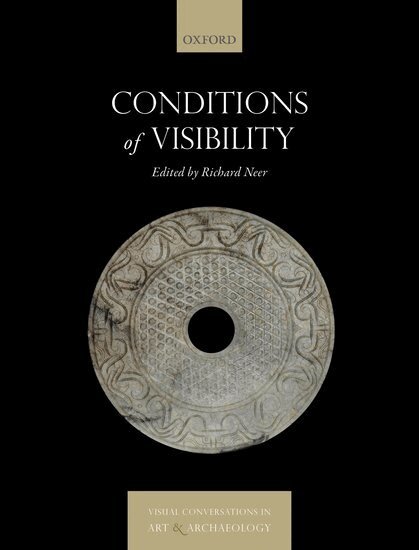
We often assume that works of visual art are meant to be seen. Yet that assumption may be a modern prejudice. The ancient world - from China to Greece, Rome to Mexico - provides many examples of statues, paintings, and other images that were not intended to be visible. Instead of being displayed, they were hidden, buried, or otherwise obscured. In this third volume in the Visual Conversations in Art & Archaeology series, leading scholars working at the intersection of archaeology and the history of art address the fundamental question of art's visibility. What conditions must be met, what has to be in place, for a work of art to be seen at all? The answer is both historical and methodological; it concerns ancient societies and modern disciplines, and encompasses material circumstances, perceptual capacities, technologies of visualization, protocols of classification, and a great deal more. The emerging field of archaeological art history is uniquely suited to address such questions. Intrinsically comparative, this approach cuts across traditional ethnic, religious, and chronological categories to confront the academic present with the historical past. The goal is to produce a new art history that is at once cosmopolitan in method and global in scope, and in doing so establish new ways of seeing - new conditions of visibility - for shared objects of study.
Inbunden, Engelska, 2010
857 kr
Skickas inom 5-8 vardagar
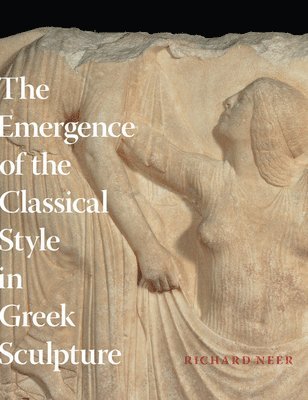
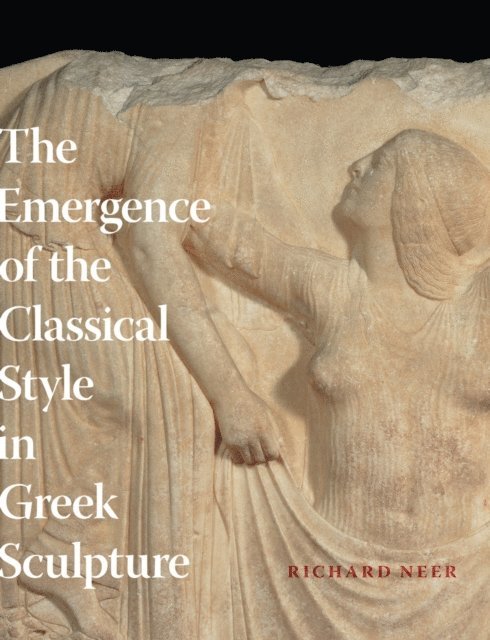
In the fifth century BCE, an artistic revolution occurred in Greece, as sculptors developed new ways of representing bodies, movement, and space. The resulting 'classical' style would prove influential for centuries to come. Modern scholars have traditionally described the emergence of this style as a steady march of progress, culminating in masterpieces like the Parthenon sculptures. But this account assumes the impossible: that the early Greeks were working tirelessly toward a style of which they had no prior knowledge. In this ambitious work, Richard Neer draws on recent work in art history, archaeology, literary criticism, and art theory to rewrite the story of Greek sculpture. He provides new ways to understand classical sculpture in Greek terms, and carefully analyzes the relationship between political and stylistic histories. A much-heralded project, "The Emergence of the Classical Style in Greek Sculpture" represents an important step in furthering our understanding of the ancient world.
E-bok
PDF, Engelska, 2010896 kr
Läs direkt efter köp
In this wide-ranging study, Richard Neer offers a new way to understand the epoch-making sculpture of classical Greece. Working at the intersection of art history, archaeology, literature, and aesthetics, he reveals a people fascinated with the power of sculpture to provoke wonder in beholders. Wonder, not accuracy, realism, naturalism or truth, was the supreme objective of Greek sculptors. Neer traces this way of thinking about art from the poems of Homer to the philosophy of Plato. Then, through meticulous accounts of major sculpture from around the Greek world, he shows how the demand for wonder-inducing statues gave rise to some of the greatest masterpieces of Greek art. Rewriting the history of Greek sculpture in Greek terms and restoring wonder to a sometimes dusty subject, The Emergence of the Classical Style in Greek Sculpture is an indispensable guide for anyone interested in the art of sculpture or the history of the ancient world.
Inbunden, Engelska, 2025
479 kr
Skickas inom 5-8 vardagar
Neer uncovers a key moment in the history of early modern art, when painting was understood to be a tool for self-transformation and for living a philosophical life. In this wide-ranging study, Richard Neer shows how French painters of the seventeenth century developed radically new ways to connect art, perception, and ethics. Cutting across traditional boundaries of classicism and realism, Neer addresses four case studies: Nicolas Poussin, renowned for marrying ancient philosophy and narrative painting; Louise Moillon, who pioneered French still life in the 1630s; Georges de La Tour, a painter of intense and introspective nocturnes; and the Brothers Le Nain, specialists in genre and portraiture who inspired Courbet, Manet, and other painters of modern life. Setting these artists in dialogue with Montaigne, Descartes, Pascal, and others, ranging from the studios of Rome to the streets of Paris, this book provides fresh accounts of essential artworks—some well-known, others neglected—and new ways to approach the relation of art, theory, and daily life.
Häftad, Engelska, 2001
280 kr
Skickas inom 3-6 vardagar
E-bok
Engelska11 kr
Läs direkt efter köp
E-bok
Engelska11 kr
Läs direkt efter köp
E-bok
Engelska10 kr
Läs direkt efter köp
E-bok
Engelska, 2001185 kr
Läs direkt efter köp
"It was all so honest, before the end of our collective innocence. Top Forty jocks screamed and yelled and sounded mightier than God on millions of transistor radios. But on FM radio it was all spun out for only you. On a golden web by a master weaver driven by fifty thousand magical watts of crystal clear power . . . before the days of trashy, hedonistic dumbspeak and disposable three-minute ditties . . . in the days where rock lived at many addresses in many cities."–from FMAs a young man, Richard Neer dreamed of landing a job at WNEW in New York–one of the revolutionary FM stations across the country that were changing the face of radio by rejecting strict formatting and letting disc jockeys play whatever they wanted. He felt that when he got there, he’d have made the big time. Little did he know he’d have shaped rock history as well.FM: The Rise and Fall of Rock Radio chronicles the birth, growth, and death of free-form rock-and-roll radio through the stories of the movement’s flagship stations. In the late sixties and early seventies–at stations like KSAN in San Francisco, WBCN in Boston, WMMR in Philadelphia, KMET in Los Angeles, WNEW, and others–disc jockeys became the gatekeepers, critics, and gurus of new music. Jocks like Scott Muni, Vin Scelsa, Jonathan Schwartz, and Neer developed loyal followings and had incredible influence on their listeners and on the early careers of artists such as Bruce Springsteen, Genesis, the Cars, and many others.Full of fascinating firsthand stories, FM documents the commodification of an iconoclastic phenomenon, revealing how counterculture was coopted and consumed by the mainstream. Richard Neer was an eyewitness to, and participant in, this history. FM is the tale of his exhilarating ride.