Leslie Kurke – författare
Visar alla böcker från författaren Leslie Kurke. Handla med fri frakt och snabb leverans.
10 produkter
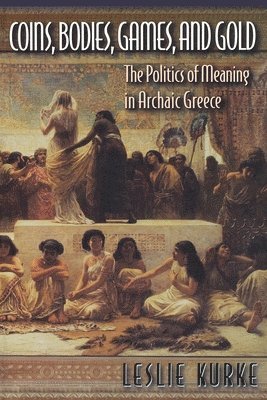
Coins, Bodies, Games, and Gold
The Politics of Meaning in Archaic Greece
Av Leslie Kurke
Häftad, 1999
844 kr
Lägg i varukorg
The invention of coinage in ancient Greece provided an arena in which rival political groups struggled to imprint their views on the world. Here Leslie Kurke analyzes the ideological functions of Greek coinage as one of a number of symbolic practices that arise for the first time in the archaic …
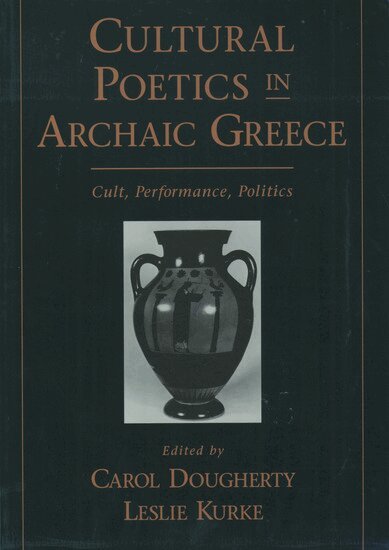
Cultural Poetics in Archaic Greece
Cult, Performance, Politics
Av Carol Dougherty, Leslie Kurke
Häftad, 1998
1938 kr
Lägg i varukorg
This is a paperback reprint of a hardback originally published by Cambridge University Press in 1993, and derived from a seminal conference held at Wellesley in 1990. Among the scholarly community, the book is generally regarded as the first critical milestone in the cultural poetics movement, …
Cultural Poetics in Archaic Greece
Cult, Performance, Politics
Av Leslie Kurke, Carol Dougherty
E-bok, 1998
1237 kr
Lägg i varukorg
This volume brings together essays by archaeologists, historians, and literary scholars in a comprehensive examination of the Greek archaic age. A time of dramatic and revolutionary change when many of the institutions and thought patterns that would shape Greek culture evolved, this period has …
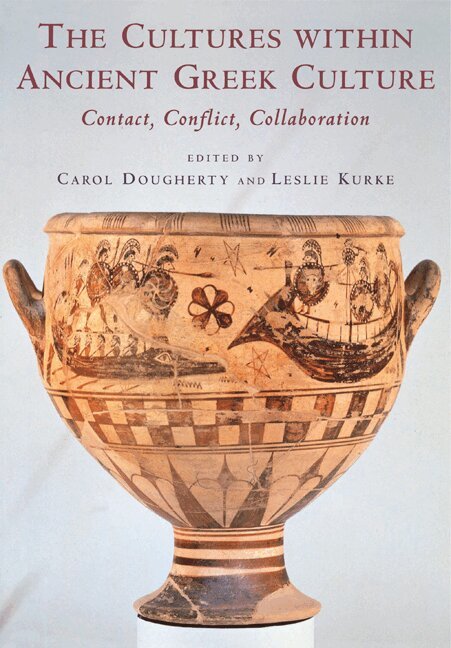
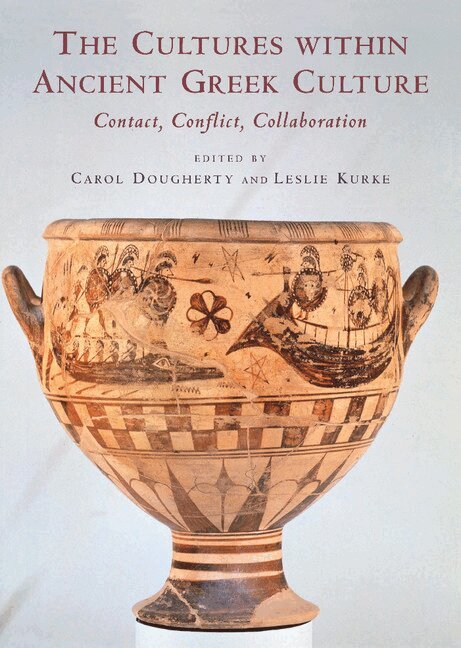
The Cultures within Ancient Greek Culture
Contact, Conflict, Collaboration
Av Carol Dougherty, Leslie Kurke
Häftad, 2011
842 kr
Lägg i varukorg
Originally published in 2003, The Cultures within Ancient Greek Culture challenges the conventional perception of ancient Greece as the paradigm for unified models of culture. It offers an alternative view of archaic and classical Greece, one in which the contact, conflict and collaboration of a …
The Cultures within Ancient Greek Culture
Contact, Conflict, Collaboration
Av Carol Dougherty, Leslie Kurke
Inbunden, 2003
1872 kr
Lägg i varukorg
Originally published in 2003, The Cultures within Ancient Greek Culture challenges the conventional perception of ancient Greece as the paradigm for unified models of culture. It offers an alternative view of archaic and classical Greece, one in which the contact, conflict and collaboration of a …
Aesopic Conversations
Popular Tradition, Cultural Dialogue, and the Invention of Greek Prose
Av Leslie Kurke
Häftad, 2010
578 kr
Lägg i varukorg
Examining the figure of Aesop and the traditions surrounding him, Aesopic Conversations offers a portrait of what Greek popular culture might have looked like in the ancient world. What has survived from the literary record of antiquity is almost entirely the product of an elite of birth, wealth, …
Coins, Bodies, Games, and Gold
The Politics of Meaning in Archaic Greece
Av Leslie Kurke
E-bok, 2021
1175 kr
Lägg i varukorg
The invention of coinage in ancient Greece provided an arena in which rival political groups struggled to imprint their views on the world. Here Leslie Kurke analyzes the ideological functions of Greek coinage as one of a number of symbolic practices that arise for the first time in the archaic …
Aesopic Conversations
Popular Tradition, Cultural Dialogue, and the Invention of Greek Prose
Av Leslie Kurke
E-bok, 2010
788 kr
Lägg i varukorg
Examining the figure of Aesop and the traditions surrounding him, Aesopic Conversations offers a portrait of what Greek popular culture might have looked like in the ancient world. What has survived from the literary record of antiquity is almost entirely the product of an elite of birth, wealth, …
Pindar, Song, and Space
Towards a Lyric Archaeology
Inbunden, 2019
738 kr
Lägg i varukorg
A groundbreaking study of the interaction of poetry, performance, and the built environment in ancient Greece.Winner of the PROSE Award for Best Book in Classics by the Association of American PublishersIn this volume, Richard Neer and Leslie Kurke develop a new, integrated approach to classical …