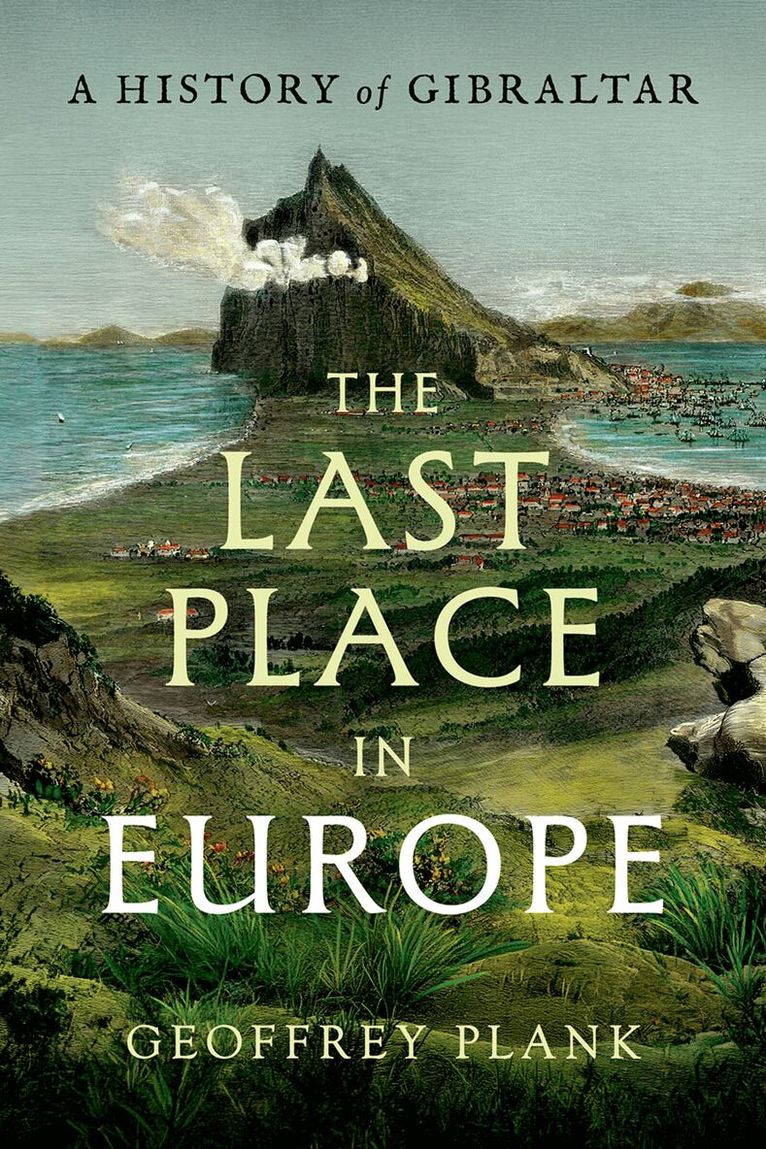
Inbunden, Engelska, 2027
The Last Place in Europe
456 kr
Beställningsvara. Skickas inom 3-6 vardagar. Fri frakt över 249 kr.
Beskrivning
A sweeping history of the tiny but politically significant territory of Gibraltar from antiquity to the presentSince classical times, sailors, poets, and geographers have seen Gibraltar as a natural monument separating the Mediterranean from the Atlantic and Europe from Africa. Ancient Greeks and Romans recounted how the hero Hercules, sent on a mission to the end of the Earth, discovered an isthmus linking Africa and Europe. He destroyed it, leaving Gibraltar and an adjacent peak in Africa as the only remaining fragments of the demolished land bridge. By 1492, the strait between the continents was associated with the separation of faiths, serving as a boundary line between Christendom and Islam. After Spain's expulsions of Muslims and Jews, Gibraltar became, in the eyes of the Spanish, a fortress city on the frontier of European Christendom. The Anglo-Dutch seizure of Gibraltar in 1704 created a new border cutting the small peninsula off from Spain. Today, Gibraltar is the only territory in Europe included on the United Nations list of non-self-governing territories, and Britain and Spain continue to make claims to its few square miles.The Last Place in Europe examines Gibraltar's history from antiquity to the present, focusing on how the peninsula's dramatic geographical position has shaped mythologies, religious animosities, scientific theories, migration patterns, trade, international politics, and labor relations. Gibraltar has always belonged as much to the Atlantic world as to the Mediterranean. Geoffrey Plank traces Gibraltar's commercial ties to Portuguese, Spanish, and British colonies in Africa and the Americas. After Britain seized Gibraltar early in the eighteenth century, the town and garrison became a meeting place for merchants, missionaries, refugees, sailors, scientists, and soldiers from across the British Empire. Plank recounts notable military events during the American Revolution, the Napoleonic Wars, and World War II. Legacies of past conflict have inflected Gibraltar's history through the two world wars, the collapse of the British Empire, the Spanish blockade from 1969 to 1982, Britain's withdrawal from the European Union, and Gibraltar's development as a center of off-shore international finance.With its dramatic history at land and sea, The Last Place in Europe sets a new standard for work on this area of outsized significance as a crossroads of Europe, Africa, and the Atlantic world.
Produktinformation
- Utgivningsdatum: 2027-01-14
- Mått: 166 x 238 x 28 mm
- Vikt: 676 g
- Format: Inbunden
- Språk: Engelska
- Antal sidor: 368
- Förlag: OUP USA
- ISBN: 9780197673362
Utforska kategorier
Betyg & recensioner
0 recensioner
Inga recensioner tillgängliga.