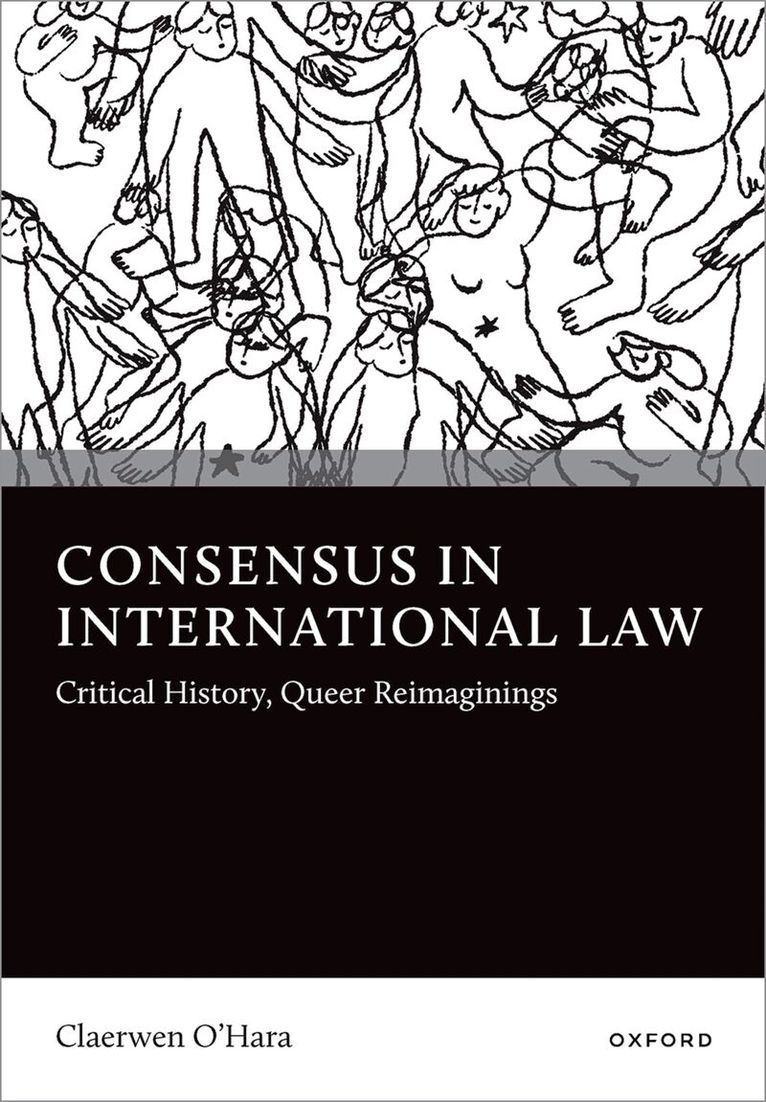
Inbunden, Engelska, 2026
Consensus in International Law
1384 kr
Beställningsvara. Skickas inom 5-8 vardagar. Fri frakt över 249 kr.
Beskrivning
Consensus in International Law: Critical History, Queer Reimaginings critically explores the idea of 'consensus' by retracing its history in two settings: in consensus decision-making in the General Agreement on Tariffs and Trade and World Trade Organisation, and the European Court of Human Rights' use of 'European consensus' as a method of treaty interpretation. Employing a unique theoretical framework informed by queer theory and jurisdictional thinking, the book argues that consensus in international law is best understood as a technique of authorization, which functions by gesturing towards a widespread, yet unfixed, level of agreement.Claerwen O'Hara demonstrates that the gesture towards widespread agreement works to imbue institutional practices with an air of equality and project visions of unity onto a decision, helping to ground the authority of international institutions and their legal worlds. At the same time, the variable nature of the agreement means that the idea of consensus can be applied flexibly, including in situations in which no such equality or unity exists. Consequently, despite the positive discourses surrounding the idea of consensus in international law, it has often worked to suppress difference and dissent and uphold existing power relations. The book suggests that this gap between discourse and reality has been a contributing factor in some of the problems facing international law and its institutions today. To overcome these problems, Consensus in International Law calls for a shift in imagination in which the idea of the world or a particular region routinely reaching a widespread agreement is decentred in international law. In its place, the book proposes a vision of the international as a 'meeting place' for a plurality of peoples and their laws.
Produktinformation
- Utgivningsdatum: 2026-09-08
- Mått: 162 x 239 x 19 mm
- Vikt: 555 g
- Format: Inbunden
- Språk: Engelska
- Antal sidor: 272
- Förlag: OUP OXFORD
- ISBN: 9780198948612
Utforska kategorier
Betyg & recensioner
0 recensioner
Inga recensioner tillgängliga.