

Immigrants and National Identity in Europe
2 467 kr
Beställningsvara. Skickas inom 10-15 vardagar. Fri frakt över 249 kr.
Fler format och utgåvor
Beskrivning
The author reviews main theories of nationalism and criticises their lack of elaboration on the role of 'Others' in nation formation. Drawing upon anthropological, sociological and social psychological perspectives, she develops a dynamic, relational perspective for the study of national theory.
Produktinformation
Utforska kategorier
Recensioner i media
Innehållsförteckning
Hoppa över listan







Mer från samma författare
Circular Migration between Europe and its Neighbourhood
Anna Triandafyllidou, Anna Triandafyllidou
Inbunden, 2013
1 890 kr
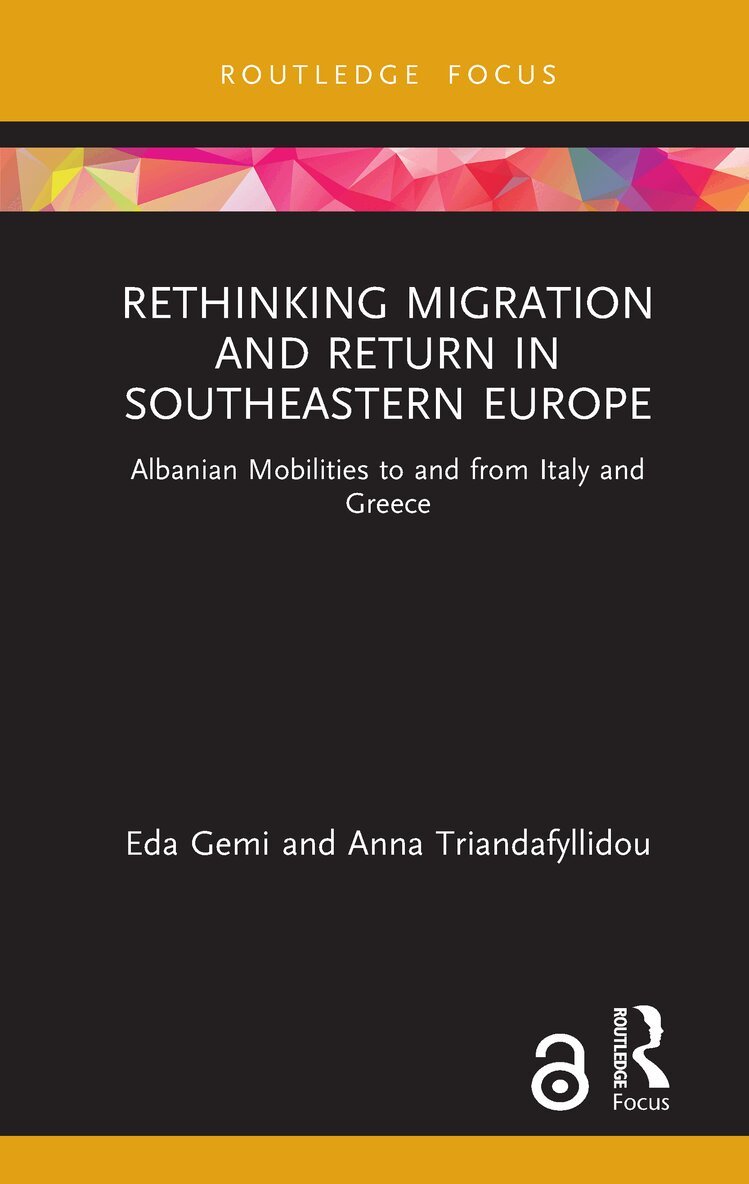
Rethinking Migration and Return in Southeastern Europe
Eda Gemi, Anna Triandafyllidou
Inbunden, 2021
980 kr
Routledge Handbook on the Governance of Religious Diversity
Anna Triandafyllidou, Tina Magazzini
Inbunden, 2020
3 726 kr
Routledge Handbook on the Governance of Religious Diversity
Anna Triandafyllidou, Tina Magazzini
Häftad, 2022
736 kr
Hoppa över listan









Mer från samma serie
Equine Cultures in Transition
Jonna Bornemark, Petra Andersson, Ulla Ekström von Essen
Inbunden, 2019
2 696 kr
Equine Cultures in Transition
Jonna Bornemark, Petra Andersson, Ulla Ekström von Essen
Häftad, 2020
779 kr
Hoppa över listan









Du kanske också är intresserad av
- 10% rabatt på allt
- 10% rabatt på allt
- Signerad!
Del 3
- 10% rabatt på allt
Del 7
- 10% rabatt på allt
Del 6
- 10% rabatt på allt
Del 11
- 10% rabatt på allt
Del 3