Inbunden, Engelska, 1994
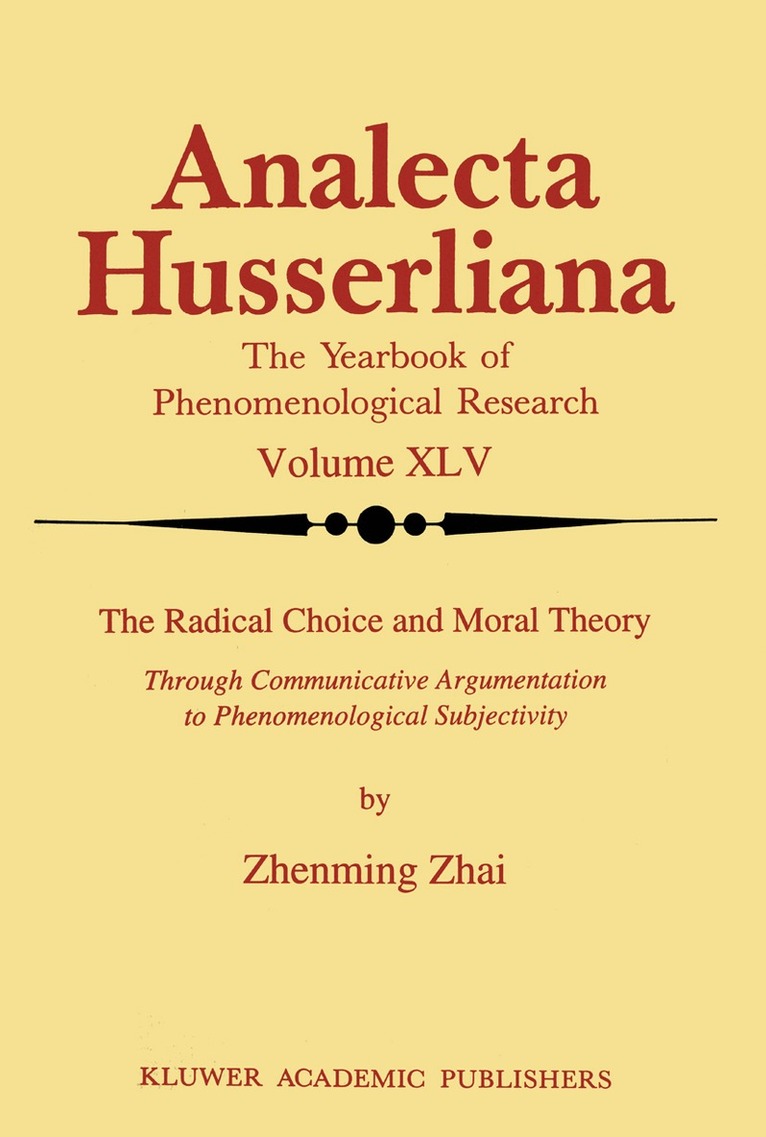
Radical Choice and Moral Theory
1102 kr
Skickas inom 10-15 vardagar
Beskrivning
In a crisp, original style the author approaches the crucial question of moral theory, the `is--ought' problem via communicative argumentation. Moving to the end of Habermas's conception of the communicative action, he introduces the concept of `radical choice' as the key to the transition from the descriptive to the normative. Phenomenological subjectivity of the intersubjective life-world is being vindicated as the `arch-value' of all derivative values, or the first principle for all normative precepts. With exceptional acumen and mastery of the philosophical argument, the author -- a young native Chinese lately trained in a Western university -- delineates a fascinating route along which the philosophical question of justification raised in the analytic tradition can be answered on the basis of phenomenology. A noteworthy contribution to the interplay between the Anglo--American and Continental schools of philosophy.
Produktinformation
- Utgivningsdatum: 1994-10-31
- Mått: 152 x 229 x 17 mm
- Vikt: 437 g
- Format: Inbunden
- Språk: Engelska
- Serie: Analecta Husserliana
- Antal sidor: 194
- Upplaga: 1994
- Förlag: Kluwer Academic Publishers
- ISBN: 9780792328919
Utforska kategorier
Betyg & recensioner
0 recensioner
Inga recensioner tillgängliga.