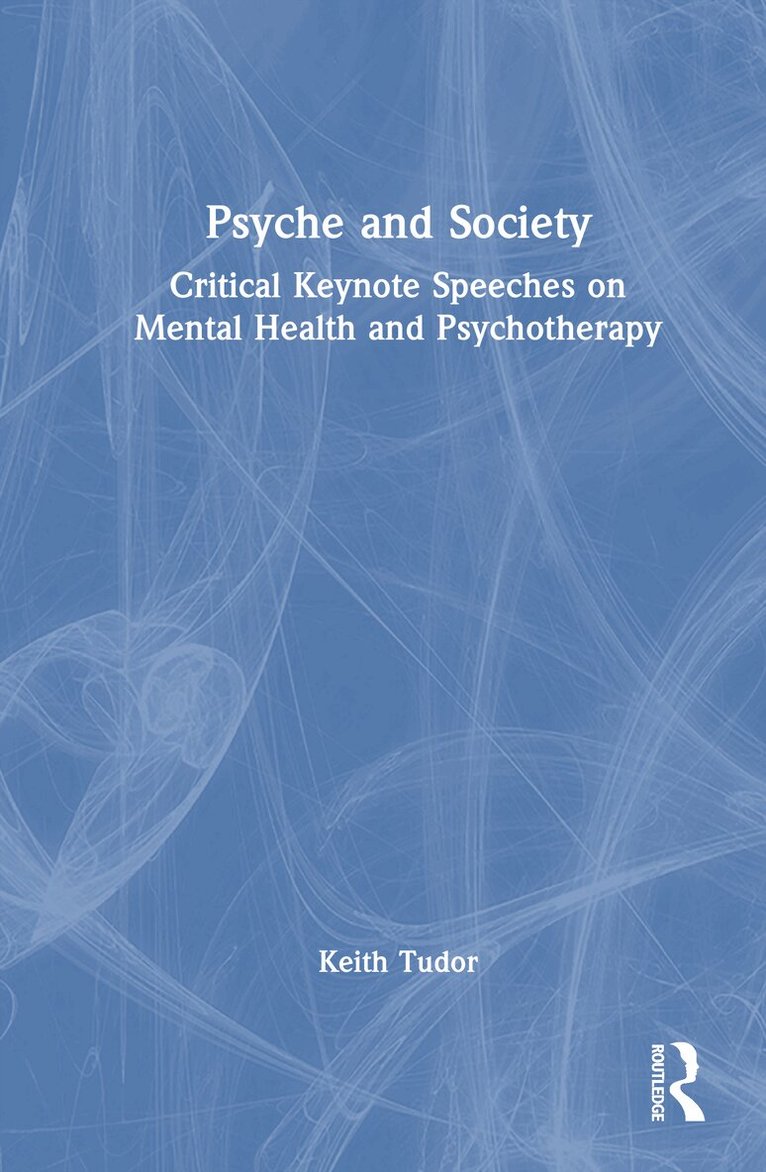
“Spanning more than a quarter century of seminal contributions from Professor Keith Tudor, this collection of warm and engaging keynote addresses is no mere nostalgia trip. It renews a critical call to action in mental health promotion for collective, prosocial, and salutogenic approaches to both health promotion and therapy. For years, public mental health efforts have been eroded by public policy subservient to neoliberal values and notions of ‘healthism’ that overly emphasises personal responsibility, and culpability, neglecting both the influence and potential of community and culture. In critically examining the assumptions, politics, and fundamentals of mental health itself, as well as health promotion and therapeutic approaches, Professor Tudor reminds us that humans are inherently social beings, with capacity for growth and change that is intrinsically holistic, interdependent, and endlessly fascinating. Professor Tudor invites us along his own long and distinguished journey of critical thought, sounding a clarion call to anyone committed to the betterment of wellbeing to remember that this work must be collective and that we are inevitably, and necessarily, a community.”Ciaran Fox, Public Health Specialist | Mātanga Hauora Tūmatanui, National Public Health Service | Waitaha Te Waipounamu, Christchurch, Aotearoa New Zealand“Keith Tudor’s eloquent anthology traverses a quarter-century of transformative thought in mental health, transactional analysis, person-centred psychology, and politics and psychotherapy. Through still contemporary critique and evocative analogies, Tudor reclaims mental health as a positive, communal process; interrogates power relations; and repositions psychotherapy within its wider cultural and political context. This vital volume challenges the individualistic model of the individual; invites practitioners toward greater openness and critical thinking; and reassures us of the enduring value of connectedness and community in therapeutic work. The book’s cover is graced by the image of a quilt made by Louise Embleton Tudor, Keith’s wife in celebration of his writing. This also acts as a metaphor which beautifully captures the complexity of both mental health and therapy as positive, social, and deeply contextual processes. Keith’s perspective, which views clients as both autonomous and homonomous as well as inherently self-healing while also being broken, and views therapy as co-creative aligns deeply with my Māori heritage grounded in we-ness. Keith’s unwavering integrity and passionate critique of the ‘psy’ professions; his challenge of theoretical orthodoxy; and his call to engage with and politically address social injustice make this volume an essential and stimulating read for all committed to transformative therapeutic practice.”Kara Bragg (Ngāi Tahu, Kāti Mamoe, Ngāi Te Ruahikihiki), Certified Transactional Analyst, London, UK“Reading Critical Mental Health and Psychotherap is like entering a lively, rigorous, and generous conversation that refuses complacency. Keith Tudor reminds us that caring for the human soul is inherently political. Each part of the book invites critical reflection, awakens creativity, and calls us to nurture the conditions by which genuine growth can emerge. This collection reaffirms that therapy, at its best, is both an act of liberation and a call for congruence between who we are and how we serve. A vital read for anyone committed to the transformation of our field and the humanity at its core.”Vanessa Ramos Fernandes, Counsellor, a Brazilian immigrant journeying in Aotearoa New Zealand“Professor Keith Tudor’s collection of keynote speeches is lively and timely. He takes the reader through an informative and insightful quarter century perspective on psychotherapy and mental health. The speeches are a pleasure to read, with his characteristic warmth and rigour emanating from the pages. Consistently and courageously, Tudor challenges psychotherapy with ‘ideas from the periphery’: activism, ecological and social justice, radical collectivity, and a critique of power. In this global moment of increasing ecological and civil crises, there is an urgent need for these peripheral ideas to enter mainstream psychotherapeutic thought and practice, and Tudor provides wise guidance on how the past 25 years can inform the next quarter of a century. Reading this book as an early-career psychotherapist, I am strengthened to respond to the vision Tudor offers by picking up that torch and ‘walking backwards into the future’.”Cordelia Huxtable is an Aotearoa born psychotherapist living and working in Toronto/Tkaronto, Canada. She practices in the intersections of somatic, relational, and climate-aware psychotherapy.