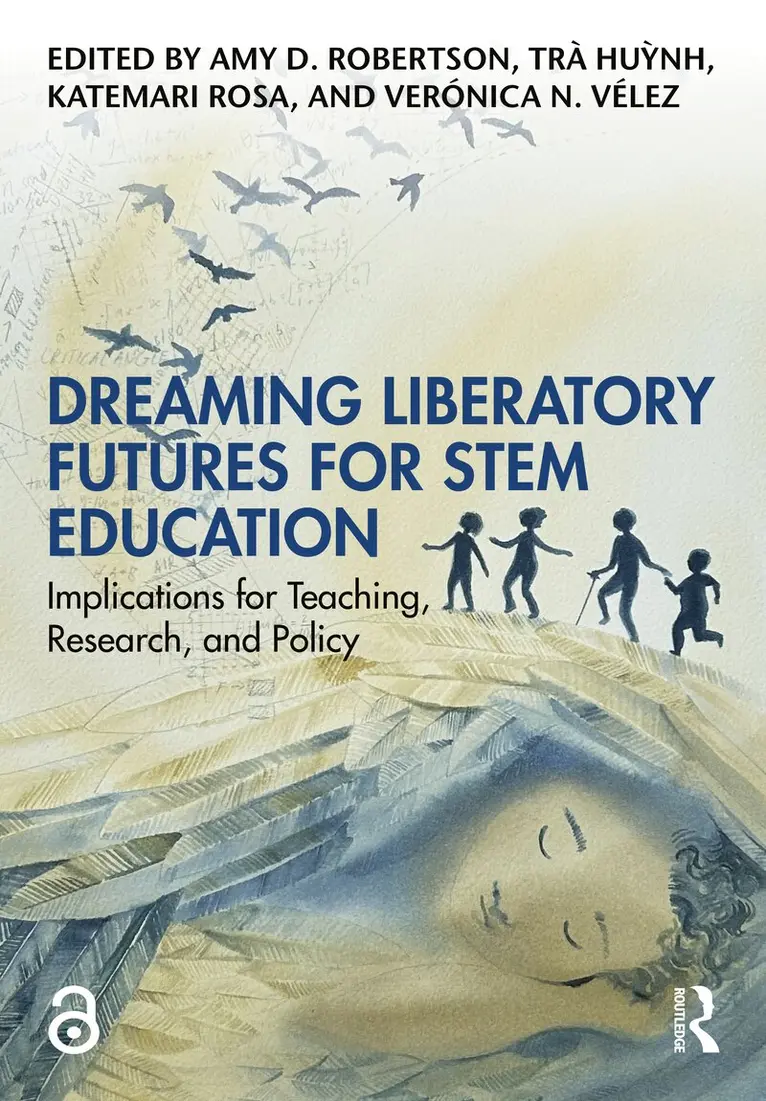
Inbunden, Engelska, 2026
Dreaming Liberatory Futures for STEM Education
Av Amy D. Robertson, Trà Huỳnh, Katemari Rosa, Verónica N. Vélez
2401 kr
Kommande
Beskrivning
This collection articulates the ways historically predominant STEM education practices uphold systemic modes of oppression. It gathers editors and contributors who are experienced in empirical and theoretical methods and represent a variety of minoritized lived experiences. Together they consider possible pathways to rework STEM education into truly equitable and just pedagogies. Chapters examine persisting systems of domination such as white supremacy, ableism, cisheteropatriarchy, and fatphobia. Each contributor draws from theoretical perspectives, sources of data, and their lived experiences to recount these inequities, and discuss moving beyond current diversity, equity, and inclusion discourses to begin to transform STEM education. They outline entry points of curricular design, classroom instruction, student support and mentoring, new methodologies, technology, and learning communities. All content centers around the intersectional liberation of STEM education and offers specific means to achieve this goal. A key text for STEM educators, education researchers, and educational policymakers, this book can be used in advanced undergraduate and postgraduate courses across STEM teacher education, critical pedagogy in schools of education, or upper-level STEM majors.
Produktinformation
- Utgivningsdatum: 2026-12-09
- Mått: 178 x 254 x undefined mm
- Format: Inbunden
- Språk: Engelska
- Antal sidor: 164
- Förlag: Taylor & Francis Ltd
- ISBN: 9781041141082
Utforska kategorier
Betyg & recensioner
0 recensioner
Inga recensioner tillgängliga.