Beställningsvara. Skickas inom 10-15 vardagar. Fri frakt över 249 kr.
Beskrivning
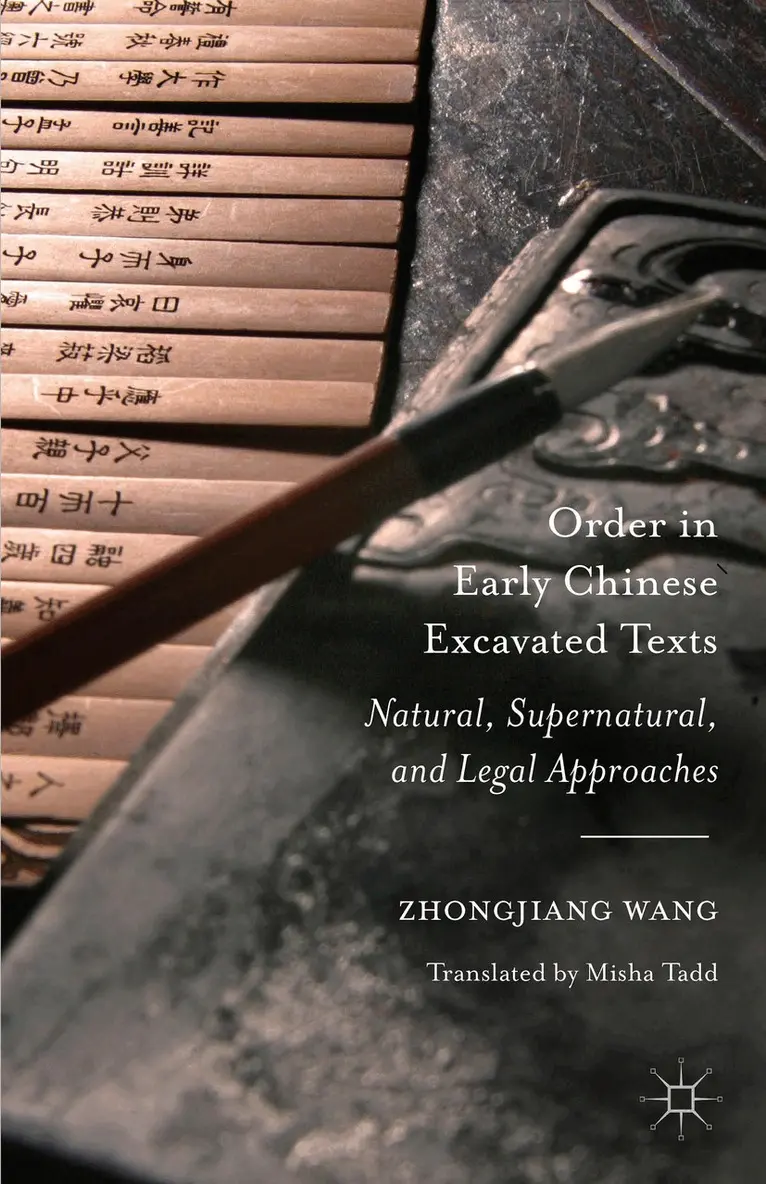
Slowly, powerful spirits and gods were stripped of their potency as nature's constant order awakened people to the possibility of universal laws, and those laws finally gave birth to an ideally conceived community, objectively managed and rationally ordered.
Zhongjiang Wang is Professor in the Department of Philosophy at Peking University, China. His research focuses on Chinese philosophy. He is the author of Civilization of Bamboo-Silk and the Word of Ancient Thought (in Chinese).Misha Tadd is a Postdoctoral Fellow at the Peking University Institute for Advanced Humanistic Studies under Tu Weiming. He studies Han dynasty Daoism.
Recensioner i media
"In his new monograph, Order in Early Chinese Excavated Texts: Natural, Supernatural, and Legal Approaches, distinguished Peking University philosopher Wang Zhongjiang develops nothing less than a new, nuanced, and compelling interpretation of classical Chinese cosmology. With research fully informed by a close and careful reading of the newly recovered archaeological texts, Wang traces the evolution of order in this antique tradition from earliest religious assumptions to an understanding of cosmic order grounded in a discernable pattern of natural law as an inspiration for a concomitant conception of positive law for the human world." - Roger T. Ames, Professor of Philosophy, University of Hawai'i, USA "Wang Zhongjiang is one of the leading scholars in the world for the study of excavated texts from early China. In his new book, expertly translated by Misha Tadd, Wang Zhongjiang uses these materials to question many of our long-standing assumptions concerning early Chinese thought. This is a wonderful book, one that is essential reading for anyone interested in early Chinese philosophy and religion." - Michael Puett, Walter C. Klein Professor of Chinese History, Harvard University, USA
Innehållsförteckning
Prolegomena1.The Cosmology of The Great One Births Water2. Cosmology, Nature, and the Sage in All Things Are Forms in Flux3. The Diversity of Eastern Zhou Views on Deities and The Divine Influence of Spirits and Gods4. Natural Order and Divine Will in The Three Virtues5. Huang-Lao's Universal Law: Why Govern with the Way and Law?Appendix 1: Transcription and Translation of The Great One Births WaterAppendix 2: Transcription and Translation of All Things are Forms in FluxAppendix 3: Transcription and Translation of The Divine Insight of Spirit and GodsAppendix 4: Transcription and Translation of The Three VirtuesBibliographyIndex