Call to Arms: Iran’s Marxist Revolutionaries
Formation and Evolution of the Fada'is, 1964–1976
Del i serien Radical Histories of the Middle East
496 kr
Skickas . Fri frakt över 249 kr.
Beskrivning
Produktinformation
- Utgivningsdatum:2021-01-07
- Mått:153 x 234 x 43 mm
- Vikt:780 g
- Format:Inbunden
- Språk:Engelska
- Serie:Radical Histories of the Middle East
- Antal sidor:528
- Förlag:Oneworld Publications
- ISBN:9781786079855
Utforska kategorier
Mer om författaren
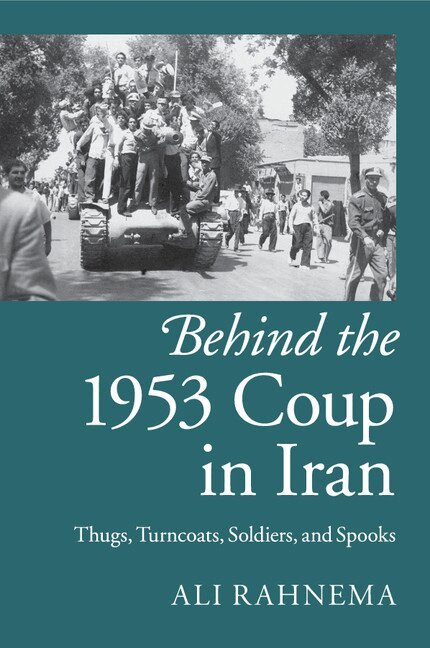
Ali Rahnema is Professor of Economics at the American University of Paris. He is the author of An Islamic Utopian: A Political Biography of Ali Shari‘ati, Behind the 1953 Coup in Iran and Superstition as Ideology in Iranian Politics.
Recensioner i media
‘A definitive history of the Iranian People’s Fada’i Guerrillas. Theoretical frameworks are interwoven with historical narrative, and riveting anecdotes are tempered by conceptual discussions. In one volume, Ali Rahnema has compiled a comprehensive guide to understanding the ideology, activities, and legacy of the Fada’is… He has masterfully told the Fada’is’ story, including their writings, their successes, and their failures, leaving readers with the impression of the Fada’is as serious, brave, influential, and ideologically driven patriots.’
Innehållsförteckning
- Preface and AcknowledgementsIntroduction 1 Violence as a political option?Demonizing the armed oppositionWhy resort to political violence?The four Iranian Marxist theoreticians of armed struggle2 Hasan Zia-Zarifi’s account of why armed struggleThe culprit: Absolutist despotic monarchismReflections from prison3 Amir-Parviz Pouyan’s account of why armed struggleLiterature in the service of politicsArmed struggle: Rational or irrational? A necessary theoretical digressionPouyan on the necessity of armed struggle as a rational choiceRefutation of the theory of survivalPouyan’s incisive impact4 Masʿoud Ahmadzadeh’s accounts of why armed struggleDemystifying classical notions of how and when to take up armsThe fruitful retreatThe Debray factor: From Havana to Tehran via MashhadLearning from the pastBreaking with the old sacred cowsArmed struggle by the revolutionary vanguard5 Bijan Jazani’s accounts of why armed struggleMysteries around What a Revolutionary Should KnowTo confront a monarchical military dictatorshipRevolutionary intellectuals: The dynamite of the revolutionary movementJazani’s paradoxical hintsRevolutionary agents and the question of leadership in a despotic or democratic Iran6 The Tudeh Party’s awkward tango with armed struggleIdeological rift over revolution-makingIranian students take sidesThe Tudeh Party’s reluctant approval of armed struggleThe Tudeh Party pushes back against armed struggleRevolution means employing peaceful methods of struggleThe Tudeh Party denounces armed struggleWhat did the revolutionary Marxists think of the Tudeh Party?7 Monarchists, Maoists, and the Tudeh Party in unison: armed struggle is counterrevolutionary adventurismFor Nikkhah the red revolution turned whiteKourosh Lashaʾi’s rejection of romanticism and embrace of realismThe Tudeh Party: We told you so8 Armed struggle and Marxist canonistsHistorical determinism or revolutionary voluntarism?Marx and Engels: Wavering over the role of violence?Lenin on violence, unequivocal?Trotsky: Dissonance between intellectual revolutionary consciousness and backward economic conditions invites violence9 Armed struggle and Marxist revolutionariesMao Tse-tung’s revolutionary authorityChe Guevara’s revolution-making to overthrow dictatorsCarlos Marighella: Unleashing violence to end dictatorial violenceMarighella in Iran via Baghdad10 Formative years of the Jazani groupJazani the entrepreneurWhence it cameStudent political activitiesFirst phase of the Jazani GroupJazani and The Message of University StudentsSecond phase of the Jazani GroupThe political and propaganda branchThe operational and military branchThe military operation that should have happened but did notGhafour Hasanpour’s networks: Recruiting behind the scenes11 Jazani Group compromisedFirst raidsThe remnants of the Jazani Group under siegeBank robberiesThe decision to leave the countryThe final nabs12 The new Hasanpour, Ashraf, and Safaʾi-Farahani Group: Preparations and operationsPicking up the broken piecesOrganizing armed struggle: Three teamsThe first urban operations of the H-A-S Group13 The Pouyan, Ahmadzadeh, and Meftahi GroupThe dissimilar but inseparable Pouyan and AhmadzadehEnter ʿAbbas MeftahiPouyan’s circles at Mashhad and TabrizAhmadzadeh’s membership in Hirmanpour’s circleMeftahi’s Sari and Tehran circlesThe P-A-M Group’s military operations before SiyahkalAn ethical digression: To press or not to press the trigger14 Armed struggle in Iran: Rural or urbanTheoretical positioningAhmadzadeh gently parts with the Cuban modelJazani: Rural Iran not the ideal revolutionary baseJazani’s change of heart: Emphasis on rural/mountainous warfare15 Merger discussions for “Iran’s revolutionary armed movement”The painful and slow process of negotiationLast hurdle: Convincing the P-A-M rank and fileThe mountain group’s five-month reconnaissance missionPostponements16 The H-A-S Group houndedThe beans are spilledThe arrests beginThe mountain team compromised17 The Siyahkal operationAssault on the Siyahkal Gendarmerie Station on 19 BahmanThe aftermath of the assaultThe nineteen-day odyssey of the retreating guerrillas18 Assessing the Siyahkal strikeObjectives of the Siyahkal strike: Ahmadzadeh, Ashraf, Safaʾi-FarahaniSiyahkal as a military operation: Fumbles and blundersThe regime’s first public response to the Siyahkal strikeThe Ranking Security Official’s spectacle19 The Hamid Ashraf factorSchoolingAshraf in the eyes of fellow combatantsThree years of guerrilla struggle in perspectiveAshraf violent and authoritarian?20 Hemming the guerrillas or cultivating a guerrilla culture?The Shah declares the end of terrorist activities in IranThe Golesorkhi affairRevolutionaries of the Film School of the Iranian National TelevisionSlaying heroes: Fuel on fire21 Jazani’s questioning of armed struggleChallenging the theory and practice of the FadaʾisLooking for new forms of struggleUnderlining the role of legal methods of struggleA matter of trade-off22 Softly disarming armed struggle to regain the trust of the massesStep one: The correct stage in the movementStep two: Walking on two legsStep three: Iran’s paradoxical political condition, democratic and despoticStep four: The guerrillas’ conflicting remits, or unity of oppositesStep five: Armed propaganda and the combined method of struggleTwo interpretations of armed struggleThe issue of objective conditions of revolutionHow long would it take the masses to join the movement?Saving the armed movement from the unhealthy leftist tendency23 Jazani’s ideological offensive in prisonSpreading the good wordOpen schism in prisonWhere did the original members of the Jazani Group stand?The secretive delinking of armed struggle from the movementThe misunderstood or conflicted theoretician24 The Fadaʾi interface, inside, outside prisonIndirect interactions between Ashraf and Jazani in 1973On the correct method of struggle: The Fadaʾis and the Star GroupSummer 1974: Armed struggle as strategy and tactic has the upper handReading about the correct method of struggle in People’s CombatFamiliarity with and reaction to Jazani’s works outside prisons25 Fadaʾi leadership debating correct methods of struggleA discreet Jazani special issue of People’s CombatGrowing a second leg?Political activities in 1976 discussions with the Marxist MojahedinDoes Ashraf take sides in May/June 1976?26 Bird’s-eye view of armed struggle (1971–1976)The guerrillas’ persistent presenceGuerrillas highlighted: Partial transparencyThe news blackout and the Fadaʾis’ rising successChanging tides: Expansion, exposure, and beleagueredThe Fadaʾis’ relations with Libya, Palestinian groups, and the Soviet UnionThe shock of state terrorismFadaʾis under attackThe Fadaʾis without Ashraf27 Guerrillas conducting the regime’s requiemStudents at home beat on the drums of warUniversity turmoil and campus guardsPolicy of zero toleranceThe student backlash to the Golesorkhi affairWinds of change28 The regime’s requiem: The players abroadIranian students abroad rallying against the regimeIranian students abroad take their cue from the guerrillasRadical methods to put the Shah’s regime on the spot29 Prelude to the Shah’s free fallThe Western press reveals secretsDisdain for tortureThe grand anti-Shah conspiracyA last-ditch effort against the guerrilla–CISNU coalitionBeating a fatal retreat ConclusionChronologyBibliographyIndex