• Fri frakt över 249 kr
  • •
  • Snabba leveranser
  • •
  • Billiga böcker
Kundservice

Du är på sajten för privatpersoner.

Företag, bibliotek eller offentlig verksamhet?

Du handlar på classic.bokus.com, där alla dina funktioner finns intakta.
Till classic.bokus.com
Bokus logotyp. Gå till startsidan.
  • Erbjudanden
  • Nyheter
  • Student
  • Topplistor
  • Barn & ungdom
  • Bokus Play
  • E-böcker
  • Pocketböcker
  • Spel & pussel

Må bättre, för mindre! Upp till 50% rabatt på hälsoböcker

Sidfot

Mina sidor

    Hjälp

    • Kundservice
    • Vanliga frågor och svar
    • Frakt och leverans
    • Retur vid ångerrätt
    • Reklamera vara
    • Betalning
    • Köpvillkor
    • Allmänna villkor
    • Information om webbplatsens tillgänglighet

    Om Bokus

    • Om oss
    • Pressrum
    • För studenter
    • För företag
    • För bibliotek och offentlig verksamhet
    • För leverantörer
    • Hållbarhet

    Populärt

    • Aktuella erbjudanden
    • Presentkort
    • Studentlitteratur
    • Nya böcker
    • Topplistor
    • Signerade böcker
    • Engelska böcker

    Inspiration

    • Boktips
    • BookTok
    • Populära bokserier
    • Barnbokskaraktärer
    • Populära författare
    Logotyp för Bokus
    Följ oss på Facebook (extern länk)Följ oss på Instagram (extern länk)Följ oss på YouTube (extern länk)Följ oss på TikTok (extern länk)
    bokus @ CookiesAnpassa cookiesIntegritetspolicyKöpvillkor
    Till Citymail hemsida (extern länk)Till Budbee hemsida (extern länk)Till Postnord hemsida (extern länk)Till Schenker hemsida (extern länk)Till Early Bird hemsida (extern länk)Till Walleys hemsida (extern länk)
    1. Historia och arkeologi
    2. Historia
    3. Mellanösterns historia

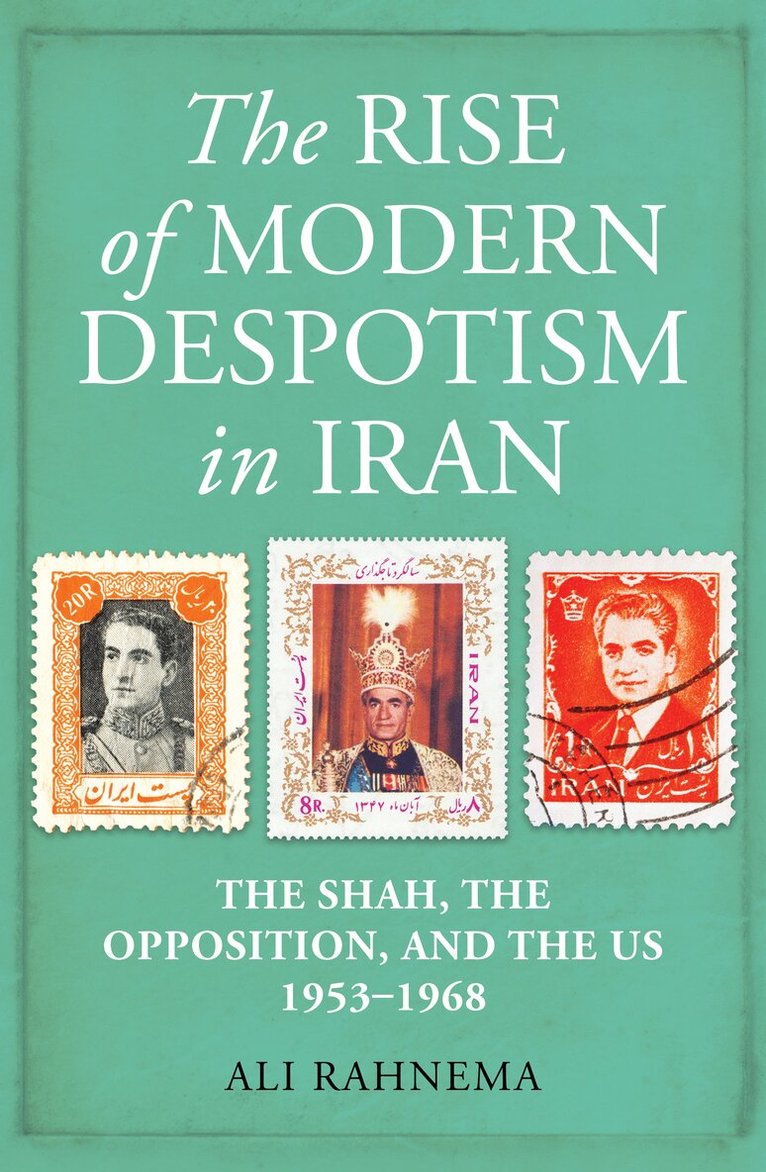
    Rise of Modern Despotism in Iran

    The Shah, the Opposition, and the US, 1953–1968

    AvAli Rahnema

    Inbunden, Engelska, 2021

    576 kr

    Beställningsvara. Skickas inom 7-10 vardagar. Fri frakt över 249 kr.

    Fler format och utgåvor

    E-bok

    413 kr

    Beskrivning

    How did the Shah of Iran become a modern despot?In 1953, Iranian monarch Mohammad-Reza Shah Pahlavi emerged victorious from a power struggle with his prime minister, Mohammad Mosaddeq, thanks to a coup masterminded by Britain and the United States. Mosaddeq believed the Shah should reign not rule, but the Shah was determined that no one would make him a mere symbol.In this meticulous political history, Ali Rahnema details Iran’s slow transition from constitutional to despotic monarchy. He examines the tug of war between the Shah, his political opposition, a nation in search of greater liberty, and successive US administrations with their changing priorities. He shows how the Shah gradually assumed control over the legislature, the judiciary, the executive, and the media, and clamped down on his opponents’ activities.By 1968, the Shah’s turn to despotism was complete. The consequences would be far-reaching.

    Produktinformation

    • Utgivningsdatum:2021-11-04
    • Mått:153 x 234 x 43 mm
    • Vikt:776 g
    • Format:Inbunden
    • Språk:Engelska
    • Antal sidor:528
    • Förlag:Oneworld Publications
    • ISBN:9780861541423

    Utforska kategorier

    • Mellanösterns historia inom Historia och arkeologi
    • Politiskt förtryck inom Samhälle och politik
    • Historia inom Historia och arkeologi

    Mer om författaren

    Ali Rahnema is Professor of Economics at the American University of Paris. He is the author of An Islamic Utopian: A Political Biography of Ali Shari‘ati, Behind the 1953 Coup in Iran and Call to Arms: Iran’s Marxist Revolutionaries, which is also published by Oneworld.

    Recensioner i media

    ‘As creative and sensitive in his interpretations as he is meticulous in his research, Rahnema offers a forensic analysis of the history of the last shah of Iran’s drift into dictatorship, guiding us skilfully through Iran’s political history, from the aftermath of the 1953 royalist coup d’état to the shah’s triumphant, Napoleonic coronation ceremony in 1968. Chronicles of the late monarch’s steady consolidation of power in his own hands and the stifling of dissent are now legion, of course. But rarely has detail been marshalled so effectively in demonstrating these points… Rahnema has written an important and insightful treatment of Iranian political history in the 1950s and 1960s, a period that is often glossed over superficially in the rush to connect the 1953 coup to the shah’s autocracy in the 1970s, but which actually marks a critical moment of transition for Iran.’