• Fri frakt över 249 kr
  • •
  • Snabba leveranser
  • •
  • Billiga böcker
Kundservice

Du är på sajten för privatpersoner.

Företag, bibliotek eller offentlig verksamhet?

Du handlar på classic.bokus.com, där alla dina funktioner finns intakta.
Till classic.bokus.com
Bokus logotyp. Gå till startsidan.
  • Erbjudanden
  • Nyheter
  • Student
  • Topplistor
  • Barn & ungdom
  • Bokus Play
  • E-böcker
  • Pocketböcker
  • Spel & pussel

10% rabatt på allt med kod: NYSTART10 →

Sidfot

Mina sidor

    Hjälp

    • Kundservice
    • Vanliga frågor och svar
    • Frakt och leverans
    • Retur vid ångerrätt
    • Reklamera vara
    • Betalning
    • Köpvillkor
    • Allmänna villkor
    • Information om webbplatsens tillgänglighet

    Om Bokus

    • Om oss
    • Pressrum
    • För studenter
    • För företag
    • För bibliotek och offentlig verksamhet
    • För leverantörer
    • Hållbarhet

    Populärt

    • Aktuella erbjudanden
    • Presentkort
    • Studentlitteratur
    • Nya böcker
    • Topplistor
    • Signerade böcker
    • Engelska böcker

    Inspiration

    • Boktips
    • BookTok
    • Populära bokserier
    • Barnbokskaraktärer
    • Populära författare
    Logotyp för Bokus
    Följ oss på Facebook (extern länk)Följ oss på Instagram (extern länk)Följ oss på YouTube (extern länk)Följ oss på TikTok (extern länk)
    bokus @ CookiesAnpassa cookiesIntegritetspolicyKöpvillkor
    Till Citymail hemsida (extern länk)Till Budbee hemsida (extern länk)Till Postnord hemsida (extern länk)Till Schenker hemsida (extern länk)Till Early Bird hemsida (extern länk)Till Walleys hemsida (extern länk)
    1. Historia och arkeologi
    2. Historia
    3. Mellanösterns historia

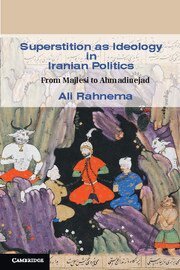
    Superstition as Ideology in Iranian Politics

    From Majlesi to Ahmadinejad

    AvAli Rahnema

    Inbunden, Engelska, 2011

    Del 35 i serien Cambridge Middle East Studies

    626 kr

    Beställningsvara. Skickas inom 10-15 vardagar. Fri frakt över 249 kr.

    Fler format och utgåvor

    Häftad

    364 kr

    Beskrivning

    A superstitious reading of the world based on religion may be harmless at a private level, yet employed as a political tool it can have more sinister implications. As this fascinating book by Ali Rahnema, a distinguished Iranian intellectual, relates, superstition and mystical beliefs have endured and influenced ideology and political strategy in Iran from the founding of the Safavid dynasty in the sixteenth century to the present day. As Rahnema demonstrates through a close reading of the Persian sources and with examples from contemporary Iranian politics, it is this supposed connectedness to the hidden world that has allowed leaders such as Muhammad Reza Shah Pahlavi and Mahmud Ahmadinejad to present themselves and their entourage as representatives of the divine, and their rivals as the embodiment of evil.

    Produktinformation

    • Utgivningsdatum:2011-06-06
    • Mått:162 x 236 x 22 mm
    • Vikt:560 g
    • Format:Inbunden
    • Språk:Engelska
    • Serie:Cambridge Middle East Studies
    • Antal sidor:334
    • Förlag:Cambridge University Press
    • ISBN:9781107005181

    Utforska kategorier

    • Mellanösterns historia inom Historia och arkeologi
    • Filosofiska discipliner inom Filosofi och religion

    Mer om författaren

    Ali Rahnema is Professor of Economics and Director of the Master of Arts program in Middle East and Islamic Studies at The American University of Paris. His many publications include An Islamic Utopian: A Political Biography of Ali Shariati (1998, 2000), Pioneers of Islamic Revival (1994, 2006), Islamic Economic Systems (with Farhad Nomani, 1994) and The Secular Miracle: Religion, Politics, and Economic Policy in Iran (with Farhad Nomani, 1990).

    Recensioner i media

    'An important book.' The Times Literary Supplement

    Innehållsförteckning

    • Introduction; Part I. Politicizing Occult Islam: 1. Ahmadinejad: a touch of light; 2. Mohammad Reza Shah Pahlavi's supernatural Shi'ism; 3. Shah Esma'il Safavi: the quintessentially occult Shi'i king; Part II. Popular Shi'ism: Majlesism: 4. Milieu, childhood, sanctity and fame; 5. From conceptualization to officialization of a religio-political ideology; 6. Deficiency and defectiveness of the human mind; 7. Society needs the leadership of jurists and/or kings; 8. Superstitious education: fogging minds, fostering resignation; 9. Reconfigurating the necessities of belief: articulating a state religion; 10. Majlesism as an ideology; Conclusion.