• Fri frakt över 249 kr
  • •
  • Snabba leveranser
  • •
  • Billiga böcker
Kundservice

Du är på sajten för privatpersoner.

Företag, bibliotek eller offentlig verksamhet?

Du handlar på classic.bokus.com, där alla dina funktioner finns intakta.
Till classic.bokus.com
Bokus logotyp. Gå till startsidan.
  • Erbjudanden
  • Student
  • Topplistor
  • Barn & ungdom
  • Bokus Play
  • E-böcker
  • Ljudböcker
  • Pocketböcker
  • Spel och pussel

Pocketfynda! Hundratals böcker för 49 kr/st →

Sidfot

Mina sidor

    Hjälp

    • Kundservice
    • Vanliga frågor och svar
    • Frakt och leverans
    • Retur vid ångerrätt
    • Reklamera vara
    • Betalning
    • Köpvillkor
    • Allmänna villkor
    • Information om webbplatsens tillgänglighet

    Om Bokus

    • Om oss
    • Pressrum
    • För studenter
    • För företag
    • För bibliotek och offentlig verksamhet
    • För leverantörer
    • Hållbarhet

    Populärt

    • Aktuella erbjudanden
    • Presentkort
    • Studentlitteratur
    • Nya böcker
    • Topplistor
    • Signerade böcker
    • Engelska böcker

    Inspiration

    • Boktips
    • BookTok
    • Barnbokskaraktärer
    • Populära författare
    Logotyp för Bokus
    Följ oss på Facebook (extern länk)Följ oss på Instagram (extern länk)Följ oss på YouTube (extern länk)Följ oss på TikTok (extern länk)
    bokus @ CookiesAnpassa cookiesIntegritetspolicyKöpvillkor
    Till Citymail hemsida (extern länk)Till Budbee hemsida (extern länk)Till Postnord hemsida (extern länk)Till Schenker hemsida (extern länk)Till Early Bird hemsida (extern länk)Till Walleys hemsida (extern länk)
    1. Ekonomi och Ledarskap
    2. Företagsekonomi
    3. Entreprenörskap

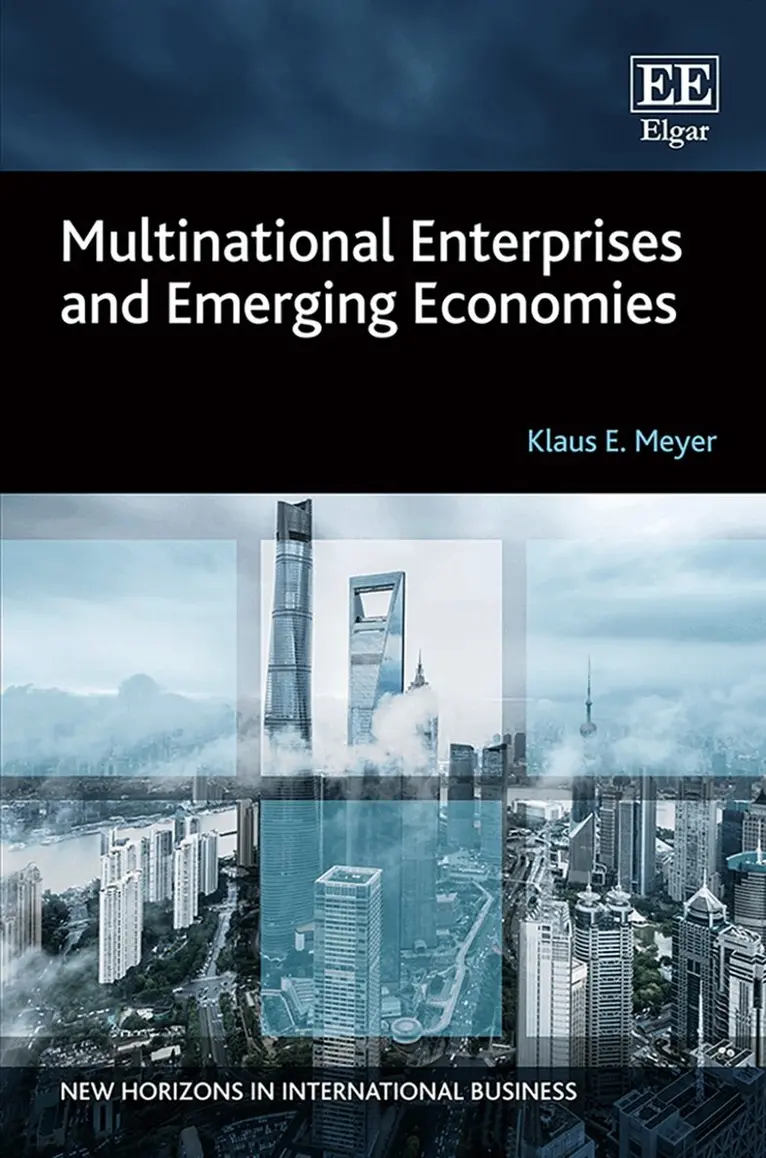
    Multinational Enterprises and Emerging Economies

    AvKlaus E. Meyer

    Inbunden, Engelska, 2020

    Del i serien New Horizons in International Business series

    2 528 kr

    Beställningsvara. Skickas inom 5-8 vardagar. Fri frakt över 249 kr.

    Fler format och utgåvor

    E-bok

    459 kr

    Beskrivning

    Guided by the overarching question ''how and why does the emerging economy context matter for business?'', this collection brings together key contributions of Klaus Meyer on multinational enterprises (MNEs) competing in, and originating from, emerging economies.From theoretical to process perspectives, the book also explores how outward investment strategies contribute to building internationally competitive MNEs. It looks at the process by which foreign MNEs pursue distinct opportunities in each emerging economy by adapting their strategies to the specific business ecosystem. This includes, inter alia, the location of production, choice of entry mode, forms of equity and non-equity partnerships and market positioning. Conversely, when local firms set their ambitions beyond national boundaries, their own resources and capabilities are shaped by the business ecosystem of their home country.The author's theoretically grounded empirical research in Multinational Enterprises and Emerging Economies gives MSc students, PhD students and junior scholars the opportunity to dig deeper into the study of MNE growth.Keywords:Business in emerging economies book / emerging markets bookMultinational enterprisesForeign entry in emerging economiesEmerging economy multinationalsInstitutional theoryContext of business

    Produktinformation

    • Utgivningsdatum:2020-03-11
    • Mått:169 x 244 x undefined mm
    • Format:Inbunden
    • Språk:Engelska
    • Serie:New Horizons in International Business series
    • Förlag:Edward Elgar Publishing Ltd
    • ISBN:9781788978910

    Utforska kategorier

    • Entreprenörskap inom Ekonomi och Ledarskap
    • Organisation och ägarskap inom Ekonomi och Ledarskap
    • Referensverk och tvärvetenskap inom Samhälle och politik

    Mer om författaren

    Klaus E. Meyer, Professor of International Business, Ivey Business School, Western University, Canada

    Recensioner i media

    'The advance of post-war globalisation since China's Open Door Policy of 1978 and the Fall of the Berlin Wall in 1989 has transformed international business. It has stimulated both inward and outward investment flows in emerging economics in Eastern Europe, Asia, Latin America and Africa. Klaus Meyer is a leading researcher into these economies. This book epitomises his systematic and insightful investigations into the role of these emerging economies in the new world order.'--Mark Casson, University of Reading and Henley Business School, UK'Professor Klaus Meyer has brought together an exceptional collection of high-quality papers on emerging economy markets and firms, all published in leading academic journals. This volume will be a must-read in the years to come for any scholar interested in advancing international business research on emerging economies. The broad scope and intellectual depth of this collection confirm the status of Professor Meyer as the world's leading authority on the subject matter of emerging markets and emerging economy multinational enterprises.'--Alain Verbeke, Editor-in-Chief, Journal of International Business Studies (JIBS)'This is a highly essential and extensive book tackling one of the key topics in contemporary international business - multinational enterprises investing in and from major emerging markets. Professor Meyer is to be congratulated on his long and remarkable achievements on international business in emerging economies, some of which are included in this very valuable book. Particularly insightful and significant are his rich theoretical discussions on strategic choice and growth of global firms entering emerging markets and emerging market firms go global.'--Yadong Luo, University of Miami, US

    Innehållsförteckning

    • Contents:Introduction Klaus E. Meyer ixPART I THEORETICAL PERSPECTIVES ON BUSINESS AND EMERGINGECONOMIES1 ‘Probing Theoretically into Central and Eastern Europe: Transactions,Resources, and Institutions’, with Mike W. Peng, Journal of InternationalBusiness Studies , 36 (6), 2005, November, 600–621 22 ‘Theoretical Foundations of Emerging Economy Business Research’, withMike W. Peng, Journal of International Business Studies , 47 (1), 2016,January, 3–22 24PART II CHOOSING LOCATIONS IN EMERGING MARKETS3 ‘Foreign Investment Location and Institutional Development in TransitionEconomies’, with Alan Bevan and Saul Estrin, International BusinessReview , 13 (1), 2004, February, 43–64 454 ‘Foreign Investment Strategies and Sub-national Institutions in EmergingMarkets: Evidence from Vietnam’, with Hung Vo Nguyen, Journal ofManagement Studies , 42 (1), 2005, January, 63–93 675 ‘Country-of-origin and Industry FDI Agglomeration of Foreign Investors inan Emerging Economy’, with Danchi Tan, Journal of InternationalBusiness Studies , 42 (4), 2011, May, 504–20 98PART III DESIGNING AND CHANGING OPERATION MODES6 ‘Institutions, Transaction Costs, and Entry Mode Choice in Eastern Europe’,Journal of International Business Studies , 32 (2), 2001, June, 357–67 1167 ‘Institutions, Resources, and Entry Strategies in Emerging Economies’, withSaul Estrin, Sumon Kumar Bhaumik and Mike W. Peng, StrategicManagement Journal , 30 (1), 2009, 61–80 1278 ‘Transaction Cost Perspectives on Alliances and Joint Ventures: ExplanatoryPower and Empirical Limitations’, with Yi Wang, in Jorma Larimo, NiinaNummela and Tuija Mainela (eds), Handbook on International Alliance andNetwork Research , Chapter 4, Cheltenham, UK and Northampton, MA,USA: Edward Elgar Publishing, 2015, 87–136 1479 ‘Brownfield Acquisitions: A Reconceptualization and Extension’, with SaulEstrin, Management International Review , 51 (4), 2011, August, 483–509 19710 ‘Market Penetration and Acquisition Strategies for Emerging Economies’,with Yen Thi Thu Tran, Long Range Planning , 39 (2), 2006, April, 177–97 22411 ‘Business Under Adverse Home Country Institutions: The Case ofInternational Sanctions Against Myanmar’, with Htwe Htwe Thein, Journalof World Business , 49 (1), 2014, January, 156–71 245PART IV CONTEXTUAL INFLUENCES ON MNEs FROM EMERGINGECONOMIES12 ‘Home Country Institutions and the Internationalization of State OwnedEnterprises: A Cross-Country Analysis’, with Saul Estrin, Bo B. Nielsenand Sabina Nielsen, Journal of World Business , 51 (2), 2016, February,294–307 26213 ‘Emerging Economy MNEs: How Does Home Country MunificenceMatter?’, with Saul Estrin and Adeline Pelletier, Journal of World Business ,53 (4), 2018, June, 514–28 27614 ‘Overcoming Distrust: How State-owned Enterprises Adapt Their ForeignEntries to Institutional Pressures Abroad’, with Yuan Ding, Jing Li and HuaZhang, Journal of International Business Studies , 45 (8), 2014, October,1005–28 29115 ‘Diplomatic and Corporate Networks: Bridges to Foreign Locations’, withJing Li, Hua Zhang and Yuan Ding, Journal of International BusinessStudies , 49 (6), 2018, August, 659–83 315PART V PROCESS PERSPECTIVES ON MNEs FROM EMERGINGECONOMIES16 ‘The Dynamics of Emerging Economy MNEs: How the InternationalizationProcess Model Can Guide Future Research’, with Ornjira Thaijongrak, AsiaPacific Journal of Management , 30 (4), 2013, December, 1125–53 34117 ‘What is “Strategic Asset Seeking FDI?”’, Multinational Business Review ,23 (1), 2015, 57–66 37018 ‘What Drives Firms’ Intent to Seek Strategic Assets by Foreign DirectInvestment? A Study of Emerging Economy Firms’, with Lin Cui and HelenWei Hu, Journal of World Business , 49 (4), 2014, October, 488–501 38019 ‘Managing Talent in Emerging Economy Multinationals: IntegratingStrategic Management and Human Resource Management’, with KatherineR. Xin, International Journal of Human Resource Management , 29 (11),2018, 1827–55 394Index 423