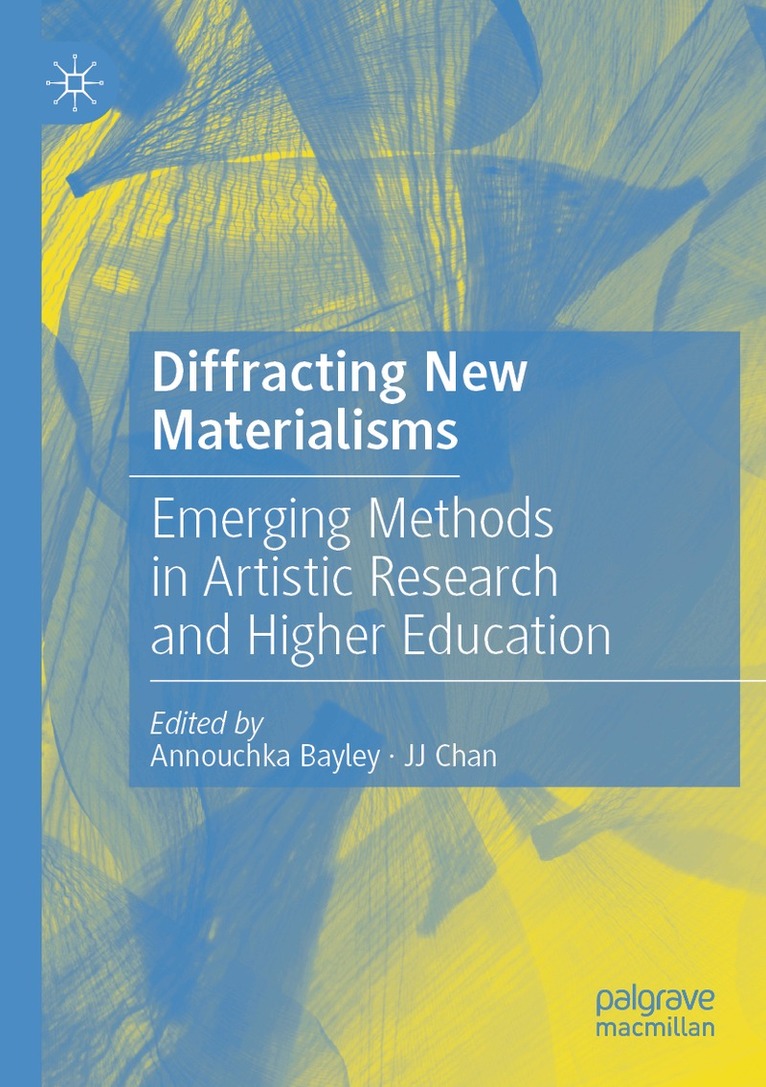
Häftad, Engelska, 2025
Diffracting New Materialisms
2024 kr
Beställningsvara. Skickas inom 10-15 vardagar. Fri frakt över 249 kr.
Beskrivning
This edited book considers the vital position of artistic research in the landscapes and ecosystems of new materialism(s) and post-humanism(s), in and for higher education. The book aims to satisfy an urgent desire for change in the ways we link artistic and critical research practices, asking what new ways of thinking and creating for twenty-first century artistic and educational contexts we need in order to address the kinds of global complexities we face. Organised around five key themes including fictioning, reading, embodying, inhabiting and folding, the book acts as an entry point for academics, artists and scholar-practitioners to participate in the shaping of new forms of artistic research and practice that are relevant, participatory, and that urgently address the kinds of complex issues emergent in our twenty-first century context. In doing so, the book makes a key contribution to the development of emerging inter- and transdisciplinary artistic research practices across arange of fields, responding to the question - what kinds of research and practice worlds do we wish to create in times of urgency, crisis and complexity?
Produktinformation
- Utgivningsdatum: 2025-01-17
- Mått: 148 x 210 x 27 mm
- Vikt: 620 g
- Format: Häftad
- Språk: Engelska
- Antal sidor: 443
- Förlag: Springer International Publishing AG
- ISBN: 9783031186097
Utforska kategorier
Betyg & recensioner
0 recensioner
Inga recensioner tillgängliga.