Häftad, Engelska, 2018
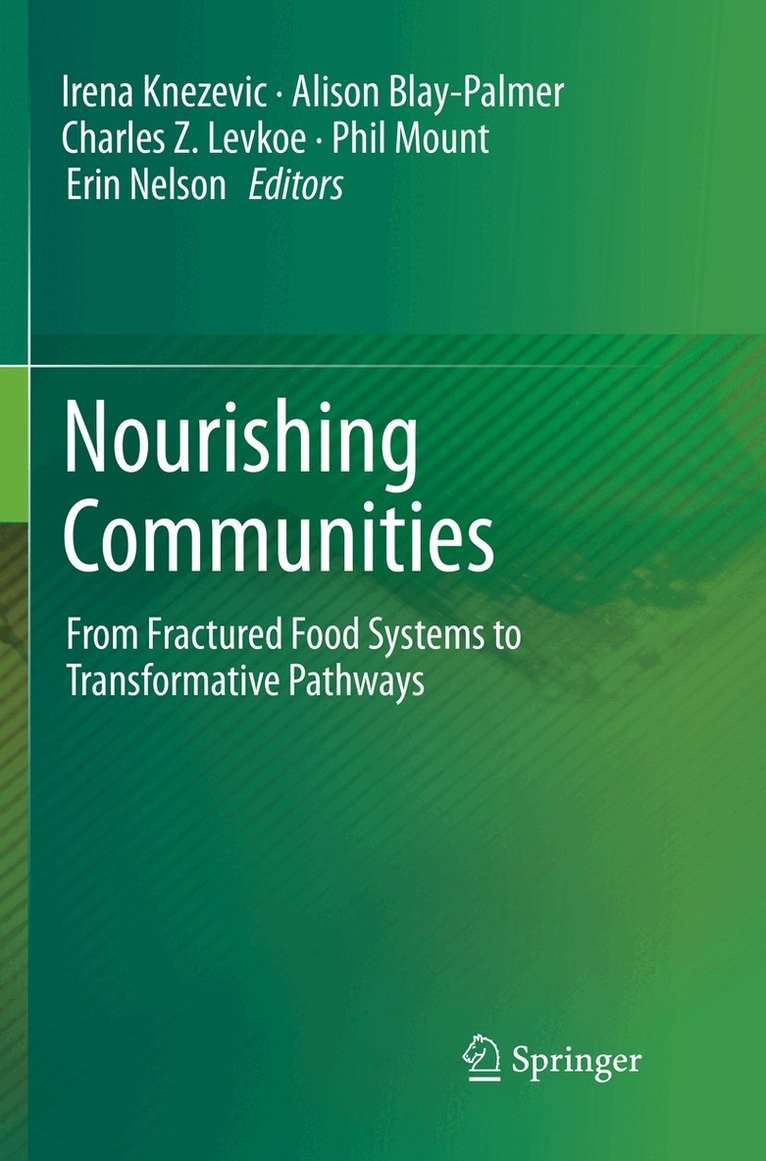
Nourishing Communities
Av Irena Knezevic, Alison Blay-Palmer, Charles Z. Levkoe, Phil Mount, Erin Nelson
960 kr
Beställningsvara. Skickas inom 10-15 vardagar. Fri frakt över 249 kr.
Beskrivning
This edited volume builds on existing alternative food initiatives and food movements research to explore how a systems approach can bring about health and well-being through enhanced collaboration. Chapters describe the myriad ways community-driven actors work to foster food systems that are socially just, embed food in local economies, regenerate the environment and actively engage citizens. Drawing on case studies, interviews and Participatory Action Research projects, the editors share the stories behind community-driven efforts to develop sustainable food systems, and present a critical assessment of both the tensions and the achievements of these initiatives. The volume is unique in its focus on approaches and methodologies that both support and recognize the value of community-based practices. Throughout the book the editors identify success stories, challenges and opportunities that link practitioner experience to critical debates in food studies, practice and policy. By making current practices visible to scholars, the volume speaks to people engaged in the co-creation of knowledge, and documents a crucial point in the evolution of a rapidly expanding and dynamic sustainable food systems movement.Entrenched food insecurity, climate change induced crop failures, rural-urban migration, escalating rates of malnutrition related diseases, and aging farm populations are increasingly common obstacles for communities around the world. Merging private, public and civil society spheres, the book gives voice to actors from across the sustainable food system movement including small businesses, not-for-profits, eaters, farmers and government. Insights into the potential for market restructuring, knowledge sharing, planning and bridging civic-political divides come from across Canada, the United States and Mexico, making this a key resource for policy-makers, students, citizens, and practitioners.
Produktinformation
- Utgivningsdatum: 2018-08-02
- Mått: 155 x 235 x 13 mm
- Vikt: 359 g
- Format: Häftad
- Språk: Engelska
- Antal sidor: 206
- Förlag: Springer International Publishing AG
- ISBN: 9783319860527
Utforska kategorier
Betyg & recensioner
0 recensioner
Inga recensioner tillgängliga.