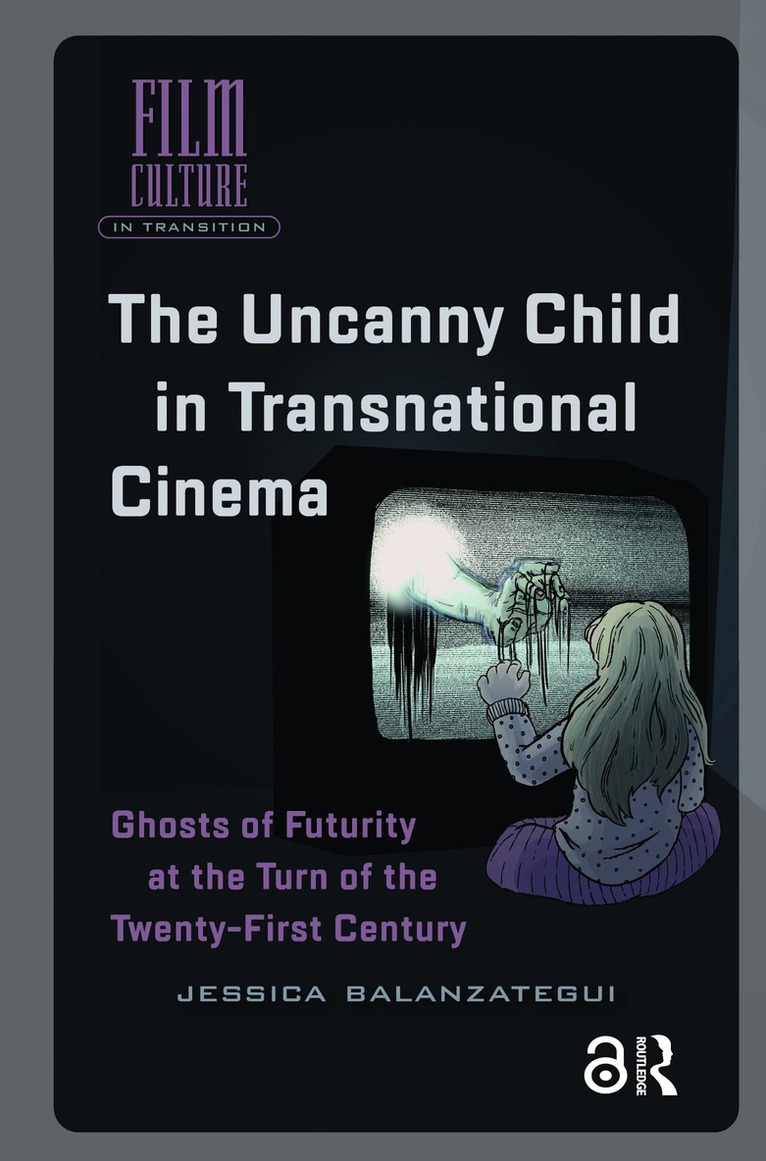
The Uncanny Child in Transnational Cinema illustrates how global horror film depictions of children re-conceptualised childhood at the beginning of the twenty-first century, and considers the cultural conditions surrounding their emergence.
Dr. Jessica Balanzategui is Senior Lecturer in Media at RMIT, before which she was Senior Lecturer in Cinema and Screen Studies and Deputy Director of the Centre for Transformative Media Technologies at Swinburne University of Technology. She is the author of The Uncanny Child in Transnational Cinema (Amsterdam UP, 2018), the founding editor of Amsterdam University Press’ book series, Horror and Gothic Media Cultures.
Recensioner i media
"This is ambitious and thought-provoking film scholarship, poised at the crossroads of horror studies, childhood studies, and trauma studies. This crossdisciplinary range is enhanced by a rewarding transnational focus (moving across the U.S., Spain, and Japan) as well as an in-depth consideration of millennial horror (including such influential films as The Ring and The Others). Balanzategui’s approach is original, stimulating, and valuable for a diverse array of research areas."- Adam Lowenstein, University of Pittsburgh "I strongly recommend this excellent book. Given its strong scholarship, breadth and depth of inquiry, as well as the inclusion of diverse contexts of production and reception, the volume is certain to become an important resource for researchers on horror film, transnational cinema, and, more generally, film studies."- Antonio Lázaro-Reboll, University of Kent
Innehållsförteckning
Introduction: The Child as Uncanny Other, Section One: Secrets and Hieroglyphs: The Uncanny Child in American Horror Film, 1. The Child and Adult Trauma in American Horror of the 1980s, 2. The Uncanny Child of the Millennial Turn, Section Two: Insects Trapped in Amber: The Uncanny Child in Spanish Horror Film, 3. The Child and Spanish Historical Trauma, 4. The Child Seer and the Allegorical Moment in Millennial Spanish Horror Cinema.., Section Three: Our Fear Has Taken on a Life of Its Own: The Uncanny Child in Japanese Horror Film, 5. The Child and Japanese National Trauma, 6. The Prosthetic Traumas of the Internal Alien in Millennial J-Horror Section Four Trauma’s Child: The Uncanny Child in Transnational Remakes and Co-productions, 7. The Transnational Uncanny Child, 8. Progress and Decay in the Twenty-first Century: The Postmodern Uncanny Child in The Others, 9. ‘Round and round, the world keeps spinning. When it stops, it’s just beginning:’ Analogue Ghosts and Digital Phantoms in The Ring, Conclusion