Inbunden, Engelska, 2018
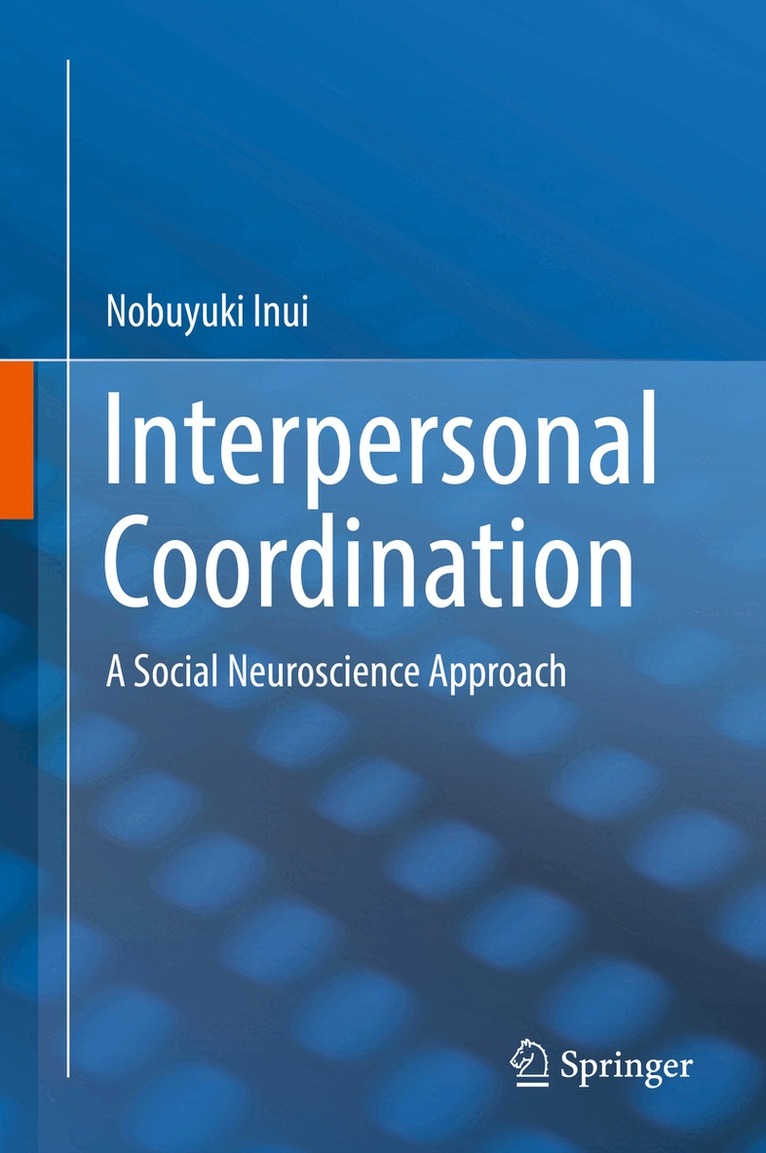
Interpersonal Coordination
1639 kr
Beställningsvara. Skickas inom 10-15 vardagar. Fri frakt över 249 kr.
Beskrivning
This book explores the fascinating area of interpersonal coordination in force production tasks, outlining the author’s extensive research to date and presenting stimulating new perspectives. The purpose is to provide a detailed exposition of current understanding of the science behind interpersonal joint action. Readers will find clear explanation of concepts from social cognition and neuroscience that are key to an understanding of the field, including the social brain hypothesis, the mirror neuron system, and joint action, as well as other relevant background information. The author then proceeds to present an overview of recent original studies on interpersonal movement coordination performed at his laboratory in Japan. These studies provide insights into such issues as complementary and synchronous force production in joint action, bidirectional transfer between joint and solo actions, and motor control hierarchy in joint action involving bimanual force. They also setthe direction for integration of knowledge of physical properties and social cognition. The book will be of interest for researchers and graduate students in all areas of the biomedical sciences.
Produktinformation
- Utgivningsdatum: 2018-09-25
- Mått: 155 x 235 x undefined mm
- Format: Inbunden
- Språk: Engelska
- Antal sidor: 244
- Förlag: Springer Verlag, Singapore
- ISBN: 9789811317644
Utforska kategorier
Betyg & recensioner
0 recensioner
Inga recensioner tillgängliga.