Mark Onuscheck – författare
1 284 kr
Skickas inom 10-15 vardagar
437 kr
Skickas inom 10-15 vardagar
505 kr
Läs direkt efter köp
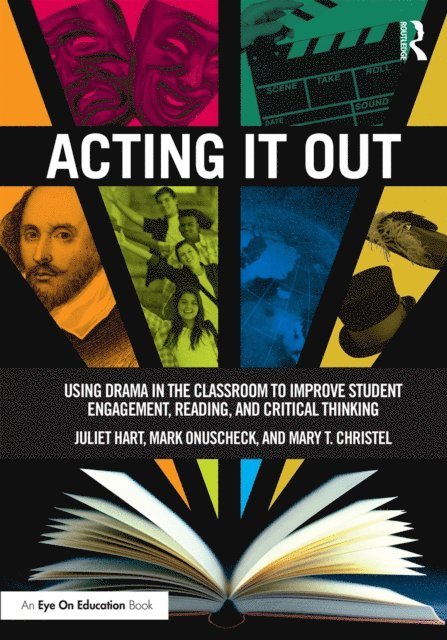
In Acting It Out, you’ll discover how to use drama in your ELA and social studies classrooms to boost student participation and foster critical thinking. With years of experience supervising arts integration programs in Chicago Public Schools, authors Juliet Hart, Mark Onuscheck, and Mary T. Christel offer practical advice for teachers in middle and high schools. Inside, you’ll find…
Group activities to improve concentration, harness focus, and engage students of all abilities and learning styles in teamwork
Close reading exercises that encourage students to think critically and build personal relationships with the text
Strategies for integrating active approaches to dramatic literature, such as improvisation and scene work
Ideas for using dramatic literature as a springboard for studying history and interdisciplinary studies
Annotated reading lists that highlight each play’s content and recommended uses in ELA or social studies
Throughout the book, you’ll also find handy tools such as reflection questions, handouts, and rubrics. By implementing the strategies in this book and allowing students to step into different roles from a text, you’ll improve reading comprehension and energize your classroom!
505 kr
Läs direkt efter köp
In Acting It Out, you’ll discover how to use drama in your ELA and social studies classrooms to boost student participation and foster critical thinking. With years of experience supervising arts integration programs in Chicago Public Schools, authors Juliet Hart, Mark Onuscheck, and Mary T. Christel offer practical advice for teachers in middle and high schools. Inside, you’ll find…
Group activities to improve concentration, harness focus, and engage students of all abilities and learning styles in teamwork
Close reading exercises that encourage students to think critically and build personal relationships with the text
Strategies for integrating active approaches to dramatic literature, such as improvisation and scene work
Ideas for using dramatic literature as a springboard for studying history and interdisciplinary studies
Annotated reading lists that highlight each play’s content and recommended uses in ELA or social studies
Throughout the book, you’ll also find handy tools such as reflection questions, handouts, and rubrics. By implementing the strategies in this book and allowing students to step into different roles from a text, you’ll improve reading comprehension and energize your classroom!
400 kr
Läs direkt efter köp
372 kr
Läs direkt efter köp
Challenge traditional grading practices and adopt a new, more effective grading model for students that will close the gaps in student achievement and content mastery. This book provides the pathway for implementing evidence-based grading practices in schools through a straightforward, five-phase creative model: (1) preparation, (2) incubation, (3) insight, (4) evaluation, and (5) elaboration. Readers will follow a hypothetical curriculum team’s journey through each phase of this process.
Benefits
Confront ineffective grading practices and then overcome traditional biases to apply better grading practices.Reflect on the effectiveness of revisions and improve newly revised grading methods.Give students meaningful information about their progress toward learning targets and expectations.Identify the concepts and perspectives to which curriculum team members must commit to successfully adopt evidence-based grading practices.Discover the important relationships between learning targets and grading, feedback and instruction, assessment and grading, and gradebooks and learning.Contents
About the Author
Introduction
1 Preparation
2 Incubation
3 Insight
4 Evaluation
5 Elaboration
Epilogue
References and Resources
Index
365 kr
Läs direkt efter köp
Part of The New Art and Science of Teaching series
Ensure your art and music programs thrive with the support of The New Art and Science of Teaching Art and Music. Built on the foundation of Robert J. Marzano''s New Art and Science of Teaching framework, this research-based book for art and music teachers outlines music- and arts-based teaching strategies. Rely on the book''s myriad strategies to enhance your daily practice and promote the artistic expression, creative growth, and critical thinking skills of every student.
Use this art and music education book to establish effective teaching strategies that inspire creative and technical skills:
Explore a model for strengthening instructional strategies for art and music.Understand which elements of instruction are best suited to teaching art and music, and utilize the specific suggestions and techniques for implementing these elements.Receive time-tested strategies and ideas to improve teaching and learning in art and music classrooms.Examine teaching methods for increasing student engagement in art and music programs.Confront the unique challenges found in art and music education, and feel inspired to collaborate with other teachers to continuously improve fine or creative arts programs.A joint publication of ASCD and Solution Tree
Contents:IntroductionChapter 1: Providing and Communicating Clear Learning GoalsChapter 2: Using AssessmentsChapter 3: Conducting Direct Instruction LessonsChapter 4: Conducting Practicing and Deepening LessonsChapter 5: Conducting Knowledge Application LessonsChapter 6: Using Strategies That Appear in All Types of LessonsChapter 7: Using Engagement StrategiesChapter 8: Implementing Rules and ProceduresChapter 9: Building RelationshipsChapter 10: Communicating High ExpectationsChapter 11: Developing ExpertiseAfterwordAppendix A: New Art and Science of Teaching Framework OverviewAppendix B: Recommended ResourcesAppendix C: List of Figures and TablesReferences and Resources
Books in The New Art and Science of Teaching series:
The New Art and Science of TeachingThe Handbook for the New Art and Science of TeachingThe New Art and Science of Teaching ReadingThe New Art and Science of Teaching WritingThe New Art and Science of Classroom AssessmentThe New Art and Science of MathematicsThe New Art and Science of Art and Music365 kr
Läs direkt efter köp
Only by shifting away from a one-size-fits-all approach to teaching and learning can every student achieve true success in the classroom. In this resource, authors Eric Twadell, Mark Onuscheck, Anthony R. Reibel, and Troy Gobble provide educators with a comprehensive strategy implementation process for proficiency-based instruction. Readers will gain a clear five-step process for seamlessly transitioning to a new, improved model of instruction in which individual student self-efficacy and growth come first.
Transition to a proficiency-based instruction model for student success:
Learn the benefits of switching from traditional instruction to proficiency-based instruction (also known as evidence-based grading).Explore the process, concepts, and supporting pedagogy of proficiency-based instruction and curriculum planning.Acquire a five-step implementation strategy: (1) preparation, (2) incubation, (3) insight, (4) evaluation, and (5) elaboration.Gain change-management tools for carrying out each of the five steps as a collaborative team and onboarding all stakeholders in curriculum implementation.Discover how one collaborative team successfully worked together to implement proficiency-based instruction.Access free online reproducibles that will support your shift to proficiency-based instruction and lesson planning.Contents:About the AuthorsIntroductionChapter 1: The Foundation of Proficiency-Based Instruction: Five Stages of the Creative ProcessChapter 2: PreparationChapter 3: IncubationChapter 4: InsightChapter 5: EvaluationChapter 6: ElaborationChapter 7: Examples of the Proficiency-Based Instructional DiamondChapter 8: Tools for Proficiency-Based Instruction
434 kr
Läs direkt efter köp
Confidently lead preK-5 literacy improvement in your professional learning community (PLC). Aligned to the Every Teacher Is a Literacy Teacher series, this results-focused guide outlines how to take urgent action to address deficiencies and increase literacy rates. Learn how to bring a new level of focus to your teacher teams and help them do the important daily work of ensuring every student successfully reads and writes at or beyond grade level.
Understand the importance and goals of literacy-focused instruction in an elementary setting.Gain specific suggestions for four types of leaders: (1) district, (2) school, (3) coach, and (4) teacher.Help collaborative teams emphasize literacy knowledge and reading and writing skills in a curriculum''s essential standards.Create effective data-inquiry practices that inform team decision-making for those who require additional support or extension.Facilitate high-quality literacy instruction using the gradual release of responsibility framework.Develop equity in literacy instructional strategies to ensure growth and development for all.Contents:Introduction: Leaders of LiteracyChapter 1: Establish Clarity About Student Learning ExpectationsChapter 2: Examine Assessment Options for LiteracyChapter 3: Create a Learning Progression to Guide Instruction and AssessmentChapter 4: Develop Collective Understanding of Learning ExpectationsChapter 5: Respond to Student Data to Ensure All Students LearnChapter 6: Design Lessons Using the Gradual Release of Responsibility Instructional FrameworkChapter 7: Plan for High-Quality Instruction in LiteracyChapter 8: Select Appropriate Instructional StrategiesChapter 9: Consider Equity in LiteracyEpilogueAppendix A: Reference Points, Templates, and ToolsAppendix B: List of Figures and TablesReferences and ResourcesIndex
366 kr
Skickas inom 3-6 vardagar
369 kr
Läs direkt efter köp
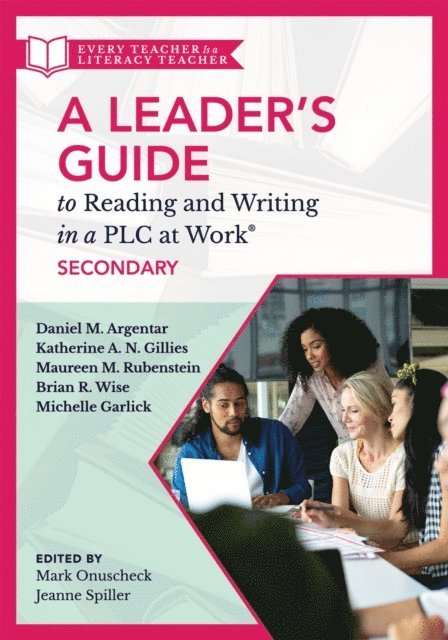
Take an active role in achieving and sustaining literacy improvement in your PLC. An essential leadership resource in the Every Teacher Is a Literacy Teacher series, this valuable guide outlines how to drive literacy instruction in a secondary setting. Learn how to support your collaborative teams, gather and analyze data, and ensure students can read and write at or beyond grade level.
This book offers leadership strategies for secondary literacy education that works:
Understand the challenges of leading literacy and the importance of using those challenges as opportunities for change.Launch your journey to become a literacy leader with effective listening, learning, and active engagement.Recognize the importance of data to new literacy-focused initiatives, reading instruction, and writing strategies.Establish professional development and differentiated instructional strategies for effective literacy instruction across academic disciplines.Measure literacy growth and sustain a continual learning environment for all students.Contents:Introduction: The Need for Literacy InstructionChapter 1: Confronting the Challenges of Leading LiteracyChapter 2: Starting With Listening, Learning, and Leading With ActionChapter 3: Leading With DataChapter 4: Leading Professional LearningChapter 5: Leading InstructionChapter 6: Leading InterventionChapter 7: Measuring Growth and SustainabilityEpilogueReferences and ResourcesIndex
386 kr
Läs direkt efter köp