Roger Southall - Böcker
Visar alla böcker från författaren Roger Southall. Handla med fri frakt och snabb leverans.
21 produkter
21 produkter
1 292 kr
Skickas inom 10-15 vardagar
The plunging of Kenya, until recently a centre of stability and growth in East Africa, into political and economic uncertainty following the general election of December 2007 is regarded as a major cause for global and African concern. It is widely accepted that the elections were deeply flawed, and that there was electoral malfeasance by all the major players. President Kibaki's rapid declaration of victory in the face of a heavily disputed election and his determination to hold on to the levers of state power precipitated a deadly crisis, communal violence and economic decline. A power-sharing deal between Kibaki and Opposition leader, Raila Odinga signed in February seems to be holding, but Kenya ranks among the worlds’ growing number of democracies at-risk.This book takes a new look at the 2007 election, the post-election crisis, the underlying interaction of ethnicity, class and political power; forced displacement, the role of international forces; and the country’s power-sharing arrangement. The study will draw upon the expertise of a variety of leading experts on Kenya, and will be edited by Peter Kagwanja and Roger Southall. The overall project was based on a workshop in Nairobi on 6-7 December 2008.This book was published as a special issue of the Journal of Contemporary African Studies.
1 591 kr
Tillfälligt slut
This collection examines the nature, scope and prospects for political opposition under African National Congress political dominance.
668 kr
Skickas inom 10-15 vardagar
This collection examines the nature, scope and prospects for political opposition under African National Congress political dominance.
382 kr
Kommande
Although hailed, alongside Nelson Mandela and Oliver Tambo, as one of the African National Congress’s holy trinity, Walter Sisulu has remained a relatively neglected figure in the historiography of the struggle for liberation in South Africa. Modest and unassuming, Sisulu was always content to stay in the background in a way that has long belied his importance. This nuanced and highly original biography, drafted by political historian Tom Lodge before his untimely death, provides a powerful corrective.Lodge describes Sisulu as an exceptional organizer, the most influential planner of the ANC’s mass campaigning during the 1950s, a principled but undoctrinaire communist, and like Mandela, an advocate of the necessity of armed struggle. He also served as the careful navigator of the ambiguous relationship between the ANC and Umkhonto we Sizwe, and Lodge details how Sisulu, with his exceptional grasp of the subtleties of fact and law, confounded the prosecution as he sat in the dock in the Rivonia trial. Sentenced to life imprisonment with his fellow defendants, Sisulu became a calming influence amid the divisive ideological debates that took place on Robben Island, as well as a constant source of strength and support to Mandela. After his 1989 release from jail-ahead of Mandela-he again demonstrated his prowess as the chief organizer of the ANC as it reestablished itself ahead of the 1994 elections.Sociologist Roger Southall stepped in to complete Lodge’s detailed analysis of Sisulu’s commitment and contribution to South African freedom, an encomium that Walter Sisulu richly deserves.
1 331 kr
Kommande
Although hailed, alongside Nelson Mandela and Oliver Tambo, as one of the African National Congress’s holy trinity, Walter Sisulu has remained a relatively neglected figure in the historiography of the struggle for liberation in South Africa. Modest and unassuming, Sisulu was always content to stay in the background in a way that has long belied his importance. This nuanced and highly original biography, drafted by political historian Tom Lodge before his untimely death, provides a powerful corrective.Lodge describes Sisulu as an exceptional organizer, the most influential planner of the ANC’s mass campaigning during the 1950s, a principled but undoctrinaire communist, and like Mandela, an advocate of the necessity of armed struggle. He also served as the careful navigator of the ambiguous relationship between the ANC and Umkhonto we Sizwe, and Lodge details how Sisulu, with his exceptional grasp of the subtleties of fact and law, confounded the prosecution as he sat in the dock in the Rivonia trial. Sentenced to life imprisonment with his fellow defendants, Sisulu became a calming influence amid the divisive ideological debates that took place on Robben Island, as well as a constant source of strength and support to Mandela. After his 1989 release from jail-ahead of Mandela-he again demonstrated his prowess as the chief organizer of the ANC as it reestablished itself ahead of the 1994 elections.Sociologist Roger Southall stepped in to complete Lodge’s detailed analysis of Sisulu’s commitment and contribution to South African freedom, an encomium that Walter Sisulu richly deserves.
1 630 kr
Skickas inom 10-15 vardagar
First published in 1999, the essays in this book examine the context and conduct of a series of watershed elections held in Anglophone Africa in the first half of the 1990s. These elections crystallized a wider process of democratization, underway in much of sub-Saharan Africa during the last decade, in which attempts were made to shift from various forms of authoritarian rule (colonial or racial oligarchies, military regimes, one-party states, or presidential rule) to pluralist parliamentary politics. This volume brings together for the first time, studies of these events in countries sharing a comparable legacy of British colonialism, an acquaintance with the Westminster constitutional tradition and related experiences of decolonization and democratic struggle. Written from a variety of perspectives by contributors with first-hand knowledge and long experience of research in Africa, the papers situate each election in its wider political context, examining the political forces at work and the events which gave rise to reform. All indicate that, despite Western pressure for reform and the influence of the collapse of the Soviet Bloc in Eastern Europe, internal African demands for democracy provided the primary driving force for change. Not all the elections fulfilled the hopes invested in them. In Nigeria, they were annulled before all the votes had been counted. In Kenya, the disarray of the opposition ensured the return to power of the old order. Even where they produced a successful regime transition, the democratic credentials of the new governments were sometimes seriously flawed. Yet for all these limitations, these watershed elections signalled important progress for African democracy. They brought a formal end to colonial rule in Namibia and to three centuries of racial discrimination in South Africa. They brought changes of government through the ballot box in Zambia and Malawi, among the first instances in Africa of such change being accomplished without the use of force. Above all, they provided African electorates with an opportunity to pass judgement on long-serving authoritarian regimes – with unequivocal results: in every case, when given the chance to vote, Africans voted for democracy.
494 kr
Skickas inom 10-15 vardagar
First published in 1999, the essays in this book examine the context and conduct of a series of watershed elections held in Anglophone Africa in the first half of the 1990s. These elections crystallized a wider process of democratization, underway in much of sub-Saharan Africa during the last decade, in which attempts were made to shift from various forms of authoritarian rule (colonial or racial oligarchies, military regimes, one-party states, or presidential rule) to pluralist parliamentary politics. This volume brings together for the first time, studies of these events in countries sharing a comparable legacy of British colonialism, an acquaintance with the Westminster constitutional tradition and related experiences of decolonization and democratic struggle. Written from a variety of perspectives by contributors with first-hand knowledge and long experience of research in Africa, the papers situate each election in its wider political context, examining the political forces at work and the events which gave rise to reform. All indicate that, despite Western pressure for reform and the influence of the collapse of the Soviet Bloc in Eastern Europe, internal African demands for democracy provided the primary driving force for change. Not all the elections fulfilled the hopes invested in them. In Nigeria, they were annulled before all the votes had been counted. In Kenya, the disarray of the opposition ensured the return to power of the old order. Even where they produced a successful regime transition, the democratic credentials of the new governments were sometimes seriously flawed. Yet for all these limitations, these watershed elections signalled important progress for African democracy. They brought a formal end to colonial rule in Namibia and to three centuries of racial discrimination in South Africa. They brought changes of government through the ballot box in Zambia and Malawi, among the first instances in Africa of such change being accomplished without the use of force. Above all, they provided African electorates with an opportunity to pass judgement on long-serving authoritarian regimes – with unequivocal results: in every case, when given the chance to vote, Africans voted for democracy.
192 kr
Tillfälligt slut
The sixth general election since the arrival of democracy occurs at a critical moment in South Africa’s history. The immediate question this book poses is will the ANC manage to manufacture a sixth electoral victory despite its disastrous record in government since 2014? It finds the answer in the personal popularity of Ramaphosa, the ANC’s capacity to forge political unity when confronted by the risk of losing power, established voting trends amongst older voters, a sharp decline in participation among the youth which might otherwise have produced electoral shifts, and the failure of opposition parties to present themselves as viable alternatives. The subsequent question is what the consequences of a sixth successive election victory for the ANC will be for South African democracy. Will the ANC’s triumph provide a sufficiently strong mandate for Ramaphosa to turn South Africa around, or will he fail to overcome Zuma’s allies within the party? Whether he succeeds or fails, will the ANC manage to hold itself together? Is the future and quality of South African democracy dictated by whether the ANC stays together or splits into rival parts? Election 2019 covers the context of the election, analyses changing voter participation and attitudes, outlines party campaigns, and explores the role of gender and the media before evaluating the result. At its heart is the issue of whether South African democracy will survive.
232 kr
Kommande
A vital and authoritative resource for all citizens by a duo with a track record. Collette Schulz-Herzenberg and Roger Southall's collaboration can always be relied upon to provide a succinctly comprehensive review of South African elections. The fourth in a series on South African elections, this book promises to be the most consequential. South Africa is facing its worst economic crisis since the inauguration of democracy. Preliminary polls suggest that there are high expectations that the ANC, the ruling party since 1994, will likely lose its predominance, compelling it to forge a coalition with other parties to retain its grip on power. A coalition government is not new to democratic South Africa. In the early days of democracy, coalition governments operated at a provincial level in the Western Cape and KwaZulu-Natal before giving way to DA dominance in the Western Cape and ANC dominance in KwaZulu-Natal and other provinces. However, ANC's dominance has recently been disrupted, with pre-election indications suggesting that along with the potential loss of its majority at the national level, it will also lose control of Gauteng and KwaZulu-Natal. The vital questions this book poses are: What is causing this disruption? What is the possible impact? What are the coalition government's prospects in South Africa? Does coalition government offer the prospect of a democratic renewal, or will it plunge South Africa into further crisis? The book begins by providing a comprehensive survey of this latest contest's turbulent political and economic background. It then outlines and assesses how electoral reform ordered by the Constitutional Court will affect the electoral landscape. This will be summed up by critical insights into the changes in public opinion, electoral participation and political (re)alignment. The second section provides detailed and highly informed analyses of the campaigns of the significant contesting parties. It explores how the ANC has sought to prevent its much-predicted electoral decline, how the DA has tried to overcome the much-highlighted racial limits in its popular appeal, and how the EFF's populism has defined (and limited?) its performance. The electoral system has always encouraged participation by a multiplicity of political parties. Section three offers analyses of the potential and performances of established smaller parties (notably the IFP and VF+), complemented by a study of the origins, inspiration and campaigns of myriad new arrivals to the electoral scene. It further explores how these are related to recent electoral reforms. Do they have a significant social base? What are their regional and spatial dimensions? Are they vehicles of an increasingly disaffected middle class? Do they provide a stable basis for a coalition government, or is South Africa about to embark upon a governmental game of musical chairs and resultant political instability? The final chapters provide a detailed review of the election results at national and provincial levels, wrapped up by the editors offering their assessment of their immediate and longer-term significance.
361 kr
Skickas inom 7-10 vardagar
Wide-ranging essays demonstrate how the consequences of inequality extend throughout society and the political economyDespite the transition from apartheid to democracy, South Africa is the most unequal country in the world. Its extremes of wealth and poverty undermine intensifying struggles for a better life for all. The wide-ranging essays in this sixth volume of the New South African Review demonstrate how the consequences of inequality extend throughout society and the political economy, crippling the quest for social justice, polarising the politics, skewing economic outcomes and bringing devastating environmental consequences in their wake. Contributors survey the extent and consequences of inequality across fields as diverse as education, disability, agrarian reform, nuclear geography and small towns, and tackle some of the most difficult social, political and economic issues. How has the quest for greater equality affected progressive political discourse? How has inequality reproduced itself, despite best intentions in social policy, to the detriment of the poor and the historically disadvantaged? How have shifts in mining and the financialisation of the economy reshaped the contours of inequality? How does inequality reach into the daily social life of South Africans, and shape the way in which they interact? How does the extent and shape of inequality in South Africa compare with that of other major countries of the global South which themselves are notorious for their extremes of wealth and poverty? South African extremes of inequality reflect increasing inequality globally, and The Crisis of Inequality will speak to all those general readers, policy makers, researchers and students who are demanding a more equal world.
673 kr
Skickas inom 7-10 vardagar
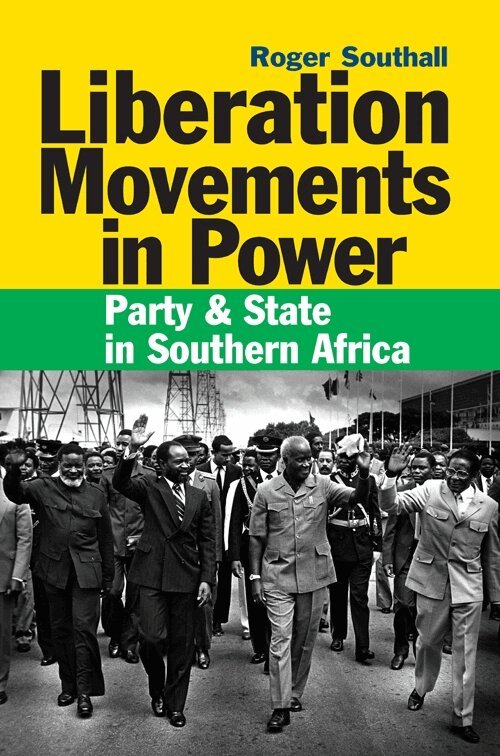
Analyses the ZANU-PF in Zimbabwe, SWAPO in Namibia and the ANC in South Africa and to what extent their promises of democracy have been effected in government.The liberation movements of Southern Africa arose to combat racism, colonialism and settler capitalism and engaged in armed struggle to establish democracy. After victory over colonial and white minority regimes, they moved into government embodying the hopes and aspirations of their mass of supporters and of widespread international solidarity movements. Even with the difficult legacies they inherited, their performance in power has been deeply disappointing. Roger Southall tracks the experiences in government of ZANU-PF, SWAPO and the ANC, arguing that such movements are characterised by paradoxical qualities, both emancipatory and authoritarian. Analysis is offered of their evolution into political machines through comparative review of their electoral performance, their relation to state and society, their policies regarding economic transformation, and their evolution as vehicles of class formation andpredatory behaviour. The author concludes that, while they will survive organizationally, their essence as progressive forces is dying, and that hopes of a genuine liberation throughout the region will depend upon political realignments alongside moral and intellectual regeneration. ANC South AfricaSWAPO NamibiaZanu-PF ZimbabweRoger Southall is Professor Emeritus in Sociology, University of the Witwatersrand and a Research Associate of the Society, Work and Development Institute.
468 kr
Skickas inom 7-10 vardagar
Analyses the ZANU-PF in Zimbabwe, SWAPO in Namibia and the ANC in South Africa and to what extent their promises of democracy have been effected in government.The liberation movements of Southern Africa arose to combat racism, colonialism and settler capitalism and engaged in armed struggle to establish democracy. After victory over colonial and white minority regimes, they moved into government embodying the hopes and aspirations of their mass of supporters and of widespread international solidarity movements. Even with the difficult legacies they inherited, their performance in power has been deeply disappointing. Roger Southall tracks the experiences in government of ZANU-PF, SWAPO and the ANC, arguing that such movements are characterised by paradoxical qualities, both emancipatory and authoritarian. Analysis is offered of their evolution into political machines through comparative review of their electoral performance, their relation to state and society, their policies regarding economic transformation, and their evolution as vehicles of class formation andpredatory behaviour. The author concludes that, while they will survive organizationally, their essence as progressive forces is dying, and that hopes of a genuine liberation throughout the region will depend upon political realignments alongside moral and intellectual regeneration. ANC South AfricaSWAPO NamibiaZanu-PF ZimbabweRoger Southall is Professor Emeritus in Sociology, University of the Witwatersrand and a Research Associate of the Society, Work and Development Institute.
1 174 kr
Skickas inom 10-15 vardagar
Provides the most comprehensive account since the early 1960s of South Africa's "black middle class".2016 CHOICE Outstanding Academic TitleThe "rise of the black middle class" is one of the most visible aspects of post-apartheid society in South Africa. Yet while it has been a major actor in the country's democratic reshaping, analysis of its role has been all but lacking. Rather, the image presented by the media has been of "black diamonds", consumers of the products of advanced industrial economies, and of corrupt "tenderpreneurs" who use their political connections to obtain contracts. This book seeks to complicate that picture with a much-needed analysis that recounts its historical development in colonial society prior to 1994, before examining the size, shape andstructure of the new black middle class in contemporary South Africa and its relation to its counterparts in the Global South.Roger Southall is Professor Emeritus in Sociology, University of the Witwatersrand.Southern Africa (South Africa, Namibia, Botswana, Lesotho, Zimbabwe and Swaziland): Jacana
349 kr
Skickas inom 10-15 vardagar
Provides the most comprehensive account since the early 1960s of South Africa's "black middle class".2016 CHOICE Outstanding Academic TitleThe "rise of the black middle class" is one of the most visible aspects of post-apartheid society in South Africa. Yet while it has been a major actor in the country's democratic reshaping, analysis of its role has been all but lacking. Rather, the image presented by the media has been of "black diamonds", consumers of the products of advanced industrial economies, and of corrupt "tenderpreneurs" who use their political connections to obtain contracts. This book seeks to complicate that picture with a much-needed analysis that recounts its historical development in colonial society prior to 1994, before examining the size, shape andstructure of the new black middle class in contemporary South Africa and its relation to its counterparts in the Global South.Roger Southall is Professor Emeritus in Sociology, University of the Witwatersrand.Southern Africa (South Africa, Namibia, Botswana, Lesotho, Zimbabwe and Swaziland): Jacana
1 158 kr
Skickas inom 7-10 vardagar
Key book in Whiteness Studies that engages with the different ways in which the last white minority in Africa to give way to majority rule has adjusted to the arrival of democracy and the different modes of transition from "settlers" to "citizens".How have whites adjusted to, contributed to and detracted from democracy in South Africa since 1994? Engaging with the literature on 'whiteness' and the current trope that the democratic settlement has failed, this book provides a study of how whites in the last bastion of 'white minority rule' in Africa have adapted to the sweeping political changes they have encountered. It examines the historical context of white supremacy and minority rule, in the past, and the white withdrawal from elsewhere on the African continent. Drawing on focus groups held across the country, Southall explores the difficult issue of 'memory', how whites seek to grapple with the history of apartheid, and how this shapes their reactions to political equality. He argues that whites cannot be regarded as a homogeneous political grouping concluding that while the overwhelming majority of white South Africans feared the coming of democracy during the years of late apartheid, they recognised its inevitability. Many of their fears were, in effect, to be recognised by the Constitution, which embedded individual rights, including those to property and private schooling, alongside the important principle of proportionality of political representation. While a small minority of whites chose to emigrate, the large majority had little choice but to adjust to the democratic settlement which, on the whole, they have done - and in different ways. It was only a small right wing which sought to actively resist; others have sought to withdraw from democracy into social enclaves; but others have embraced democracy actively, either enthusiastically welcoming its freedoms or engaging with its realities in defence of 'minority rights'. Whites may have been reluctant to accept democracy, but democrats - of a sort - they have become, and notwithstanding a significant racialisation of politics in post-apartheid South Africa, they remain an important segment of the "rainbow", although dangers lurk in the future unless present inequalities of both race and class are challenged head on.African Sun Media: South Africa
344 kr
Skickas inom 7-10 vardagar
Key book in Whiteness Studies that engages with the different ways in which the last white minority in Africa to give way to majority rule has adjusted to the arrival of democracy and the different modes of transition from "settlers" to "citizens".How have whites adjusted to, contributed to and detracted from democracy in South Africa since 1994? Engaging with the literature on 'whiteness' and the current trope that the democratic settlement has failed, this book provides a study of how whites in the last bastion of 'white minority rule' in Africa have adapted to the sweeping political changes they have encountered. It examines the historical context of white supremacy and minority rule, in the past, and the white withdrawal from elsewhere on the African continent. Drawing on focus groups held across the country, Southall explores the difficult issue of 'memory', how whites seek to grapple with the history of apartheid, and how this shapes their reactions to political equality. He argues that whites cannot be regarded as a homogeneous political grouping concluding that while the overwhelming majority of white South Africans feared the coming of democracy during the years of late apartheid, they recognised its inevitability. Many of their fears were, in effect, to be recognised by the Constitution, which embedded individual rights, including those to property and private schooling, alongside the important principle of proportionality of political representation. While a small minority of whites chose to emigrate, the large majority had little choice but to adjust to the democratic settlement which, on the whole, they have done - and in different ways. It was only a small right wing which sought to actively resist; others have sought to withdraw from democracy into social enclaves; but others have embraced democracy actively, either enthusiastically welcoming its freedoms or engaging with its realities in defence of 'minority rights'. Whites may have been reluctant to accept democracy, but democrats - of a sort - they have become, and notwithstanding a significant racialisation of politics in post-apartheid South Africa, they remain an important segment of the "rainbow", although dangers lurk in the future unless present inequalities of both race and class are challenged head on.African Sun Media: South Africa
1 486 kr
Skickas inom 7-10 vardagar
Compares how, as individuals, Smuts and Mandela shaped key aspects of the making of South Africa, moving beyond sweeping condemnation of the first and uncritical reference of the second to provide a more rounded assessment of their significance in the history of the nation.South Africa has produced two leaders who achieved global recognition and renown in their respective eras: Jan Christiaan Smuts (Prime Minister, 1919-24 and 1939-48) and Nelson Rolihlahla Mandela (President, 1994-99). The former was much celebrated for playing a significant role in reconstructing international architecture after both world wars; the latter remains globally admired for his leading part in drawing South Africa back from racial war and becoming a democracy. As a result, both have attracted multiple biographies. Today, however, whereas Mandela remains a much-admired global icon, Smuts' reputation is much diminished, with contemporary historians citing his racism and role in constructing the foundations of apartheid South Africa. In this controversial book, Roger Southall provides a re-evaluation of Smuts' hugely contradictory career by proposing fascinating parallels with the life and political trajectory of Mandela. Both came to maturity as political leaders as freedom fighters - Smuts against the British and Mandela against the apartheid regime. Both played a pre-eminent in founding a new South Africa, the first made for whites at Union in 1910 and the second for all South Africans in 1994. Both aspired to be nation-builders, but while Smuts' hoped-for South African nation was white, Mandela aspired to bring all of South Africa's people together. Both came to stride on the international stage, albeit in very different ways and for various reasons. Smuts' career failed, and he was ejected from office. Mandela retired gracefully from office and continued to be lauded for his well-earned retirement, yet South Africa's contemporary travails reveal his hopes and policies as unfulfilled. This book makes the case that we cannot fully understand Mandela without first understanding Smuts and how South Africa continues to struggle with the legacy he left behind.
506 kr
Skickas inom 7-10 vardagar
Is South Africa on a long-term decline? The New South African Review revives the tradition of critical, analytical scholarship developed by the South African Review in the 1970s and 1980s. Accessible to a wide readership and drawing upon authors from well beyond academia, its objective is to be informative, discursive and, at times, downright provocative. It seeks to provide contemporary comment and engage with current controversies. The first volume in the series, 2010: Development or Decline? ranges widely across the implications of the international crisis for the economy, the threats to our fragile ecology of present economic strategies, through to the state of the ANC and the public service, issues around service delivery, migration, HIV-Aids, land reform, crime, the sexual behaviour of our youth, and much more. Posing the provocative question of whether South Africa is embarking upon a long-term decline, the volume simultaneously argues the potential for a society premised upon social equality, social coherence and sustainability. This collection will appeal to both national and international audiences interested in engaging with the multiple dilemmas and challenges facing contemporary South Africa
414 kr
Skickas inom 7-10 vardagar
An evaluation of the ANC's second phase of the national democratic revolution.In the face of the continuing national tragedy of the inequality, poverty and unemployment which have triggered rising working-class discontent around the country, the ANC announced a 'second phase' of the 'national democratic revolution' to deal with the challenges. Ironically, the ANC post-Mangaung has resolved to preserve the core tenets of the minerals-energy-financial complex that defined racial capitalism - while at the same time ratcheting up the revolutionary rhetoric to keep the working class and marginalised onside. If the 'first phase' was a tragedy of the unmet expectations of the majority, is the 'second phase' likely to be a farce? The chapters in this volume are written by experts in their fields and address issues of politics, power and social class; economy, ecology and labour; public policy and social practice; and South Africa beyond its borders. They examine some of these challenges, and indicate that they are as much about the defective content of policies as their poor implementation. The third volume of the New South African Review continues the series by providing in-depth analyses of the key issues facing the country today.
414 kr
Skickas inom 7-10 vardagar
A series of essays taking an account of the milestones of South African democracy in order to give a multidimensional perspective of South Africa. The death of Nelson Mandela on 5 December 2013 was in a sense a wake-up call for South Africans, and a time to reflect on what has been achieved since 'those magnificent days in late April 1994' (as the editors of this volume put it) 'when South Africans of all colours voted for the first time in a democratic election'. In a time of recall and reflection it is important to take account, not only of the dramatic events that grip the headlines, but also of other signposts that indicate the shape and characteristics of a society. The New South African Review looks, every year, at some of these signposts, and the essays in this fourth volume of the series again examine and analyse a broad spectrum of issues affecting the country. They tackle topics as diverse as the state of organised labour; food retailing; electricity generation; access to information; civil courage; the school system; and - looking outside the country to its place in the world - South Africa's relationships with north-east Asia, with Israel and with its neighbours in the southern African region. Taken together, these essays give a multidimensional perspective on South Africa's democracy as it turns twenty, and will be of interest to general readers while being particularly useful to students and researchers.
361 kr
Skickas inom 7-10 vardagar
A series of essays explaining the impact of the events at Marikana upon the South African perspective of police and the keeping of order.This fifth volume in the New South African Review series takes as its starting point the shock wave emanating from the events at Marikana on 16 August 2012 and how it has reverberated throughout politics and society. Some of the chapters in the volume refer directly to Marikana. In others, the influence of that fateful day is pervasive if not direct. Marikana has, for instance, made us look differently at the police and at how order is imposed on society. Monique Marks and David Bruce write that the massacre 'has come to hold a central place in the analysis of policing, and broader political events since 2012...'.The chapters highlight a range of current concerns - political, economic and social. David Dickinson's chapter looks at the life of the poor in a township from within. In contrast, the chapter on foreign policy by Garth le Pere analyses South Africa's approach to international relations in the Mandela, Mbeki and Zuma eras. Anthony Turton's account, 'When gold mining ends' is a chilling forecast of an impending environmental catastrophe. Both Devan Pillay and Noor Nieftagodien focus attention on the left and, in different ways, ascribe its rise to a new politics in the wake of Marikana.The essays in NSAR 5: Beyond Marikana present a range of topics and perspectives of interest to general readers, but the book will also be a useful work of reference for students and researchers.