Xiaofei Tian - Böcker
Visar alla böcker från författaren Xiaofei Tian. Handla med fri frakt och snabb leverans.
14 produkter
14 produkter
1 067 kr
Skickas inom 3-6 vardagar
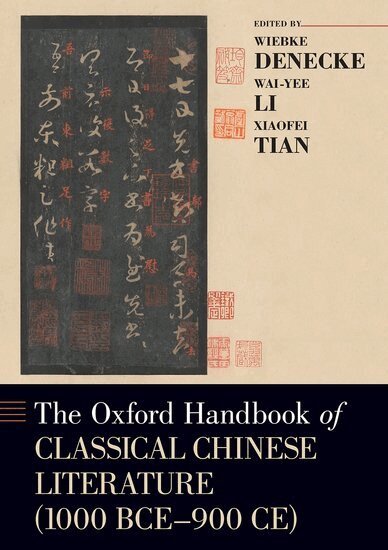
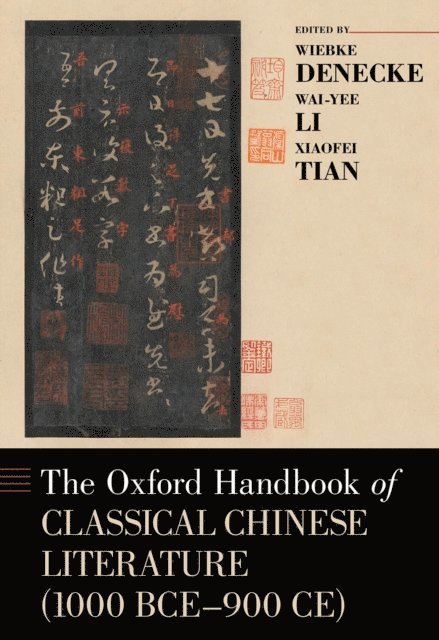
This volume introduces readers to classical Chinese literature from its beginnings (ca. 10th century BCE) to the tenth century CE. It asks basic questions such as: How did reading and writing practices change over these two millennia? How did concepts of literature evolve? What were the factors that shaped literary production and textual transmission? How do traditional bibliographic categories, modern conceptions of genre, and literary theories shape our understanding of classical Chinese literature? What are the recurrent and evolving concerns of writings within the period under purview? What are the dimensions of human experience they address? Why is classical Chinese literature important for our understanding of pre-modern East Asia? How does the transmission of this literature in Japan, Korea, and Vietnam define cultural boundaries? And what, in turn, can we learn from the Chinese-style literatures of Japan, Korea, and Vietnam, about Chinese literature? In addressing these questions, The Oxford Handbook of Classical Chinese Literature departs from standard literary histories and sourcebooks. It does not simply categorize literary works according to periods, authors, or texts. Its goal is to offer a new conceptual framework for thinking about classical Chinese literature by defining a four-part structure. The first section discusses the basics of literacy and includes topics such as writing systems, manuscript culture, education, and loss and preservation in textual transmission. It is followed by a second section devoted to conceptions of genre, textual organization, and literary signification throughout Chinese history. A third section surveys literary tropes and themes. The final section takes us beyond China to the surrounding cultures that adopted Chinese culture and produced Chinese style writing adapted to their own historical circumstances. The volume is sustained by a dual foci: the recuperation of historical perspectives for the period it surveys and the attempt to draw connections between past and present, demonstrating how the viewpoints and information in this volume yield insights into modern China and east Asia.
2 522 kr
Skickas inom 5-8 vardagar
This volume introduces readers to classical Chinese literature from its beginnings (ca. 10th century BCE) to the tenth century CE. It asks basic questions such as: How did reading and writing practices change over these two millennia? How did concepts of literature evolve? What were the factors that shaped literary production and textual transmission? How do traditional bibliographic categories, modern conceptions of genre, and literary theories shape our understanding of classical Chinese literature? What are the recurrent and evolving concerns of writings within the period under purview? What are the dimensions of human experience they address? Why is classical Chinese literature important for our understanding of pre-modern East Asia? How does the transmission of this literature in Japan, Korea, and Vietnam define cultural boundaries? And what, in turn, can we learn from the Chinese-style literatures of Japan, Korea, and Vietnam, about Chinese literature? In addressing these questions, The Oxford Handbook of Classical Chinese Literature departs from standard literary histories and sourcebooks. It does not simply categorize literary works according to periods, authors, or texts. Its goal is to offer a new conceptual framework for thinking about classical Chinese literature by defining a four-part structure. The first section discusses the basics of literacy and includes topics such as writing systems, manuscript culture, education, and loss and preservation in textual transmission. It is followed by a second section devoted to conceptions of genre, textual organization, and literary signification throughout Chinese history. A third section surveys literary tropes and themes. The final section takes us beyond China to the surrounding cultures that adopted Chinese culture and produced Chinese style writing adapted to their own historical circumstances. The volume is sustained by a dual foci: the recuperation of historical perspectives for the period it surveys and the attempt to draw connections between past and present, demonstrating how the viewpoints and information in this volume yield insights into modern China and east Asia.
Writing Empire and Self
Poetic and Cultural Transformation in Early Medieval China
Inbunden, Engelska, 2026
1 691 kr
Kommande
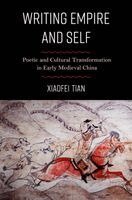
China’s early medieval period, from the fifth through the early seventh century, from the Northern and Southern Dynasties through the unified Sui, was a time of political fragmentation, military strife, and ethnic conflict. It also witnessed brilliant artistic creations as well as a full flowering of court culture, with poetry at its heart. How did poetry come to be regarded as the most potent form of cultural capital, a privileged literary genre, and a foundational skill for members of the elite? How was poetry transformed from an instrument of empire building to a venue for articulating personal trauma and voicing critique of the state?Tracing the evolution of poetry’s role in Chinese society, Writing Empire and Self uncovers the profound cultural changes that took place in the early medieval era. Xiaofei Tian argues that in this period, a social community, eventually known as the “scholar elite” and treated as if it had always been a permanent fixture of the Chinese social order, came into being. She investigates the formation of this community, which left its mark on all later Chinese arts and letters, through a careful account of its history and textual production. Combining meticulous readings of numerous previously untranslated texts with a long-term, large-scale view of social and cultural history, Writing Empire and Self offers a fresh perspective on poetry’s intricate relationship with the state.
Writing Empire and Self
Poetic and Cultural Transformation in Early Medieval China
Häftad, Engelska, 2026
447 kr
Kommande
China’s early medieval period, from the fifth through the early seventh century, from the Northern and Southern Dynasties through the unified Sui, was a time of political fragmentation, military strife, and ethnic conflict. It also witnessed brilliant artistic creations as well as a full flowering of court culture, with poetry at its heart. How did poetry come to be regarded as the most potent form of cultural capital, a privileged literary genre, and a foundational skill for members of the elite? How was poetry transformed from an instrument of empire building to a venue for articulating personal trauma and voicing critique of the state?Tracing the evolution of poetry’s role in Chinese society, Writing Empire and Self uncovers the profound cultural changes that took place in the early medieval era. Xiaofei Tian argues that in this period, a social community, eventually known as the “scholar elite” and treated as if it had always been a permanent fixture of the Chinese social order, came into being. She investigates the formation of this community, which left its mark on all later Chinese arts and letters, through a careful account of its history and textual production. Combining meticulous readings of numerous previously untranslated texts with a long-term, large-scale view of social and cultural history, Writing Empire and Self offers a fresh perspective on poetry’s intricate relationship with the state.
1 942 kr
Skickas inom 3-6 vardagar
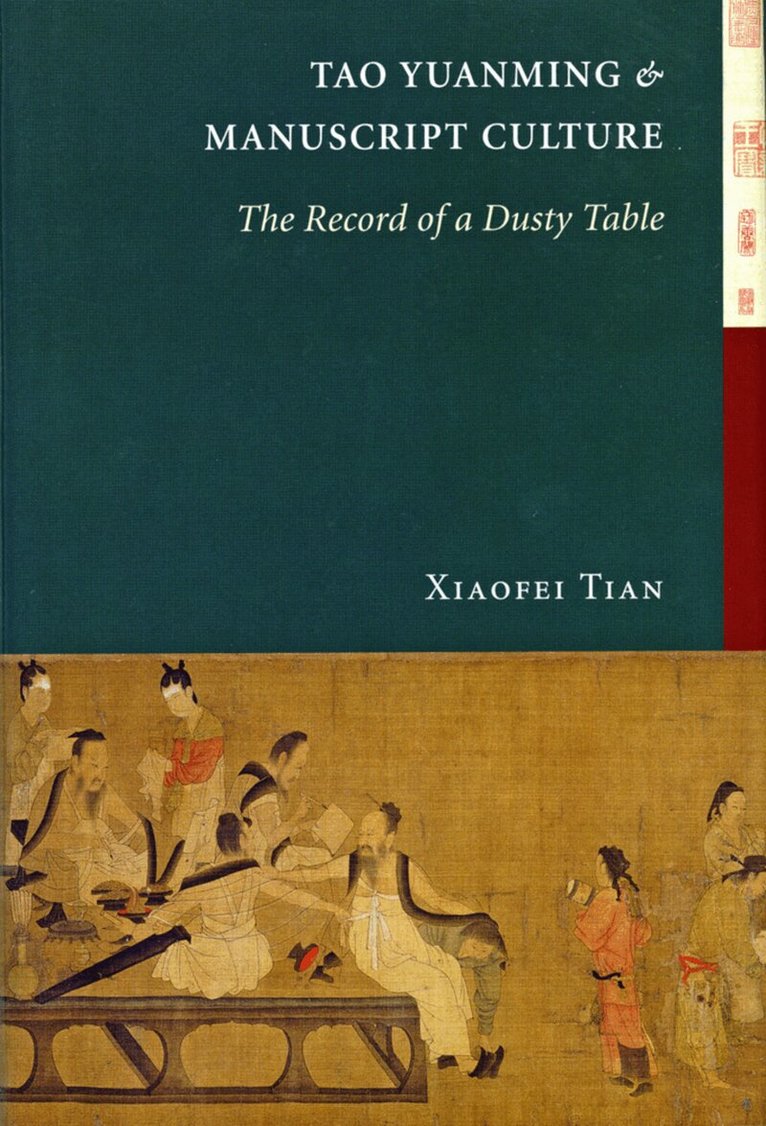
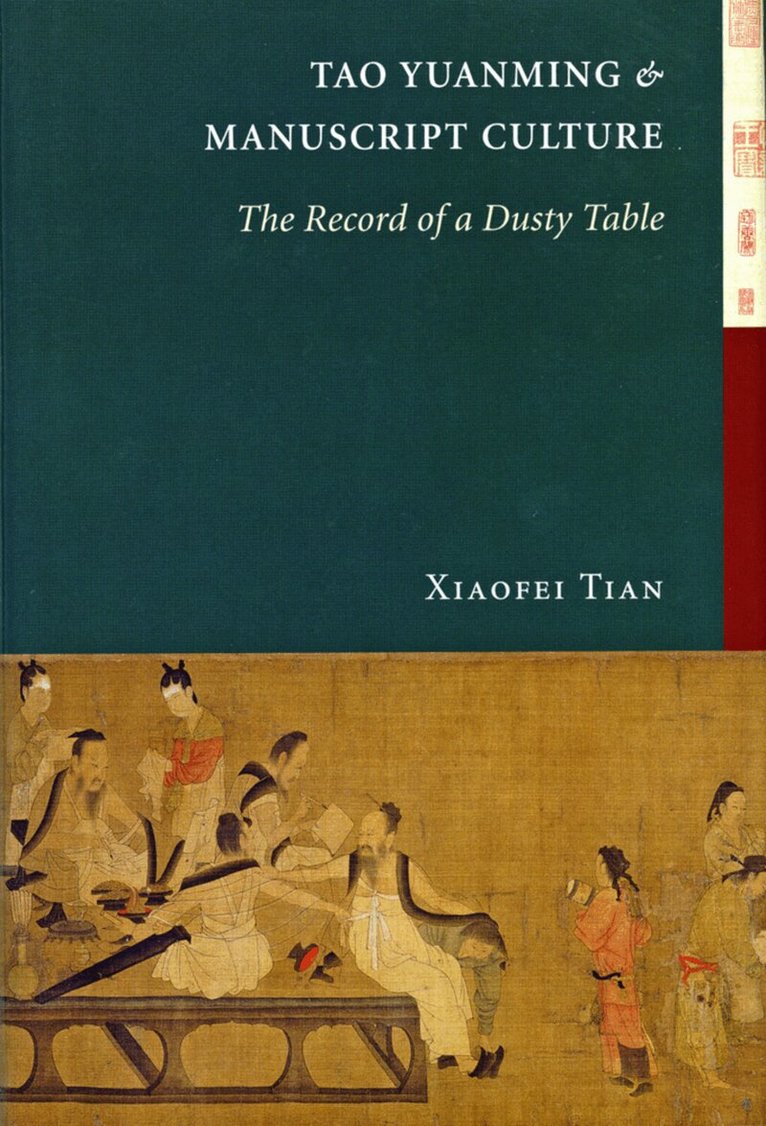
Winner of a 2006 Choice Magazine Outstanding Academic Title AwardAs medieval Chinese manuscripts were copied and recopied through the centuries, both mistakes and deliberate editorial changes were introduced, thereby affecting readers' impressions of the author's intent. In Tao Yuanming and Manuscript Culture, Xiaofei Tian shows how readers not only experience authors but produce them by shaping texts to their interpretation. Tian examines the mechanics and history of textual transmission in China by focusing on the evolution over the centuries of the reclusive poet Tao Yuanming into a figure of epic stature.Considered emblematic of the national character, Tao Yuanming (also known as Tao Qian, 365?-427 c.e.) is admired for having turned his back on active government service and city life to live a simple rural life of voluntary poverty. The artlessness of his poetic style is held as the highest literary and moral ideal, and literary critics have taken great pains to demonstrate perfect consistency between Tao Yuanming's life and poetry. Earlier work on Tao Yuanming has tended to accept this image, interpreting the poems to confirm the image.Tao Yuanming and Manuscript Culture is a study of how this cultural icon was produced and of the elusive traces of another, historical Tao Yuanming behind the icon. By comparing four early biographies of the poet, Tian shows how these are in large measure constructed out of Tao Yuanming's self-image as projected in his poetry and prose. Drawing on work in European medieval literature, she demonstrates the fluidity of the Chinese medieval textual world and how its materials were historically reconfigured for later purposes.Tian finds in Tao's poetic corpus not one essentialized Tao Yuanming, but multiple texts continuously produced long after the author's physical demise. Her provocative look at the influence of manuscript culture on literary perceptions transcends its immediate subject and has special resonance today, when the transition from print to electronic media is shaking the literary world in a way not unlike the transition from handwritten to print media in medieval China.
580 kr
Skickas inom 7-10 vardagar
Winner of a 2006 Choice Magazine Outstanding Academic Title AwardAs medieval Chinese manuscripts were copied and recopied through the centuries, both mistakes and deliberate editorial changes were introduced, thereby affecting readers' impressions of the author's intent. In Tao Yuanming and Manuscript Culture, Xiaofei Tian shows how readers not only experience authors but produce them by shaping texts to their interpretation. Tian examines the mechanics and history of textual transmission in China by focusing on the evolution over the centuries of the reclusive poet Tao Yuanming into a figure of epic stature.Considered emblematic of the national character, Tao Yuanming (also known as Tao Qian, 365?-427 c.e.) is admired for having turned his back on active government service and city life to live a simple rural life of voluntary poverty. The artlessness of his poetic style is held as the highest literary and moral ideal, and literary critics have taken great pains to demonstrate perfect consistency between Tao Yuanming's life and poetry. Earlier work on Tao Yuanming has tended to accept this image, interpreting the poems to confirm the image.Tao Yuanming and Manuscript Culture is a study of how this cultural icon was produced and of the elusive traces of another, historical Tao Yuanming behind the icon. By comparing four early biographies of the poet, Tian shows how these are in large measure constructed out of Tao Yuanming's self-image as projected in his poetry and prose. Drawing on work in European medieval literature, she demonstrates the fluidity of the Chinese medieval textual world and how its materials were historically reconfigured for later purposes.Tian finds in Tao's poetic corpus not one essentialized Tao Yuanming, but multiple texts continuously produced long after the author's physical demise. Her provocative look at the influence of manuscript culture on literary perceptions transcends its immediate subject and has special resonance today, when the transition from print to electronic media is shaking the literary world in a way not unlike the transition from handwritten to print media in medieval China.
Del 63 - Harvard-Yenching Institute Monograph Series
Beacon Fire and Shooting Star
The Literary Culture of the Liang (502–557)
Inbunden, Engelska, 2007
458 kr
Skickas inom 7-10 vardagar
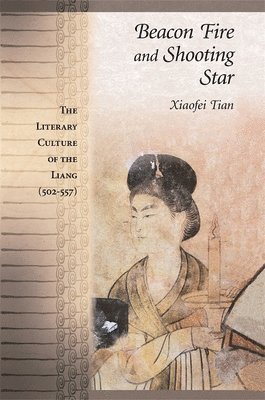
The Liang dynasty (502–557) is one of the most brilliant and creative periods in Chinese history and one of the most underestimated and misunderstood. Under the Liang, literary activities, such as writing, editing, anthologizing, and cataloguing, were pursued on an unprecedented scale, yet the works of this era are often dismissed as “decadent” and no more than a shallow prelude to the glories of the Tang.This book is devoted to contextualizing the literary culture of this era—not only the literary works themselves but also the physical process of literary production such as the copying and transmitting of texts; activities such as book collecting, anthologizing, cataloguing, and various forms of literary scholarship; and the intricate interaction of religion, particularly Buddhism, and literature. Its aim is to explore the impact of social and political structure on the literary world.
Del 78 - Harvard-Yenching Institute Monograph Series
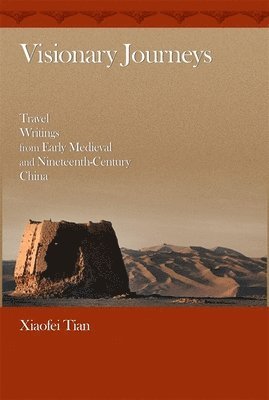
Visionary Journeys
Travel Writings from Early Medieval and Nineteenth-Century China
Inbunden, Engelska, 2012
332 kr
Skickas inom 7-10 vardagar
This book explores the parallel and yet profoundly different ways of seeing the outside world and engaging with the foreign at two important moments of dislocation in Chinese history, namely, the early medieval period commonly known as the Northern and Southern Dynasties (317–589 CE), and the nineteenth century. Xiaofei Tian juxtaposes literary, historical, and religious materials from these two periods in comparative study, bringing them together in their unprecedentedly large-scale interactions, and their intense fascination, with foreign cultures.By examining various cultural forms of representation from the two periods, Tian attempts to sort out modes of seeing the world that inform these writings. These modes, Tian argues, were established in early medieval times and resurfaced, in permutations and metamorphoses, in nineteenth-century writings on encountering the Other. This book is for readers who are interested not only in early medieval or nineteenth-century China but also in issues of representation, travel, visualization, and modernity.
Del 137 - Harvard-Yenching Institute Monograph Series
Literary History in and beyond China
Reading Text and World
Inbunden, Engelska, 2023
462 kr
Skickas inom 7-10 vardagar
Literary History in and beyond China: Reading Text and World explores the idea of literary history across the long span of the Chinese tradition. Although much scholarship on Chinese literature may be characterized as doing the work of literary history, there has been little theoretical engagement with received literary historical categories and assumptions, with how literary historical judgments are formed, and with what it means to do literary history in the first place. The present collection of essays addresses these questions from perspectives emerging both from within the tradition and from without, examining the anthological histories that shape the concept of a particular genre, the interpretive positions that impel our aesthetic judgments, the conceptual categories that determine how literary history is framed, and the history of literary historiography itself. As such, the essays collectively consider what it means to think through the framework of literary history, what literary history affords or omits, and what needs to be theorized in terms of literary history’s constraints and possibilities.
Del 108 - Harvard-Yenching Institute Monograph Series
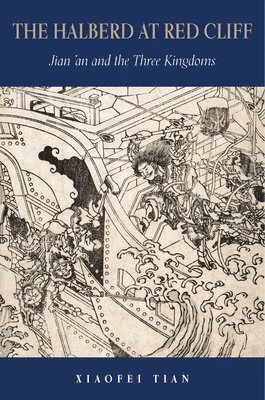
Halberd at Red Cliff
Jian’an and the Three Kingdoms
Inbunden, Engelska, 2018
462 kr
Skickas inom 7-10 vardagar
The turn of the third century CE—known as the Jian’an era or Three Kingdoms period—holds double significance for the Chinese cultural tradition. Its writings laid the foundation of classical poetry and literary criticism. Its historical personages and events have also inspired works of poetry, fiction, drama, film, and art throughout Chinese history, including Internet fantasy literature today. There is a vast body of secondary literature on these two subjects individually, but very little on their interface.The image of the Jian’an era, with its feasting, drinking, heroism, and literary panache, as well as intense male friendship, was to return time and again in the romanticized narrative of the Three Kingdoms. How did Jian’an bifurcate into two distinct nostalgias, one of which was the first paradigmatic embodiment of wen (literary graces, cultural patterning), and the other of wu (heroic martial virtue)? How did these largely segregated nostalgias negotiate with one another? And how is the predominantly male world of the Three Kingdoms appropriated by young women in contemporary China? The Halberd at Red Cliff investigates how these associations were closely related in their complex origins and then came to be divergent in their later metamorphoses.
Family Instructions for the Yan Clan and Other Works by Yan Zhitui (531–590s)
Inbunden, Engelska, 2021
569 kr
Skickas inom 5-8 vardagar
Yan Zhitui (531–590s) was a courtier and cultural luminary who lived a colourful life during one of the most chaotic periods, known as the Northern and Southern Dynasties, in Chinese history. Beginning his career in the southern Liang court, he was taken captive to the north after the Liang capital fell, and served several northern dynasties. Today he remains one of the best-known medieval writers for his book-length “family instructions” (jiaxun), the earliest surviving and the most influential of its kind. Completed in his last years, the work resembles a long letter addressed to his sons, in which he discusses a wide range of topics from family relations and remarriage to religious faith, philology, cultural arts, and codes of conduct in public and private life. It is filled with vivid details of contemporary social life, and with the author’s keen observations of the mores of north and south China. This is a new, complete translation into English, with critical notes and introduction, and based on recent scholarship, of Yan Zhitui’s Family Instructions, and of all of his extant literary works, including his self-annotated poetic autobiography and a never-before-translated fragmentary rhapsody, as well as of his biographies in dynastic histories.
596 kr
Skickas inom 5-8 vardagar
681 kr
Kommande
By the middle of the third century BCE, some people in China had begun to imagine it possible to employ esoteric methods to refashion themselves into posthuman beings with spirit-like capabilities, enhanced bodies, and greatly extended lifespans. Such beings were termed transcendents (xian 仙). Traditions of Exemplary Transcendents (Liexian zhuan 列仙傳), attributed to the imperial bibliographer Liu Xiang 劉向 (79-8 BCE), is the earliest extant collection of colorful stories about such figures. This volume makes available a critical edition and the first complete, annotated English translation of a text preserving some of the earliest mentions of alchemical, dietary, and medicinal methods of self-cultivation that later became standard in transcendence-seekers’ repertoire of practices. Through this work we can already glimpse the sorts of engagements with local communities that made the quest for transcendence a matter of keen interest not just to practitioners themselves but to many in Chinese society for centuries thereafter.
644 kr
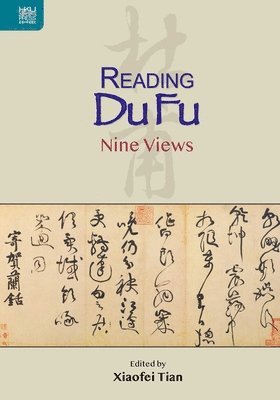
Skickas inom 5-8 vardagar
This is the first collection of essays in English, contributed by well-known experts of Chinese literature as well as scholars of a younger generation, dedicated to the poetry of Du Fu, commonly regarded as the greatest Chinese poet. These essays are engaged in historically nuanced close reading of Du Fu’s poems, both canonical and less known, from new angles and in various contexts, and discuss a series of critical issues, including the local and the imperial; the body politic and the individual body; poetry and geography; perspectives on the complicated relation of religion and literature; materiality and contemporary reception of Du Fu; poetry and visual art; and tradition and modernity. Many of the poems discussed in this book were written in the backwater town of Kuizhou, far from Du Fu’s earlier residence in the capital city Chang’an, at a time when the Tang dynasty was going through devastating social and political disturbances. The authors contend that Du Fu’s isolation from the elite literary establishments allowed him to become a pioneer who introduced a new order to the Chinese poetic discourse. However, his attention to details in everyday reality, his preoccupation with domestic life and the larger issues embroiled in it, his humor, and his ability to surprise tend to be obscured by the clichéd image of the “poet sage” and “poet historian”—an image this collection of essays successfully complicates.