Edouard A. Groult – illustratör
Upptäck titlar med illustrationer av Edouard A. Groult.
21 produkter
21 produkter
187 kr
Skickas inom 5-8 vardagar
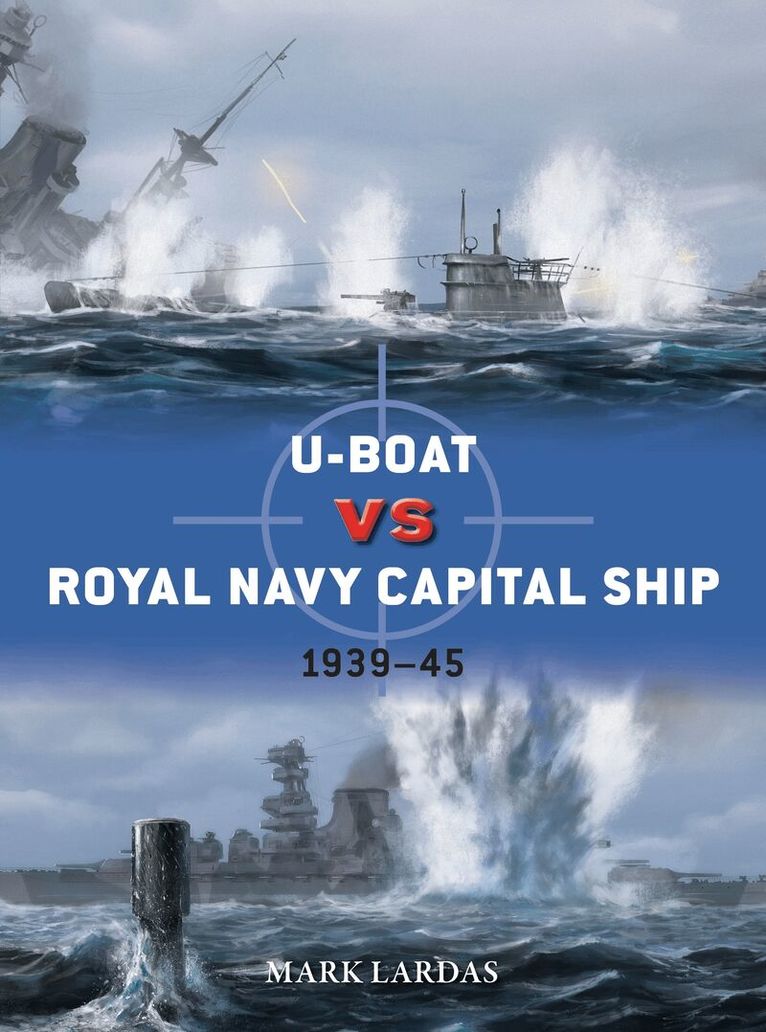
This insightful illustrated study investigates how the Royal Navy lost two battleships and three aircraft carriers to German U-boats during 1939–42.During World War II, over half of Britain’s capital ship losses were due to U-boats, as Germany’s submarines sought to deplete the Royal Navy’s powerful surface fleet. Featuring specially commissioned artwork and mapping alongside archive photographs, this study explains how Germany’s submarines sank five of Britain’s major surface vessels in four years of conflict at sea.Aircraft carrier HMS Courageous was sunk by U-29 on 17 September 1939 during anti-submarine patrols. On 14 October 1939, U-47 penetrated the Scapa Flow defences and sank battleship HMS Royal Oak. On 14 November 1941, U-81 sank HMS Ark Royal as the aircraft carrier returned to Gibraltar. On 25 November 1941, U-331 sank HMS Barham off Egypt. The final British capital ship to be sunk by German submarines was carrier HMS Eagle, torpedoed by U-73 en route to Malta on 11 August 1942.In this book, Mark Lardas charts the origins, development and combat performance of the U-boats in the Kriegsmarine’s efforts to attack British capital ships, and the Royal Navy’s efforts to counter the submarine threat to its battleships, battlecruisers and aircraft carriers. As well as the five encounters that led to sinkings, he examines the ‘near-misses’ that saw Royal Navy capital ships get the better of the U-boats.
201 kr
Skickas inom 10-15 vardagar
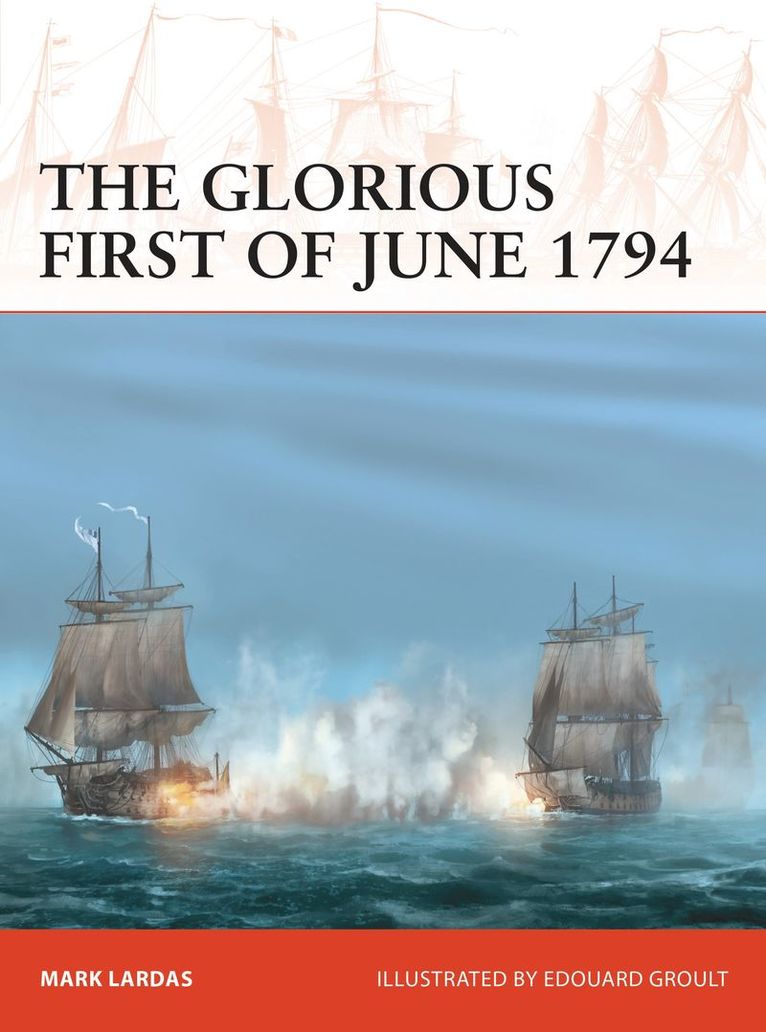
A highly illustrated account of the first and largest fleet action between the navies of Great Britain and France during the French Revolutionary Wars.As 1794 opened, Revolutionary France stood on a knife’s edge of failure. Its army and navy had been shaken by the revolution, with civil war and famine taking its toll on their resources. Seeking to bring a revitalizing supply of food from its Caribbean colonies and the United States, the French government decided to organize a massive convoy to bring the New World’s bounty to France. However, in order to succeed in their mission, the French Navy would have to make a deadly crossing over the North Atlantic, an ocean patrolled by the Royal Navy, the most powerful navy force in the world, whose sailors were eager to inflict a damaging defeat on Revolutionary France and win their fortune in prize money. Illustrated throughout with stunning full-colour artwork, this is the full story of the only fleet action during the Age of Fighting Sail fought in the open ocean, hundreds of miles from shore. Taking place over the course of a month, the inevitable battle was to be a close-run affair, with both sides claiming victory. To the French, it was le Bataille du 13 prairial, a notable day in their new, scientific Revolutionary calendar. For the British, it was the Glorious First of June.
Del 28 - Air Campaign
D-Day 1944
The deadly failure of Allied heavy bombing on June 6
Häftad, Engelska, 2022
174 kr
Skickas
An illustrated study of the little-known history of the failed Allied bombing campaign designed to shatter German defenses on D-Day.D-Day is one of the most written-about events in military history. One aspect of the invasion, however, continues to be ignored: the massive pre-assault bombardment by the Allied Expeditionary Air Force (AEAF), reinforced by RAF Bomber Command and the US Eighth Air Force on June 6 which sought to neutralize the German defenses along the Atlantic Wall. Unfortunately, this failed series of attacks resulted in death or injury to hundreds of soldiers, and killed many French civilians. Despite an initial successful attack performed by the Allied forces, the most crucial phase of the operation, which was the assault from the Eighth Air Force against the defenses along the Calvados coast, was disastrous. The bombers missed almost all of their targets, inflicting little damage to the German defenses, which resulted in a high number of casualties among the Allied infantry. The primary cause of this failure was that planners at Eighth Air Force Headquarters had changed aircraft drop times at the last moment, to prevent casualties amongst the landing forces, without notifying either Eisenhower or Doolittle. This book examines this generally overlooked event in detail, answering several fundamental questions: What was the AEAF supposed to accomplish along the Atlantic Wall on D-Day and why did it not achieve its bombardment objectives? Offering a new perspective on a little-known air campaign, it is packed with illustrations, maps and diagrams exploring in detail the features and ramifications of this mission.
174 kr
Skickas
A new illustrated history of one of the key air campaigns of late World War II – the American effort to cripple Germany's oil production, and grind its armed forces to a halt.With retreating German forces losing their oilfields on the Eastern Front, Germany was reliant on its own facilities, particularly for producing synthetic oil from coal. However, these were within range of the increasingly mighty Allied air forces. In 1944 the head of the US Strategic Air Forces, General Carl Spaatz was intent on a new campaign that aimed to cripple the German war machine by depriving it of fuel. The USAAF’s Oil Campaign built up momentum during the summer of 1944 and targeted these refineries and plants with its daylight heavy bombers. Decrypted German communications made it clear that the Oil Campaign was having an effect against the Wehrmacht. Fuel shortages in the autumn of 1944 forced the Luftwaffe to ground most of its combat units except for fighters involved in the defense of the Reich. Fuel shortages also forced the Kriegsmarine to place most of its warships in harbor except for the U-boats and greatly hampered German army campaigns such as the Battle of the Bulge in December 1944–45. This fascinating book packed with key photos and illustrations examines the controversies and debates over the focus of the US bombing campaign in the final year of the war, and the impact it had on the war effort overall.
187 kr
Skickas inom 5-8 vardagar
The first book to examine the battleship-led 1941 Pacific Fleet as it was intended to fight. Packed with illustrations, this study explains how the US Navy saw the approaching war unfolding.When the Japanese attacked Pearl Harbor, the Pacific Fleet was the most powerful in the US Navy. It was still dominated by battleships, but since the late 1930s had been developing naval aviation and integrating them with its battleship-led doctrine.This book is the first to examine the Pacific Fleet as it was intended to fight, and how it had been training and preparing in the months leading up to December 7, 1941. Naval historian Mark Lardas explains how, contrary to modern assumptions, it was not wedded to the battleship, but was hedging its bets, building up both its carrier and battleship strength. Most crucially, it had also been building and honing a massive fleet train, enabling the Pacific Fleet to operate easily thousands of miles from home. It was this foundation that enabled the Pacific Fleet to adapt so rapidly to the new world of carrier-led naval warfare, and first check and then defeat the IJN.With artwork, photos and diagrams, this is a portrait of 1941 in the Pacific Fleet, the last time and place when battleship doctrine held sway. Pearl Harbor would shatter this, and herald the start of the carrier era. The blow fell heavily on the US Pacific Fleet, but it and its successors would emerge more powerful than ever.
196 kr
Skickas
The full history of how the United States targeted and destroyed the Japanese capital from the air, in a ten-month long campaign by the US Army Air Force and the US Navy.In November 1944, the US Army Air Force launched a 111-plane B-29 strike against Tokyo, the first raid since the morale-boosting Doolittle Raid of 1942. From then until August 13, 1945, the United States would attack Tokyo 25 times, 20 from B-29s based in the Marianas and five from US Navy carrier task forces. The campaign included the single deadliest air raid in human history, when around 100,000 people were killed by the firestorm created by the Operation Meetinghouse raid of March 10, 1945.This book, the first to examine the full history of the United States’ air campaign against the greatest target in Japan, looks at the USAAF’s and US Navy’s efforts to use air power to eliminate Tokyo’s strategic value to the Empire. It considers how the campaign developed from daylight bombing to firebombing and anti-ship mining, and finally how the target was handed over to the US Navy, whose carrier-based bombers and fighter-bombers continued to strike Tokyo during July and August 1945.Using specially commissioned battlescenes, strategic maps and diagrams, this volume presents a detailed picture of how Tokyo was vanquished from the air.
185 kr
Skickas
This fully illustrated book assesses the trial of strength between US Navy PT boats and Japanese destroyers operating in the Solomon Islands during 1942–43.During the Solomons fighting, the IJN was forced to rely on destroyers to move men and materiel to its forward garrisons. Conducted at night to avoid American air power, these missions, first seen during the struggle for Guadalcanal, were dubbed the Tokyo Express. Unable to derail the Tokyo Express by using its destroyers, the USN deployed PT boats off Guadalcanal from October 1942; sinking one destroyer and damaging another.As the fighting moved into the Central Solomons, the USN attempted to disrupt the build-up of Japanese forces on New Georgia Island and other Japanese strongholds by using cruisers and destroyers, but this approach resulted in heavy losses. PT boat operations were increasingly important after the Japanese turned to barges to move troops and supplies.Full-colour artwork and mapping and carefully chosen archive photographs complement vivid battle narratives and shrewd analysis in this lively account of the ships and men fighting on both sides in the crucial Solomon Islands campaign at the height of World War II. Renowned authority Mark Stille explores the background to this epic clash of arms, charts its course during 1942–43, and offers insights into the performance of both sides in this pivotal campaign of World War II in the Pacific.
152 kr
Skickas
Illustrated throughout, this book explains the composition and qualities of the Soviet tank force that fought Germany’s mighty Panzers at the biggest tank battle in history. In the summer of 1943, Hitler’s army had rebuilt its Panzer forces after defeat at Stalingrad and retreat from the Caucasus. New types, including the Panther, Tiger, and Elefant, at last added technical superiority to the traditional tactical edge enjoyed by the Panzer divisions. The plan was to begin offensive operations by striking from the north and south to cut off Soviet forces in the Kursk salient. In this book, Soviet military specialist William E. Hiestand explores the armor that met this Panzer force, in the biggest tank battle of World War II. The Soviets had benefited from their prodigious production capabilities but the tanks at Kursk varied widely. Still short of tanks, the Soviets also still operated weak T-60 and T-70 light tanks, along with the increasingly obsolete KV-1 heavy tank. Significant numbers of Lend-Lease tanks also fought, including M3 Lees, Valentines, Stuarts, Churchills, and the first Shermans to join the Red Army. The Soviets also benefited from the firepower of the first generation of Soviet self-propelled guns – the SU-76, SU-122, and SU-152. With meticulously researched tank illustrations and rare archive photos, this is an expert account of the Soviet tank forces in the climactic clash on the Eastern Front.
215 kr
Skickas
An illustrated history of "the first Pacific War," which saw the United States transform itself into an outward-looking, expansionist great power.In April 1898, the United States and Spain declared war on each other. Led by Commodore George Dewey, the small US Asiatic Squadron departed China and attacked the Spanish naval squadron defending Manila Bay on May 1. Simultaneously, an insurrection under a charismatic young Filipino named Aguinaldo liberated most of the Philippines on its own and laid siege to Manila. This resulted in three warring sides vying for supremacy, with each fixed on their own unique political goals. Here, respected author Brian Lane Herder explores why the 1898 US campaign in the Philippines permanently transformed US foreign policy, and highlights the importance of the Filipino rebels in defeating the Spanish. Illustrated with stunning battlescenes, photographs, and informative maps and diagrams, this work covers the May 1 naval battle between the US and Spanish cruiser squadrons, the May–August Philippines land campaign, the capture of Guam, and the annexation of Hawaii. The resultant work is one of the first to address the entire Pacific theater of the Spanish–American War, including both military and diplomatic developments.
203 kr
Skickas inom 5-8 vardagar
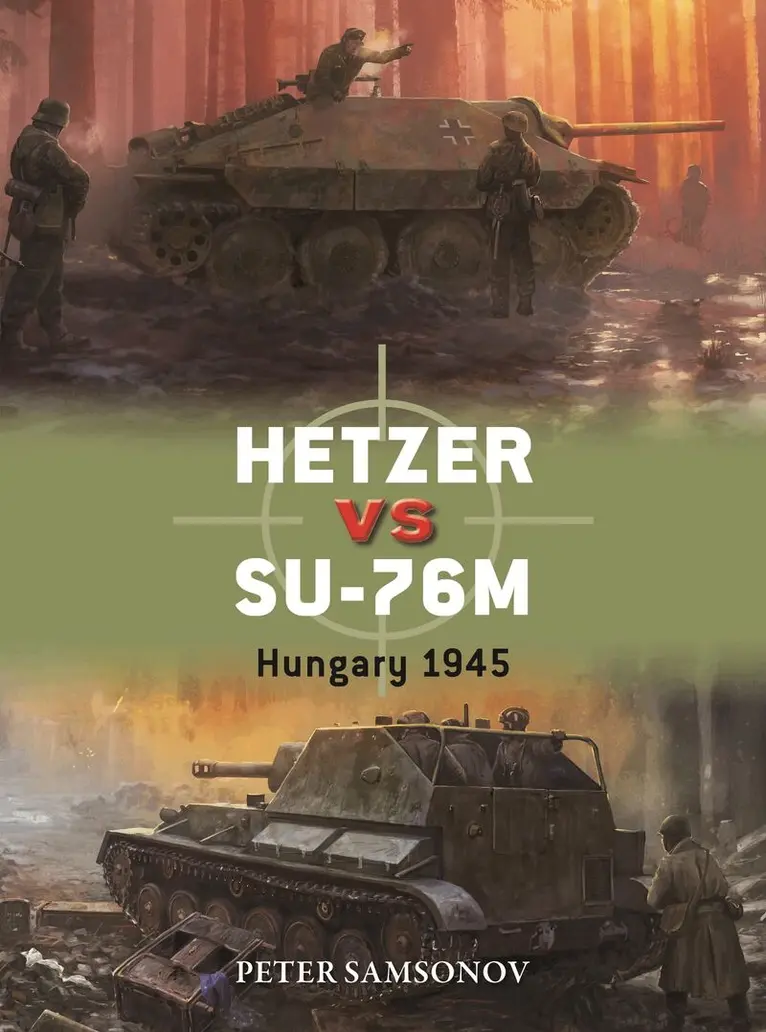
A noted authority examines the roles played by Germany’s Hetzer tank destroyer and the Soviet SU-76M self-propelled gun during the battle for Hungary in 1945.During World War II, Germany and the Soviet Union soon found that their light tanks were obsolete; while their small guns were no longer useful against the enemy’s armoured vehicles, the chassis allowed for installation of a larger gun at the cost of a rotating turret. Keen to utilize existing technology, Germany and the Soviet Union approached this challenge differently. While the Germans turned their PzKpfw 38(t) tank into a tank destroyer, first the open-topped Marder III and then the fully enclosed Jagdpanzer 38(t), nicknamed the ‘Hetzer’, the Soviet designers turned the T-70 light tank into an infantry support gun capable of engaging enemy armour, its open-topped fighting compartment adding communication with accompanying infantry.In this study, leading armour expert Peter Samsonov’s insightful analysis is complemented by specially commissioned artwork and mapping alongside carefully selected archive and present-day photographs, revealing the origins, development and combat performance of these two types at war. Both were widely employed amid the tank battles of early 1945, as Soviet forces reached deep into Hungary and the Axis armies mounted one last counter-offensive on the Eastern Front, Operation Spring Awakening.
Del 10 - Fleet
Royal Navy Grand Fleet 1914–18
Britain’s last supreme naval fleet
Häftad, Engelska, 2025
185 kr
Skickas
World War I was Britain’s last moment as the world’s naval superpower, and its Grand Fleet was then the most powerful ever seen. Fully illustrated, this explores its fighting power.At the start of World War I, the Royal Navy’s forces were amalgamated into a single entity, the Grand Fleet, and stationed in Scapa Flow, Orkney. The Grand Fleet was the largest amalgamation of modern naval power the world had seen, with over 30 dreadnought battleships or battlecruisers, and a plethora of cruisers and destroyers. In 1917 it was reinforced further by a powerful American squadron.In this book, based on extensive primary source research, naval expert Angus Konstam assesses the Grand Fleet’s ships, technology, organization, command and intelligence, and how it fought. While ship-for-ship its German counterparts were better designed, as a combined fleet Admiral Jellicoe’s armada was unstoppable. It took part in several clashes with its German foe during the war, but it was only at the Battle of Jutland, in 1916, that Jellicoe finally had the chance to destroy the enemy.Although the High Seas Fleet deftly avoided the trap laid for it, the Grand Fleet's economic blockade then really began to bite, which led to Germany’s surrender in November 1918. Packed with battle diagrams, spectacular artwork, and archive photos, this book is an essential guide to the last time the Royal Navy would be indisputably the world’s most powerful.
Del 13 - Fleet
Kriegsmarine North Sea Command 1939–42
Germany's coastal naval campaign
Häftad, Engelska, 2025
203 kr
Skickas inom 5-8 vardagar
An authoritative, illustrated history of how Germany fought to dominate the North Sea in early World War II, and take the naval war to Britain's coasts.Britain’s war economy relied not only on the Atlantic Convoys, but also on superiority in coastal waters. Six days out of seven, convoys left Scotland and northern England, laden chiefly with the coal that the south required – London alone needing 40,000 tons a week. Cutting these lines, as well as challenging military and naval movements, was the responsibility of Germany’s North Sea Command.Here, Kriegsmarine expert Lawrence Paterson offers the first study of Germany’s fierce war in the North Sea from a strategic and operational perspective. Although famous for its dashing S-boats, the North Sea saw an array of ships from battleships (briefly) and cruisers to converted fishing boats. Destroyers, torpedo boats and minelayers laid extensive mine barrages close inshore, in the face of the Royal Navy. He also explores the command's defences, with its many Kriegsmarine shore troops, artillery emplacements, flak batteries and small units of marines.German coastal forces engaged British forces at Dunkirk and, with the fall of France, the war spread along the entire coastline. With diagrams, archive photos (some unpublished) and original artwork, this is the story of the Kriegsmarine’s struggle to cut Britain’s military and trade arteries.
Del 154 - Duel
US Liberty Ship vs German Surface Raider
The Battle of the Atlantic 1942
Häftad, Engelska, 2026
185 kr
Kommande
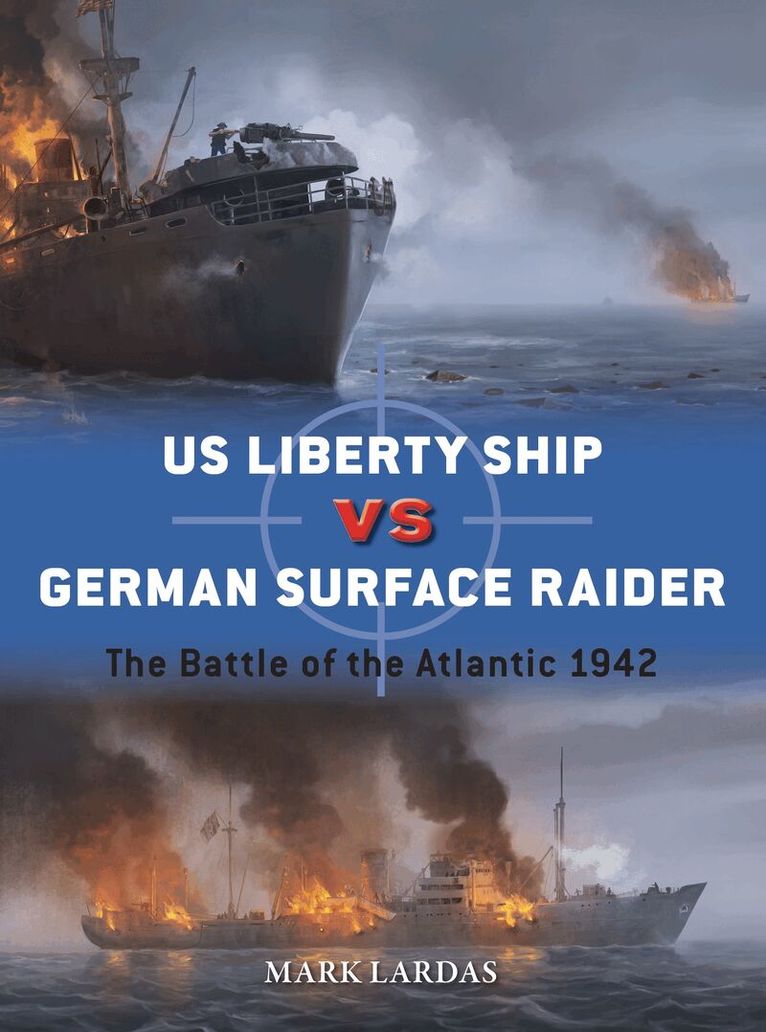
Fully illustrated, this study examines World War II's most dramatic single-ship action, in which Stephen Hopkins fought a heavily armed German auxiliary cruiser, Stier.When the United States entered World War II, the Battle of the Atlantic was already raging. The so-called ‘Liberty Ships’, built at breakneck speed and in huge numbers during 1941–45, were crucial to the Allied war effort. While the greatest successes of Germany’s auxiliary cruisers occurred in 1939–41, this book describes how one of these ingenious warships, Stier, confronted the Liberty Ship Stephen Hopkins in an epic single-ship duel on September 27, 1942.Stephen Hopkins carried one 4in gun, two 37mm cannon and six machine guns, all primarily intended for antisubmarine and antiaircraft purposes. Stier had six 150mm, one 75mm, one twin 37mm, four single 20mm and four 533mm torpedo tubes. At the end of this grossly uneven fight, Stier had sunk Stephen Hopkins, but was so badly damaged it had to be scuttled.While this battle has garnered much attention, Mark Lardas explores other clashes between the German surface raiders and their Liberty Ship quarry during 1942. Featuring specially commissioned artwork and mapping alongside archive photographs, this lively study investigates the important role both ship types played as the Battle of the Atlantic reached its climax.
185 kr
Kommande
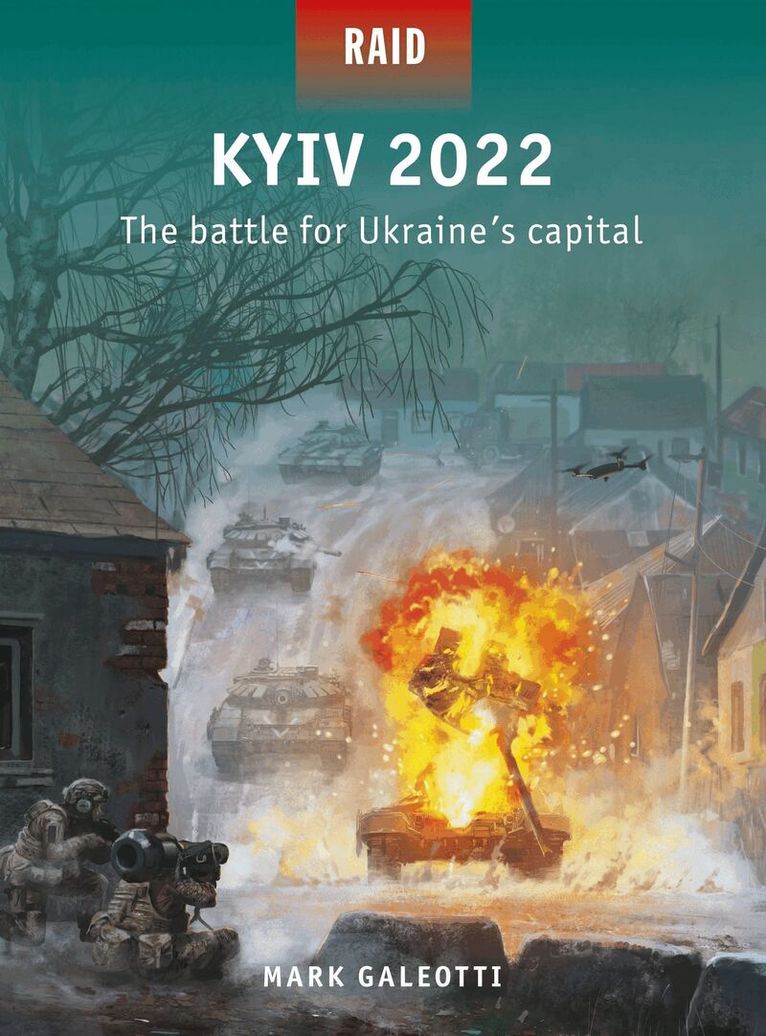
The first authoritative, illustrated account of Russia’s high-risk strike on Ukraine’s capital, the centerpiece of its failed 2022 invasion plan.In 2022, Vladimir Putin was convinced he could seize Kyiv, install a puppet government, and close his fist on Ukraine in a matter of weeks, with minimal fighting. In this book, Dr Mark Galeotti, a world expert on Russian military history, explains how Russia’s lightning conquest was conceived and planned, and how it was defeated.He explains how Russia’s commanders did not expect to go to war and were forced to invade under-prepared, and how they nonetheless made a concerted attempt to seize Hostomel Airport and from there take the capital, with mercenaries detailed to hunt down the government. But Ukrainian military and civilian resistance thwarted the attack and within a month, the Russians were already on the retreat, leaving behind the smoking remains of the 40-mile invasion column outside Kyiv.Drawing extensively on Russian and Ukrainian sources including interviews with soldiers involved in the operation, and fully illustrated with photographs, original artwork and maps, this is the most detailed and compelling study of this operation available in English. It is the story of a strike whose defeat signalled both the shattering of Putin’s expectations of an easy victory, and the start of the reorientation of the war towards the south-east.
Del 20 - Fleet
Royal Navy Mediterranean Fleet 1793–1805
The war at sea against Napoleon
Häftad, Engelska, 2026
180 kr
Kommande
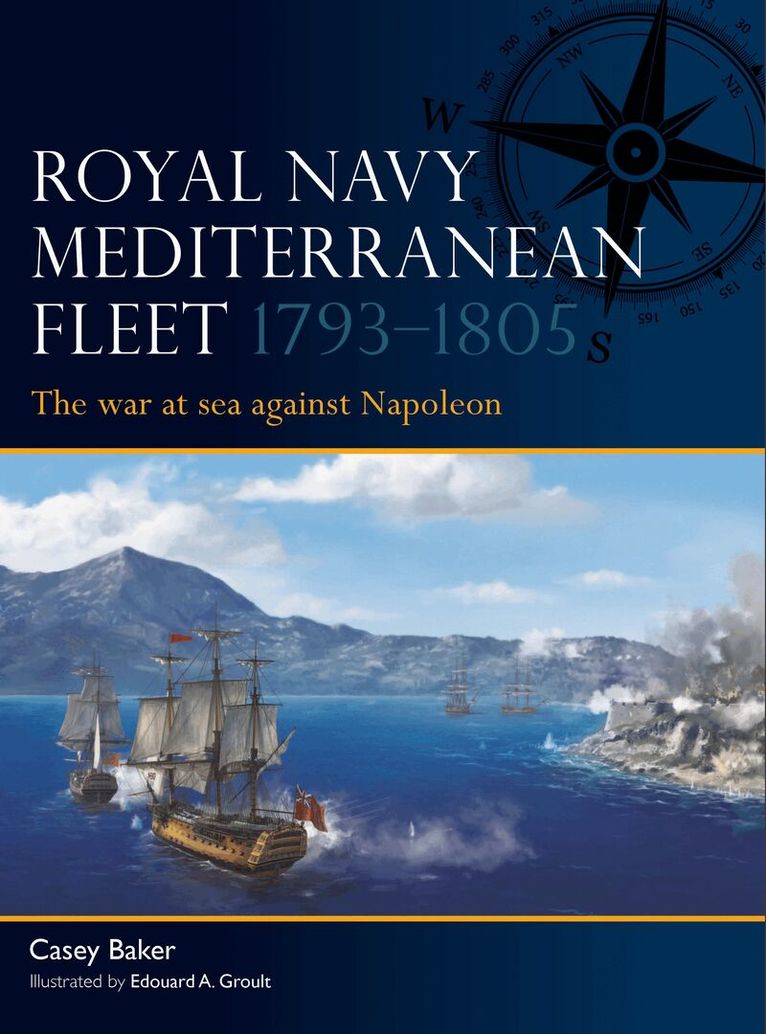
A fresh, all-encompassing study of the most active British fleet of the French Revolutionary and Napoleonic wars: the Mediterranean Fleet, in which Horatio Nelson made his legendary name.When war broke out with Revolutionary France in 1893, the Royal Navy’s Mediterranean Fleet was launched into a long and complex war. Operating at arm's length from London, the fleet assumed traditional responsibilities for trade protection, blockade, and high-seas warfare, but also diplomatic and counter-revolutionary activities across the region. It was the theatre that produced some of the most iconic moments of British naval history, and made a legend out of Horatio Nelson. However, the reality of the Mediterranean war has long been overshadowed by its famous battles and huge personalities. In this book, naval scholar Casey Baker draws upon his years of archive research to present a comprehensive portrait of the Mediterranean Fleet’s war – its strategic roles, its organization and decision-making, fighting capabilities and shortcomings, diplomatic and political responsibilities, logistics and manning, and the combat that it saw from the Levant to Cape Trafalgar. With superb original artwork, new maps and 3D diagrams of little-studied actions from amphibious operations to the maritime trade war, he assesses how Royal Navy’s most active fleet of the Revolutionary and Napoleonic Wars fought and operated in this most crucial theatre.
Del 21 - Fleet
Kriegsmarine Norway Command 1940–45
The naval war on the northern flank
Häftad, Engelska, 2026
185 kr
Kommande
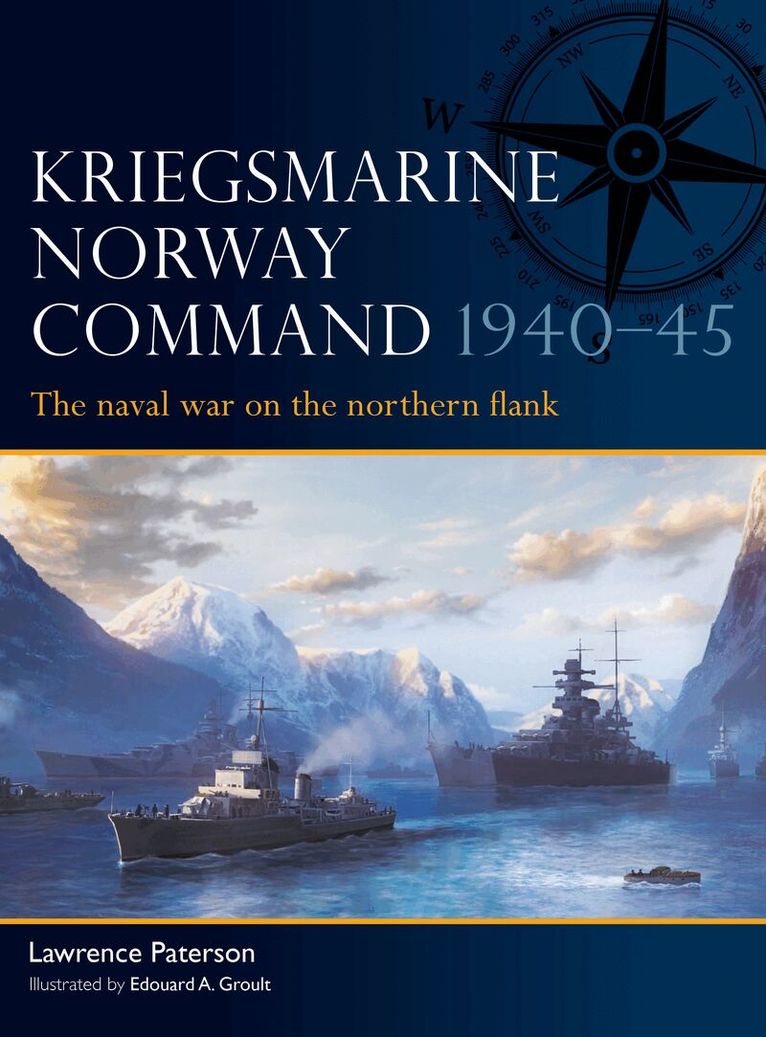
Fully illustrated, this is the first full history of the Kriegsmarine’s challenging operations from occupied Norway, tackling Allied sea power in the North Sea and Arctic. The invasion of Norway was intended to secure Germany’s northern flank, and win access to the Atlantic and to vital Scandinavian resources. It was the Kriegsmarine’s biggest, most testing, and most costly amphibious operation, and victory only brought new demands on the mauled surface fleet. Naval historian Lawrence Paterson here examines the Kriegsmarine’s presence and operations in occupied Norway, as the fleet fought to secure its new waters and launch offensive operations, first against the British and later the Soviets. It is a theatre most famous as the last lair of Germany’s battleships and for operations against the Arctic Convoys, but operations involved the full spectrum of the navy. Convoy protection, coastal security and interdiction were vital throughout the war and relied heavily on Germany’s workhorse Vorpostenboote. Illustrated with some rare and unpublished photos, superb original artwork, diagrams and maps, this book explores the full story of the Kriegsmarine in Norway. From warships and combat to its strategic tasks, the complex and confusing command structure, intelligence, logistics, security and facilities, it is the first comprehensive history of Germany’s fleet in the far north.
Del 15 - Fleet
Italian Adriatic Fleet 1915–18
The fierce naval war with Austria-Hungary
Häftad, Engelska, 2026
187 kr
Skickas inom 5-8 vardagar
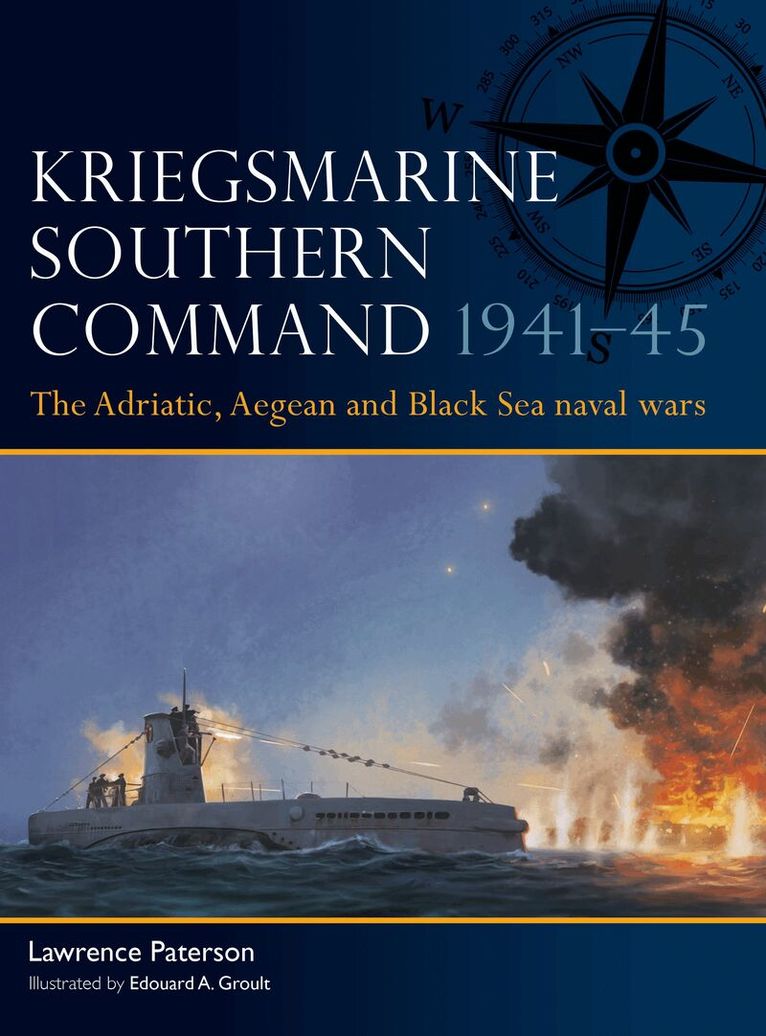
Fiercely fought with all the latest weaponry of World War I, Italy’s Adriatic campaign is the forgotten war of the dreadnought era. Fully illustrated, this is its first history in English.Fought across the narrowest naval frontline of World War I, with almost daily combat, the Adriatic Sea was perhaps the war’s most active coastal naval campaign, yet it is barely known in the English-speaking world. Although the two battle fleets never met, the Adriatic was ferociously fought over by Italy and Austro-Hungary’s cruisers, destroyers, torpedo boats and submarines. It was a war of hit-and-run attacks, port raids, blockades and evasions, convoy warfare, shore bombardments and amphibious operations.Renowned naval historian Enrico Cernuschi draws upon his decades of research to present the first complete history in English of Italy’s Adriatic naval war, and the fleets and flotillas that fought it. The theatre saw successful use of new technology and tactics, including the first battleship to be sunk by torpedo, as well as extensive use of aircraft and flying boats.Packed with rare and unpublished photos, superb original artwork, 3D maps and diagrams, this book explores the Regia Marina’s warships, command structures, intelligence, relations with other Allied navies, as well as a thorough history of Adriatic naval actions, most of which have never been written about in English.
185 kr
Kommande
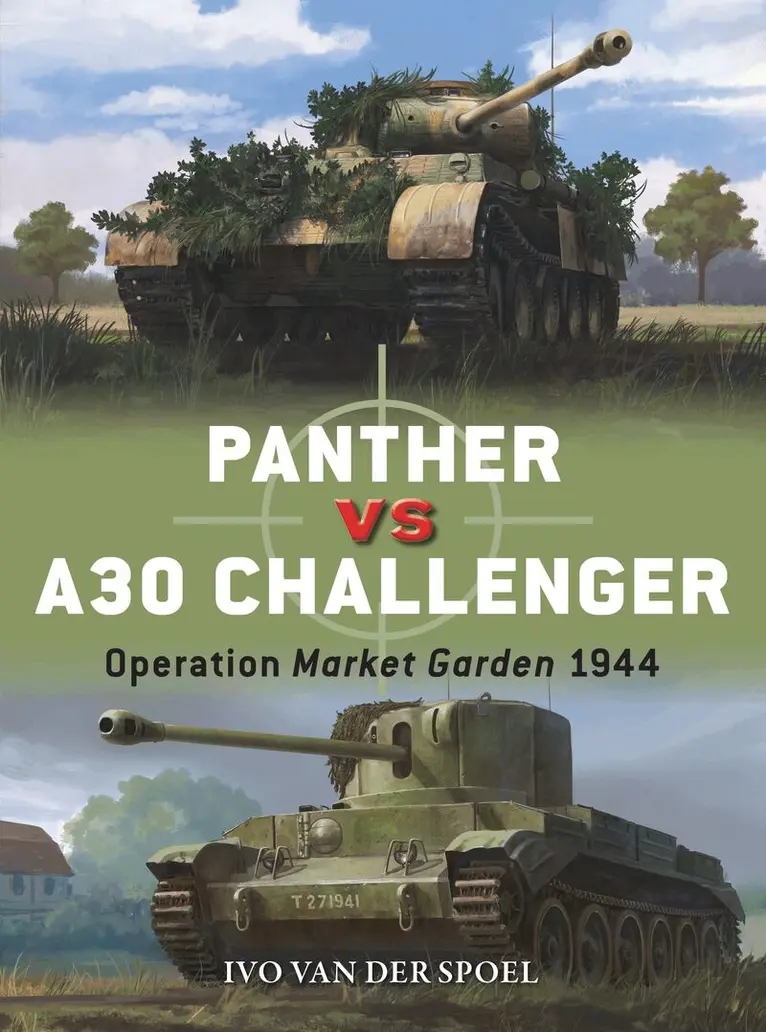
This lively study investigates the clashes between two cutting-edge tank types in battle at a crucial moment in Operation Market Garden.In 1944–45 Britain’s A30 Challenger tank, a stopgap design armed with the lethally effective 17-pounder anti-tank gun used in the Sherman Firefly, provided essential armour-piercing firepower against Germany’s latest fighting vehicles including the formidable Panther tank. This absorbing account casts new light on these innovative tank designs and their clash in September 1944 at a critical moment in Operation Market Garden, the Allied bid to cross the Rhine and end the war by Christmas.In this book, Ivo van der Spoel reconstructs the pivotal tank battle outside the Dutch village of Son on 20 September 1944, in which Cromwells and Challengers of the 15/19 Hussars repulsed an attack by Panther tanks of Panzerbrigade 107. In an intense combined-arms battle that lasted all day the Hussars, backed up by American paratroopers, destroyed five Panther tanks and drove back one of the most dangerous German attacks on the Market Garden corridor. The authoritative text is complemented by rare photographs, full-colour mapping and specially commissioned artwork showing the two types in combat.
283 kr
Kommande
300 kr
Kommande
283 kr
Kommande