
Visar resultat för..."Pen Sword Military"
1 724 produkter
1 724 produkter
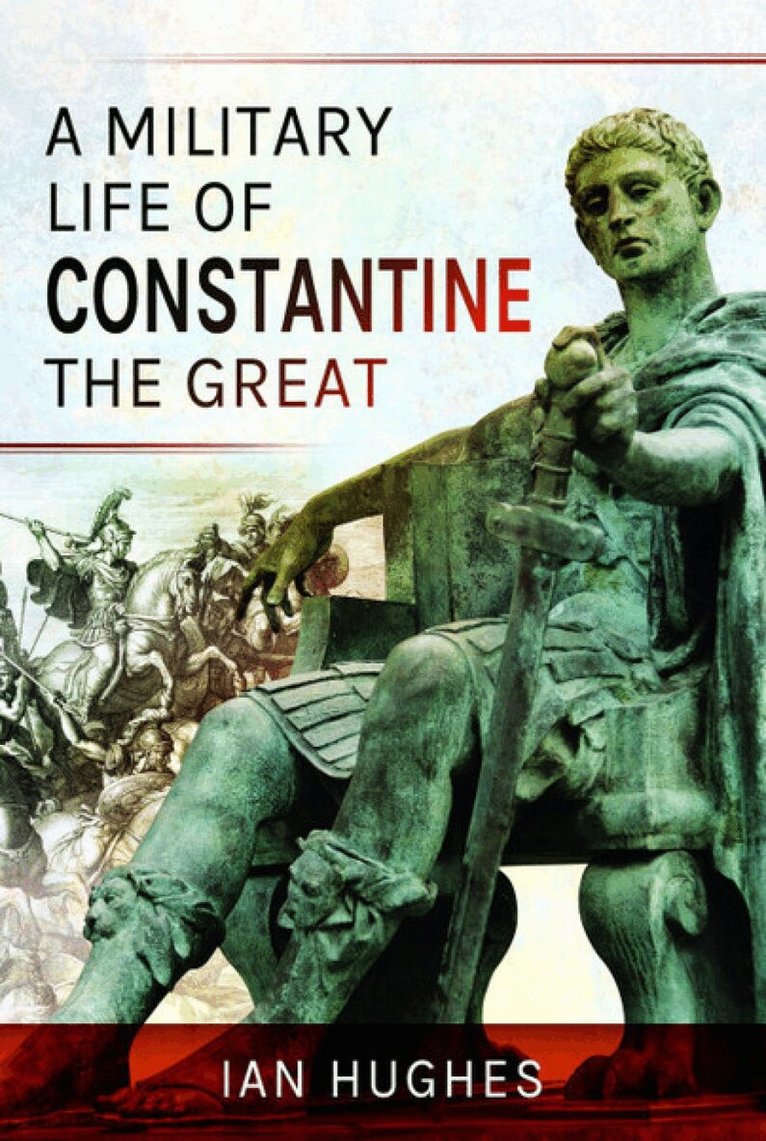
Häftad, Engelska, 2024
160 kr
Skickas
Much of Constantine I’s claim to lasting fame rests upon his sponsorship of Christianity, and many works have been published assessing whether his apparent conversion was a real religious experience or a cynical political manoeuvre. However his path to sole rule of the Roman Empire depended more upon the ruthless application of military might than upon his espousal of Christianity. He fought numerous campaigns, many of them against Roman rivals for Imperial power, most famously defeating Maxentius at the Battle of the Milvian Bridge. In this new study, Ian Hughes assesses whether Constantine would have deserved the title ‘the Great’ for his military achievements alone, or whether the epithet depends upon the gratitude of Christian historians.All of Constantine’s campaigns are narrated and his strategic and tactical decisions analysed. The organization, strengths and weaknesses of the Roman army he inherited are described and the effect of both his and his predecessors’ reforms discussed. The result is a fresh analysis of this pivotal figure in European history from a military perspective.
Inbunden, Engelska, 2020
218 kr
Skickas
Much of Constantine I's claim to lasting fame rests upon his sponsorship of Christianity, and many works have been published assessing whether his apparent conversion was a real religious experience or a cynical political manoeuvre. However his path to sole rule of the Roman Empire depended more upon the ruthless application of military might than upon his espousal of Christianity. He fought numerous campaigns, many of them against Roman rivals for Imperial power, most famously defeating Maxentius at the Battle of the Milvian Bridge. In this new study, Ian Hughes assesses whether Constantine would have deserved the title 'the Great' for his military achievements alone, or whether the epithet depends upon the gratitude of Christian historians.All of Constantine's campaigns are narrated and his strategic and tactical decisions analysed. The organization, strengths and weaknesses of the Roman army he inherited are described and the effect of both his and his predecessors' reforms discussed. The result is a fresh analysis of this pivotal figure in European history from a military perspective.
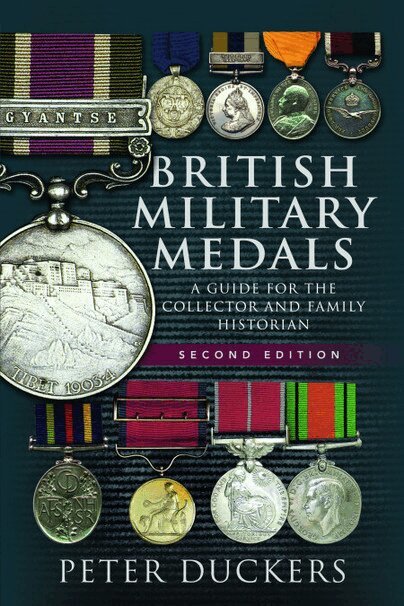
Häftad, Engelska, 2021
223 kr
Skickas
This second edition of Peter Duckers best-selling British Military Medals traces the history of medals and gallantry awards from Elizabethan times to the modern day, and it features an expert account of their design and production. Campaign and gallantry medals are a key to understanding - and exploring - British and imperial military history, and to uncovering the careers and exploits of individual soldiers. In a series of succinct and well-organized chapters he explains how medals originated, to whom they were awarded and how the practice of giving medals has developed over the centuries. His work is a guide for collectors and for local and family historians who want to learn how to use medals to discover the history of military units and the experiences of individuals who served in them.
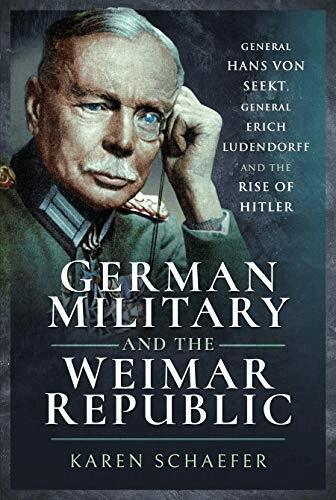
Inbunden, Engelska, 2020
262 kr
Skickas
General Hans von Seekt (1866-1936) was the military counterpart of the Weimar Republic, both attempted to restore Germany's international acceptance and security following defeat in World War I and the Treaty of Versailles of 1919. And the failure of both led eventually to the rise of Hitler and Nazi Germany. Hans von Seekt was from the traditional German officer caste, served with distinction on the war and became Chief of the Army Command at the Reichewehr Ministry of the Weimar Republic and Germany's 'supreme soldier'and major military strategist. His role was to re-build the shattered German army in face of the punitive terms of post-war settlement imposed by the victorious Entente Powers which drastically reduced its strength and imposed crippling financial conditions. He aimed to build a modern and efficient military - a new German army - with a main strategy of peaceful defence purposes, and to re-introduce Germany into the community of nations. This original and far-sighted policy was opposed by the movement seeking revenge for defeat - a 'stab in the back' - led principally by his rival, General Erich Ludendorff, whose aim was re-build the once-mighty German imperial army as a major international force. The failure of von Seekt's experiment was mirrored by the fall of the Weimar Republic, and the rise of rise of Hitler and Nazi Germany.
Inbunden, Engelska, 2026
304 kr
Skickas
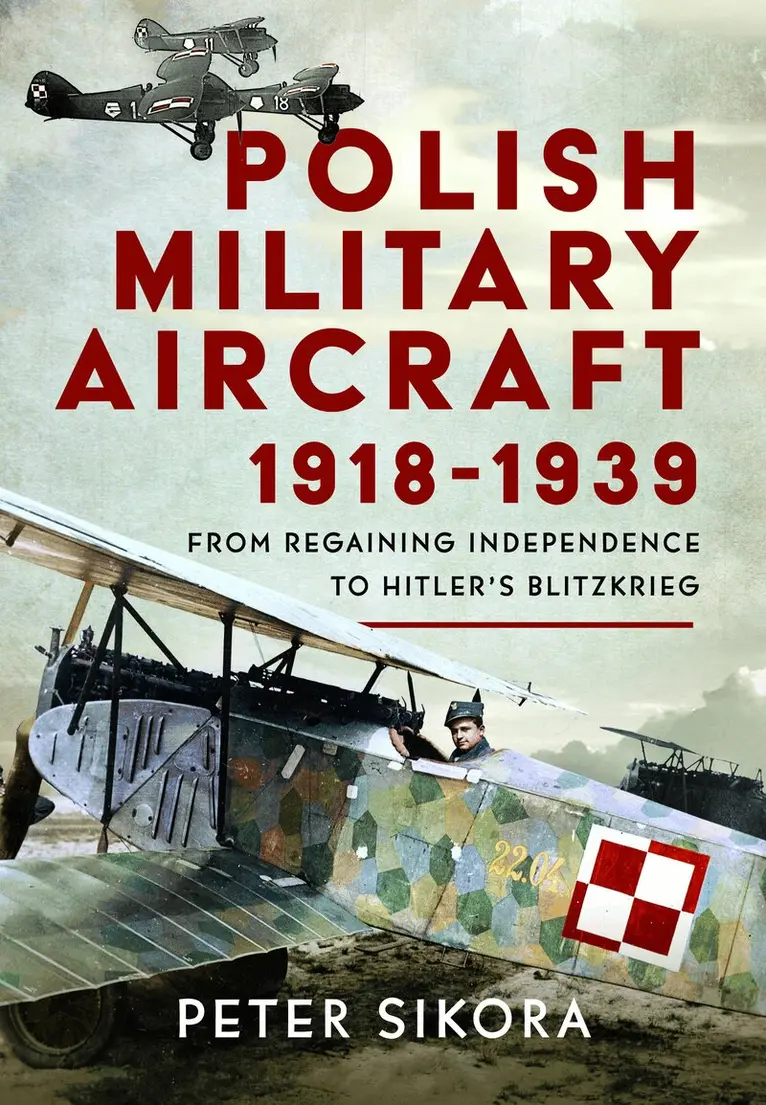
Despite not existing as a free country for 123 years until the end of the First World War, the roots of Polish aviation, including military aviation, reach as far back as the days of pioneers such as Otto Lilienthal or the Wright Brothers.The Polish Military Aviation can trace its origins to the second half of 1917, and was officially established when Poland regained her independence on 11 November 1918. The country was then able to build its own air force with men being proud to call themselves Poles again.Despite its difficult rebirth, in the 1930s Poland developed a wide range of its own aircraft. These included the PZL P.6 fighter which gained fame for being the most advanced of its day and the first fighter aircraft made of metal in the world, or PZL P.24 fighter considered by the RAF as a purchase option. Towards the end of the decade, however, foreign aircraft design had overtaken them.In 1939, Poland fought its lonely war against overwhelming might of the German Third Reich, the fascist state of Slovakia and the Soviet Russia. Though surrounded, massively outnumbered and flying mostly inferior aircraft, Polish fliers caused the attacking forces considerable losses, including 500 aircraft, destroyed and damaged.As well as telling the story of the valiant Polish flyers, Polish Military Aircraft 1918-1939 includes a wonderful collection of photographs, the majority of which have never been seen in the West. Together, these take the reader on a journey throughout the early years of Polish military aviation, showing amazing pictures of German, Austro-Hungarian or Russian aeroplanes, in many cases scavenged by the Poles. Also included is selection of British aircraft which were used in Poland, as well as a host of photographs of Polish-designed and built machines, including these that had to face Luftwaffe in September of 1939.
Inbunden, Engelska, 2023
262 kr
Skickas
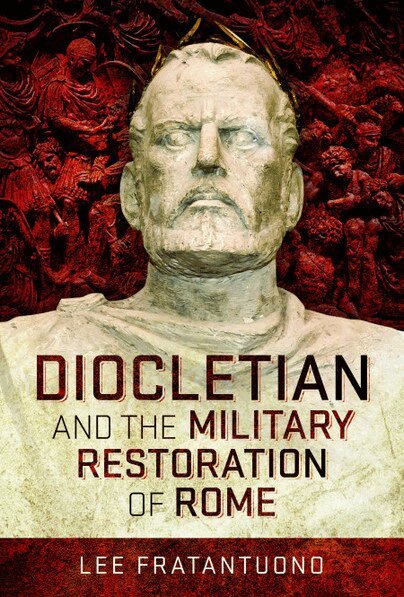
The third century AD was one of unprecedented crisis and chaos for the Roman Empire. Nightmares both internal and external threatened to spell the end of Rome's thousand-year history. Diocletian was born either a slave or a freedman, and he grew up to become the saviour of Rome in her hour of crisis, a powerful military and political leader who transformed the Roman Empire from a hotbed of unceasing strife and turmoil into a renewed, restored, revivified and stable polity. His more than twenty years of power were marked by the ill-fated Great Persecution of the Christians, an undertaking that would prove to be one of the less successful initiatives of his reign, even as in its own way it helped to pave the way for the coming of an equally famous, successful emperor in the person of Constantine the Great. The present study seeks to provide an introduction to the life and times of Diocletian for the general reader, offering a balanced portrait of an immensely talented man in a time of trial and tumult, an accomplished emperor who knew when it was time to retire to his gardens.
Häftad, Engelska, 2000
211 kr
Skickas
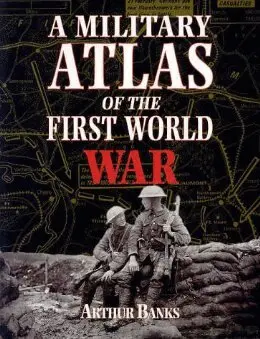
This is a unique study of the conflict of 1914-18 on land, sea and in the air, through maps, diagrams and illustrations. Within the scope of some 250 maps, Arthur Banks has presented both broad general surveys of political and military strategy, and the most closely researched details of major individual campaigns and engagements. These are supplemented by comprehensive analysis of military strengths and command structures and illustrations.
Inbunden, Engelska, 2024
323 kr
Skickas
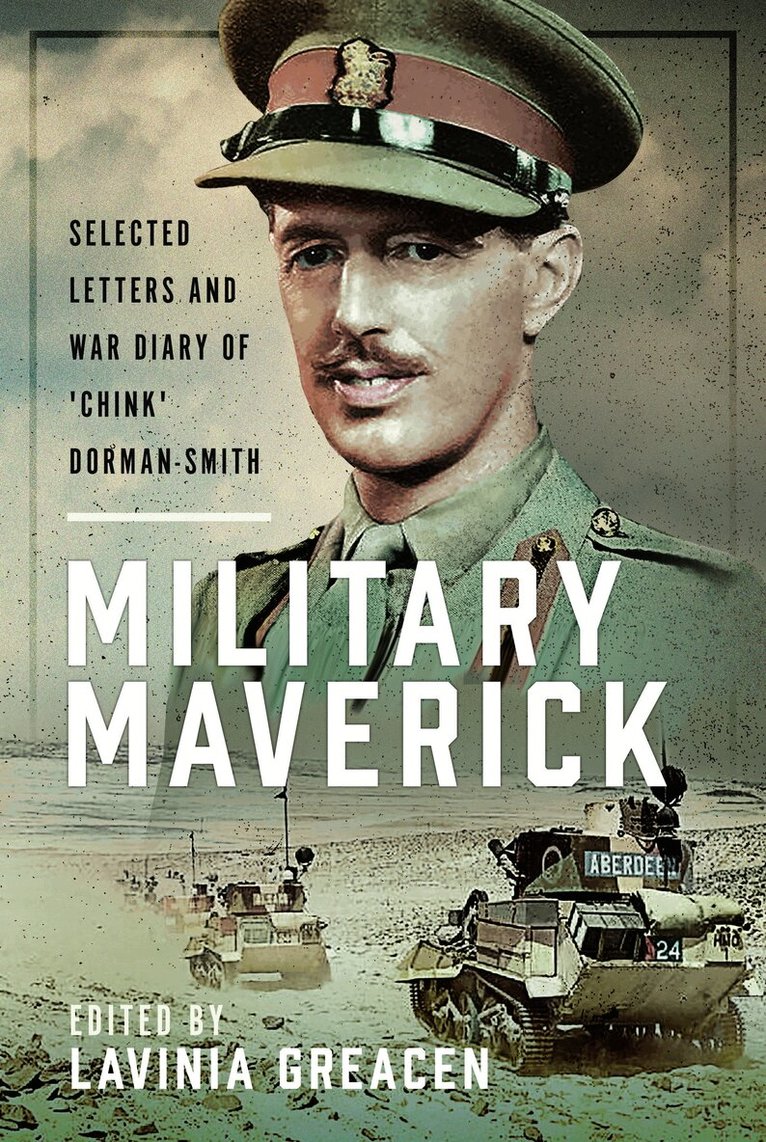
A follow-up to the best-selling biography ‘Chink’, this selection from private letters and intimate war diary has the impact of a fresh ‘no holds barred’ autobiography. Dorman-Smith the man – flesh and blood – comes alive here on the page.Provocative, irreverent, caustic and witty, his disdain for Churchill – and for the Establishment in general – increases as his military career unravels. Egotistical? Yes. Arrogant? Certainly. His own worst enemy? Perhaps. But Dorman Smith’s grasp of tactics and strategy was unsurpassed, as his exchanges with Basil Liddell-Hart demonstrate.Full of contradictions, he was externally reserved and inwardly super-sensitive. Growing up in style in Ireland and educated at public school in England, his religion was Catholic and he scorned any Anglo-Irish tag. His private life while rising up the Royal Northumberland Fusiliers proved colourful, while a brief dalliance with the IRA in the 1950s never endangered his vow of silence over the Enigma/Ultra secret.This book gives a marvellous picture of personal war experience in two world wars, from RMC Sandhurst and life in the trenches, via the Staff College to high command in Egypt and India between the wars, until service in North Africa under Wavell began, and working side by side with Auchinleck at the First Battle of Alamein. That would lead to confrontation with Churchill and Brooke, and subsequent breakout from Anzio under fire. Readers will know what it was like to survive the trenches, to serve in HQ as crises arose, and to have command involving losses - the reality of war is dramatic and moving.The First Battle of Alamein, fought under Auchinleck in the emergency that dangerous summer of 1942, was to be followed within three months by Montgomery’s celebrated battle and its consequent fame. The important argument of Military Maverick, however, is that First Alamein was the real turning point in the Desert War, and that makes Dorman Smith’s account even more valuable.The letters and diary entries are linked by commentary and explanation by the editor Lavinia Greacen, and by the military historian John Lee.
Inbunden, Engelska, 2025
262 kr
Skickas
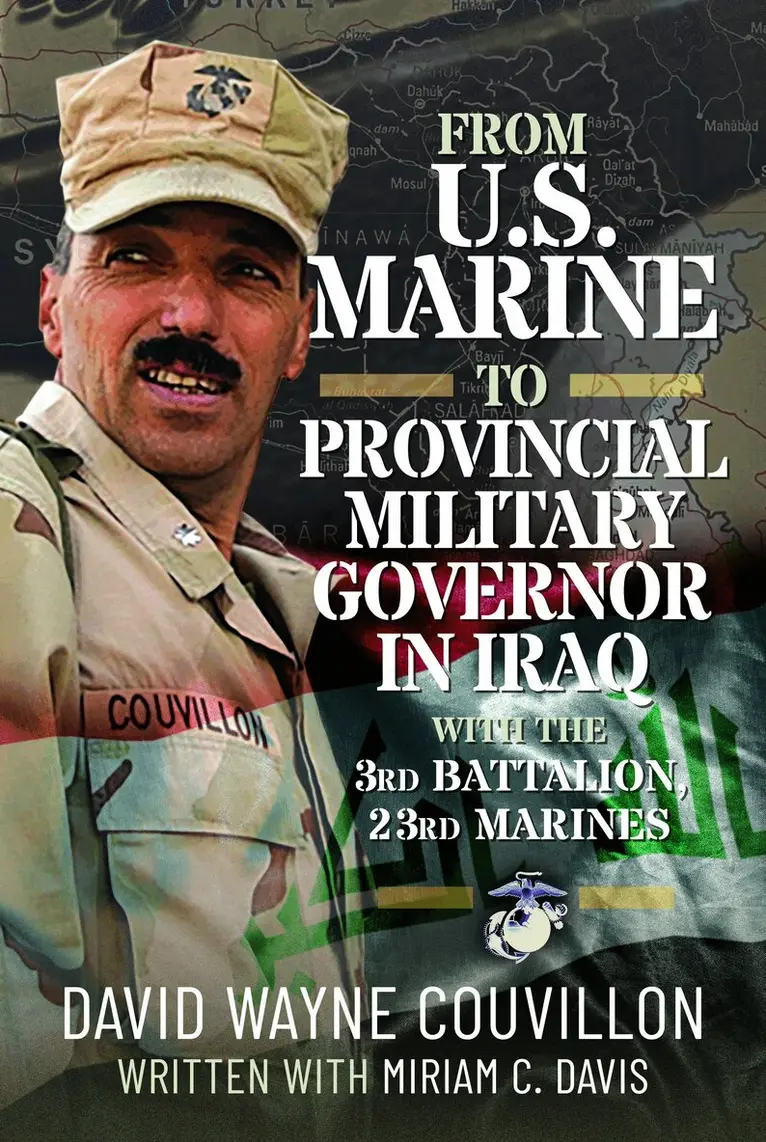
The book is an account of the U.S. Marine Corps 3rd Battalion, 23rd Marine Regiment ("3/23"), who were tasked with governing Wasit Province immediately after the Coalition invasion as part of the 1st Marine Division. Then Lt. Col. David Couvillon, was appointed provincial military governor—a position for which he had zero training and preparation.His instructions were simple: "If anything happens, it's your responsibility." As simple as that order was, it was also very complicated. It’s difficult to grasp the challenge the 3/23 faced after the Coalition’s invasion of Iraq, overseeing a population of over a million people scattered across 6600 sq. miles: the breakdown of normal society, interruption and outright devastation of infrastructure, political and religious schisms, and the collapse of a functioning economy. The province was in shambles. 3/23 had to provide basic security for both military personnel and the populace, while also thwarting insurgency. Couvillon and his men had very little direction—sometimes without sufficient resources.Marines are not trained for long-term occupation. They are trained in first-strike operations. Establishing city councils, creating women's political parties, holding local elections, creating a functioning police force, instituting a civilian judicial system, instituting a free press and independent TV and radio stations, reopening primary schools, engaging in diplomacy with imams and sheiks, bolstering the regional economy, brokering peace agreements between rival tribes, overseeing trade agreements between towns: none of this is within the purview of the Marines.3/23 strolled the streets of Al Kut and Numaniyah, talking with people, playing with children, and trying to solve the myriad problems of everyday life. Despite being the public face of the American occupation, Lt. Col. Couvillon traveled throughout the province apparently unarmed: no helmet, no armor, no visible weapon. The Marines (and, later, soldiers and sailors) came under attack more than once.Nor was 3/23 completely without fault. There were substantiated instances of excessive force and even the death of innocent civilians. A military occupation is, at best, a necessary evil.But 3/23 came to Wasit, Iraq, not as conquerors, but as allies: friends who wanted to help overthrow, not just a dictator, but Wasit so that its people could experience individual freedom and self-government.From US Marine to Provincial Military Governor in Iraq is the story of how the battalion faced immense and perilous challenges without much in the way of direction from above—Couvillon’s only real guidance came from the Small Wars Manual, a sixty-year-old Marine Corps handbook on low intensity conflicts. It’s about citizen-soldiers-sometimes derided as “weekend warriors ”-who turned their civilian life skills into an assets for their mission. It’s the personal story of Lt. Col. David Couvillon, who in an instant was transformed into a military governor responsible for the welfare not only of his 900 leathernecks, but the approximately 1.5 million inhabitants of an Iraqi province. The narrative doesn’t shrink from criticism of higher-ups who made consequential misjudgments that made the 3/23’s job harder and ultimately undermined its achievements. Understanding the successes of the 3/23 can help prevent future mistakes.
Inbunden, Engelska, 2026
313 kr
Kommande
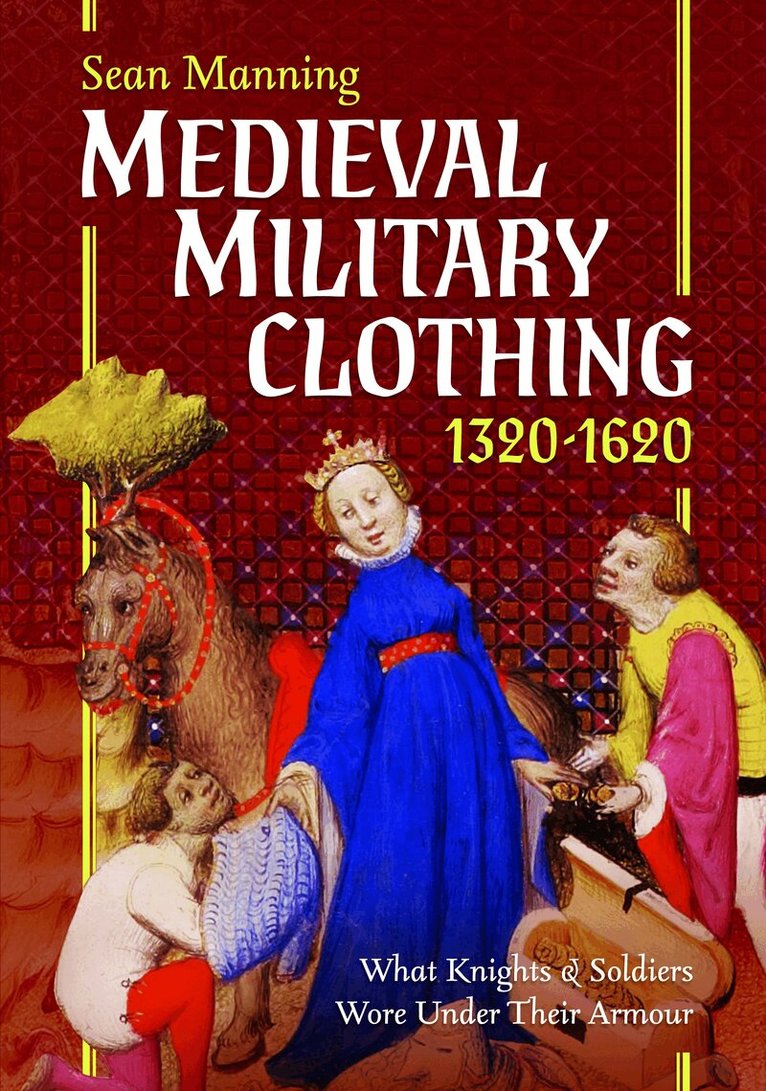
Medieval knights are a very familiar image in the popular imagination but what did they wear with and beneath their shining armour? Medieval Military Clothing 1320-1360 brings together documents, art, artefacts, and experience to answer this question. Where most treatments of the subject are superficial or based on artwork and the same few famous texts, Dr Sean Manning draws also on documents and lesser-known texts in a variety of languages. Most of this information has never been translated into English, and much of the rest was previously scattered across long- out-of-print books. The author traces developments across the period, which changed with the continuous evolution of armour and military need but also with the whims of fashion. Not only the noble knights but other men-at-arms and common soldiers are discussed in an accessible and not overly jargonistic manner, with common misconceptions addressed along the way. This thoroughly researched text is beautifully illustrated with numerous line drawings and colour photographs, mainly of primary sources such as medieval manuscripts, paintings and tomb effigies.
Häftad, Engelska, 2021
165 kr
Skickas
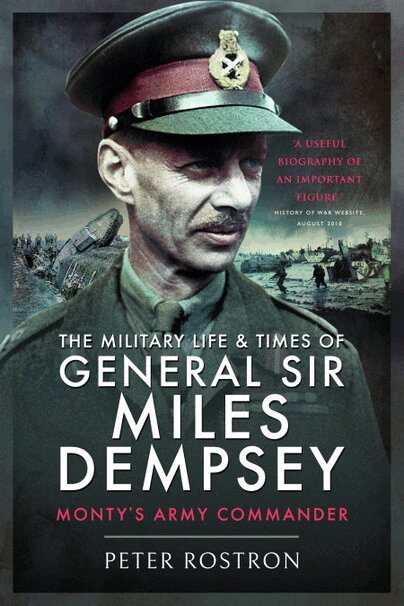
Miles Dempsey, Commander of the British Second Army in the invasion of Europe 1944-45, is almost unknown to the general public. Yet his part in Britains contribution to that campaign was second only to Montgomerys in importance.Dempsey survived two and a half years of bitter fighting as an infantry officer on the Western Front before accompanying his beloved Royal Berkshire Regiment in the little-known North West Persia campaign of 1920-21\. In six years he rose from Major to command over half a million men in the largest combined operation in history, and led them to victory a year later.Based on sources which include some of Dempseys previously unpublished work and the views of those who knew him, the book traces his career as a soldier of rare distinction, a talented sportsman and a man of huge charm and shrewd intellect, dedicated to his beloved regiment and ever mindful of the lives of his soldiers. It examines his methods of command and his relationships with Montgomery, his Corps commanders, the Americans and the RAF. It highlights his crucial role in the Dunkirk evacuation, the training of the Canadian Army, and the invasion of Sicily, Italy, and North West Europe. It analyses why his army performed so brilliantly on D Day, and examines his contribution to the campaign in Europe, focussing on the controversial operations of EPSOM, GOODWOOD, Arnhem and the Rhine Crossing.
Häftad, Engelska, 2025
160 kr
Skickas
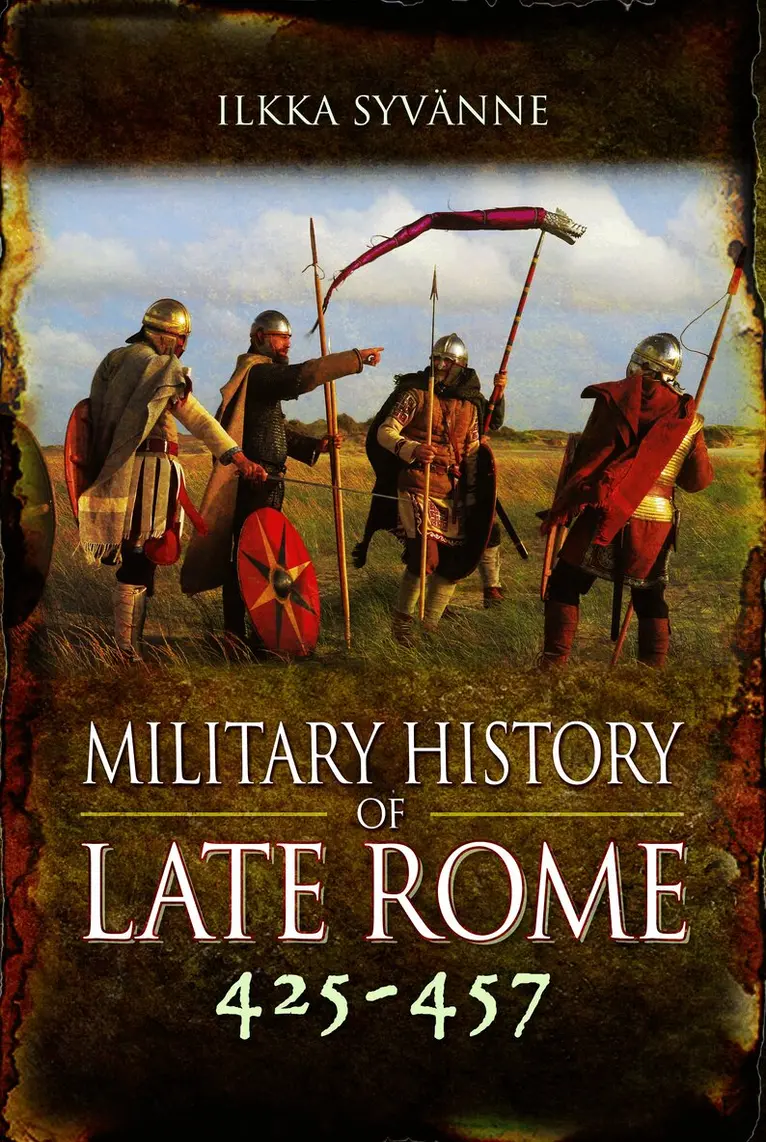
The Military History of Late Rome 425-457 analyses in great detail how the Romans coped with the challenge posed by masses of Huns in a situation in which the Germanic tribes had gained a permanent foothold in the territories of West Rome. This analysis reassesses the strategy and tactics of the period . The book shows how cooperation between the West Roman Master of Soldiers, Aetius, and East Roman Emperor Marcian saved Western civilization from the barbarian nightmare posed by the Huns of Attila. A fresh appraisal of the great clash at the Catalaunian Fields in 451 offers new insights into the mechanics of the fighting and shows that it was a true battle of nations which decided nothing less than the fate of human civilization. Had Aetius and his allies lost the battle and had Marcian not cooperated with Aetius in 451 and 452, we would not have seen the rise of the West and the rise of the scientific thinking.
Inbunden, Engelska, 2023
262 kr
Skickas
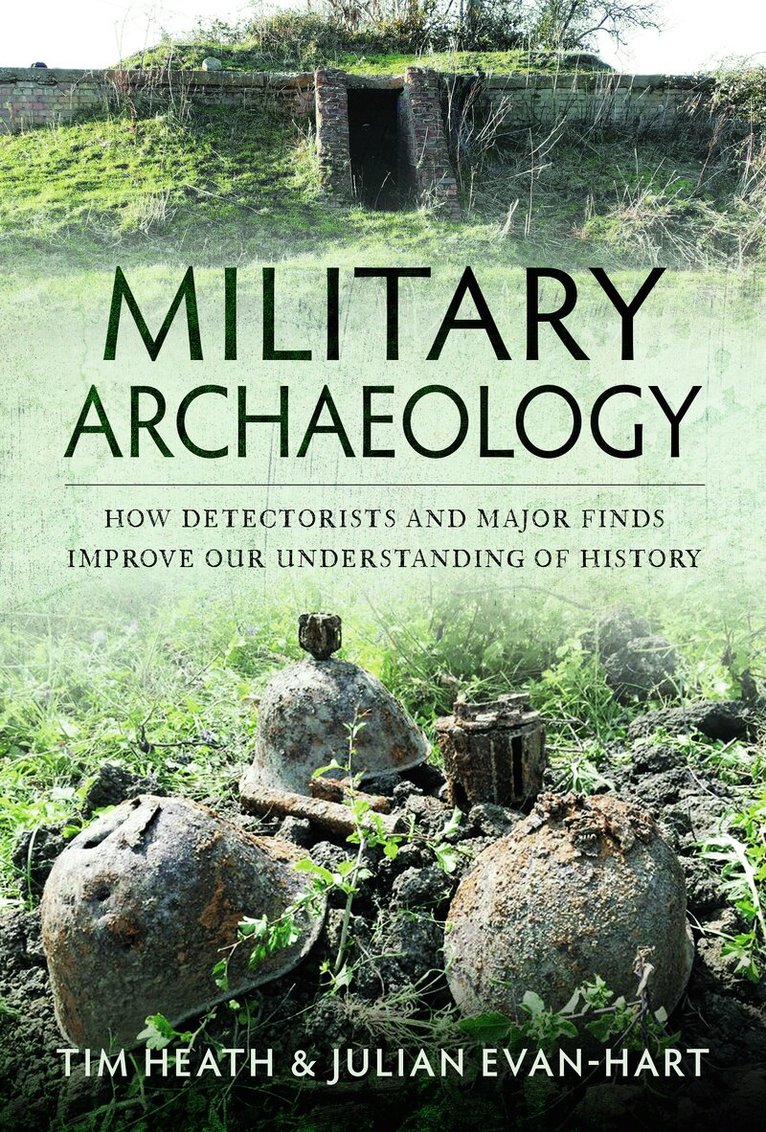
Military and battlefield archaeology has always been viewed as a sub-discipline to that of traditional historical archaeology. Once considered the pursuit of learned history professors and their disciples today, military archaeology has flourished around the world into what can only best be described as a hugely popular pastime, and in some instances a multi-million-pound business.With technologies available today, even the student on the most modest of budgets can become an archaeologist (if only in the layman’s term). Yet despite it’s popularity in unearthing answers to the questions of our turbulent past, there are surprisingly few texts available on what is arguably a fascinating and historically important subject. The objective herein is to present an analysis of various battles fought around the world from medieval times to the present, and the archaeology recovered from investigations carried out by professionally sanctioned groups and hobbyists. The context here includes general battlefield recovered artefacts, military aviation crash sites, Second World War pill boxes, air raid shelters, POW Camps and other structures. There is also emphasis on Britain’s ally in both world wars, the United States of America, examining the artefacts, wreckology, structures and dumping grounds left behind by the American military forces at the end of the Second World War both in the UK and Europe.Military Archaeology: How Detectorists and Major Finds Improve our Understanding of History is a valuable addition to the military and literary analysis of the archaeology of warfare from the Boudiccan uprising to the 2003 Invasion of Iraq.
Häftad, Engelska, 2022
160 kr
Skickas
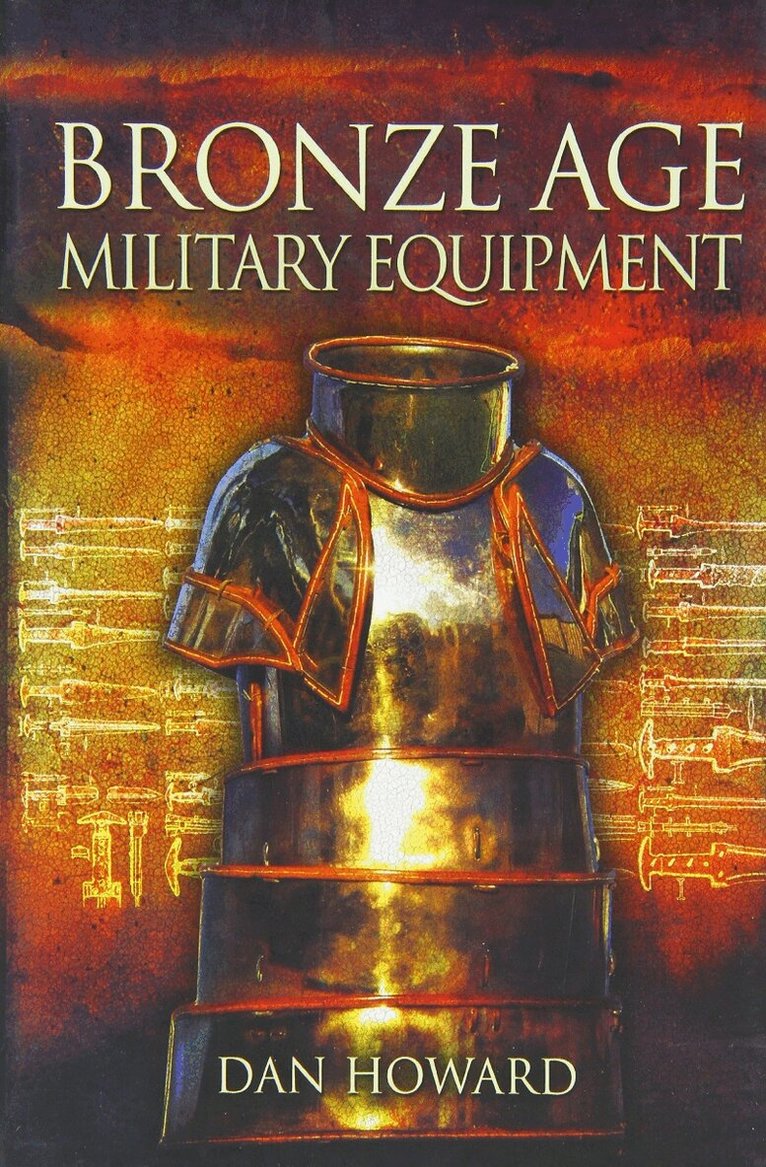
This book is a fascinating discussion of the development of the military equipment of the earliest organized armies. Dan Howard describes the development of weapons, armour and chariots, how they were made and their tactical use in battle. Spanning from the introduction of massed infantry by the Sumerians (c. 26th century BC) through to the collapse of the chariot civilizations (c. 12th century BC), this is the period of the epic struggles described in the Old Testament and Homer's Iliad, the clashes of mighty empires like those of the Babylonians, Egyptians and Hittites. The author draws on the latest research and archaeology, as well as his own experiences of using and making replica weapons and armour, to challenge established views and bring fresh insights to this fascinating period of military history. The main regions of discussion are the Aegean, the Near East and the Middle East but some reference is also made to other relevant cultures such as the Aryan Indians and the Shang Chinese.
Inbunden, Engelska, 2024
262 kr
Skickas
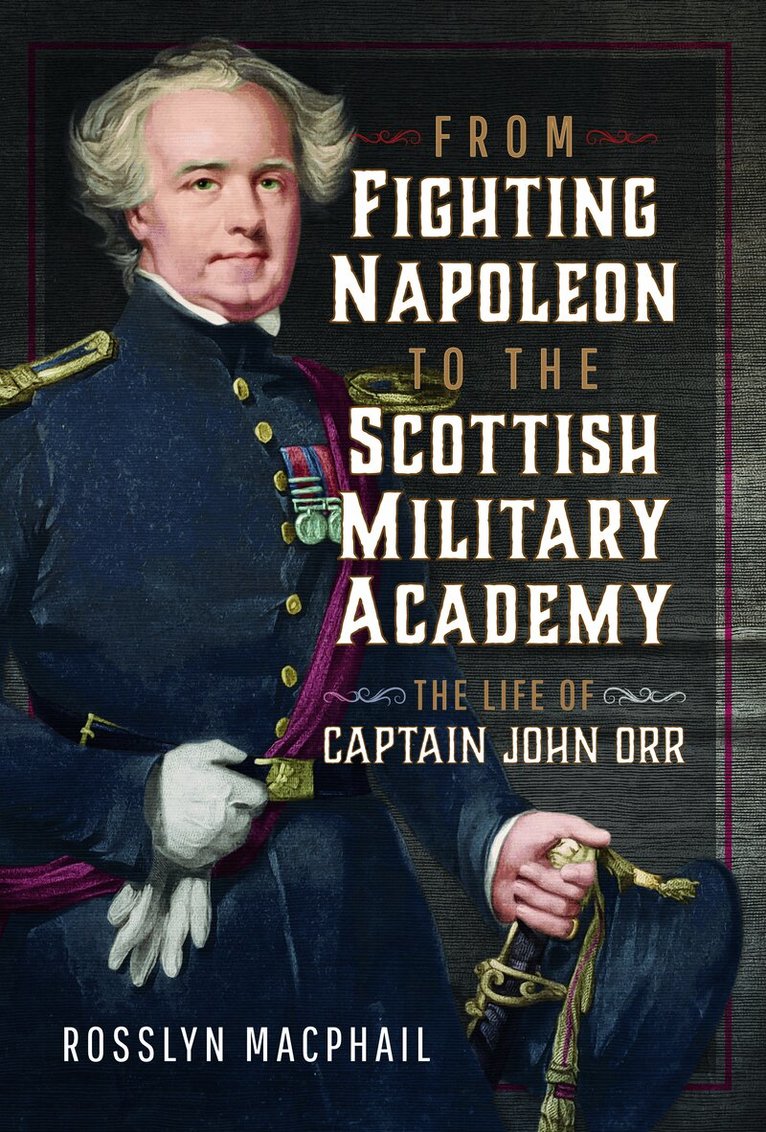
Based on Captain John Orr's previously unseen campaign diary and personal documents, this is the first biography of the man who would become Superintendent of the Scottish Naval & Military Academy (SNMA). We follow John during his eighteen months in Portugal and Spain informed by his first-hand accounts of the Battle of Salamanca, the siege of Burgos and fighting in the Pyrenees. Later he fought at Quatre Bras and was wounded at Waterloo. He was retired on full pension in 1821.Ten years later, aged 41, resigning himself that he would no longer be commissioned into a regiment, he enrolled as a captain in the Edinburgh Militia. Almost immediately he was asked to become the Superintendent of the Scottish Naval & Military Academy which was situated in Edinburgh. It had been established six years earlier and was struggling after the Directors had made a number of bad decisions.John’s appointment stabilised the SNMA and the enrolment started to grow. He had enthusiasm for his job and managed to mix discipline with affection for the boys. In 1832 the Duke of Wellington became President. By the mid-1840s it had become a successful military college. It sent over a thousand young men into the services, including over a hundred who fought in the Crimean War. Nearly every British army regiment had at least one officer who had studied at the SNMA.Through John's letters, the history of the Academy is interwoven with a description of the Orr family. John died in 1879, aged 89 years old. He was the last surviving member of the Black Watch who had fought at Waterloo.The book is brought to life with paintings and photographs of John, his family, his uniform and pages from his Peninsular War diary. It is an intimate portrait of a soldier who served his country on and off the battle field.
Inbunden, Engelska, 2026
262 kr
Kommande
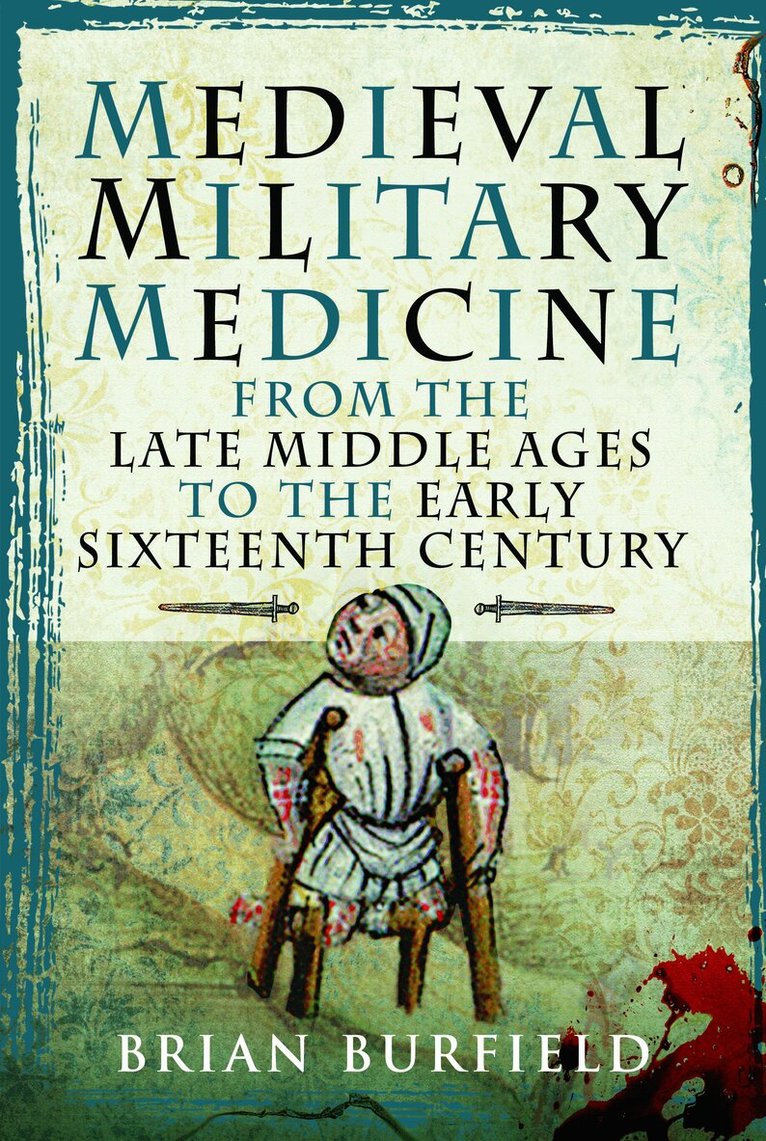
Following on from Medieval Military Medicine, from the Vikings to the High Middle Ages, this volume explores the diseases and wounds, both physical and psychological, suffered by soldiers during the subsequent 250 years, alongside the treatments administered by those who looked after them.Drawing once again on diverse contemporary sources, including numerous firsthand accounts, Medieval Military Medicine: From the Late Middle Ages to the Early Sixteenth Century begins by exploring the medical landscape of the period and its close ties to warfare. It highlights the many discoveries and rediscoveries that emerged in response to the continual improvements and innovations in weaponry. Certainly, the most notable technological advancement in European warfare at this time was associated with the introduction and development of gunpowder weapons, which enabled armies to cause much greater harm to one another and led to the development of several new treatments. Further chapters examine the broken bones, as well as the disfigurements and disabilities endured by warriors of this era. One of the most catastrophic disasters in human history, the bubonic plague, struck during the middle of the fourteenth century and continued to resurface in deadly encores every few years afterwards. It undoubtedly left its mark on Europe’s armies, as did the outbreak of a virulent strain of syphilis that began at the end of the fifteenth century, both of which are explored here. The book’s final chapter examines the psychological consequences of war, considering its impact on soldiers as well as on the broader civilian population of Europe during these two-and-a-half centuries.
Inbunden, Engelska, 2026
380 kr
Kommande
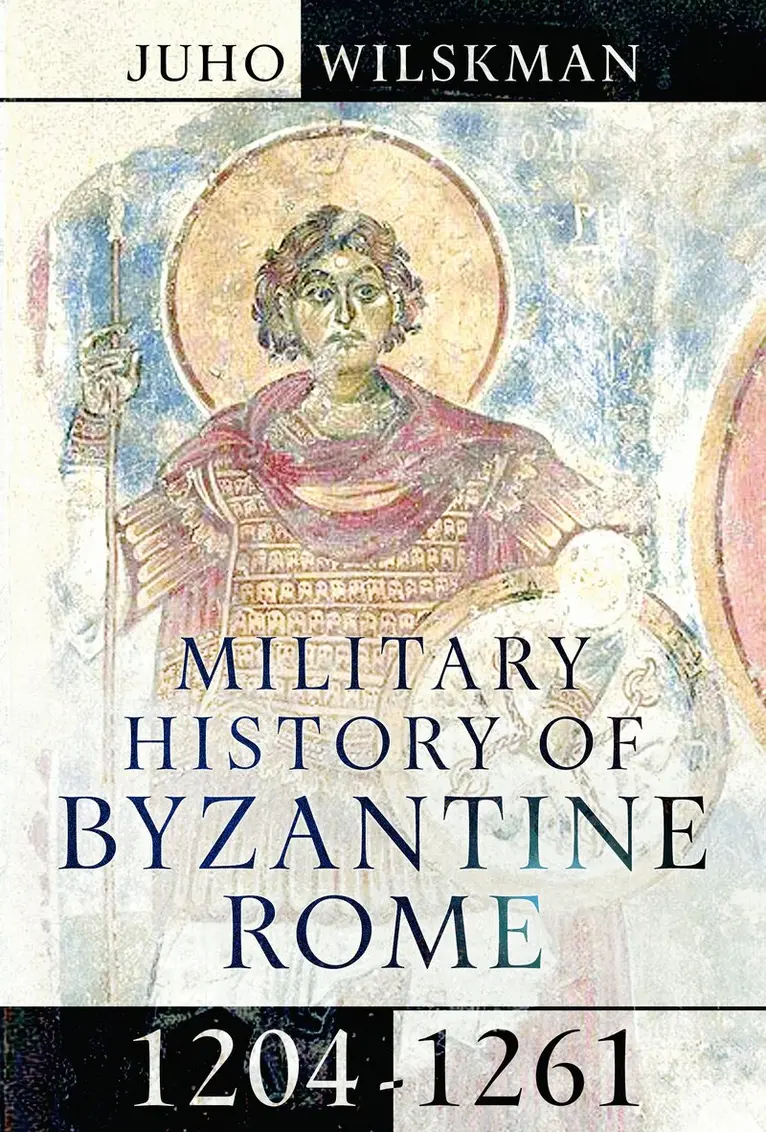
Many studies of Byzantine military history conclude with the events of 1204, when forces of the Fourth Crusade turned on their ostensible allies and took Constantinople. It could be argued that, with the ‘New Rome’ in enemy hands, the long, glorious history of the Roman Empire had finally come to an end also in its eastern portion what we commonly call Byzantium. As a result, little has been written in English about the military history of the turbulent half century covered in this book. However, numerous leaders rose to resist the conquerors, and three so-called Byzantine successor states, known as Nicaea, Epiros, and Trebizond, proved durable. They fought numerous campaigns and battles for survival and recovery, culminating in the recapture of Constantinople by Nicaean troops in 1261.Dr Juho Wilskman narrates the course of these fascinating events. He shows how the military institutions and methods of warfare showed much continuity with the earlier Byzantine art of war, and also how they adapted to the evolving strategic situation and new enemies. Using primary sources and incorporating the latest research and information, he shines a long overdue light on this significant and unduly neglected interlude in the history of the Byzantine Empire.
Inbunden, Engelska, 2024
257 kr
Skickas
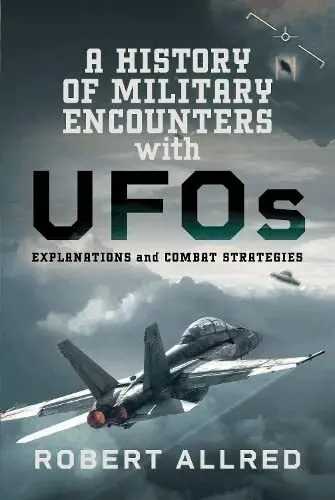
Military bodies around our planet have encountered, and even clashed with, UFOs, or as the U.S. military now defines them, Unidentified Aerial Phenomena - UAP. These observations and engagements have occurred for well over a century, at least, and on all continents.Different nations and cultures have had vastly different interpretations of the UFO/UAP phenomenon - from the Soviet Union and Communist China to the Western democracies. The UFO/UAP phenomenon has not diminished and has instead grown in proportion in recent years. It has now assumed the mantle of legitimacy in many countries: in government circles, the media, among the general public, even in the world's militaries. What are less well-known, or even concealed, are the encounters our planet's militaries have had with UFOs - some of which have proved fatal to both sides.There were reported clashes between UFOs and both Allied and German aircraft in the First World War. In the Second World War, sightings of what became known as 'Foo Fighters' were commonplace. After that war, UFO-related incidents increased exponentially, culminating in the wave of observations in 1947. In July of that year, the United States Air Force announced the capture of a 'flying disk', outside Roswell, New Mexico. The USAF quickly withdrew the announcement, but it was verified for decades by scores of reliable witnesses -military and civilian. The crash was possibly caused, albeit unintentionally, by the U.S. military. Five years later, in July 1952, for two consecutive weekends, UFOs hovered over Washington, D.C. USAF jets trying to intercept the strange craft were outrun by the UFOs.UFOs/UAP have tampered with world nuclear forces, including shutting down strategic missiles of the United States, and activating Soviet ICBMs, almost setting off an unordered (by Soviet authorities) launch of atomic warheads against the United States. USAF and RAF personnel, including a Lieutenant Colonel, also encountered a UFO on the ground, and observed others above their joint air base at Rendlesham Forest in the UK in 1980. UFOs have played 'cat-and-mouse' games with the latest fighter-bombers of the United States Navy since 2004, and these events have been captured on videotape as verified by the pilots, and the navy.This book takes a no-nonsense approach in its careful research, with hundreds of sources cited, including formerly classified documents and testimony regarding UFOs/UAP. As readers will discover from the mass of evidence presented in this book, it is no longer a question of whether UFOs exist or not. Such phenomena are an incontrovertible fact that has prompted the United States to craft plans on how to resist an alien invasion. Is there any need for humans to be concerned about the alien presence in the skies surrounding our planet? Yes, be very concerned.
Inbunden, Engelska, 2022
262 kr
Skickas
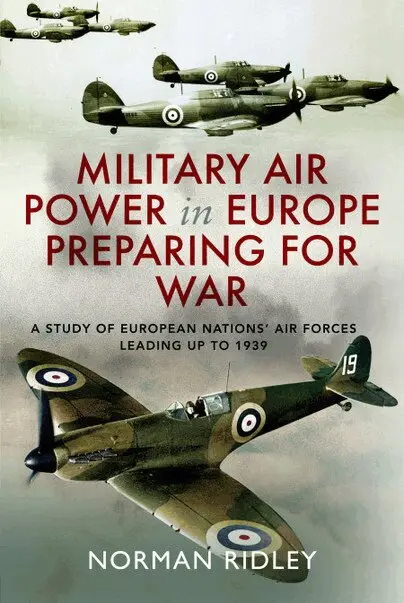
The First World War had seen the mechanisation of warfare. Battle fronts had become immobilised in the grip of machine-guns and heavy artillery, leading to slaughter on an unprecedented scale.The end of the war saw exhausted governments extricating themselves from the carnage, but some leaders were concerned that, sooner or later, another major war would follow. As France's Marshal Foch put it, the Treaty of Versailles was only a twenty-year truce'. The overriding concern was to find ways in future of avoiding the kind of static battle fronts that had consumed so many in such futile efforts.Military aviation was seen as the one great innovation that had the potential to do this by revolutionising warfare. It would not only augment the effectiveness of ground forces in a tactical role, but it also had the means of reaching out strategically beyond the battlefronts to strike at the enemy's trade, supplies, communications and industrial production. All through the war, military aviation had been firmly under the control of army commanders but there was soon a fierce debate over the way it should develop. The development of an air doctrine' within each of the major European powers was fraught with difficulty as the nascent air arms struggled, with varying degrees of success, to free themselves from army control to find a new, independent identity.This book examines the way in which these air arms competed for prominence within the military structures of six major European nations - Germany, Britain, France, Soviet Union, Poland and Italy - with different resources, ambitions and philosophies, in the years from the beginning of aviation right up to the start of the Second World War.
Inbunden, Engelska, 2022
313 kr
Skickas
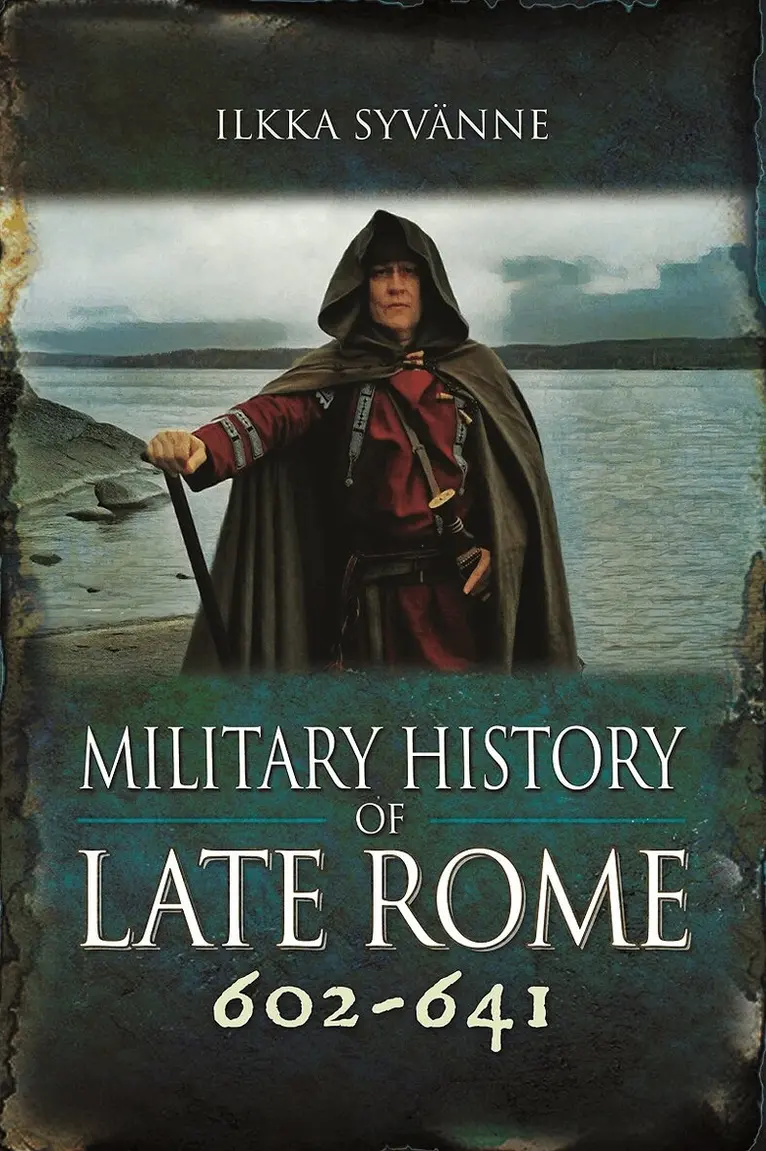
The Military History of Late Rome 565-602 provides a fresh analysis of the Roman Empire from the reign of Phocas (602-10) until the death of Heraclius (610-41). This was an era of unprecedented upheavals which is usually considered to have resulted in the end of antiquity. The usurpations of Phocas and Heraclius led to the collapse of the Roman defences; The Persians conquered Syria, Lebanon, Palestine and Egypt; The Avars and Slavs ravaged the Balkans; The Lombards held the upper hand in Italy; the Visigoths conquered Spain; But then happened one of the most remarkable reversals of fortune in the history of mankind. Heraclius began his holy war against the fire-worshippers. He launched a very effective counterattack against the Persians as a result of which the Romans not only defeated the Persians but actually even extended their domains at their expense, and not only this, because by 633 Heraclius was already restoring the Roman fortunes in the Balkans. This volume revises many of the previously held views of how this took place and what actually happened. The Roman armies seemed invincible and then happened yet another great reversal of fortune - the Muslims began their jihad to conquer the world. The author provides a fresh analysis of all of these upheavals; explains in detail why these reversals of fortune happened; what enabled the Romans to defeat the Persians; and why the Romans lost when they fought against the Muslims and, conversely, why the Muslims were so successful. This was an era of epic campaigns and battles all of which are explained in unprecedented detail. The epic campaigns needed equally talented commanders who include, for example, Heraclius, Chosroes II Parwez, Shahrbaraz, Shahin, Abu Bakr, Umar, Abu Ubaydah, and Khalid b. al-Walid, the Sword of Allah. This is revisionist history writing at its best.
Häftad, Engelska, 2021
201 kr
Skickas
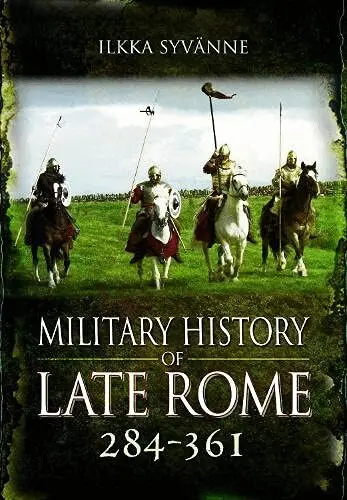
This ambitious series gives the reader a comprehensive narrative of late Roman military history from 284-641\. Each volume (5 are planned) gives a detailed account of the changes in organization, equipment, strategy and tactics among both the Roman forces and her enemies in the relevant period, while also giving a detailed but accessible account of the campaigns and battles. Volume I covers the period 284-361, starting with recovery from the 'third-century crisis' and the formation of the Tetrarchy. Constantine's civil wars and stabilization.are also major themes, with the pattern repeated under his sons. Constantius IIs wars against the usurper Magnentius, the Danubian tribes and the Sassanid Persians illustrate the serious combination of internal and external threats the Empire faced at this time. The author discusses these and the many other dramatic military events in their full context and puts forward some interesting conclusions on strategic and tactical developments. He argues, for example, that the Roman shift from infantry to cavalry as the dominant arm occurred considerably earlier than usually accepted. Anyone with an interest in the military history of this period will find it both informative and thought-provoking.
Inbunden, Engelska, 2023
354 kr
Skickas
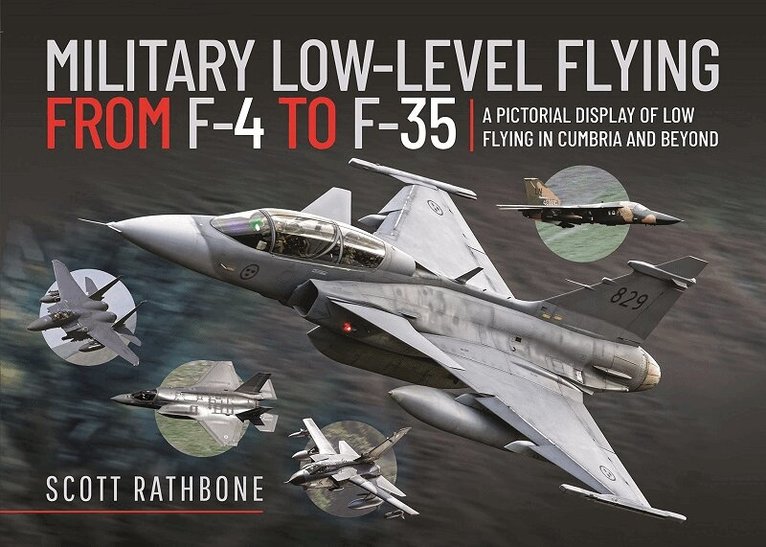
The United Kingdom has some of the most dramatic landscapes that can be used by pilots to train in the vital skill of low flying. Aircrew preparing for operations in Afghanistan, Iraq and other potential war zones frequently hone their skills flying through the valleys of the UK, sometimes at near subsonic speed.In Cumbria, as well as other major training areas within the United Kingdom Low Flying System, such as parts of Scotland and the world-famous Mach Loop in Wales, pilots can be seen on an almost daily basis sharpening their skills as they weave their aircraft, from basic trainers to the latest high-tech fighters, between the hillsides. As a result, these locations offer remarkable opportunities for photographers to capture close-up and dramatic shots.These sights have captured the imagination of many photographers who have devoted many hours and displayed great patience in waiting to snap dynamic images on camera, the majority of these since the birth of digital photography. Whilst photographs of military low flying prior to the digital age are rare, in the pages of this book the author presents a selection of images to showcase just how things have developed since the 1980s - particularly focusing on the action to be seen over the hills and valleys of Cumbria and the Lake District which, since 1979, has been a major area in the training of military pilots.In these pages are amazing shots of scores of different types of aircraft, from Jet Provosts, Buccaneers and Hawks through to F4 Phantoms, A-10 Thunderbolts, Tornadoes, Typhoons, and F-35 Lightnings, to name but a few. Types such as the Chinook and Sea King represent the many rotary aircraft. Unlike the photographs from air shows, none of these were staged; they are all action shots taken spontaneously as the aircraft whistled by Scott Rathbone and his trusty camera.
Inbunden, Engelska, 2023
262 kr
Skickas
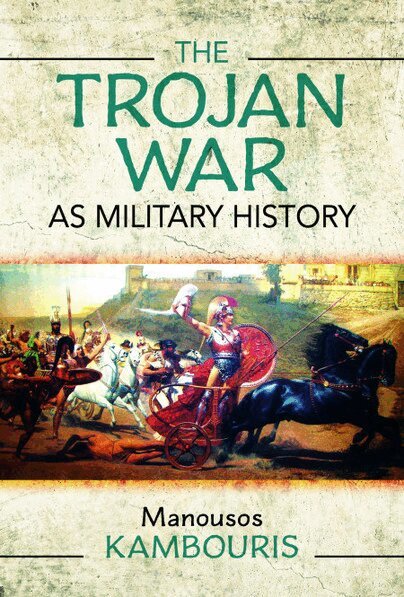
In The Trojan war as Military History, the author's starting point is the fact that the Iliad, notwithstanding the fantastical/mythological elements (the involvement of gods and demigods), is the earliest detailed description of warfare we have. Stripping away the myths, Manousos Kambouris analyses the epic and combines it with other textual and archaeological evidence to produce a coherent narrative of the conflict and of Bronze Age warfare in the Aegean.The author presents the most detailed analysis possible of Mycenaean Greek armies - their composition and organization, the warriors' weapons, armour and tactics, and those of their enemies. He finds sophisticated combined-arms forces blending massed infantry with missile troops and chariots, employing open battle, deception and special operations in what amounted to total war. The author's detailed examination of the mechanics of Bronze Age combat is enriched by his use of insights from experimental archaeology using replica equipment. No less illuminating or significant than the minutiae of heroic duels is the setting of the strategic context of the conflict and the geopolitical relationship of the Mycenaean Greeks with their rivals across the Aegean. Seeking to integrate the supernatural/divine element of the Iliad within the power structure and struggle of the day, the author lashes the Trojan War to the chariot of rationality and drags it from the mists of mythology and into the realm of History.

Inbunden, Engelska, 2022
239 kr
Skickas
Motorsport has many iconic names attached to it. It has many that are celebrated as heroes in their chosen sport. However, what perhaps is less well known is how many of the motorsport icons of the twentieth century carried out acts of real-life bravery, many during war time, but some in selfless acts of bravery in saving the lives of their fellow competitors.Some of the iconic names of motorsport are linked to the great conflicts of the twentieth century. Enzo Ferrari served during World War One, the most revered of the 1920s Bentley Boys were all World War One veterans such as John Duff, Bernard Rubin, Woolf Barnato, Sammy Davis and Glen Kidston. World War One American flying ace Eddie Rickenbacker was an Indianapolis 500 racing driver. Muriel Thompson, Military Medal, who became a World War One ambulance driver, was not only a chauffeur for suffragette Emeline Pankhurst, but raced at Brooklands before the war.Commentator Murray Walker was a World War Two tank commander, fellow commentator Raymond Baxter was a Spitfire pilot who was mentioned in dispatches for bravery. Carroll Shelby was a United States Army Airforce pilot and instructor with a reputation for great leadership. His friend, engineer and racing driver Ken Miles, served throughout the war as a specialist in tank recovery, landing as part of the D-Day operations.These are just a few of the most notable names from a group of men and women who risked all in conflict, before risking all on the track profiled in this book.
Inbunden, Engelska, 2028
252 kr
Kommande
Häftad, Engelska, 2028
252 kr
Kommande
Häftad, Engelska, 2028
295 kr
Kommande
Häftad, Engelska, 2024
252 kr
Kommande
Inbunden, Engelska, 2024
380 kr
Kommande
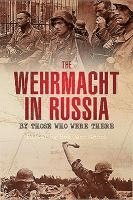
Häftad, Engelska, 2024
295 kr
Kommande
Letar du efter digitala böcker?
E-böcker och ljudböcker handlar du än så länge på vår tidigare sajt.