Camden House German Film Classics - Böcker
Visar alla böcker i serien Camden House German Film Classics. Handla med fri frakt och snabb leverans.
12 produkter
12 produkter
275 kr
Skickas
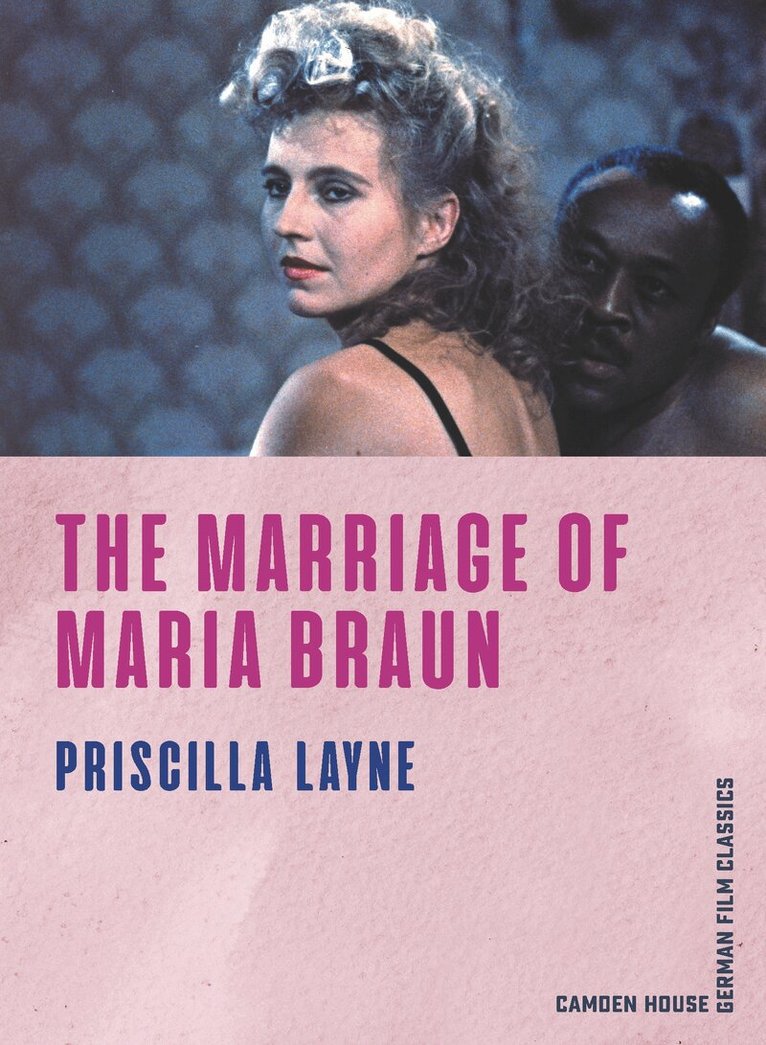
A new reading of Fassbinder's most popular film that highlights the roles of race and gender.The Marriage of Maria Braun is the most popular film by the enfant terrible director Rainer Werner Fassbinder, the leading exponent of the "New German Cinema" of the early sixties to early eighties. It exemplifies his use and abuse of the genre of melodrama. Set in the immediate postwar period and centered around a strong female protagonist, Maria Braun (1978) was the first film in a trilogy that attempts to work through West Germany's fraught past and the legacy of Nazi Germany through the eyes of characters marginalized by their gender, race, sexuality, or (dis)ability. Maria attempts to navigate the poverty and sexism of the immediate postwar years by making her relationships with men, including the Black American G.I., Bill, as beneficial as possible. In the end, she discovers she has been a pawn in a power game between her husband, Hermann, for whom she has been pining while he has been in prison, and her lover, the industrialist Oswald. Yet Maria is also complicit in racism and white patriarchy, a fact that scholarship on the film has barely registered. In her new reading, Priscilla Layne draws on archival research, Critical Race Theory, Black Feminist Thought, and Critical Whiteness Studies to expand on the role of race and gender in the film.
247 kr
Skickas inom 7-10 vardagar
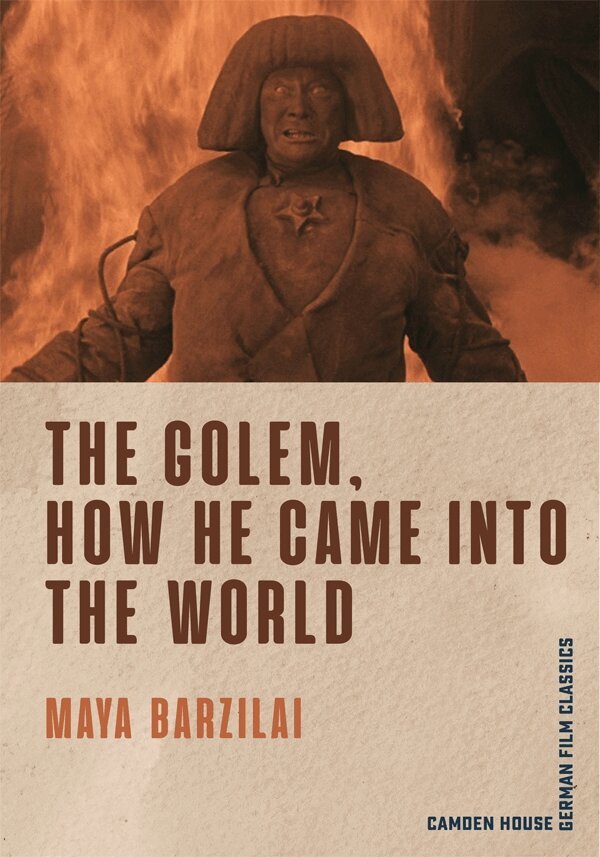
Provides an aesthetic and historical overview of and new critical insights into Paul Wegener's great 1920 film, recognized at the time as a breakthrough in German cinema.Actor and director Paul Wegener released his 1920 silent film The Golem, How He Came into the World in the aftermath of Germany's defeat in World War I. The film's innovative cinematography, lighting effects, modernist architectural design, and thrilling plot all led contemporaneous viewers and critics to pronounce that Germany had finally succeeded on the film front if not on the battlefield. The Golem, How He Came into the World, Wegener's third golem film, narrates how Rabbi Loew, here an astrologer and sorcerer as well as a spiritual leader, forms and animates an artificial clay anthropoid in order to save the Prague Jewish community from an edict of expulsion. Maya Barzilai situates the 1920 film in the historical and social context of post-World War I Germany, taking into consideration Wegener's violent and traumatic service on the Western front. She closely analyzes the film's expressive sculptural aesthetic, enhanced through poetic cinematography, arguing that Wegener's animation of cinema also served a postwar ethical purpose: revealing the human face of the golem and offering a redemptive escape from the the film's Christian-Jewish conflict through nature on the one hand and Zionism on the other.
247 kr
Skickas inom 7-10 vardagar
Revisits Herzog's classic film from a decisively contemporary standpoint, bringing into play the development of his filmmaking career.When it was released in 1982, Werner Herzog's Fitzcarraldo was widely criticized for its demanding use of human and natural resources as well as its director's uncompromising aesthetic vision. Critics and scholars saw little difference between the film's protagonist's obsession with hauling a ship over a mountain in the Amazon and Herzog's own mode of cinematic production and storytelling. And yet Fitzcarraldo stands out as one of the defining moments of New German Cinema and, as the years pass, continues to raise new questions about the relation of film and society, art and nature, progress and subjectivity, the known and the unknown. This book revisits Herzog's taleof operatic entrepreneurialism from a decisively contemporary standpoint. It draws on recent writing on the Anthropocene to probe the relationship of art, civilization, and the natural world in Fitzcarraldo. It discusses the role of opera and music in Herzog's Amazon spectacle. And it brings into play the development of Herzog's own career as a filmmaker over the last few decades to offer a fresh look at this by-now classical contribution to twentieth-century German film art.Lutz Koepnick is Gertrude Conaway Vanderbilt Professor of German, Cinema and Media Arts at Vanderbilt University.
269 kr
Skickas inom 10-15 vardagar
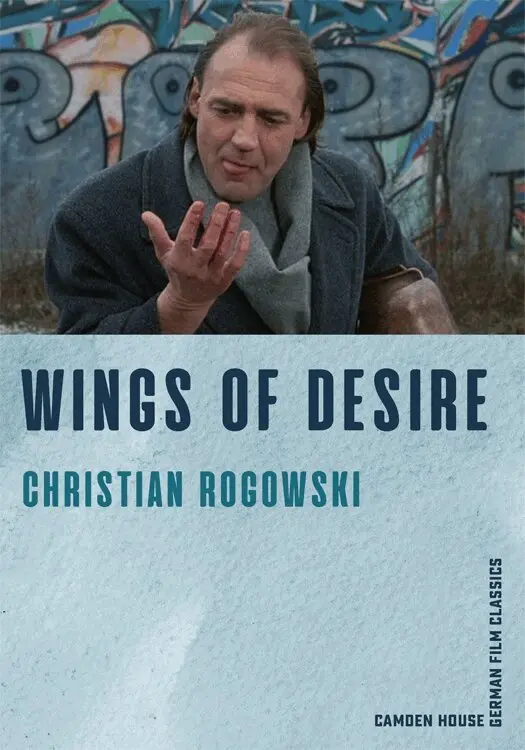
A guide through the many aspects of Wenders's groundbreaking film, employing archival research to bring out new insights into its making and its meanings.Filmed in 1986/87 in still-divided Berlin, Wim Wenders's Wings of Desire is both a utopian fairy tale and a fascinating time capsule of that late Cold War moment. Together with legendary French cinematographer Henri Alekan(who had worked on Jean Cocteau's La Belle et la Bête of 1946, among many other films) and Austrian author Peter Handke (with whom he had collaborated before), Wenders created a multilayered filmic poem of dazzling complexity: the skies over Berlin are populated with angels bearing witness to its inhabitants' everyday concerns. One falls in love with a beautiful young woman, a trapeze artist in a traveling circus, and decides to forfeit his immortality. Wenders's groundbreaking film has been hailed as a paean to love, a rumination on the continued presence in Berlin of the troubled German history, as well as an homage to the life-affirming power of the cinematic imagination.Christian Rogowski guides the reader through the film's many aspects, using archival research to bring out new insights into its making and its meanings.Christian Rogowski is G. Armour Craig Professor in Language andLiterature in the Department of German at Amherst College.
247 kr
Skickas inom 7-10 vardagar
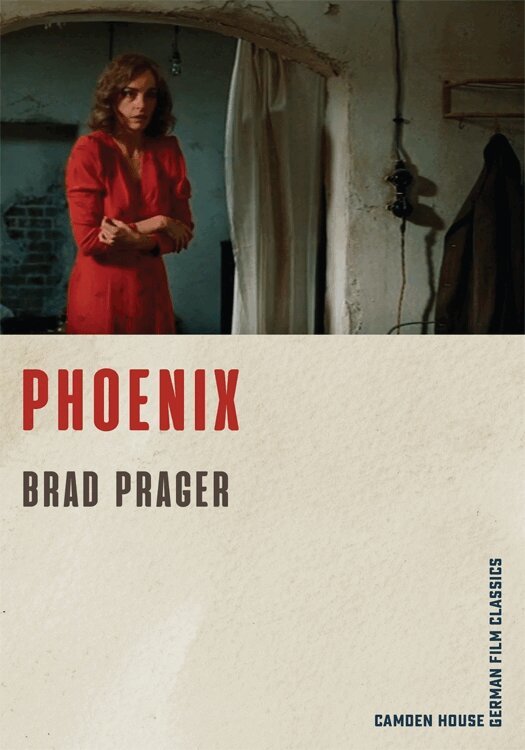
Offers not only a close reading but also a film-historical contextualization of Phoenix, constituting the most significant and thorough study of Petzold's film to date.Christian Petzold's Phoenix (2014), a masterpiece from one of Germany's leading contemporary filmmakers, portrays a death-camp survivor's return to occupied Berlin just after the war has come to an end. Nelly, played by German film star Nina Hoss, returns badly wounded, her face covered in bandages, hoping that her German husband will still love her. Johnny fails to recognize her and instead offers her a role in an intricate criminal scheme. Petzold's film, which he scripted together with his frequent collaborator Harun Farocki, was an international success that has been widely compared with works by Alfred Hitchcock and Rainer Werner Fassbinder. This study explores the film's unique array of influences including the vast range of films, novels, and memoirs on which its screenwriters drew. Its central argument concerns the film's integration of a long history of German-Jewish works and ideas-its attempt to confront its audience with a neglected tradition that included figures as diverse as Peter Lorre, Fred Zinnemann, and Hannah Arendt. Offering a close reading of the film's themes, compositions, and music alongside a film-historical contextualization, this book constitutes the most significant and thorough study of Phoenix to date.Brad Prager is Professor of German and Film Studies at the University of Missouri.
269 kr
Skickas inom 10-15 vardagar
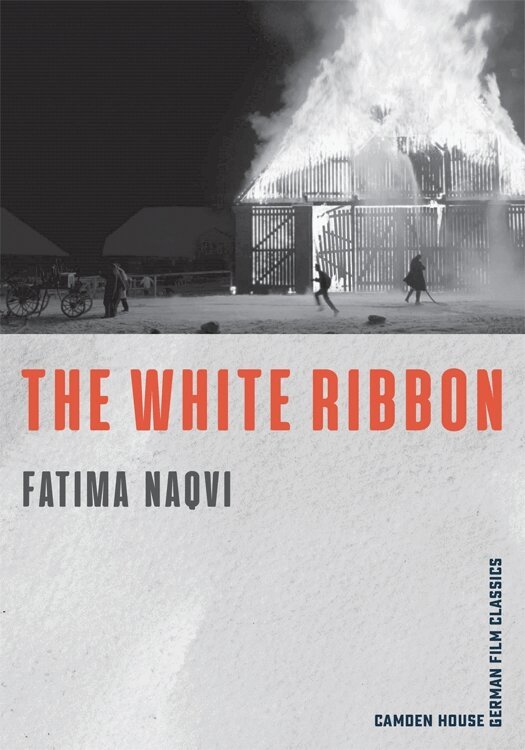
Explores Haneke's historically complex film as a reflection on purity, ideology, violence, and child-rearing.White ribbons and black pedagogy - Michael Haneke's award-winning film The White Ribbon (2009) is a multilayered reflection on purity, ideology, violence, and child rearing. In this tense black-and-white whodunit, mysterious events occur in a small town on the German-Polish border in 1913-14. A tripwire fells the doctor's horse; a farmhand's wife falls through the floor of a shed; a barn goes up in flames; the baron's son is terribly beaten; a girls takes claims to clairvoyance; a mentally disabled boy is tortured and maimed. While the film unfolds on the eve of the First World War, the violence evokes other historical moments: the breakup of the multi ethnic Austro-Hungarian Empire, the rise of National Socialism, the emergence of 1960s German terrorism, and religious fundamentalism post 9/11.Fatima Naqvi's book looks at Haneke's technique of combining various histories in the digital era. It also reflects on the guise of literariness and historical authenticity in which the director clothes this fictional film. It meditates on the film's inscription techniques and its ability to appeal to international audiences. Naqvi shows that The White Ribbon bespeaks a certain historical "translatability" into historical and aesthetic contexts outside of Germany-in marked contrast to the historical specificity it conveys on a surface level.
192 kr
Skickas
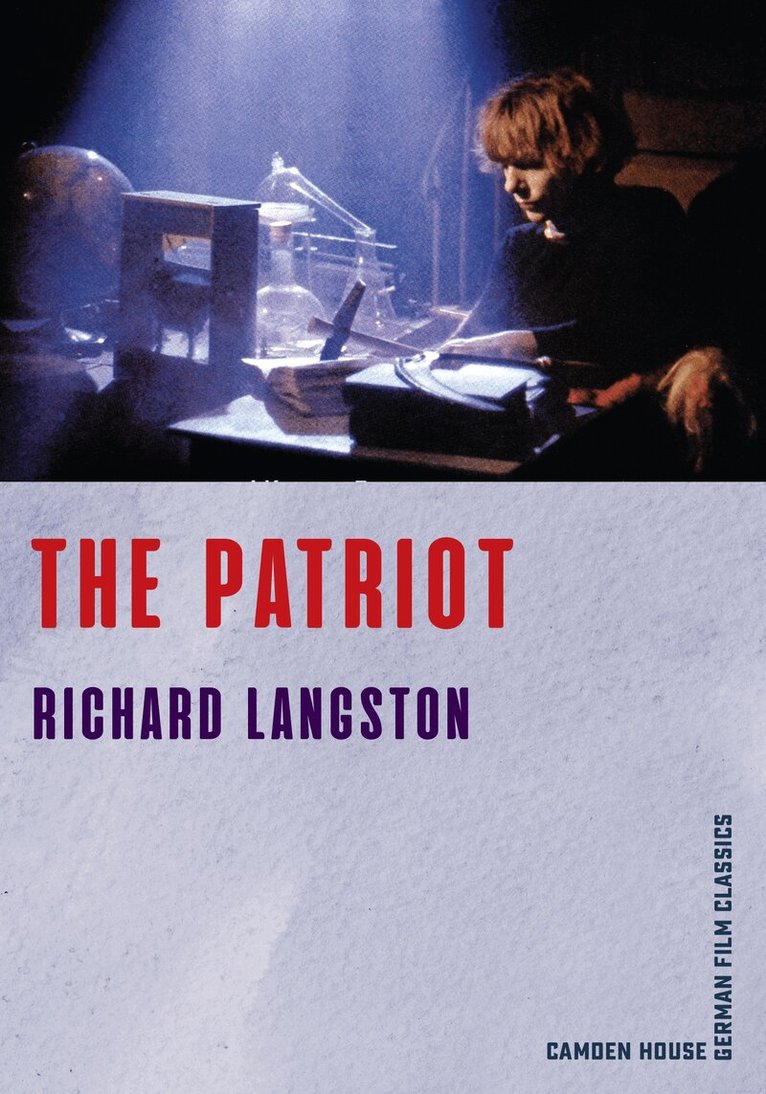
Revitalizes Alexander Kluge's classic 1979 film, showing it to be not just great storytelling but also an exploration of the poetic force of Frankfurt School Critical Theory.Alexander Kluge achieved his breakthrough at the 1966 Venice Biennale with his first feature, Yesterday Girl (Abschied von gestern), but it is arguably his 1979 film The Patriot (Die Patriotin) that first embodied the great heights his storytelling could reach. Titled after its heroine, the history teacher Gabi Teichert, The Patriot is, however, much more than just a curious story about a headstrong pedagogue intent on teaching kids a version of German history that does not end in war and death: it is one of the finest examples of Kluge's exploration of the poetic force of Frankfurt School Critical Theory. This book pursues The Patriot's conception as a cinematic extension of the theoretical agenda that Kluge and social philosopher Oskar Negt began developing just as the Frankfurt School's first generation was ending. It will guide twenty-first-century English-language readers past superficial interpretations of the film's engagement with German history. By asking how and why The Patriot brings the twin concepts of history and obstinacy - the human propensity to resist capitalism's forces of expropriation and alienation - to the screen, this book revitalizes Kluge's film for the new millennium.
278 kr
Skickas inom 7-10 vardagar
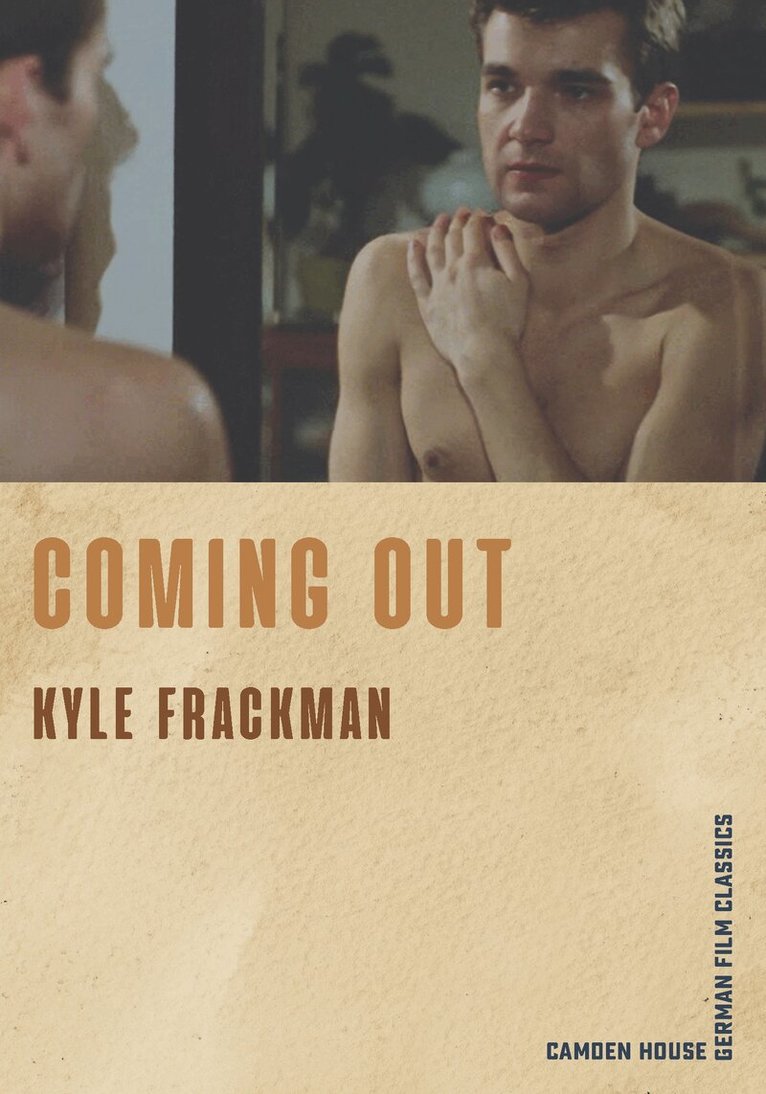
Examines the creation, context, and significance of the first and only East German feature film about homosexuality.It took forty years for East Germany's state-run studios, DEFA, to produce a feature film about homosexuality: Coming Out. The film's story seems radically ordinary today: a young teacher, Philipp, is gay but cannot accept the truth about his sexuality. He starts a relationship with a fellow teacher, Tanja, but falls in love with a man he meets, Matthias, whose confidence in his own self-understanding is alluring for him as well as a challenge. Acclaimed director Heiner Carow created a film that shows the difficulties, both internalized and external, that queer people faced in East Germany. In a quirk of history, Coming Out premiered in German theaters on November 9, 1989, the very night on which the Berlin Wall was opened, which meant the film was initially overshadowed, to say the least, by the earthshaking political events. Yet it remains a popular film and is regularly screened around the world, including prominently at queer film festivals. Kyle Frackman's book examines the film in both the late East German context of its creation and the international context of its reception. This book is openly available in digital formats under Creative Commons license CC BY-NC.
295 kr
Skickas inom 7-10 vardagar
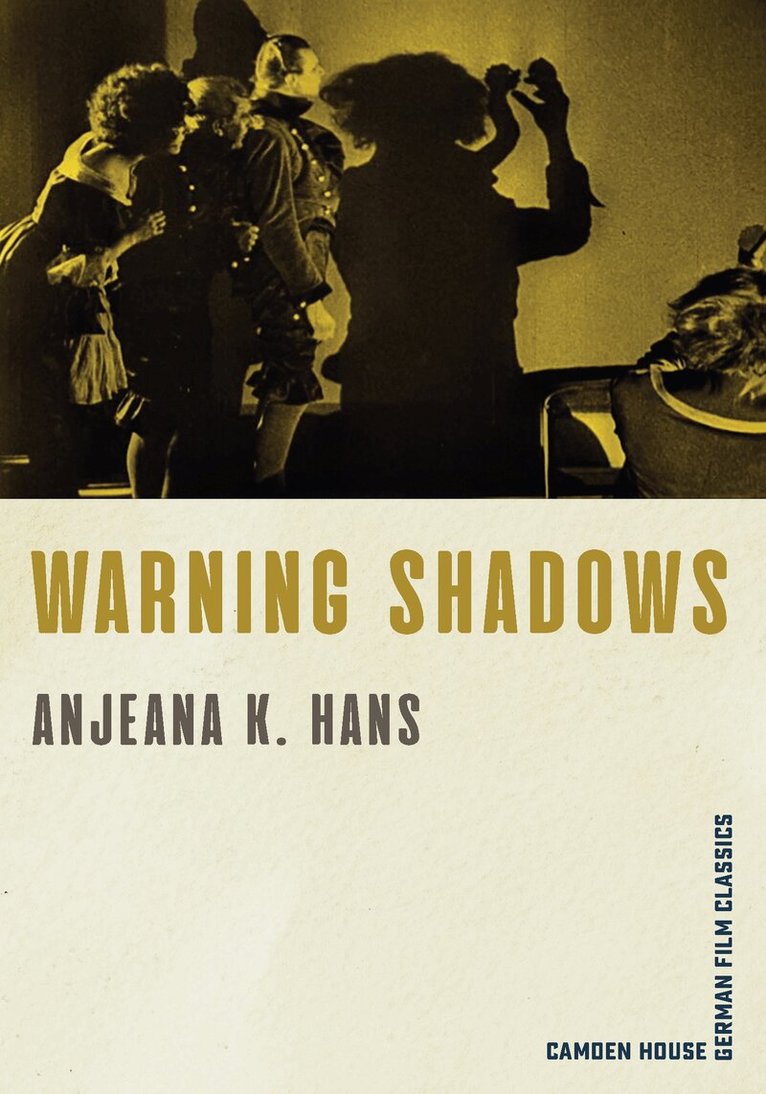
A view of a long-neglected classic of Weimar cinema - now restored and widely available - as both a gripping narrative of infidelity and jealousy and a film inherently about film.Artur Robison's Warning Shadows - in German simply Schatten, shadows - premiered in 1923 to critical acclaim. This story of a fateful dinner party at which a flirtatious wife, her jealous husband, and their guests are entertained by a traveling illusionist who deals in shadow play and hypnosis was extolled by one critic as superior to Wegener's Golem, Lubitsch's Passion, even Murnau's Nosferatu and Wiene's The Cabinet of Dr. Caligari. Yet where those films became mainstays of film history, Warning Shadows was long unknown: only recently, with the release of a restored version on DVD, has it begun to get its due. One of the few silent movies to eschew intertitles, it was an attempt to create a "pure film," drawing on the qualities of cinema that made it not an heir to literature or theater but a unique and autonomous art form. Staging a story of desire, adultery, and violence, Robison's film also engaged with discourses at the heart of Weimar culture, from changing gender norms to hysteria and hypnosis to the construction of spectatorship. Seen this way, Warning Shadows is both a gripping narrative of infidelity and jealousy and a film inherently about film.
239 kr
Skickas
Restores the first German feminist film, long neglected, to its rightful status as a classic forebear of more recent cinefeminism, demonstrating that the film is as relevant today as it was upon its 1968 release.Acclaimed as postwar Germany's first feminist film, Ula Stöckl's The Cat Has Nine Lives disappeared from view shortly after its 1968 premiere when its distributor went bankrupt. Although it laid the groundwork for the flourishing feminist cinema that emerged in West Germany and beyond during the 1970s, Stöckl's vibrant film long remained largely unknown. Yet it is as fresh and relevant today as it was when it debuted half a century ago. Revived at the 2019 Berlin International Film Festival (Berlinale), The Cat Has Nine Lives is now available for the first time on DVD with English subtitles. Posing the question, "Women have never had as many possibilities to do what they want as they have today, but do they know what they want?," Stöckl's film follows the intertwined stories of five characters to explore the possibilities for and limitations on women's subjectivity, desire, friendship, work, and artistic expression in a society defined by gender inequality. Restoring this singular film to its rightful place as a German film classic, Hester Baer argues that The Cat Has Nine Lives forms an important aesthetic and theoretical precursor to the unfolding cinefeminism of later decades.
247 kr
Skickas inom 7-10 vardagar
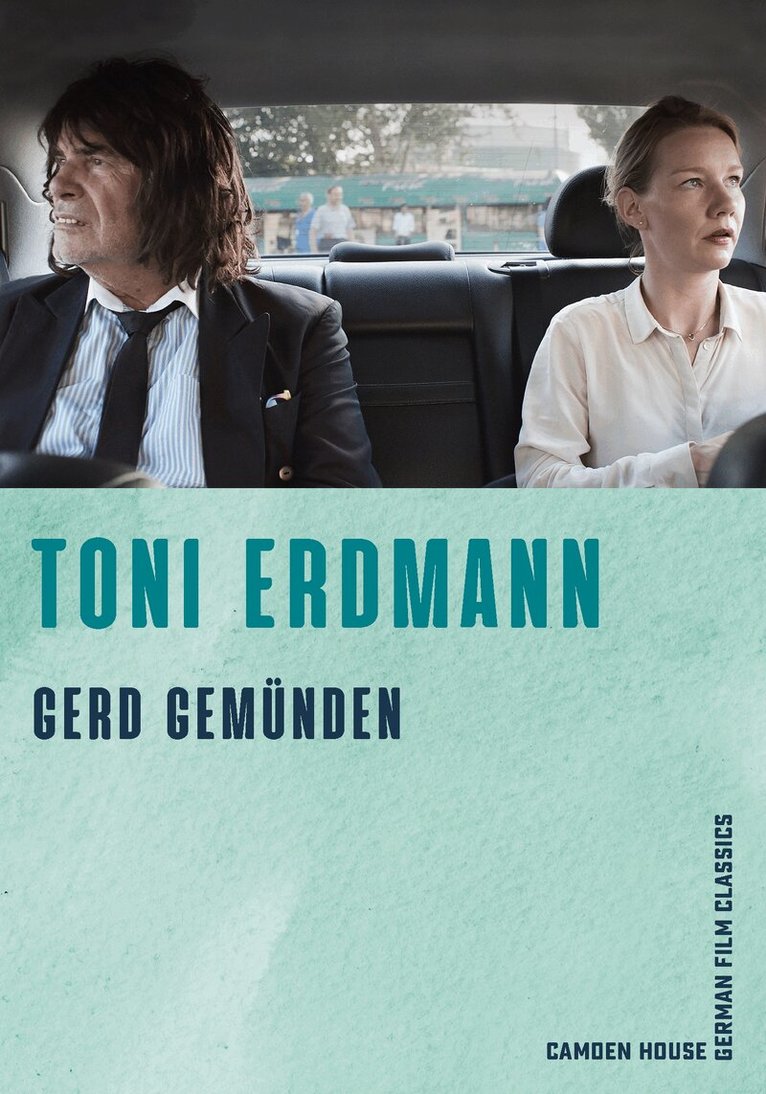
The first in-depth analysis of Maren Ade's acclaimed contemporary classic, a generational tug-of-war about the meaning of life, work, and death.Maren Ade's tragicomedy Toni Erdmann, a 2016 Cannes sensation and Oscar nominee, is an internationally acclaimed classic of recent German cinema. By turns hilarious, cringeworthy, and heart-wrenching, the film revolves around Winfried, a retired music teacher and prankster trying to rebuild a relationship with his daughter Ines, a high-powered business consultant based in Bucharest. At its center, this unpredictable scenario pits one type of performance - Ines's efforts to meet the unyielding expectations of the new economy - against another - Winfried's anarchic role-play meant to disrupt the standardization of life. This book, the first in-depth analysis of the film, explores the many layers of this generational tug-of-war about the meaning of life, work, and death. Employing Ade's trademark minimalist style, the film deftly comments on the precarity of life; the gendering of labor in the new economy; the re-definition of feminism by the children of the generation of 1968; and reconfigured East-West relations in post-Wall Europe. Lastly, in light of Ade's artisanal mode of filmmaking, in which she regularly assumes the role of writer, director, and producer, Toni Erdmann becomes a highly self-reflexive comment on the neoliberal dictates of global art cinema.
320 kr
Skickas inom 7-10 vardagar
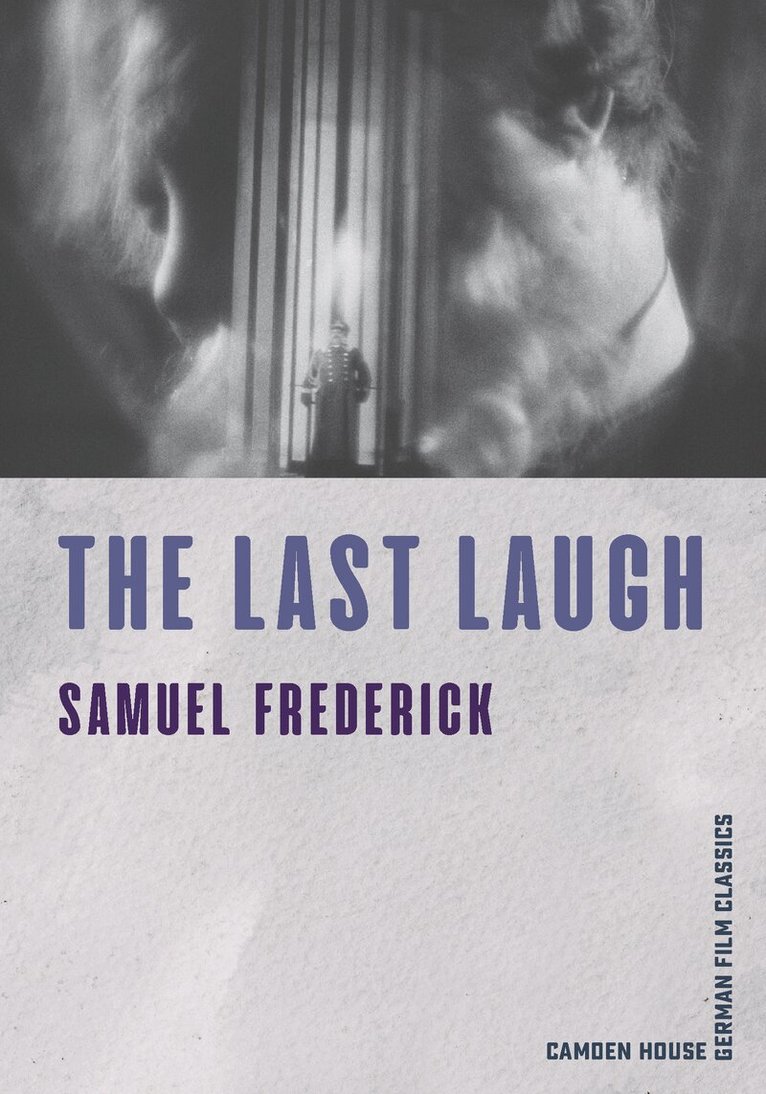
A penetrating new reading of Murnau's classic silent film that shows its transitional status, both historically and stylistically, while emphasizing its innovative camerawork and the ethical stakes of its story.An undisputed masterpiece of silent cinema, F. W. Murnau's The Last Laugh (1924) stars the larger-than-life Emil Jannings as a proud hotel porter who is demoted to lowly washroom attendant. One worker's misfortune becomes a tragic turning point in a social drama as much about the struggling Weimar Republic, which had just overcome several years of social, political, and economic instability, as about its working-class citizens. At once clinging to the symbols of the old order while helplessly thrust into an unforgiving modern world, Jannings's fallen porter embodies the contradictions of this transitional moment for the young democracy. Samuel Frederick shows us that Murnau's film is similarly transitional: born at the crossroads between the Expressionist style of the early 1920s and the emerging aesthetics of New Objectivity, it is both soberly realistic and oneirically distorted. With only one intertitle, The Last Laugh's flow of images is complemented by cinematographer Karl Freund's innovative mobile camera, which, "unchained" from the tripod, swims effortlessly through the film's different urban spaces. Here, inanimate objects become charged with potency and architecture is animated, conveying both allure and danger. Frederick's incisive analysis of the film foregrounds the visual dynamism of its technological and aesthetic experimentation while also pursuing the ethical implications of its central figure's downfall.