Nomos Studies in Law, Culture and Power – serie
Visar alla böcker i serien Nomos Studies in Law, Culture and Power. Handla med fri frakt och snabb leverans.
9 produkter
9 produkter
2 113 kr
Skickas inom 3-6 vardagar
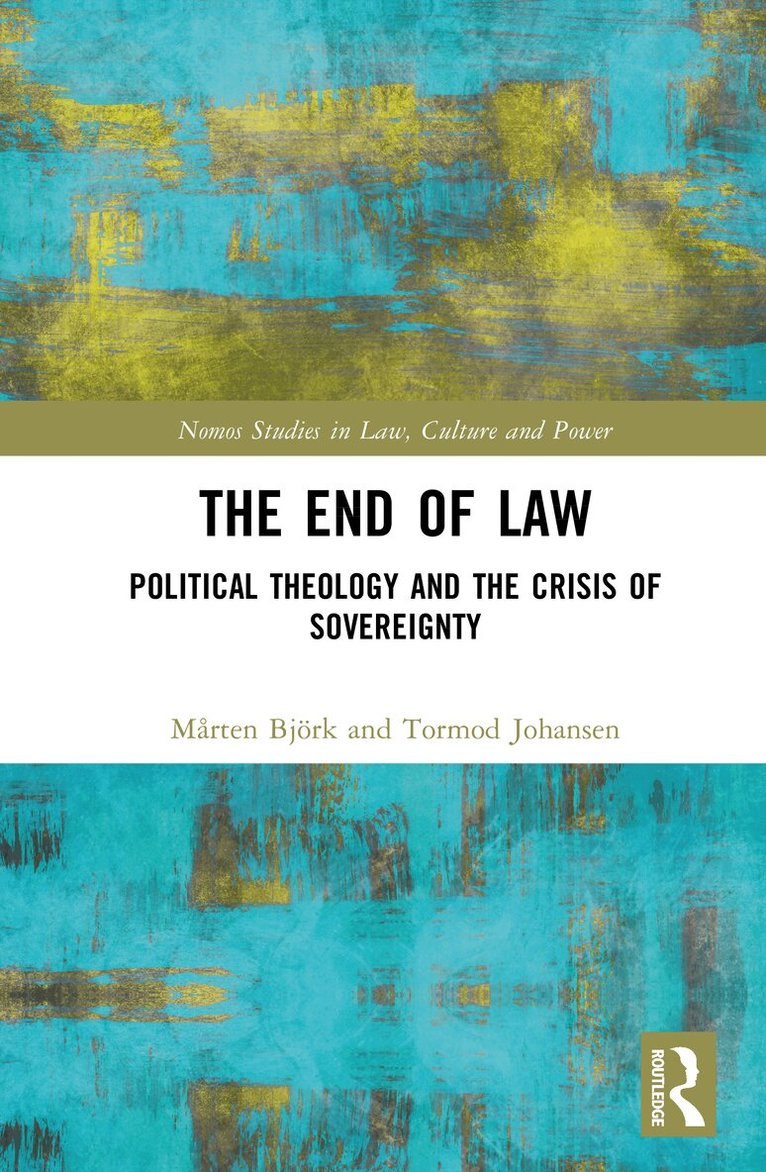
This book examines how Gustav Radbruch, H. L. A. Hart, and Ernst-Wolfgang Böckenförde each addressed the question of the end of law, its function, and its normative foundation within the context of the modern legal and political order. Through a politico-theological reading, it highlights the tension between legal validity and moral legitimacy, as well as the extent to which law can maintain public order without compromising its own claim to justice.The analysis of Radbruch, Hart, and Böckenförde sheds light on how valid law can become unjust, demanding actions that may conflict with individual judgment or morality. It raises questions about natural law, the relationship between morality and law, and law’s ultimate purpose, suggesting that law and politics represent, at best, a relative good. It addresses the broader crisis of legal authority and state sovereignty, the expanding reach of state power, and whether law should instruct, command, or ultimately point beyond itself.The End of Law is of interest to scholars in legal theory, political theology, and the philosophy of law.The Open Access version of this book, available at http://www.taylorfrancis.com, has been made available under a Creative Commons Attribution (CC BY) 4.0 license
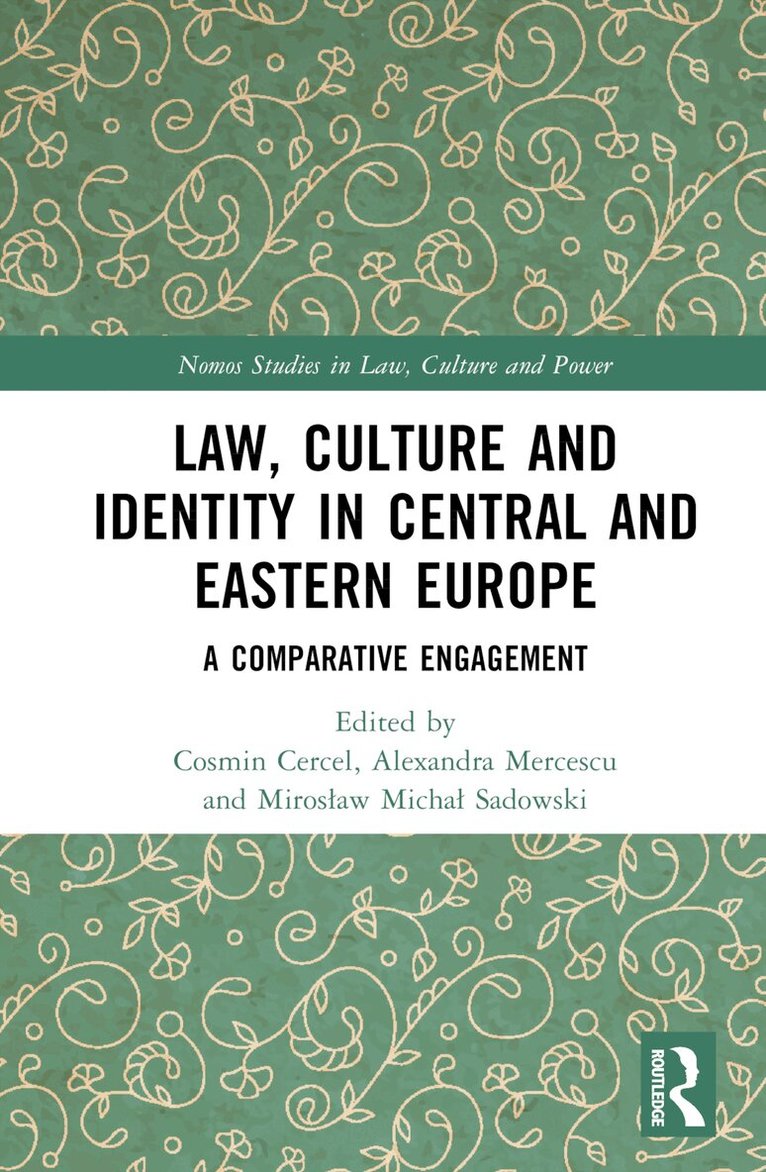
Law, Culture and Identity in Central and Eastern Europe
A Comparative Engagement
Inbunden, Engelska, 2023
2 131 kr
Skickas inom 10-15 vardagar
Combining insights from comparative legal theory, jurisprudence and legal history, this collection examines the legal and constitutional identity of Central and Eastern Europe.Although the various countries of Central and Eastern Europe have often compared themselves to the West, the failure of these countries to engage with one another has resulted in a whole spectrum of legal identities remaining hidden. This book takes up a comparison of such identities within the region of Central and Eastern Europe, and following from the prima facie similarity between the region’s countries, given the experience of communism and legal transfers. The book thereby illuminates, through comparisons, the distinct legal identities of the 16 Central and Eastern European states; whilst, at the same time, arguing for a shared Central and Eastern European legal identity.This book will appeal to scholars and students in the area of comparative law, as well as lawyers, political scientists, sociologists, and historians with particular interests in Central and Eastern Europe.
Law, Culture and Identity in Central and Eastern Europe
A Comparative Engagement
Häftad, Engelska, 2025
581 kr
Skickas inom 10-15 vardagar
Combining insights from comparative legal theory, jurisprudence and legal history, this collection examines the legal and constitutional identity of Central and Eastern Europe.Although the various countries of Central and Eastern Europe have often compared themselves to the West, the failure of these countries to engage with one another has resulted in a whole spectrum of legal identities remaining hidden. This book takes up a comparison of such identities within the region of Central and Eastern Europe, and following from the prima facie similarity between the region’s countries, given the experience of communism and legal transfers. The book thereby illuminates, through comparisons, the distinct legal identities of the 16 Central and Eastern European states; whilst, at the same time, arguing for a shared Central and Eastern European legal identity.This book will appeal to scholars and students in the area of comparative law, as well as lawyers, political scientists, sociologists, and historians with particular interests in Central and Eastern Europe.
1 819 kr
Skickas inom 10-15 vardagar
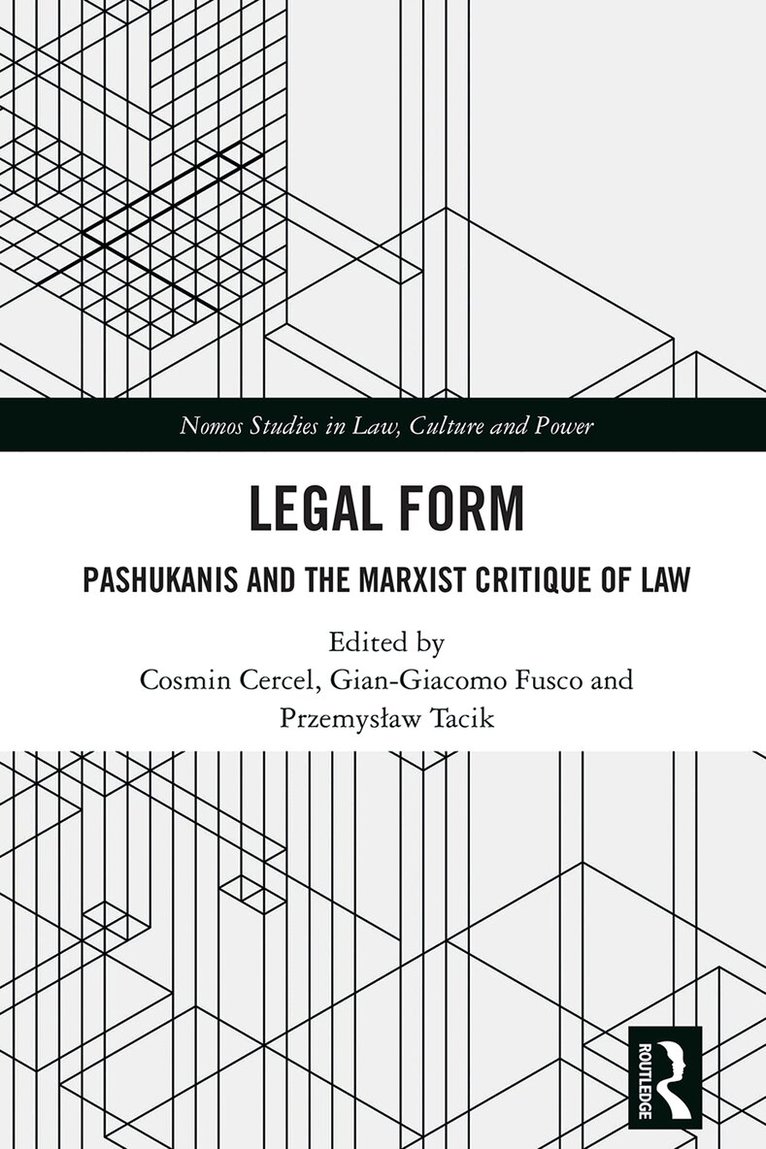
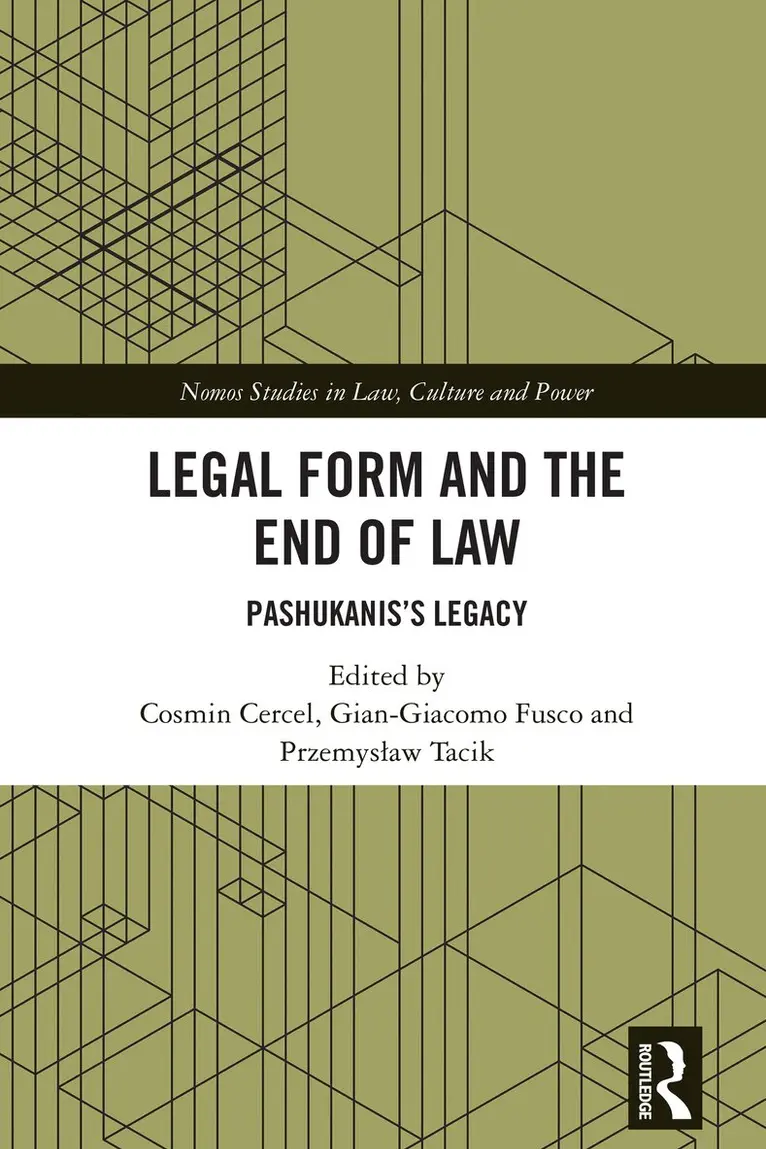
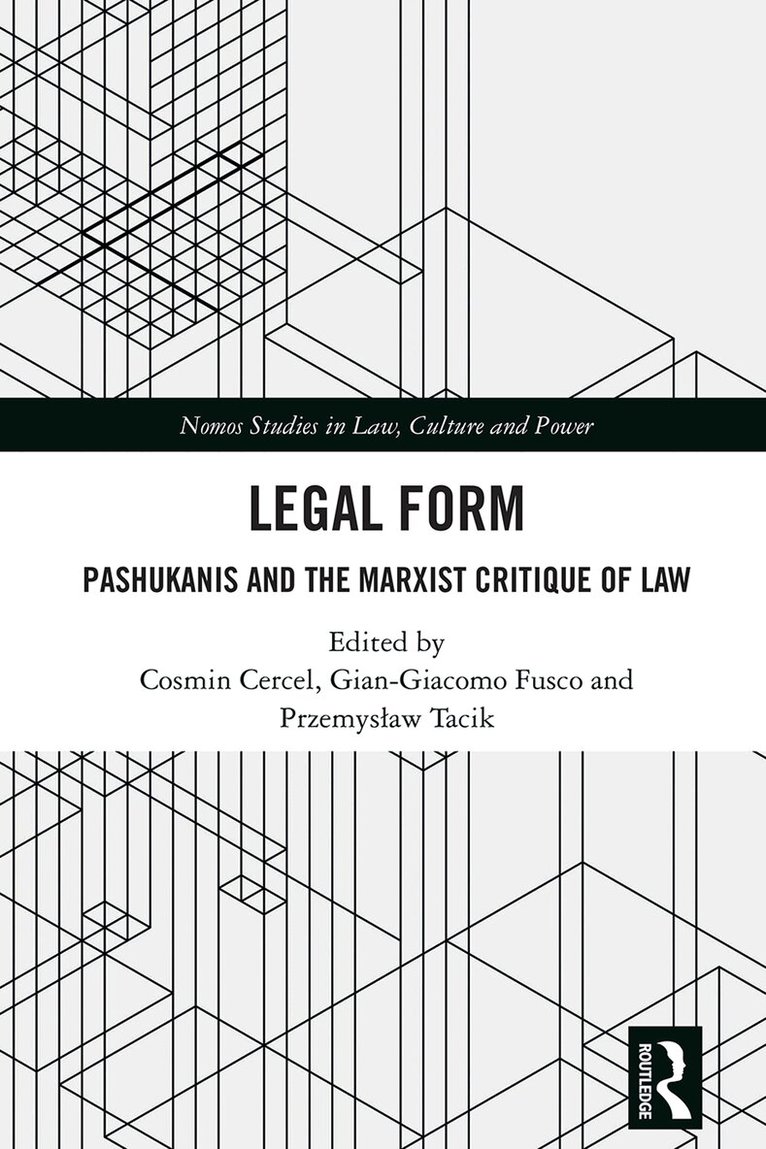
A century after the publication of Evgeny Pashukanis’ pivotal book General Theory of Law and Marxism, this collection presents a comprehensive account and analysis of his key concept of legal form.Evgeny Pashukanis’ General Theory, born amidst the fervour of the first socialist revolution, remains still a crucial reference point in Marxist theories of the law and critical legal theory. Its theoretical depth paved the way for new understandings of the relationship between Marxism and the law. Its crucial virtue continues to be, even after a century, the ability to articulate epochal concerns in the context of a socialist revolution that turned hitherto theoretical problems into dilemmas of practice. This book returns to Pashukanis’ main concept: ‘legal form’. Through this jurisprudential category Pashukanis aimed to grasp the dependence of the law on the economy, and at the same time, to enquire into the degree to which the law preserves its autonomy from economic relations. In other words, the legal form as a concept conveys both the law’s dependence on the economic sphere of exchange and its greatest inherent specificity: the way it translates economic relations into its proper language and set of legal/ideological constructs. The contributions to this volume provide a range of perspectives on how the concept of legal form has been developed and reinterpreted.Including the first English translation of Pashukanis’ essay, ‘Hegel, State and Law’, this collection will be of considerable interest to scholars and students of legal and political theory.
2 246 kr
Skickas inom 10-15 vardagar
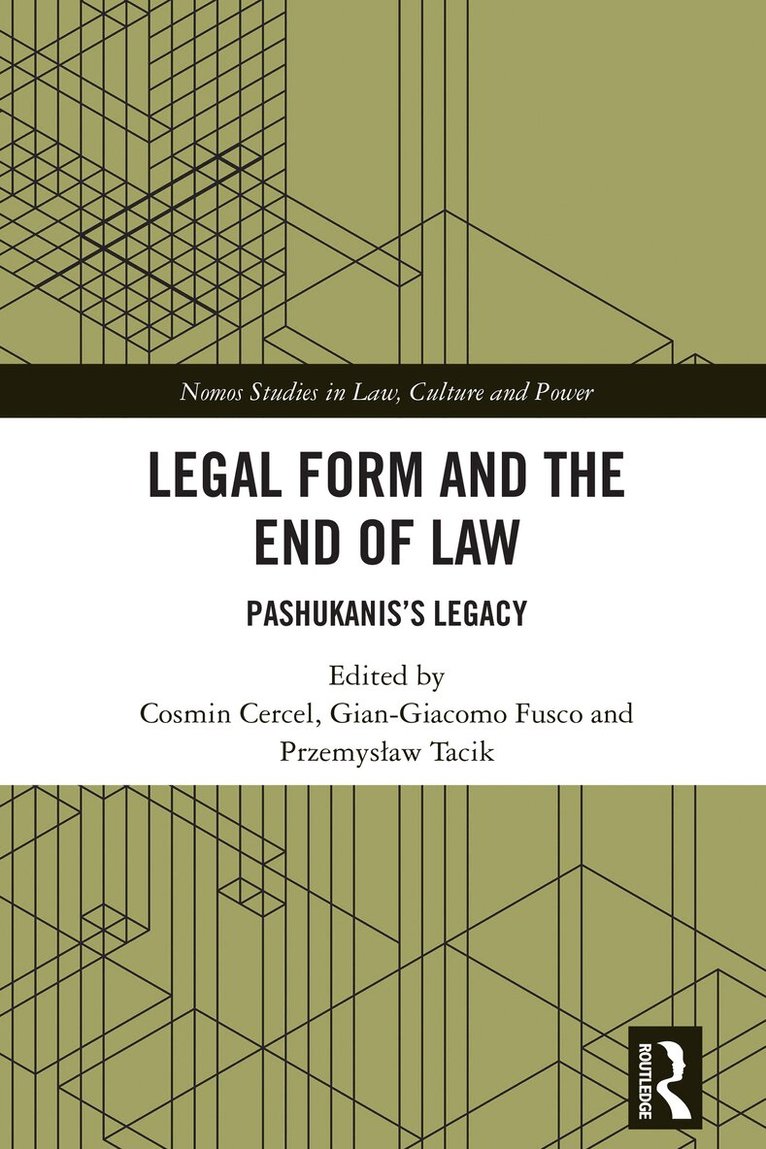
Following the 100th anniversary of Pashukanis’ General Theory of Law and Marxism (1924), this volume aims to breathe new life into the main category of Pashukanian legacy, the concept of legal form. This book offers new, deeper and more general, ways in which the concept of legal form can be used to push forward Marxist – post-Marxist or hauntingly Marxist – legal theory. Accordingly, this book does not pledge allegiance to reconstructing and reconsidering the official interpretative legacy of the legal form. Instead, it mobilises the revolutionary conceptual potentialities that this term contains. When investigated thoroughly, and in many dimensions, the legal form becomes a privileged vantage point not only into the greatest law-related riddles of Marxism (such as the relation between economy and the state or withering away of statal apparatuses), but the whole of modernity as the epoch determined by – if not overlapping with – capitalism. This book aims to think with the legal form rather than explain this concept. In so doing, it offers a panoply of theoretical perspectives that address legal subjectivity, abstraction, autonomy of the law and, last but not least, withering away of the law. This contemporary interrogation of the relevance of the concept of legal form will be of considerable interest to scholars and students of legal and political theory.
2 176 kr
Skickas inom 10-15 vardagar
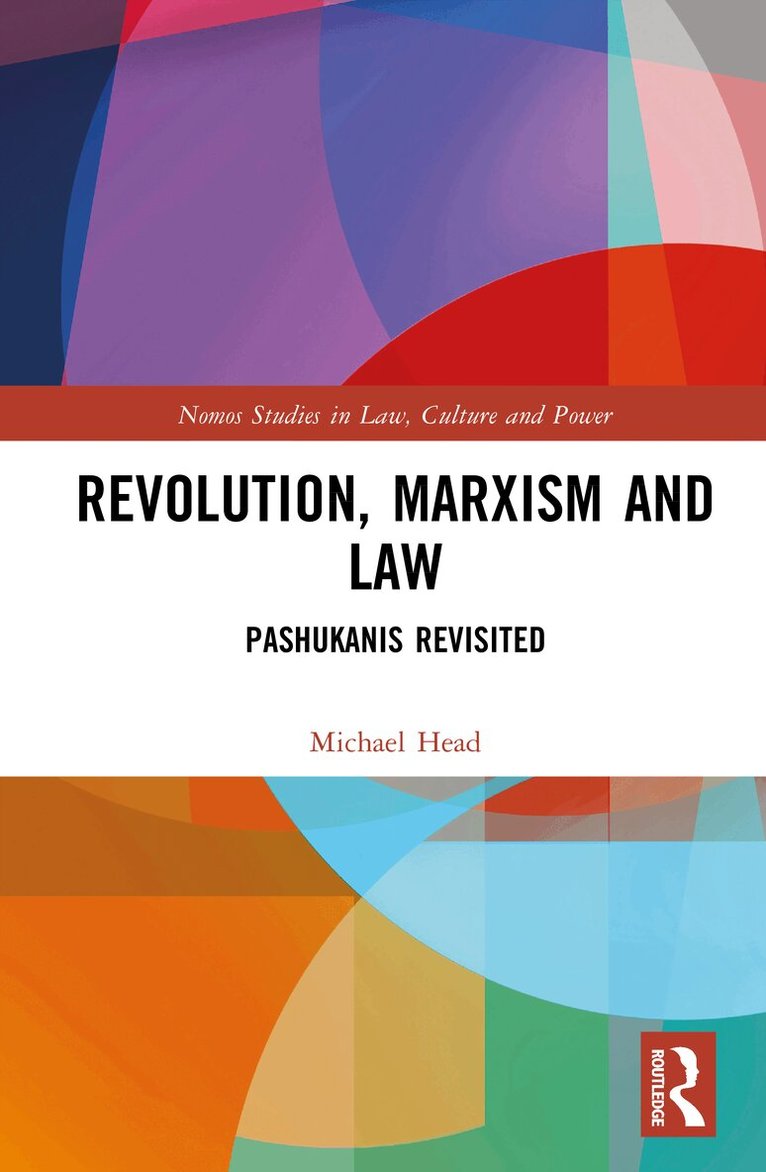
This book builds on Head’s previous work on Soviet legal scholar Evgeny Pashukanis, challenging Western academics who separate Pashukanis's theories from the complex realities of the Soviet state's decline under Stalin.It is not, this book argues, possible to analyse the emergence of Pashukanis as a preeminent Soviet legal theorist in the 1920s, and the subsequent retractions and reversals of his theories, outside their historical context. That context includes the prior development of Marxist legal theory, the contradictions and dynamics of the 1917 Russian Revolution, the early achievements of the Soviet state in law-related fields, the emergence of the Stalinist regime, and Pashukanis’ efforts to satisfy the demands of that regime. Reviewing the trials and the cruel methods used to pursue opponents of the Stalinist regime, the book draws on newly available material to offer a thorough analysis of what exactly it was in Pashukanis’ writings that made his disappearance essential for Stalin’s regime. In our current age of economic inequality, environmental crisis, and growing disillusionment with global capitalism, this book offers a fresh perspective on what happened in the Soviet Union, separating genuine revolutionary ideals from their later distortion.Revolution, Marxism and Law will appeal to scholars and students in legal theory, especially those interested in socialist legal theory, critical legal theory and Marxism, as well as those in other disciplines with an interest in Russia and the rise and fall of the Soviet Union.
2 113 kr
Skickas inom 10-15 vardagar
This book proposes a paradigm shift in the way that ‘the state of exception’–as it is usually named in legal and political theory–is to be understood. Building on the assumption that the exception is a heuristic idea that is still a relevant category for a critical deconstruction of law, this book argues that it needs to be rethought outside the boundaries of its traditional understanding. To this end, the book offers two strategies. First, it develops the ideas of ‘exceptionality’ and ‘exceptionalisation’ in order to grasp how measures, norms and mechanisms that clearly have an exceptional character are no longer confined within the boundaries of classic institutions such as the state of exception, martial law, the state of emergency and so on. As demonstrated recently during the COVID-19 pandemic, legal systems may dissimulate the exceptional as the normal, avoiding the use of formal states of exception and adopting measures that are of exceptional nature. This book maintains that it is necessary to think of ‘exceptionality’ outside of its usual legal footholds. Emergency laws are considered here as part of a more general sphere of exceptionality that must be understood as the product of a process of the accumulation of symbols, practices, notions and images that are only partially expressed through law, despite having long populated the legal imagination. Second, the book offers an analysis of the inner exceptional life of liberal constitutionalism: the subterranean authoritarian drives dissimulated by the rule of law.This book will interest scholars and researchers in legal and political theory, as well as continental philosophy.
2 113 kr
Skickas inom 10-15 vardagar
This book considers how, during the unprecedented global lockdown due to the Covid-19 pandemic, the normal order of everyday life, of the rule of law, of power itself was interrupted, and hence the nomos of this earth was suspended.Employing the term ‘herd immunity’ from vaccination science and global lockdown policy as a guiding theme, the book considers two central aspects of the pandemic. These are the function of herding and collecting as a definition of ontology after Alain Badiou, and the concept of immunity as a suspension of oppositional differences in the work of Roberto Esposito. It then considers how herd immunity not only disrupts the nomos but also suspends its significance as a guiding principle of state-sanctioned legal norms—and perhaps permanently. Providing critical readings of masking, social distancing, compliance, vulnerability, bubbles, immunity, breathing, anti-vaxxers, nudge theory, cocooning, lockdown, patient zero, and the many other terms that became commonplace between 2020 and 2022, the book traces a suspension of legal and social norms, a manipulation of our compliance using false science, and a reconfiguring of the social nomos, in light of the threats of the virus. In a highly original mix of contemporary and post-war continental philosophy, biopolitical theory, set theoretical mathematics, extensional logic, and the most up-to-date science in the area, it argues that lockdown was not some global, biopolitical power grab, but actually a weakening of power, of nomos.This book will appeal to scholars and others in a range of disciplinary areas with interests in the legacy of Covid; but especially those working in the areas of continental philosophy, contemporary legal theory, and biopolitics.
1 944 kr
Skickas inom 10-15 vardagar
This book explores the epistemological, semiotic, semantic, and heuristic dimensions of the dark emotions in constitutional and international law. We are living in times of crisis and emergency where negative emotions and dark feelings are abundant. As these have come to form the intellectual and socio-legal context for the performance of constitutional and international law, this book explores their place – especially the politics of fear, but also anger, hate, despair, and crisis – in our current constitutional polycrisis. Focusing on this ‘dark constitutionalism’, the book draws together an international and interdisciplinary range of scholars to consider the place of emotive semiotics in collective meaning making, the constitutional politics of emotions, and emotional approaches to global challenges in a time of crisis, emergency, and transition. The book thereby develops a compelling analysis of the use of negative emotions in the shaping of contemporary constitutional imaginaries, and with it a novel account of the rise of dark constitutionalism. This book will appeal to researchers and scholars working in the areas of legal theory, legal philosophy, constitutional law, international law, and socio-legal studies.Chapter 1 of this book is freely available as a downloadable Open Access PDF at http://www.taylorfrancis.com under a Creative Commons Attribution-Non Commercial-No Derivatives (CC BY-NC-ND) 4.0 license.