Cycles - Böcker
Visar alla böcker i serien Cycles. Handla med fri frakt och snabb leverans.
15 produkter
15 produkter
1 129 kr
Skickas
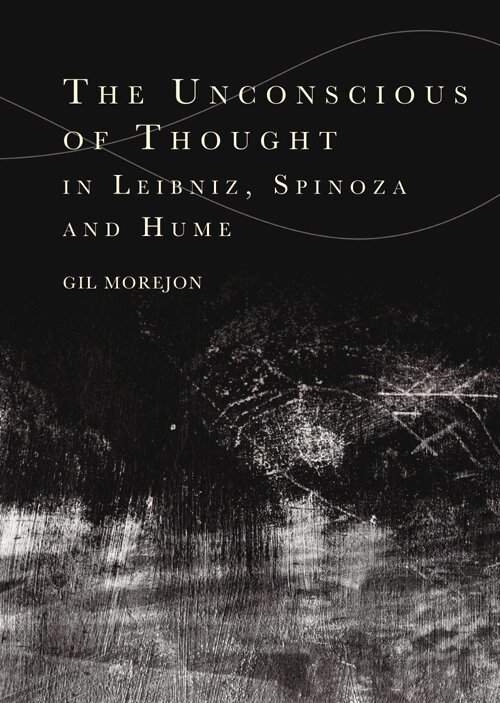
These three early modern philosophers understood that minds necessarily involve ideas and patterns of thinking that are not conscious. Gil Morejon shows that in this way they sharply distinguish themselves from other major early modern thinkers whose conceptions of the mind tended to identify thinking with consciousness, such as Descartes, Malebranche and Locke. This understanding of the thinking mind as conscious remains popular even today. By contrast, Leibniz, Spinoza and Hume argue instead that thought is not, as such, a matter of consciousness. Morejon explores the significance of this insight for their conceptions of freedom and ethics. By systematically and creatively analysing the major writings of these three thinkers and placing them in the context of the history of Western philosophy, he shows that together they provide us with a metaphysics of ideas that is uniquely helpful for thinking through important problems in contemporary political theory and philosophy of mind. In particular, it allows us to understand how it is possible for people to act against their own interests and in spite of their consciously knowing better.
251 kr
Skickas
Three early modern philosophers - Spinoza, Leibniz and Hume - understood that minds necessarily involve ideas and patterns of thinking that are not conscious. Morejon shows that in this way they sharply distinguish themselves from other major early modern thinkers whose conceptions of the mind tended to identify thinking with consciousness, such as Descartes, Malebranche and Locke. This conception of the thinking mind as conscious remains popular even today. By contrast, Leibniz, Spinoza and Hume argue instead that thought is not, as such, a matter of consciousness. Morejon explores the significance of this insight for their conceptions of freedom and ethics. By systematically analyzing the major writings of these three thinkers and placing them in the context of the history of Western philosophy, he shows that together they provide us with a metaphysics of ideas that is uniquely helpful for thinking through important problems in contemporary political theory. In particular, it allows us to understand how it is possible for people to act against their own interests and in spite of their consciously knowing better. Readers will gain a sophisticated understanding of what Leibniz, Spinoza and Hume thought about the metaphysics of ideas, the nature of the human mind and the limits of individual freedom.
1 017 kr
Skickas
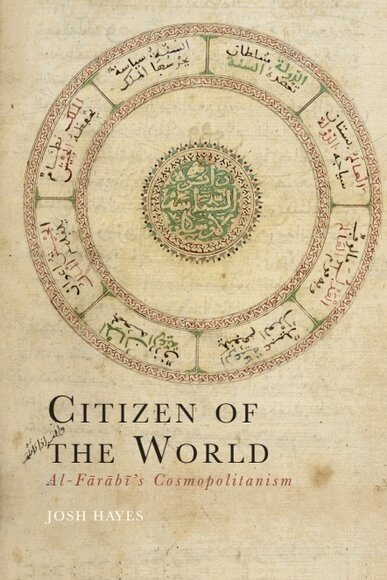
The early Greek Cynic, Diogenes, when asked where he came from simply replied: kosmopolit?s - 'I am a citizen of the world'. The ethical and political paradigm of cosmopolitanism is often exclusively attributed to the ancient schools of Cynicism and Stoicism. Cosmopolitanism is commonly assumed to have reached an impasse throughout the Middle Ages, only to resurface during the Enlightenment with the political philosophies of Hugo Grotius, Adam Smith, and Immanuel Kant. However, the political philosophy of Ab? Na?r al-F?r?b? (870-950 CE), represents a promising avenue for the revival and expansion of cosmopolitanism. By harmonizing Plato and Aristotle with Neoplatonism and Islamic theology (kal?m) in a radically innovative manner, al-F?r?b? ambitiously proposes the existence of a political community extending across the entire inhabited world. This book demonstrates that the possibility and promise of al-F?r?b?'s cosmopolitanism remains an enduring contribution to contemporary debates concerning the future of democracy and global political association.
239 kr
Kommande
The early Greek Cynic, Diogenes, when asked where he came from simply replied: kosmopolitēs - ‘I am a citizen of the world’. The ethical and political paradigm of cosmopolitanism is often exclusively attributed to the ancient schools of Cynicism and Stoicism. Cosmopolitanism is commonly assumed to have reached an impasse throughout the Middle Ages, only to resurface during the Enlightenment with the political philosophies of Hugo Grotius, Adam Smith, and Immanuel Kant. However, the political philosophy of Abū Naṣr al-Fārābī (870-950 CE), represents a promising avenue for the revival and expansion of cosmopolitanism. By harmonizing Plato and Aristotle with Neoplatonism and Islamic theology (kalām) in a radically innovative manner, al-Fārābī ambitiously proposes the existence of a political community extending across the entire inhabited world. This book demonstrates that the possibility and promise of al-Fārābī’s cosmopolitanism remains an enduring contribution to contemporary debates concerning the future of democracy and global political association.
Kantian Ethics and Environmental Philosophy
Pursuing the Good in an Age of Crisis
Inbunden, Engelska, 2025
1 597 kr
Skickas inom 3-6 vardagar
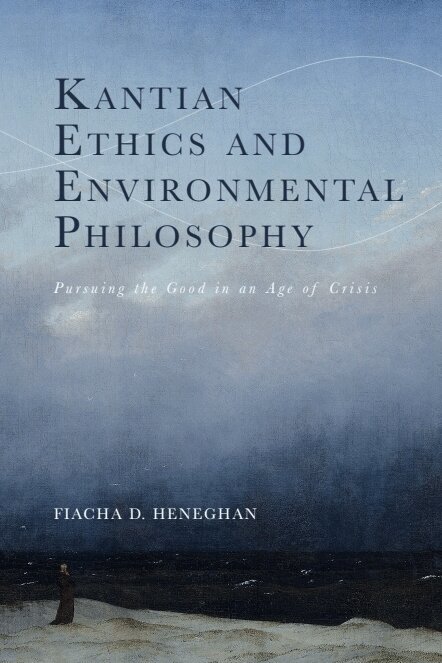
Human beings have desires and obligations. A Kantian framework reveals the morally significant conflict between these two. In the context of looming environmental crises of our own making, we may be forced in many respects to choose between environmental obligations and the pursuit of our well-being. Kantian Ethics and Environmental Philosophy begins by examining a tendency in philosophical thought as old as the Ancient Greeks: the temptation to minimize or even theorize away such conflicts. By contrast, this book argues that acknowledging the reality of the choices ahead is a necessary first step to forming a coherent and rational hope for a better world.
Kantian Ethics and Environmental Philosophy
Pursuing the Good in an Age of Crisis
Häftad, Engelska, 2026
239 kr
Kommande
Human beings have desires and obligations. A Kantian framework reveals the morally significant conflict between these two. In the context of looming environmental crises of our own making, we may be forced in many respects to choose between environmental obligations and the pursuit of our well-being. Kantian Ethics and Environmental Philosophy begins by examining a tendency in philosophical thought as old as the Ancient Greeks: the temptation to minimize or even theorize away such conflicts. By contrast, this book argues that acknowledging the reality of the choices ahead is a necessary first step to forming a coherent and rational hope for a better world.
1 053 kr
Skickas
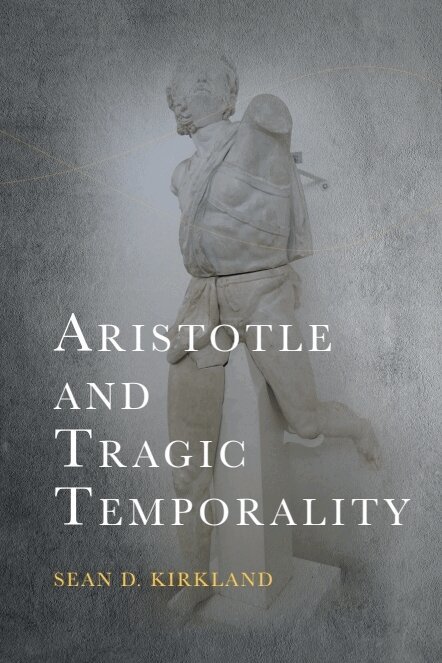
Aristotle and Tragic Temporality treats a theme that has drawn scholarly attention for millennia: Aristotle on time and our experience of it. It does so, however, in a wholly unprecedented way, grounding its interpretation in his Poetics and Ethics, rather than the natural philosophy of the Physics. Sean D. Kirkland first takes up Aristotle's discussion of our tragic temporal situatedness our having to act, think, and live always between a determining past we can never fully master and a projected future we can never fully anticipate. It is this condition that comes powerfully to light for Aristotle on stage in the performance of a tragic drama. The familiar Aristotelian 'virtue ethics' then becomes something radically new in the transforming light of the Poetics' temporality - an outline of how humans can inhabit that irremediably tragic condition, never overcoming or suspending it, and arrive nonetheless at something like happiness and excellence.
297 kr
Kommande
Aristotle and Tragic Temporality treats a theme that has drawn scholarly attention for millennia: Aristotle on time and our experience of it. It does so, however, in a wholly unprecedented way, grounding its interpretation in his Poetics and Ethics, rather than the natural philosophy of the Physics. Sean D. Kirkland first takes up Aristotle's discussion of our tragic temporal situatedness—our having to act, think, and live always between a determining past we can never fully master and a projected future we can never fully anticipate. It is this condition that comes powerfully to light for Aristotle on stage in the performance of a tragic drama. The familiar Aristotelian ‘virtue ethics’ then becomes something radically new in the transforming light of the Poetics’ temporality - an outline of how humans can inhabit that irremediably tragic condition, never overcoming or suspending it, and arrive nonetheless at something like happiness and excellence.
1 111 kr
Kommande
Reconstructing the conceptual link between life and accountability, Meghan Robison presents a new account of political founding and obligation in Hobbes. Beginning from an interpretation of life as an idiosyncratic bodily motion – a motion of limbs that begins within a living body – she shows how the Commonwealth is instituted through our self‑legislated embodied practices of holding ourselves to mutually beneficial shared rules.
1 140 kr
Skickas inom 7-10 vardagar
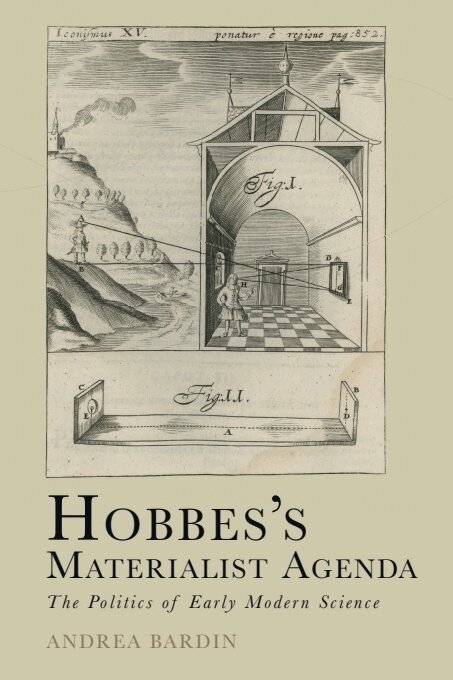
In this major contribution to our understanding of Hobbes's political thought, Andrea Bardin contends that it should be analysed in relation to the 'materialist agenda' Hobbes was pursuing when confronting Descartes's project. Bardin pinpoints the changes in Hobbes's political thought to the intellectual context in which he elaborated his materialist ontology and epistemology. He investigates the classical sources that initially shaped Hobbes's political thinking, including Thucydides and Aristotle, as well as the broad materialist agenda that Hobbes drew from Bacon and elaborated in opposition to Descartes. He studies Hobbes's exchanges with his contemporary interlocutors in the Mersenne circle, including Descartes and Gassendi, with whom he discussed first philosophy and natural philosophy. In this way, Bardin vindicates materialist critiques of the idealist foundations of early modern mechanical philosophy.
1 203 kr
Skickas inom 7-10 vardagar
This book redirects our attention to a group of thinkers whose project of rethinking difference and alterity assumes new critical significance at the current juncture. Reaching from the Renaissance to the Enlightenment, the interventions of La Boetie, Montaigne, Spinoza and Mendelssohn are not just history (albeit one problematically assimilated to canonical views), but offer new resources for moving past the politics of tolerance, charity, and recognition. These thinkers argue for an understanding of otherness that renegotiates the terms of difference and alterity more radically as the conditions of our own existence. From La Boetie's exposure of 'voluntary servitude' as the mechanism behind the tyranny of despotic authority, to the ideas of Montaigne, Spinoza and Mendelssohn, these thinkers argue for the critical importance of the deep constitutive nexus between self and other: identity, difference and otherness.
1 140 kr
Skickas inom 7-10 vardagar
Emile Brehier's creative interpretations of Stoicism inspired the next generation of thinkers from Jean-Paul Sartre to Luce Irigaray to rethink the history of philosophy. Perhaps most of all, Brehier's thinking about the Stoic theory of incorporeality was pivotal to Gilles Deleuze's understanding of Ancient Greek and Roman thinkers, especially the Stoics, and formative for his own materialistic metaphysics. To understand the metaphysics, philosophy of language, and interpretations of psychoanalysis in Deleuze's Logic of Sense, Brehier's influence remains to be fully elucidated. Yet such influence has been largely unknown in Anglophone philosophy until now. For the first time since its publication nearly a century ago, Brehier's groundbreaking essay finally appears in English. To frame its history and convey its importance for the future of philosophy, two new essays by a leading French philosopher and a British-Canadian philosopher bookend the translation.
1 053 kr
Kommande
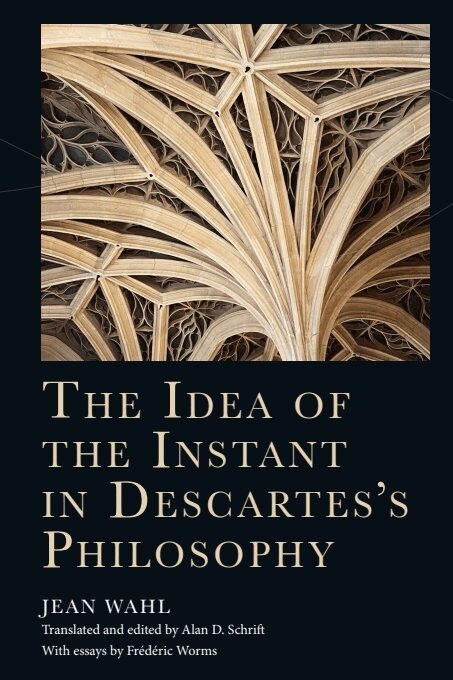
The Idea of the Instant in Descartes’s Philosophy is the first English translation of a major and influential interpretation of Descartes’s philosophy by one of the most influential figures in twentieth-century French philosophy. While discussing the role of the instant within Descartes’s philosophy, Jean Wahl develops an original account of temporality that is central to Wahl’s entire and extensive oeuvre and that has influenced a variety of 20th -century French thinkers, most notably Gilles Deleuze.In addition to including the original French text, the volume contains an introduction to Jean Wahl by Alan D. Schrift and English translations of three essays, one written exclusively for this book, by Frédéric Worms, Director of the École Normale Supérieure, Wahl’s most important French interpreter, and one of the most influential philosophers working in France today.
1 454 kr
Skickas inom 7-10 vardagar
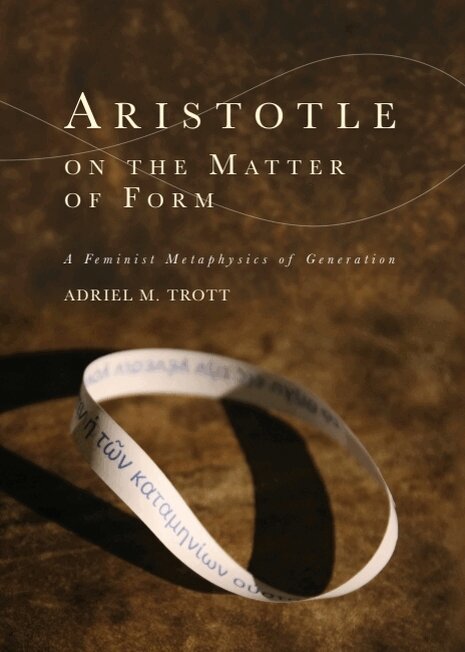
Adriel M. Trott challenges the wholesale acceptance of the view that nature operates in Aristotle’s work on a craft model, which implies that matter has no power of its own. Instead, she argues for a robust sense of matter in Aristotle in response to feminist critiques. She finds resources for thinking the female’s contribution – and the female – on its own terms and not as the contrary to form, or the male.
332 kr
Skickas
Adriel M. Trott challenges the wholesale acceptance of the view that nature operates in Aristotle’s work on a craft model, which implies that matter has no power of its own. Instead, she argues for a robust sense of matter in Aristotle in response to feminist critiques. She finds resources for thinking the female’s contribution – and the female – on its own terms and not as the contrary to form, or the male.