Europas Osten im 20. Jahrhundert - Böcker
Visar alla böcker i serien Europas Osten im 20. Jahrhundert. Handla med fri frakt och snabb leverans.
7 produkter
7 produkter
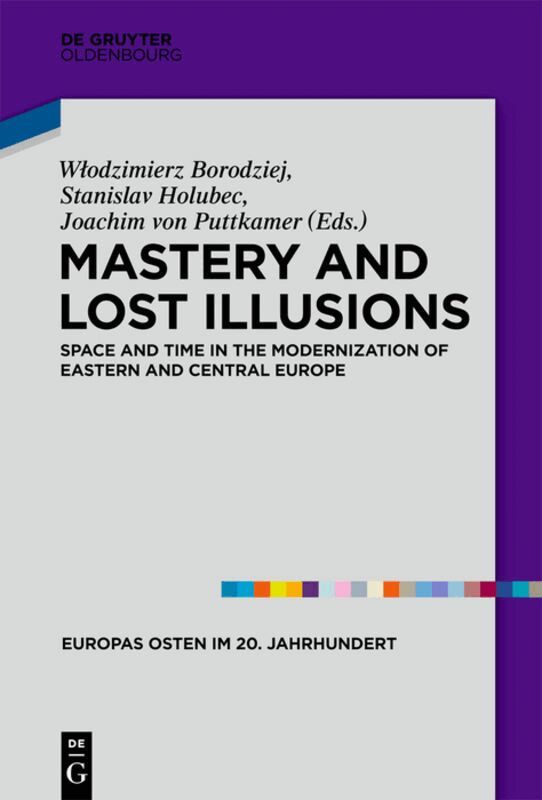
Mastery and Lost Illusions
Space and Time in the Modernization of Eastern and Central Europe
Inbunden, Engelska, 2014
720 kr
Skickas inom 7-10 vardagar
This volume highlights the specific experiences and challenges of modernity in twentieth-century Eastern and Central Europe. Contributors ask how spatial and temporal conditions shaped the region’s transformation from a rural to an urban, industrialized society in this period and investigate the state’s role in the mastery of space, particularly in the context of state socialism. The volume also sheds light on the ruralization of cities and mutual perceptions of the rural and urban populations in this region.
885 kr
Skickas inom 5-8 vardagar
Del 9 - Europas Osten Im 20. Jahrhundert
Städtebau Und Legitimation
Debatten Um Das Unbebaute Historische Warschauer Zentrum, 1945-1989
Inbunden, Tyska, 2019
1 403 kr
Skickas inom 5-8 vardagar
929 kr
Skickas inom 5-8 vardagar
607 kr
Skickas inom 5-8 vardagar
972 kr
Skickas inom 5-8 vardagar
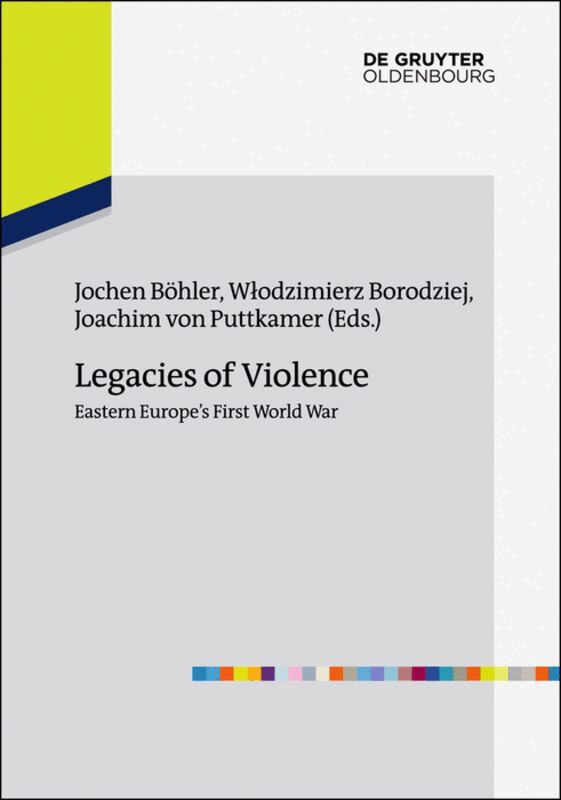
The First World War began in the Balkans, and it was fought as fiercely in the East as it was in the West. Fighting persisted in the East for almost a decade, radically transforming the political and social order of the entire continent. The specifics of the Eastern war such as mass deportations, ethnic cleansing, and the radicalization of military, paramilitary and revolutionary violence have only recently become the focus of historical research. This volume situates the ‘Long First World War’ on the Eastern Front (1912–1923) in the hundred years from the mid-19th to the mid-20th century and explores the legacies of violence within this context.ContentJochen Böhler/Włodzimierz Borodziej/Joachim von Puttkamer: IntroductionI. A World in TransitionJoachim von Puttkamer: Collapse and Restoration. Politics and the Strains of War in Eastern EuropeMark Biondich: Eastern Borderlands and Prospective Shatter Zones. Identity and Conflict in East Central and Southeastern Europe on the Eve of the First World WarJochen Böhler: Generals and Warlords, Revolutionaries and Nation-State Builders. The First World War and its Aftermath in Central and Eastern EuropeII. OccupationJonathan E. Gumz: Losing Control. The Norm of Occupation in Eastern Europe during the First World WarStephan Lehnstaedt: Fluctuating between ‘Utilisation’ and Exploitation. Occupied East Central Europe during the First World WarRobert L. Nelson: Utopias of Open Space. Forced Population Transfer Fantasies during the First World WarIII. RadicalizationMaciej Górny: War on Paper? Physical Anthropology in the Service of States and NationsPiotr J. Wróbel: Foreshadowing the Holocaust. The Wars of 1914–1921 and Anti-Jewish Violence in Central and Eastern EuropeRobert Gerwarth: Fighting the Red Beast. Counter-Revolutionary Violence in the Defeated States of Central EuropeIV. AftermathJulia Eichenberg: Consent, Coercion and Endurance in Eastern Europe. Poland and the Fluidity of War ExperiencesPhilipp Ther: Pre-negotiated Violence. Ethnic Cleansing in the ‘Long’ First World WarDietrich Beyrau: The Long Shadow of the Revolution. Violence in War and Peace in the Soviet UnionCommentaryJörn Leonhard: Legacies of Violence: Eastern Europe’s First World War – A Commentary from a Comparative Perspective
1 084 kr
Skickas inom 3-6 vardagar
Die russische Erinnerungskultur wird oft als zerrissen und fragmentiert beschrieben und gleichzeitig die geschichtspolitische Allmacht des Staates beklagt. Aber besitzt der Kreml wirklich die alleinige Deutungshoheit und wäre eine einheitlichere Geschichtskultur – gerade unter diesen Vorzeichen – überhaupt erstrebenswert? Was wird eigentlich genau untersucht, wenn sich die Wissenschaft der heutigen Erinnerung an die Verbrechen des Stalinismus zuwendet? Und lässt sich eigentlich rechtfertigen, dabei von einem deutschen ‚Muster‘ der Aufarbeitung auszugehen?Der vorliegende Band stellt sich diesen Fragen und nimmt einen doppelten Perspektivwechsel vor: Zum einen steht explizit nicht die Erinnerung an den Zweiten Weltkrieg im Vordergrund, sondern das Gedächtnis an die sowjetischen Massenverbrechen, insbesondere an den Gulag. Zum anderen beleuchten die Beiträge eine Vielzahl von Akteuren, die an verschiedenen Orten in zuweilen wechselnden Kombinationen ganz unterschiedliche Deutungen der stalinistischen Verbrechen vornehmen.Unter anderem werden die juristischen, ökonomischen und sozialen Bedingungen von Erinnerungsarbeit in ihrer jeweiligen und ortsgebundenen Spezifik beleuchtet, die Rolle der postsowjetischen russischen Historiographie kritisch befragt und neben den großen geschichtspolitischen Akteuren wie Staat und Kirche auch engagierte Einzelpersonen gewürdigt. So entsteht ein weitaus vielfältigeres und interessanteres Panorama, das der vielfach verbreiteten Legende einer geschichtspolitischen Diktatur des Kreml einen notwendigen Kontrapunkt hinzufügt.