Human Evolution Series - Böcker
Visar alla böcker i serien Human Evolution Series. Handla med fri frakt och snabb leverans.
9 produkter
9 produkter
2 541 kr
Skickas inom 5-8 vardagar
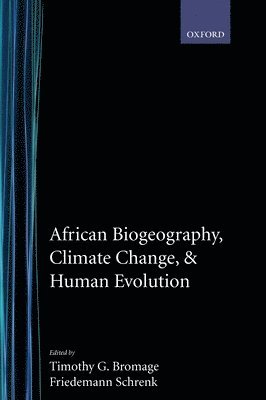
This interdisciplinary book interprets early human evolution in the context of the local ecology and specific habitats. It assesses carefully the possible role of climate change in driving early human evolution. Bringing an ecological and biogeographic perspective to recent fossil finds, the book provides a new synthesis of ideas on hominid evolution. It will be a valuable resource for researchers in physical, biological, or paleoanthropology, evolutionary biology or biogeography.
1 531 kr
Skickas inom 5-8 vardagar
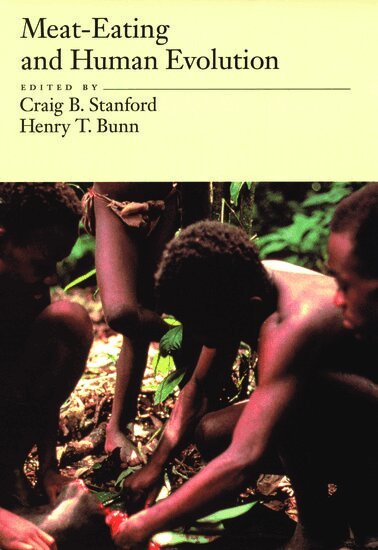
When, why, and how early humans began to eat meat are three of the most fundamental unresolved questions in the study of human origins. Before 2.5 million years ago the presence and importance of meat in the hominid diet is unkown. After stone tools appear in the fossil record it seems clear that meat was eaten in increasing quantities, but whether it was obtained through hunting or scavenging remains a topic of intense debate. This book takes a novel and strongly interdisciplinary approach to the role of meat in the early hominid diet, inviting well-known researchers who study the human fossil record, modern hunter-gatherers, and nonhuman primates to contribute chapters to a volume that integrates these three perspectives. Stanford's research has been on the ecology of hunting by wild chimpanzees. Bunn is an archaeologist who has worked on both the fossil record and modern foraging people. This will be a reconsideration of the role of hunting, scavening, and the uses of meat in light of recent data and modern evolutionary theory. There is currently no other book, nor has there ever been, that occupies the niche this book will create for itself.
2 379 kr
Skickas inom 7-10 vardagar
The book is the most in-depth account of the fossil skull anatomy and evolutionary significance of the 3.6-3.0 million year old early human species Australopithecus afarensis. Knowledge of this species is pivotal to understanding early human evolution, because 1) the sample of fossil remains of A. afarensis is among the most extensive for any early human species, and the majority of remains are of taxonomically inormative skulls and teeth; 2) the wealth of material makes A. afarensis an indispensible point of reference for the interpretation of other fossil discoveries; 3) the species occupies a time period that is the focus of current research to determine when, where, and why the human lineage first diversified into separate contemporaneous lines of descent. Upon publication of this book, this species will be among the most thoroughly documented extinct ancestors of humankind. The main focus of the book - its organizing principle - is the first complete skull of A. afarensis (specimen number A.L. 444-2) at the Hadar site, Ethiopia, the home of the remarkably complete 3.18 million year old skeleton known as "Lucy," found at Hadar by third author D. Johanson in 1974. Lucy and other fossils from Hadar, together with those from the site of Laetoli in Tanzania, were controversially attributed to the then brand new species A. afarensis by Johanson, T. White and Y. Coppens in 1978. However, a complete skull, which would have quickly resolved much of the early debate over the species, proved elusive until second author Y. Rak's discovery of the 444 skull in 1992. The book details the comparative anatomy of the new skull (and the cast of its brain, analyzed by R. Holloway and M. Huan) , as well as of other skull and dental finds recovered during the latest, ongoing field work at Hadar, and analyzes the evolutionary significance of A. afarensis in the context of other critically important discoveries of earliest humans made in recent years. In essence, it summarizes the state of knowledge about one of the central subjects of current paleoanthropological investigation.
3 148 kr
Skickas inom 7-10 vardagar
This is primary descriptive volume on the most important paleontological site for research into the emergence of humans, the development of a modern pattern of hunting and gathering societies in the Middle Upper Paleolithic Era. Erik Trinkhaus is among the most distinguished paleoanthropologists and a member of the National Academy. Svoboda is the project leader on the Pavlovian site.
961 kr
Skickas inom 7-10 vardagar
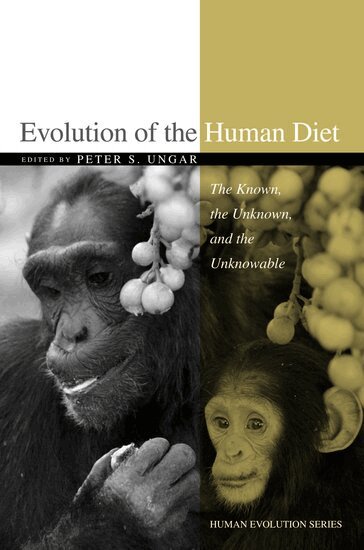
We are interested in the evolution of hominin diets for several reasons. One is the fundamental concern over our present-day eating habits and the consequences of our societal choices, such as obesity prevalent in some cultures and starvation in others. Another is that humans have learned to feed themselves in extremely varied environments, and these adaptations, which are fundamentally different from those of our closest biological relatives, have to have had historical roots of varying depth. The third, and the reason why most paleoanthropologists are interested in this question, is that a species' trophic level and feeding adaptations can have a strong effect on body size, locomotion, "life history strategies", geographic range, habitat choice, and social behavior. Diet is key to understanding the ecology and evolution of our distant ancestors and their kin, the early hominins. A study of the range of foods eaten by our progenitors underscores just how unhealthy many of our diets are today. This volume brings together authorities from disparate fields to offer new insights into the diets of our ancestors. Paleontologists, archaeologists, primatologists, nutritionists and other researchers all contribute pieces to the puzzle. This volume has at its core four main sections: · Reconstructed diets based on hominin fossils--tooth size, shape, structure, wear, and chemistry, mandibular biomechanics· Archaeological evidence of subsistence--stone tools and modified bones· Models of early hominin diets based on the diets of living primates--both human and non-human, paleoecology, and energetics· Nutritional analyses and their implications for evolutionary medicine New techniques for gleaning information from fossil teeth, bones, and stone tools, new theories stemming from studies of paleoecology, and new models coming from analogy with modern humans and other primates all contribute to our understanding. When these approaches are brought together, they offer an impressive glimpse into the lives of our distant ancestors. The contributions in this volume explore the frontiers of our knowledge in each of these disciplines as they address the knowns, the unknowns, and the unknowables of the evolution of hominin diets.
1 200 kr
Skickas inom 7-10 vardagar
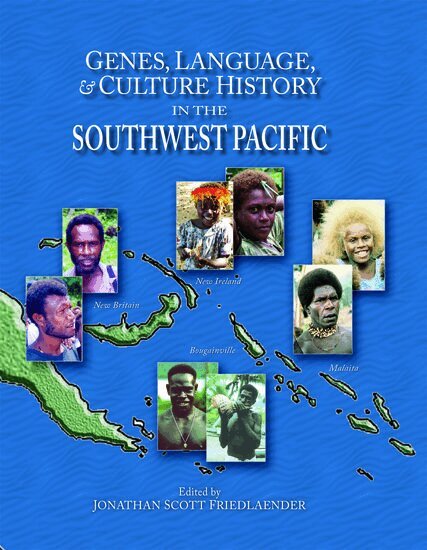
The broad arc of islands north of Australia that extends from Indonesia east towards the central Pacific is home to a set of human populations whose concentration of diversity is unequaled elsewhere. Approximately 20% of the worlds languages are spoken here, and the biological and genetic heterogeneity among the groups is extraordinary. Anthropologist W.W. Howells once declared diversity in the region so Protean as to defy analysis. However, this book can now claim considerable success in describing and understanding the origins of the genetic and linguistic variation there. In order to cut through this biological knot, the authors have applied a comprehensive battery of genetic analyses to an intensively sampled set of populations, and have subjected these and complementary linguistic data to a variety of phylogenetic analyses. This has revealed a number of heretofore unknown ancient Pleistocene genetic variants that are only found in these island populations, and has also identified the genetic footprints of more recent migrants from Southeast Asia who were the ancestors of the Polynesians. The book lays out the very complex structure of the variation within and among the islands in this relatively small region, and a number of explanatory models are tested to see which best account for the observed pattern of genetic variation here. The results suggest that a number of commonly used models of evolutionary divergence are overly simple in their assumptions, and that often human diversity has accumulated in very complex ways.
760 kr
Skickas inom 5-8 vardagar
This book presents the first comprehensive description of the lithic assemblages from Qafzeh Cave, one of only two Middle Paleolithic sites in the Levant that has yielded multiple burials of early anatomically modern Homo sapiens (AMHs). The record from this region raises the question of possible long-term temporal overlap between early AMHs and Neanderthals. For this reason, Qafzeh has long been one of the pivotal sites in debates on the origins of AMHs and in attempts to compare and contrast the two species' adaptations and behavior. Although the hominin fossils from the site were published years ago, until now the associated archaeological assemblages were incompletely described, often leading to conflicting interpretations. This monograph includes a thorough technological analysis of the lithic assemblages, incorporated in their geological and sedimentological contexts. This description serves as a springboard for regional comparisons as well as a more general discussion about Middle Paleolithic behavior, which is relevant to important and as yet unresolved questions on the origins of "modern" behavior patterns. The volume includes a wide-ranging and up-to-date bibliography that provides the middle-range for discussing the ecological context and behavioral complexity of the Middle Paleolithic period, and ends with some thought-provoking conclusions about the dynamic human interactions that existed in the region during this time.
1 240 kr
Skickas inom 5-8 vardagar
The 1924 African discovery of an early hominin child's skull, referred to as Australopithecus africanus by Raymond Dart, was a major event in the history of paleoanthropology. This provided the first evidence of early hominins in Africa and overturned conventional ideas about human evolution. Subsequent discoveries of A. africanus fossils, notably from cave deposits at Sterkfontein, yielded the first evidence that early hominins were habitual bipeds. Fifty years after this, the discovered wealth of fossil evidence in eastern Africa of the slightly older and craniodentally more primitive taxon, A. afarensis, catalyzed debates about the origin and evolution of human gait and the phylogentic relationships among early hominins. This formed the main basis of our understanding of early hominin bipedality and paleobiology. Little attention has been paid to the variation among species in postcranial anatomy and locomotion, although intriguing hints are beginning to appear in the literature. Did multiple varieties of bipedality evolve? Did australopith species differ in positional or manipulative abilities, body proportions, or patterns of sexual dimorphism? These are critical questions for understanding the evolution of australopiths and hominin locomotion. In this book, Bernhard Zipfel, Brian Richmond, Carol Ward, and the most knowledgeable scholars in their respective fields provide groundbreaking accounts for each postcranial fossil and expert examinations into the background of each fossil. The chapters include standardized high-quality photographs and anatomical descriptions to allow readers to read the book entirely or learn by comparing features across chapters. Hominin Postcranial Remains from Sterkfontein, South Africa, 1936-1995 is an evolutionary history of South African hominins, and it offers readers an orientation and introduction to the field. This is an important reference book for professional paleontologists, paleobiologists, anthropologists, geologists, students, and historians interested in human evolution.
The People of Sunghir
Burials, Bodies, and Behavior in the Earlier Upper Paleolithic
Inbunden, Engelska, 2014
2 938 kr
Skickas inom 7-10 vardagar
In this latest volume in the Human Evolution Series, Erik Trinkaus and his co-authors synthesize the research and findings concerning the human remains found at the Sunghir archaeological site. It has long been apparent to those in the field of paleoanthropology that the human fossil remains from the site of Sunghir are an important part of the human paleoanthropological record, and that these fossil remains have the potential to provide substantial data and inferences concerning human biology and behavior, both during the earlier Upper Paleolithic and concerning the early phases of human occupation of high latitude continental Eurasia. But despite many separate investigations and published studies on the site and its findings, a single and definitive volume does not yet exist on the subject. This book combines the expertise of four paleoanthropologists to provide a comprehensive description and paleobiological analysis of the Sunghir human remains.Since 1990, Trinkaus et al. have had access to the Sunghir site and its findings, and the authors have published frequently on the topic. The book places these human fossil remains in context with other Late Pleistocene humans, utilizing numerous comparative charts, graphs, and figures. As such, the book is highly illustrated, in color. Trinkaus and his co-authors outline the many advances in paleoanthropology that these remains have helped to bring about, examining the Sunghir site from all angles.