Erik Trinkaus – författare
Visar alla böcker från författaren Erik Trinkaus. Handla med fri frakt och snabb leverans.
9 produkter
9 produkter
Inbunden, Engelska, 2005
3 274 kr
Skickas inom 7-10 vardagar
This is primary descriptive volume on the most important paleontological site for research into the emergence of humans, the development of a modern pattern of hunting and gathering societies in the Middle Upper Paleolithic Era. Erik Trinkhaus is among the most distinguished paleoanthropologists and a member of the National Academy. Svoboda is the project leader on the Pavlovian site.
Inbunden, Engelska, 2012
2 035 kr
Skickas inom 11-20 vardagar
The Pestera cu Oase is a sealed limestone cavern in southwestern Romania which served principally as a hibernation den for Pleistocene cave bears and wolves, but also contained the fossil remains of the earliest modern humans in Europe. Currently inaccessible except through cave diving and rock climbing, the cave preserved its contents undisturbed for tens of thousands of years. To understand the cave, its contents, the bear and wolves, and especially the humans, an international team mapped and excavated the Pestera cu Oase from 2002 to 2005, and has since analyzed its remains in detail. The result was a wealth of information on the geology and paleontology of this cave as a reflection of life in the southwestern Carpathians 40-50 thousand years ago. This volume presents those findings. Among other things, the large cave bears provided the first solid evidence of the omnivorous nature of these not-so-gentle giants. The deer remains brought into the cave by wolves are among the largest known in Europe and document the westernmost extent of the eastern (wapiti) variant of this species. And the human remains, a complete lower jaw of a young adult and a largely complete skull of an adolescent, furhish detailed information on the anatomy of the earliet modern Europeans, who were modern without being fully modern. They combine an overall distinctly modern anatomy with traits reminescent of earlier archaic humans and among the largest rear molars in the genus Homo. They thus document the initial spread of modern humans into the cul-de-sac of Europe, the complex ancestry of those humans, and the ongoing nature of human evolution after the established of people like ourselves.
Inbunden, Engelska, 2014
3 034 kr
Skickas inom 7-10 vardagar
In this latest volume in the Human Evolution Series, Erik Trinkaus and his co-authors synthesize the research and findings concerning the human remains found at the Sunghir archaeological site. It has long been apparent to those in the field of paleoanthropology that the human fossil remains from the site of Sunghir are an important part of the human paleoanthropological record, and that these fossil remains have the potential to provide substantial data and inferences concerning human biology and behavior, both during the earlier Upper Paleolithic and concerning the early phases of human occupation of high latitude continental Eurasia. But despite many separate investigations and published studies on the site and its findings, a single and definitive volume does not yet exist on the subject. This book combines the expertise of four paleoanthropologists to provide a comprehensive description and paleobiological analysis of the Sunghir human remains.Since 1990, Trinkaus et al. have had access to the Sunghir site and its findings, and the authors have published frequently on the topic. The book places these human fossil remains in context with other Late Pleistocene humans, utilizing numerous comparative charts, graphs, and figures. As such, the book is highly illustrated, in color. Trinkaus and his co-authors outline the many advances in paleoanthropology that these remains have helped to bring about, examining the Sunghir site from all angles.
E-bok
PDF, Engelska, 20142 282 kr
Läs direkt efter köp
In this latest volume in the Human Evolution Series, Erik Trinkaus and his co-authors synthesize the research and findings concerning the human remains found at the Sunghir archaeological site. It has long been apparent to those in the field of paleoanthropology that the human fossil remains from the site of Sunghir are an important part of the human paleoanthropological record, and that these fossil remains have the potential to provide substantial data and inferences concerning human biology and behavior, both during the earlier Upper Paleolithic and concerning the early phases of human occupation of high latitude continental Eurasia. But despite many separate investigations and published studies on the site and its findings, a single and definitive volume does not yet exist on the subject. This book combines the expertise of four paleoanthropologists to provide a comprehensive description and paleobiological analysis of the Sunghir human remains.Since 1990, Trinkaus et al. have had access to the Sunghir site and its findings, and the authors have published frequently on the topic. The book places these human fossil remains in context with other Late Pleistocene humans, utilizing numerous comparative charts, graphs, and figures. As such, the book is highly illustrated, in color. Trinkaus and his co-authors outline the many advances in paleoanthropology that these remains have helped to bring about, examining the Sunghir site from all angles.
Häftad, Engelska, 1983
849 kr
Skickas inom 5-8 vardagar
E-bok
PDF, Engelska, 2014979 kr
Läs direkt efter köp
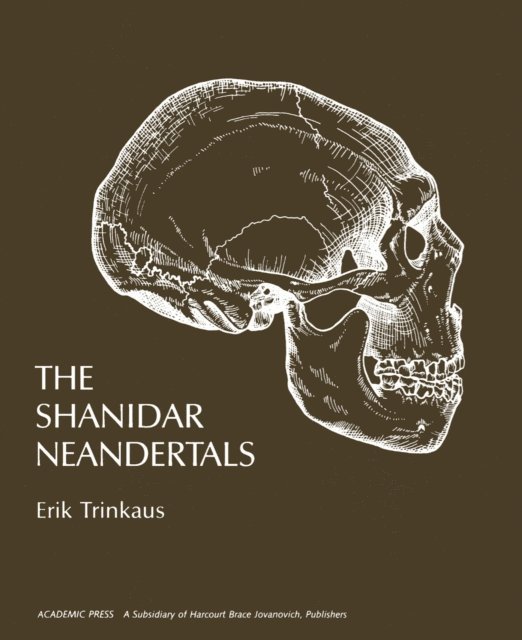
The Shanidar Neandertals describes the functional morphology of the Neanderthals and their place in human evolution based on a paleontological study of fossils discovered at Shanidar Cave in northeastern Iraq. Functional interpretations are provided that describe and discuss the individual fossils. The phylogenetic implications of the Shanidar specimens are also discussed. Comprised of 14 chapters, this book begins with an overview of the Neanderthal remains from the Shanidar Cave and the paleontological data obtained from the fossils. The discussion then turns to the history of the excavations in Shanidar Cave and the discoveries of the Neanderthals; morphometrics of the Shanidar remains; and determination of the age and sex of the Shanidar Neanderthals. Subsequent chapters focus on various aspects of the Neanderthal fossils, including the cranial and mandibular remains; the dental remains; the axial skeleton; and the upper and lower limb remains. The immature remains are also described, along with bodily proportions and the estimation of stature. This monograph will be of interest to archaeologists, anthropologists, paleontologists, and paleopathologists.
Inbunden, Engelska, 1899
1 263 kr
Skickas inom 3-6 vardagar
Häftad, Engelska
878 kr
Skickas inom 3-6 vardagar
Inbunden, Engelska, 2017
668 kr
Skickas inom 11-20 vardagar
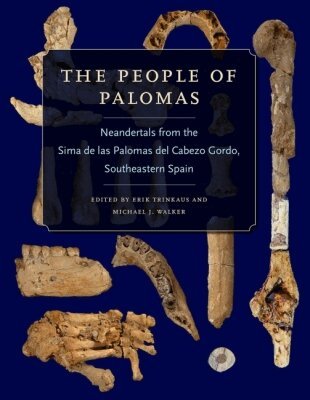
The Neandertal site at Sima de las Palomas del Cabezo Gordo, located in Murcia in southeastern Spain, is unique in several respects. Its most important contribution to the field of study, however, may be the fact that it consists of the remains of multiple individuals, adding appreciable breadth to the available data for a greater understanding of Neandertals. Further, its location in the Iberian Peninsula south of the Pyrenees suggests potential for studying a population that may have been somewhat isolated from contemporaneous groups of early humans.This comprehensive analysis represents the first detailed overview of the human fossil assemblage found at the Sima de las Palomas site. While scientific discussion continues regarding the precise impact of Neandertals upon modern human physiology and biology, The People of Palomas adds significantly to our knowledge of the human fossil record of the Late Pleistocene.