Architecture, Landscape and Amer Culture - Böcker
Visar alla böcker i serien Architecture, Landscape and Amer Culture. Handla med fri frakt och snabb leverans.
11 produkter
11 produkter
292 kr
Skickas inom 7-10 vardagar
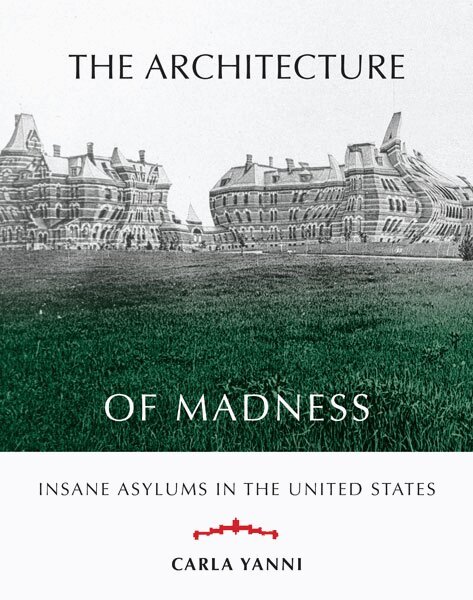
Elaborately conceived, grandly constructed insane asylums-ranging in appearance from classical temples to Gothic castles-were once a common sight looming on the outskirts of American towns and cities. Many of these buildings were razed long ago, and those that remain stand as grim reminders of an often cruel system. For much of the nineteenth century, however, these asylums epitomized the widely held belief among doctors and social reformers that insanity was a curable disease and that environment-architecture in particular-was the most effective means of treatment. In The Architecture of Madness, Carla Yanni tells a compelling story of therapeutic design, from America’s earliest purpose-built institutions for the insane to the asylum construction frenzy in the second half of the century. At the center of Yanni’s inquiry is Dr. Thomas Kirkbride, a Pennsylvania-born Quaker, who in the 1840s devised a novel way to house the mentally diseased that emphasized segregation by severity of illness, ease of treatment and surveillance, and ventilation. After the Civil War, American architects designed Kirkbride-plan hospitals across the country. Before the end of the century, interest in the Kirkbride plan had begun to decline. Many of the asylums had deteriorated into human warehouses, strengthening arguments against the monolithic structures advocated by Kirkbride. At the same time, the medical profession began embracing a more neurological approach to mental disease that considered architecture as largely irrelevant to its treatment. Generously illustrated, The Architecture of Madness is a fresh and original look at the American medical establishment’s century-long preoccupation with therapeutic architecture as a way to cure social ills. Carla Yanni is associate professor of art history at Rutgers University and the author of Nature’s Museums: Victorian Science and the Architecture of Display.
296 kr
Skickas inom 10-15 vardagar
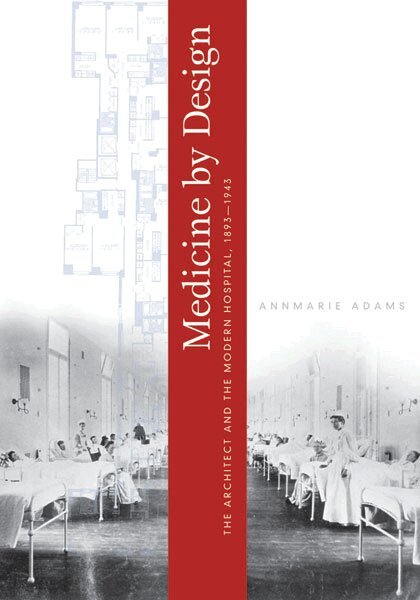
In the history of medicine, hospitals are usually seen as passive reflections of advances in medical knowledge and technology. In Medicine by Design, Annmarie Adams challenges these assumptions, examining how hospital design influenced the development of twentieth-century medicine and demonstrating the importance of these specialized buildings in the history of architecture. At the center of this work is Montreal’s landmark Royal Victoria Hospital, built in 1893. Drawing on a wide range of visual and textual sources, Adams uses the “Royal Vic”-along with other hospitals built or modified over the next fifty years-to explore critical issues in architecture and medicine: the role of gender and class in both fields, the transformation of patients into consumers, the introduction of new medical concepts and technologies, and the use of domestic architecture and regionally inspired imagery to soften the jarring impact of high-tech medicine. Identifying the roles played by architects in medical history and those played by patients, doctors, nurses, and other medical professionals in the design of hospitals, Adams also links architectural spaces to everyday hospital activities, from meal preparation to the ways in which patients entered the hospital and awaited treatment. Methodologically and conceptually innovative, Medicine by Design makes a significant contribution to the histories of both architectural and medical practices in the twentieth century. Annmarie Adams is William C. Macdonald Professor of Architecture at McGill University and the author of Architecture in the Family Way: Doctors, Houses, and Women, 1870–1900 and coauthor of Designing Women: Gender and the Architectural Profession.
265 kr
Skickas inom 7-10 vardagar
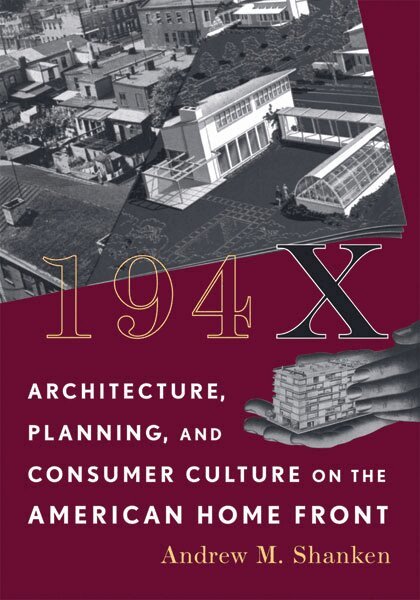
During the Second World War, American architecture was in a state of crisis. The rationing of building materials and restrictions on nonmilitary construction continued the privations that the profession had endured during the Great Depression. At the same time, the dramatic events of the 1930s and 1940s led many architects to believe that their profession-and society itself-would undergo a profound shift once the war ended, with private commissions giving way to centrally planned projects. The magazine Architectural Forum coined the term “194X” to encapsulate this wartime vision of postwar architecture and urbanism.In a major study of American architecture during World War II, Andrew M. Shanken focuses on the culture of anticipation that arose in this period, as out-of-work architects turned their energies from the built to the unbuilt, redefining themselves as planners and creating original designs to excite the public about postwar architecture. Shanken recasts the wartime era as a crucible for the intermingling of modernist architecture and consumer culture.Challenging the pervasive idea that corporate capitalism corrupted the idealism of modernist architecture in the postwar era, 194X shows instead that architecture’s wartime partnership with corporate American was founded on shared anxieties and ideals. Business and architecture were brought together in innovative ways, as shown by Shanken’s persuasive reading of magazine advertisements for Revere Copper and Brass, U.S. Gypsum, General Electric, and other companies that prominently featured the work of leading progressive architects, including Louis I. Kahn, Eero Saarinen, and Walter Gropius.Although the unexpected prosperity of the postwar era made the architecture of 194X obsolete before it could be built and led to its exclusion from the story of twentieth-century American architecture, Shanken makes clear that its anticipatory rhetoric and designs played a crucial role in the widespread acceptance
428 kr
Skickas inom 7-10 vardagar
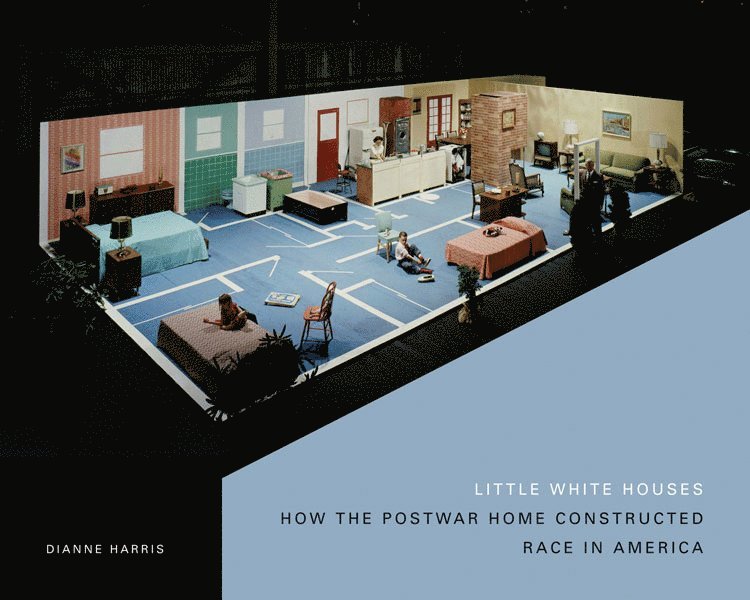
A rare exploration of the racial and class politics of architecture, Little White Houses examines how postwar media representations associated the ordinary single-family house with middle-class whites to the exclusion of others, creating a powerful and invidious cultural iconography that continues to resonate today. Drawing from popular and trade magazines, floor plans and architectural drawings, television programs, advertisements, and beyond, Dianne Harris shows how the depiction of houses and their interiors, furnishings, and landscapes shaped and reinforced the ways in which Americans perceived white, middle-class identities and helped support a housing market already defined by racial segregation and deep economic inequalities.After describing the ordinary postwar house and its orderly, prescribed layout, Harris analyzes how cultural iconography associated these houses with middle-class whites and an ideal of white domesticity. She traces how homeowners were urged to buy specific kinds of furniture and other domestic objects and how the appropriate storage and display of these possessions was linked to race and class by designers, tastemakers, and publishers. Harris also investigates lawns, fences, indoor-outdoor spaces, and other aspects of the postwar home and analyzes their contribution to the assumption that the rightful owners of ordinary houses were white.Richly detailed, Little White Houses adds a new dimension to our understanding of race in America and the inequalities that persist in the U.S. housing market.
288 kr
Skickas inom 10-15 vardagar
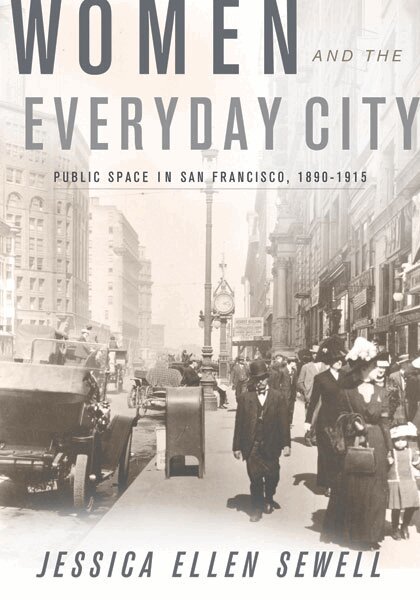
In Women and the Everyday City, Jessica Ellen Sewell explores the lives of women in turn-of-the-century San Francisco. A period of transformation of both gender roles and American cities, she shows how changes in the city affected women's ability to negotiate shifting gender norms as well as how women's increasing use of the city played a critical role in the campaign for women's suffrage.Focusing on women's everyday use of streetcars, shops, restaurants, and theaters, Sewell reveals the impact of women on these public places-what women did there, which women went there, and how these places were changed in response to women's presence. Using the diaries of three women in San Francisco-Annie Haskell, Ella Lees Leigh, and Mary Eugenia Pierce, who wrote extensively on their everyday experiences-Sewell studies their accounts of day trips to the city and combines them with memoirs, newspapers, maps, photographs, and her own observations of the buildings that exist today to build a sense of life in San Francisco at this pivotal point in history.Working at the nexus of urban history, architectural history, and cultural geography, Women and the Everyday City offers a revealing portrait of both a major American city during its early years and the women who shaped it-and the country-for generations to come.
374 kr
Skickas inom 7-10 vardagar
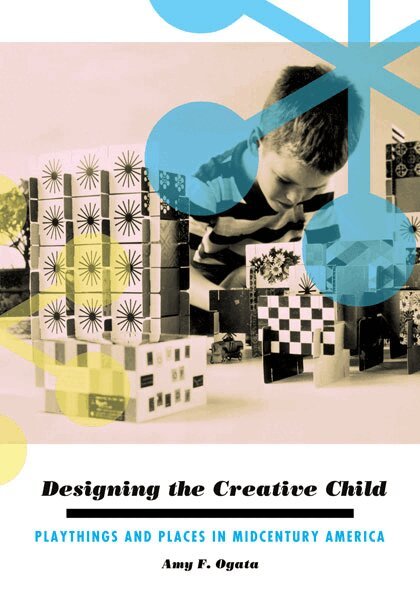
The postwar American stereotypes of suburban sameness, traditional gender roles, and educational conservatism have masked an alternate self-image tailor-made for the Cold War. The creative child, an idealized future citizen, was the darling of baby boom parents, psychologists, marketers, and designers who saw in the next generation promise that appeared to answer the most pressing worries of the age. Designing the Creative Child reveals how a postwar cult of childhood creativity developed and continues to this day. Exploring how the idea of children as imaginative and naturally creative was constructed, disseminated, and consumed in the United States after World War II, Amy F. Ogata argues that educational toys, playgrounds, small middle-class houses, new schools, and children’s museums were designed to cultivate imagination in a growing cohort of baby boom children. Enthusiasm for encouraging creativity in children countered Cold War fears of failing competitiveness and the postwar critique of social conformity, making creativity an emblem of national revitalization.Ogata describes how a historically rooted belief in children’s capacity for independent thinking was transformed from an elite concern of the interwar years to a fully consumable and aspirational ideal that persists today. From building blocks to Gumby, playhouses to Playskool trains, Creative Playthings to the Eames House of Cards, Crayola fingerpaint to children’s museums, material goods and spaces shaped a popular understanding of creativity, and Designing the Creative Child demonstrates how this notion has been woven into the fabric of American culture.
359 kr
Skickas inom 11-20 vardagar
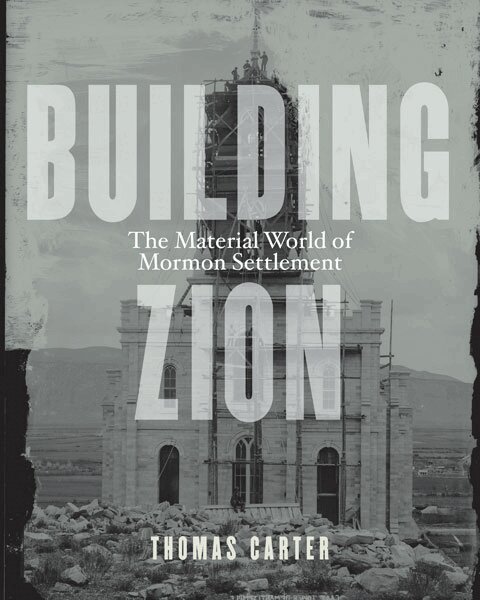
For Mormons, the second coming of Christ and the subsequent millennium will arrive only when the earth has been perfected through the building of a model world called Zion. Throughout the nineteenth century the Latter-day Saints followed this vision, creating a material world-first in Missouri and Illinois but most importantly and permanently in Utah and surrounding western states-that serves as a foundation for understanding their concept of an ideal universe.Building Zion is, in essence, the biography of the cultural landscape of western LDS settlements. Through the physical forms Zion assumed, it tells the life story of a set of Mormon communities-how they were conceived and constructed and inhabited-and what this material manifestation of Zion reveals about what it meant to be a Mormon in the nineteenth century. Focusing on a network of small towns in Utah, Thomas Carter explores the key elements of the Mormon cultural landscape: town planning, residences (including polygamous houses), stores and other nonreligious buildings, meetinghouses, and temples. Zion, we see, is an evolving entity, reflecting the church’s shift from group-oriented millenarian goals to more individualized endeavors centered on personal salvation and exaltation. Building Zion demonstrates how this cultural landscape draws its singularity from a unique blending of sacred and secular spaces, a division that characterized the Mormon material world in the late nineteenth century and continues to do so today.
1 310 kr
Skickas inom 7-10 vardagar
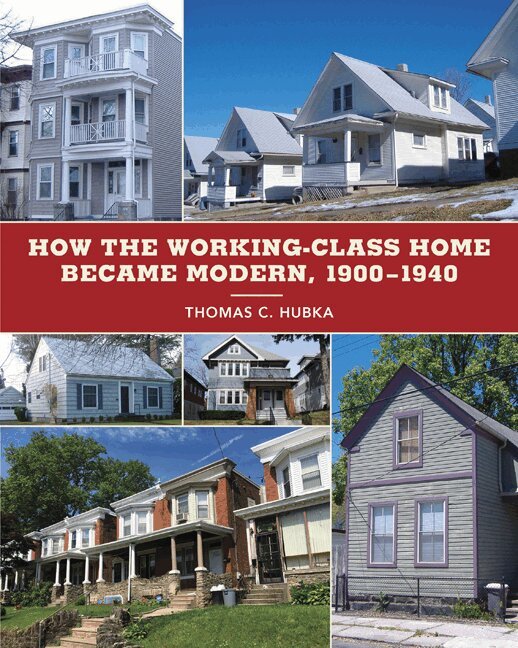
The transformation of average Americans’ domestic lives, revealed through the mechanical innovations and physical improvements of their homesAt the turn of the nineteenth century, the average American family still lived by kerosene light, ate in the kitchen, and used an outhouse. By 1940, electric lights, dining rooms, and bathrooms were the norm as the traditional working-class home was fast becoming modern-a fact largely missing from the story of domestic innovation and improvement in twentieth-century America, where such benefits seem to count primarily among the upper classes and the post–World War II denizens of suburbia. Examining the physical evidence of America’s working-class houses, Thomas C. Hubka revises our understanding of how widespread domestic improvement transformed the lives of Americans in the modern era. His work, focused on the broad central portion of the housing population, recalibrates longstanding ideas about the nature and development of the “middle class” and its new measure of improvement, “standards of living.”In How the Working-Class Home Became Modern, 1900–1940, Hubka analyzes a period when millions of average Americans saw accelerated improvement in their housing and domestic conditions. These improvements were intertwined with the acquisition of entirely new mechanical conveniences, new types of rooms and patterns of domestic life, and such innovations-from public utilities and kitchen appliances to remodeled and multi-unit housing-are at the center of the story Hubka tells. It is a narrative, amply illustrated and finely detailed, that traces changes in household hygiene, sociability, and privacy practices that launched large portions of the working classes into the middle class-and that, in Hubka’s telling, reconfigures and enriches the standard account of the domestic transformation of the American home.
428 kr
Skickas inom 7-10 vardagar
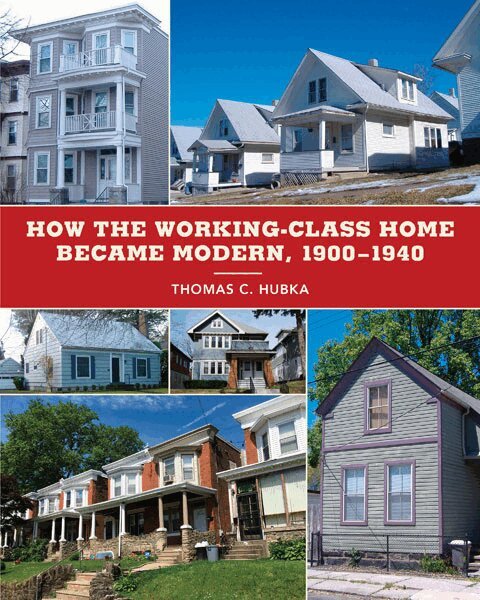
The transformation of average Americans’ domestic lives, revealed through the mechanical innovations and physical improvements of their homesAt the turn of the nineteenth century, the average American family still lived by kerosene light, ate in the kitchen, and used an outhouse. By 1940, electric lights, dining rooms, and bathrooms were the norm as the traditional working-class home was fast becoming modern-a fact largely missing from the story of domestic innovation and improvement in twentieth-century America, where such benefits seem to count primarily among the upper classes and the post–World War II denizens of suburbia. Examining the physical evidence of America’s working-class houses, Thomas C. Hubka revises our understanding of how widespread domestic improvement transformed the lives of Americans in the modern era. His work, focused on the broad central portion of the housing population, recalibrates longstanding ideas about the nature and development of the “middle class” and its new measure of improvement, “standards of living.”In How the Working-Class Home Became Modern, 1900–1940, Hubka analyzes a period when millions of average Americans saw accelerated improvement in their housing and domestic conditions. These improvements were intertwined with the acquisition of entirely new mechanical conveniences, new types of rooms and patterns of domestic life, and such innovations-from public utilities and kitchen appliances to remodeled and multi-unit housing-are at the center of the story Hubka tells. It is a narrative, amply illustrated and finely detailed, that traces changes in household hygiene, sociability, and privacy practices that launched large portions of the working classes into the middle class-and that, in Hubka’s telling, reconfigures and enriches the standard account of the domestic transformation of the American home.
1 528 kr
Skickas inom 7-10 vardagar
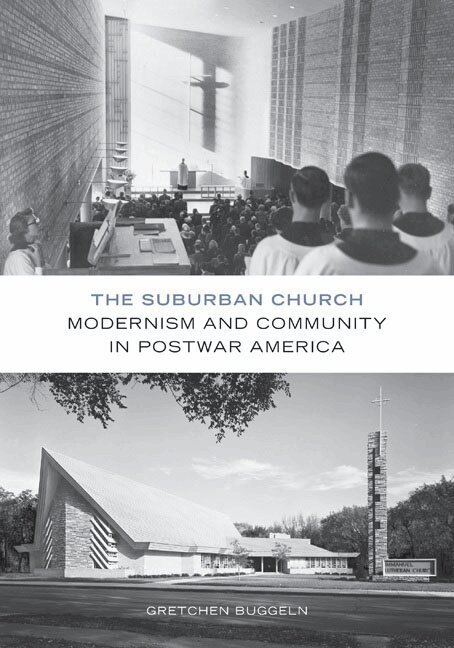
After World War II, America’s religious denominations spent billions on church architecture as they spread into the suburbs. In this richly illustrated history of midcentury modern churches in the Midwest, Gretchen Buggeln shows how architects and suburban congregations joined forces to work out a vision of how modernist churches might help reinvigorate Protestant worship and community. The result is a fascinating new perspective on postwar architecture, religion, and society.Drawing on the architectural record, church archives, and oral histories, The Suburban Church focuses on collaborations between architects Edward D. Dart, Edward A. SÖvik, Charles E. Stade, and seventy-five congregations. By telling the stories behind their modernist churches, the book describes how the buildings both reflected and shaped developments in postwar religion-its ecumenism, optimism, and liturgical innovation, as well as its fears about staying relevant during a time of vast cultural, social, and demographic change.While many scholars have characterized these congregations as “country club” churches, The Suburban Church argues that most were earnest, well-intentioned religious communities caught between the desire to serve God and the demands of a suburban milieu in which serving middle-class families required most of their material and spiritual resources.
428 kr
Skickas inom 7-10 vardagar
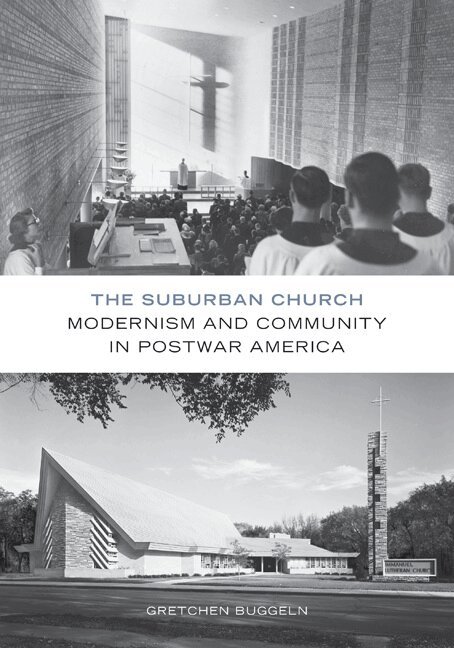
After World War II, America’s religious denominations spent billions on church architecture as they spread into the suburbs. In this richly illustrated history of midcentury modern churches in the Midwest, Gretchen Buggeln shows how architects and suburban congregations joined forces to work out a vision of how modernist churches might help reinvigorate Protestant worship and community. The result is a fascinating new perspective on postwar architecture, religion, and society.Drawing on the architectural record, church archives, and oral histories, The Suburban Church focuses on collaborations between architects Edward D. Dart, Edward A. SÖvik, Charles E. Stade, and seventy-five congregations. By telling the stories behind their modernist churches, the book describes how the buildings both reflected and shaped developments in postwar religion-its ecumenism, optimism, and liturgical innovation, as well as its fears about staying relevant during a time of vast cultural, social, and demographic change.While many scholars have characterized these congregations as “country club” churches, The Suburban Church argues that most were earnest, well-intentioned religious communities caught between the desire to serve God and the demands of a suburban milieu in which serving middle-class families required most of their material and spiritual resources.