• Fri frakt över 249 kr
  • •
  • Snabba leveranser
  • •
  • Billiga böcker
Kundservice

Du är på sajten för privatpersoner.

Företag, bibliotek eller offentlig verksamhet?

Du handlar på classic.bokus.com, där alla dina funktioner finns intakta.
Till classic.bokus.com
Bokus logotyp. Gå till startsidan.
  • Erbjudanden
  • Nyheter
  • Student
  • Topplistor
  • Barn & ungdom
  • Bokus Play
  • E-böcker
  • Pocketböcker
  • Spel & pussel

10% rabatt på allt med kod: NYSTART10 →

Sidfot

Mina sidor

    Hjälp

    • Kundservice
    • Vanliga frågor och svar
    • Frakt och leverans
    • Retur vid ångerrätt
    • Reklamera vara
    • Betalning
    • Köpvillkor
    • Allmänna villkor
    • Information om webbplatsens tillgänglighet

    Om Bokus

    • Om oss
    • Pressrum
    • För studenter
    • För företag
    • För bibliotek och offentlig verksamhet
    • För leverantörer
    • Hållbarhet

    Populärt

    • Aktuella erbjudanden
    • Presentkort
    • Studentlitteratur
    • Nya böcker
    • Topplistor
    • Signerade böcker
    • Engelska böcker

    Inspiration

    • Boktips
    • BookTok
    • Populära bokserier
    • Barnbokskaraktärer
    • Populära författare
    Logotyp för Bokus
    Följ oss på Facebook (extern länk)Följ oss på Instagram (extern länk)Följ oss på YouTube (extern länk)Följ oss på TikTok (extern länk)
    bokus @ CookiesAnpassa cookiesIntegritetspolicyKöpvillkor
    Till Citymail hemsida (extern länk)Till Budbee hemsida (extern länk)Till Postnord hemsida (extern länk)Till Schenker hemsida (extern länk)Till Early Bird hemsida (extern länk)Till Walleys hemsida (extern länk)
    1. Kultur
    2. Arkitektur
    3. Arkitekturhistoria

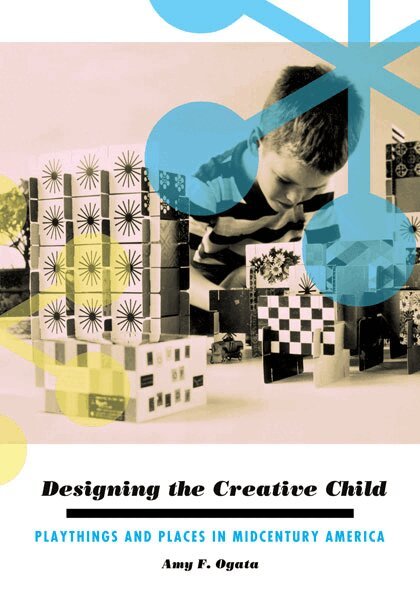
    Designing the Creative Child

    Playthings and Places in Midcentury America

    AvAmy F. Ogata

    Häftad, Engelska, 2013

    Del i serien Architecture, Landscape and Amer Culture

    388 kr

    Beställningsvara. Skickas inom 5-8 vardagar. Fri frakt över 249 kr.

    Beskrivning

    The postwar American stereotypes of suburban sameness, traditional gender roles, and educational conservatism have masked an alternate self-image tailor-made for the Cold War. The creative child, an idealized future citizen, was the darling of baby boom parents, psychologists, marketers, and designers who saw in the next generation promise that appeared to answer the most pressing worries of the age. Designing the Creative Child reveals how a postwar cult of childhood creativity developed and continues to this day. Exploring how the idea of children as imaginative and naturally creative was constructed, disseminated, and consumed in the United States after World War II, Amy F. Ogata argues that educational toys, playgrounds, small middle-class houses, new schools, and children’s museums were designed to cultivate imagination in a growing cohort of baby boom children. Enthusiasm for encouraging creativity in children countered Cold War fears of failing competitiveness and the postwar critique of social conformity, making creativity an emblem of national revitalization.Ogata describes how a historically rooted belief in children’s capacity for independent thinking was transformed from an elite concern of the interwar years to a fully consumable and aspirational ideal that persists today. From building blocks to Gumby, playhouses to Playskool trains, Creative Playthings to the Eames House of Cards, Crayola fingerpaint to children’s museums, material goods and spaces shaped a popular understanding of creativity, and Designing the Creative Child demonstrates how this notion has been woven into the fabric of American culture.

    Produktinformation

    • Utgivningsdatum:2013-04-21
    • Mått:178 x 229 x 38 mm
    • Format:Häftad
    • Språk:Engelska
    • Serie:Architecture, Landscape and Amer Culture
    • Antal sidor:320
    • Förlag:University of Minnesota Press
    • ISBN:9780816679614
    • Utmärkelser:Winner of Designing the Creative Child 2014

    Utforska kategorier

    • Arkitekturhistoria inom Kultur
    • Amerikas historia inom Historia och arkeologi
    • Sociala grupper och identitet inom Samhälle och politik

    Mer om författaren

    Amy F. Ogata is associate professor at the Bard Graduate Center: Decorative Arts, Design History, Material Culture in New York City. She is the author of Art Nouveau and the Social Vision of Modern Living and has published widely on modern architecture and design.

    Recensioner i media

    "At a time when the news media is again concerned about a crisis in American creativity, schools are cutting funding for arts education, major foundations are modeling ways that students and teachers might ‘play’ with new media, and museums worry about declining youth attendance, Designing the Creative Child makes an important intervention, reminding us that these debates build upon a much longer history of efforts to support and enhance the creative development of American youth. I admire this fascinating, multidisciplinary account which couples close attention to the design of everyday cultural materials with an awareness of the debates in educational theory, public policy, children’s literature, and abstract art which informed them." -Henry Jenkins, Editor, The Children's Culture Reader"Amy Ogata’s Designing the Creative Child is an exceptionally interesting book on the development of both child psychology and playthings in America during the baby boom years following World War II. A delightfully educational book."-Life Long Dewey (blog)"Amy Ogata . . . argues that American worries about conformity-as well as the nation’s Cold War rivalry with the totalitarian Soviet Union-persuaded parents that their children’s creative impulses could, and should, be encouraged."-Boston Globe"This well-researched and clearly written history of the responses of designers and architects to advice from psychologists on ways to encourage creativity in young children in Cold War America is a welcome addition to cultural history, architectural and design history, the study of material culture, and child psychology. [Ogata’s] broad knowledge of art and architecture contributes to the success of her foray into the history of toys, playrooms, playgrounds, schoolrooms, and children’s museums."-Journal of American History"An insightful investigation into the development and marketing of objects and spaces for children aimed at satisfying parental desires to promote creativity in the children of mid-century America."-Art Libraries Society of North America"Featuring extensive illustrations of toy advertisements, product designs, and blueprints, this highly informative book has an extensive bibliography and notes."-CHOICE"Designing the Creative Child is a valuable and inspiring resource for scholars and professionals in child related research."-The Architect’s Newspaper"Ogata’s book is well researched, well written, and beautifully illustrated-and truly innovative in its depiction of how a generation of toy designers, architects, and museum curators gave shape to their faith in youthful creativity."-American Journal of Play"Lucid and engaging, Ogata’s assiduously researched study sheds a much-needed light on its origins and development and contributes significantly to our understanding of everyday design in the dynamics of postwar cultural change."-Buildings & Landscapes"Ogata brings her research together in an exciting way by examining childhood creativity as an idealized attribute developed in the multi-faceted dimensionality of material culture-from television programming and toy design to suburan homes, school buildings and museum exhibition design. The book is richly illustrated and is in conversation with other multi-disciplinary books that address aspects of the post-war era, consumerism, architecture, suburbia and school design."-Journal of Design History"This study offers us innovative ways of understanding efforts to shape childhood that we might consider adopting more fully."-Journal of the History of Childhood and Youth"A tight, timely study."-Art Review"An important contribution."-Winterthur Portfolio"Beautifully illustrated and superbly written."-Daniella On Design

    Innehållsförteckning

    • ContentsIntroduction: Object Lessons1. Constructing Creativity in Postwar America2. Educational Toys and Creative Playthings3. Creative Living at Home4. Building Creativity in Postwar Schools5. Learning Imagination in Art and ScienceEpilogue: The Legacy of Consuming CreativityAcknowledgmentsNotesBibliographyIndex