Oxford Commentary on the Dead Sea Scrolls - Böcker
Visar alla böcker i serien Oxford Commentary on the Dead Sea Scrolls. Handla med fri frakt och snabb leverans.
4 produkter
4 produkter
1 295 kr
Skickas inom 7-10 vardagar
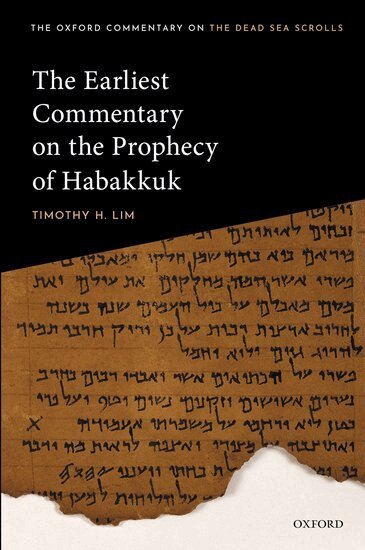
This is the first major commentary in English on Pesher Habakkuk for forty years. It elucidates the nature of 1QpHab as the earliest commentary on the prophecy of Habakkuk by a detailed study of the biblical quotation and sectarian interpretation. This commentary provides a new edition of the scroll, including new readings, and detailed palaeographical, philological, exegetical and historical notes and discussion. It shows that the pesherist imitates the allusive style of the oracles of Habakkuk and also draws on lexemes, phrases, and themes from other biblical texts and Jewish sources. It shows that the pesherist identified the Kittim with the Romans who conquered Judaea in 63 BCE, and suggests that the scroll refers to several righteous and wicked figures, including the last Hasmonean high priests.
1 417 kr
Kommande
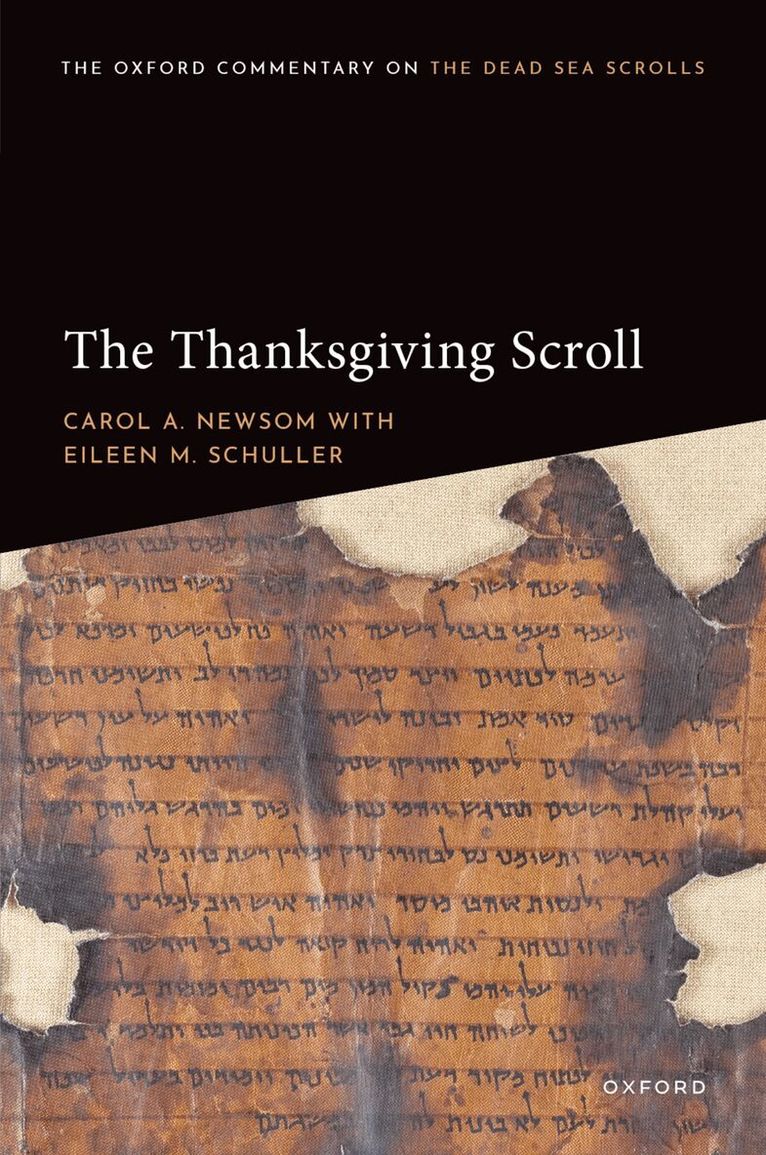
1QHa was one of the first Dead Sea Scrolls discovered by the Bedouin in 1947 and is recognized as one of the most important. Also known as Hodayot, it contains a collection of psalms, addressed to God, in which the author(s) give thanks to God for deliverance, salvation, knowledge, and divine mercy. The Thanksgiving Scroll by Carol A. Newsom and Eileen M. Schuller is the first commentary based on 1QHa as reconstructed by Hartmut Stegemann and Émile Puech, with the revision of 1QHa 1-8 by Michael Johnson. The Hebrew text and the division of the scroll into twenty-four compositions largely follows that established by Stegemann. The Introduction also includes accounts of the history of publication, reconstruction, and interpretation of the Hodayot, as well as information on the material aspects of 1QHa, its paleography, and scribal practices, much of which was not included in the previous edition in Discoveries in the Judaean Desert 40.In this commentary, attention is given primarily to exegetical, literary, and rhetorical issues. In contrast to the earlier distinction between Teacher Psalms and Community Psalms, Newsom and Schuller attribute all the non-Teacher Psalms to the work of various Maskilim, the instructors and liturgical leaders of the Yahad. Internal evidence from 1QHa and comparison with the Hodayot manuscripts from Cave 4 (4QHa-f) provide grounds for identifying three successive editions in the growth of the Hodayot collections that appear to have served different functions. The careful editorial framework provided by Maskil Psalms (cols. 9, 18-19, plus 15:29-16:4) contains numerous intertextual allusions to the Teacher Psalms (cols. 10-17)--which form the core of the collection--and supplies grounds for understanding the Teacher Psalms as compositions by the Teacher of Righteousness.
1 200 kr
Skickas inom 5-8 vardagar
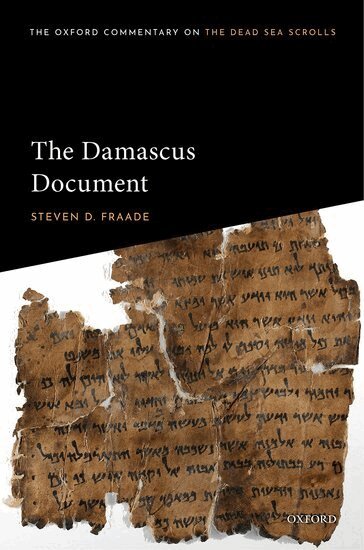
Steve D. Fraade offers a new translation, with notes, and detailed commentary to the Dead Sea Scroll most commonly called the Damascus Document, based on both ancient manuscripts from caves along the western shore of the Dead Sea, and medieval manuscripts from the Cairo Geniza. The text is one of the longest and most important of the Dead Sea Scrolls. Its importance derives from several aspects of its contents: its extensive collections of laws, both for the sectarian community that authored it and for the rest of Israel; some of the oldest examples of scriptural interpretation, both legal and narrative, both implicit and explicit, with important implications for our understanding of the evolving status of the Hebrew canon; some of the clearest expressions, often in hortatory form, of the community's self-understanding as an elect remnant of Israel that understands itself in dualistic opposition to the rest of Israel, its practices, and its leaders; important expressions of the community's self-understanding as a priestly alternative to the sacrificial worship in the Jerusalem Temple; expressions of an apocalyptic, eschatological understanding of living as the true Israel in the "end of days;" important expressions of attitudes toward woman, sexual activity, and marriage; importance for our understanding of ancient modes of teaching and of ritual practice; importance for the study of the history of the Hebrew language and its scribal practices. The volume contains a substantial introduction, dealing with these aspects of the Damascus Document and locating its place within the Dead Sea Scrolls more broadly as well as the historical context of ancient Judaism that gave rise to this text.
1 227 kr
Skickas inom 5-8 vardagar
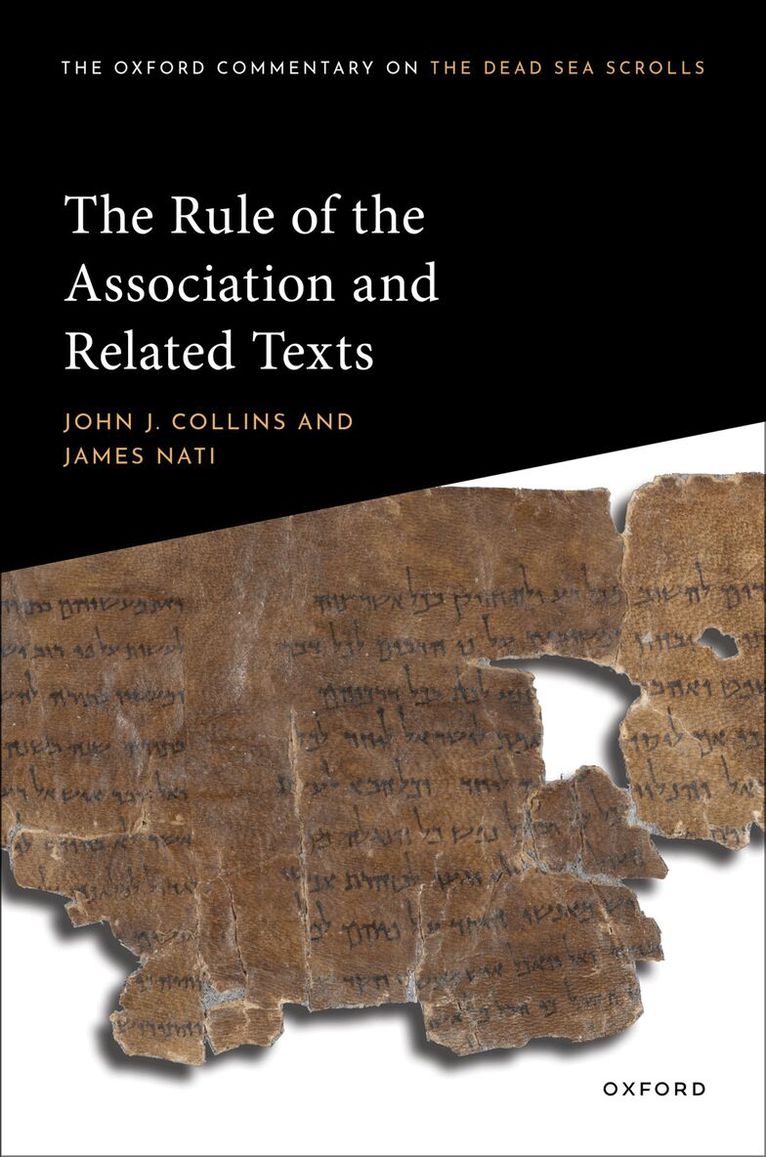
The Rule of the Association (1QS; Serek ha-Yahad) is the primary description of the sectarian community described in the Dead Sea Scrolls. It was one of the first Scrolls published, in 1951. Several related fragmentary scrolls subsequently came to light. This book provides text, translation, and commentary on all these manuscripts, with a substantial introduction that locates the Rule in the context of the sectarian movement. Distinctive features of this commentary include: presentation of the Hebrew text; treatment of the related manuscripts as texts in their own right, not just as stages in the development of 1QS; recognition that this was a rule for a movement with many settlements and not just for the community that lived at Qumran; recognition of graded levels of holiness within 1QS; recognition of conceptual differences between 1QS and some of the related fragments with regard to the nature and goals of the association; discussion of the broader cultural context of voluntary associations in the Hellenistic world, and the influence of Persian dualism on the Instruction on the Two Spirits in 1QS 3-4.The commentary also engages the full range of scholarship on the texts known as 1QSa (The Rule of the Community) and 1QSb (The Scroll of Blessings) which were copied on the same scroll as 1QS but appear to have originated separately.