Peopling of the Americas Publications – serie
Visar alla böcker i serien Peopling of the Americas Publications. Handla med fri frakt och snabb leverans.
14 produkter
14 produkter
Inbunden, Engelska, 2012
781 kr
Skickas inom 10-15 vardagar
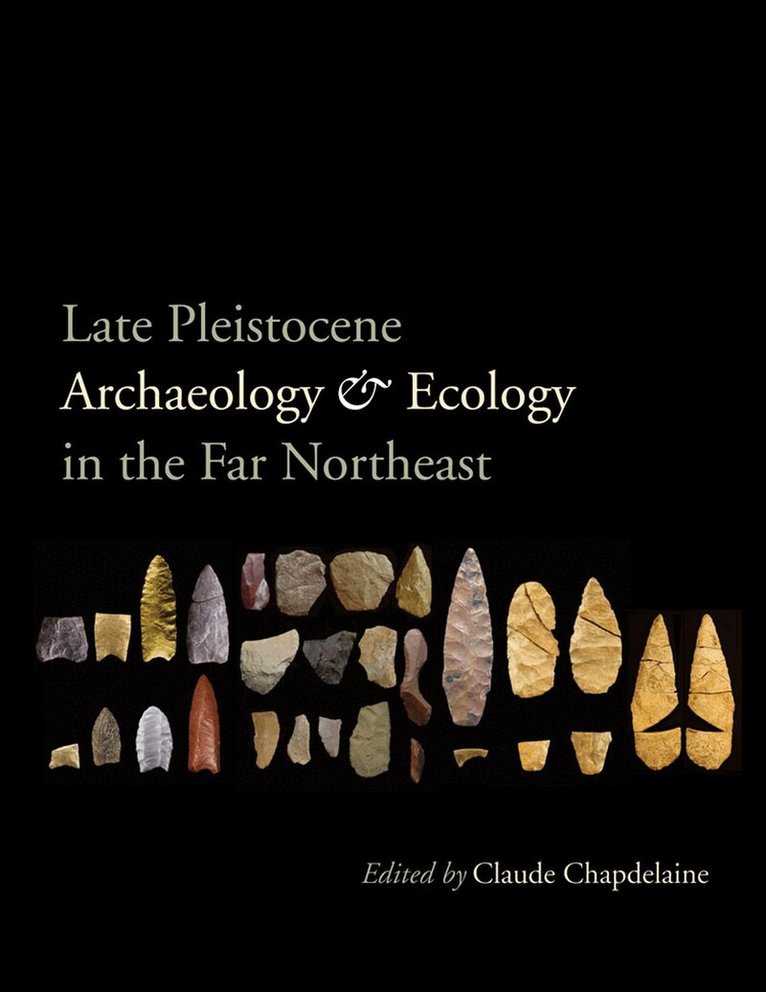
The Far Northeast, a peninsula incorporating the six New England states, New York east of the Hudson, Quebec south of the St. Lawrence River and Gulf of St. Lawrence, and the Maritime Provinces, provided the setting for a distinct chapter in the peopling of North America. Late Pleistocene Archaeology and Ecology in the Far Northeast focuses on the Clovis pioneers and their eastward migration into this region, inhospitable before 13,500 years ago, especially in its northern latitudes.Bringing together the last decade or so of research on the Paleoindian presence in the area, Claude Chapdelaine and the contributors to this volume discuss, among other topics, the style variations in the fluted points left behind by these migrating peoples, a broader disparity than previously thought. This book offers not only an opportunity to review new data and interpretations in most areas of the Far Northeast, including a first glimpse at the Cliche-Rancourt Site, the only known fluted point site in Quebec, but also permits these new findings to shape revised interpretations of old sites. The accumulation of research findings in the Far Northeast has been steady, and this timely book presents some of the most interesting results, offering fresh perspectives on the prehistory of this important region.
Inbunden, Engelska, 2014
839 kr
Skickas inom 5-8 vardagar
Almost from the day of its accidental discovery along the banks of the Columbia River in Washington State in July 1996, the ancient skeleton of Kennewick Man has garnered significant attention from scientific and Native American communities as well as public media outlets. This volume represents a collaboration among physical and forensic anthropologists, archaeologists, geologists, and geochemists, among others, and presents the results of the scientific study of this remarkable find. Scholars address a range of topics, from basic aspects of osteological analysis to advanced research focused on Kennewick Man’s origins and his relationships to other populations. Interdisciplinary studies, comprehensive data collection and preservation, and applications of technology are all critical to telling Kennewick Man’s story.Kennewick Man: The Scientific Investigation of an Ancient American Skeleton is written for a discerning professional audience, yet the absorbing story of the remains, their discovery, their curation history, and the extensive amount of detail that skilled scientists have been able to glean from them will appeal to interested and informed general readers. These bones lay silent for nearly nine thousand years, but now, with the aid of dedicated researchers, they can speak about the life of one of the earliest human occupants of North America.
Inbunden, Engelska, 2014
585 kr
Skickas inom 11-20 vardagar
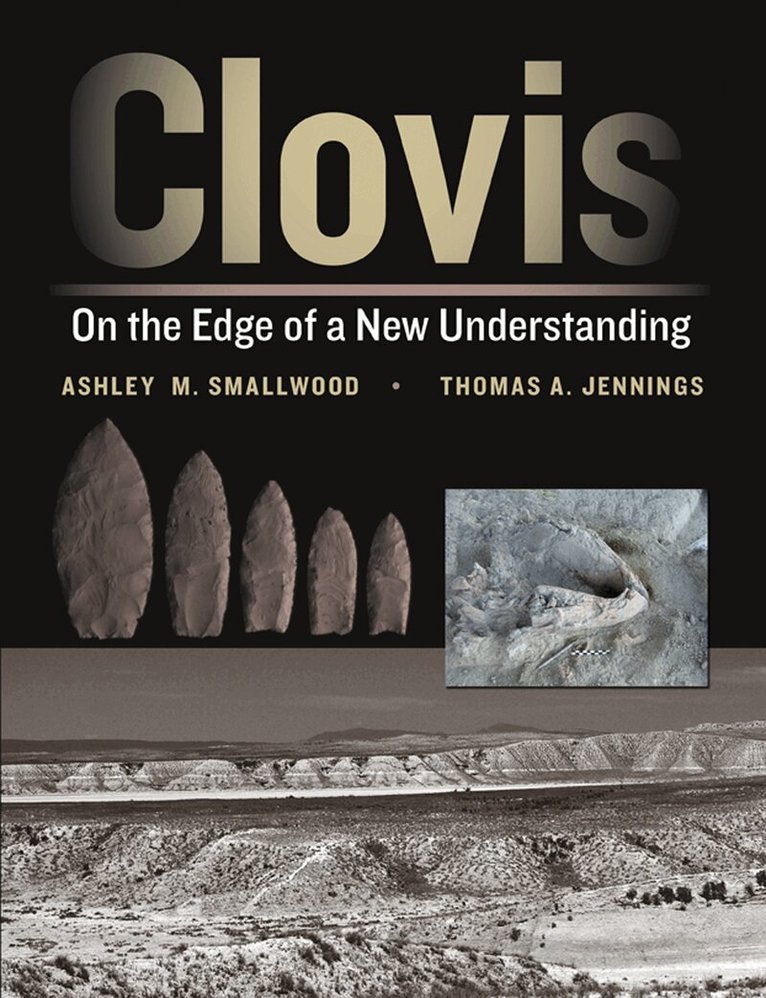
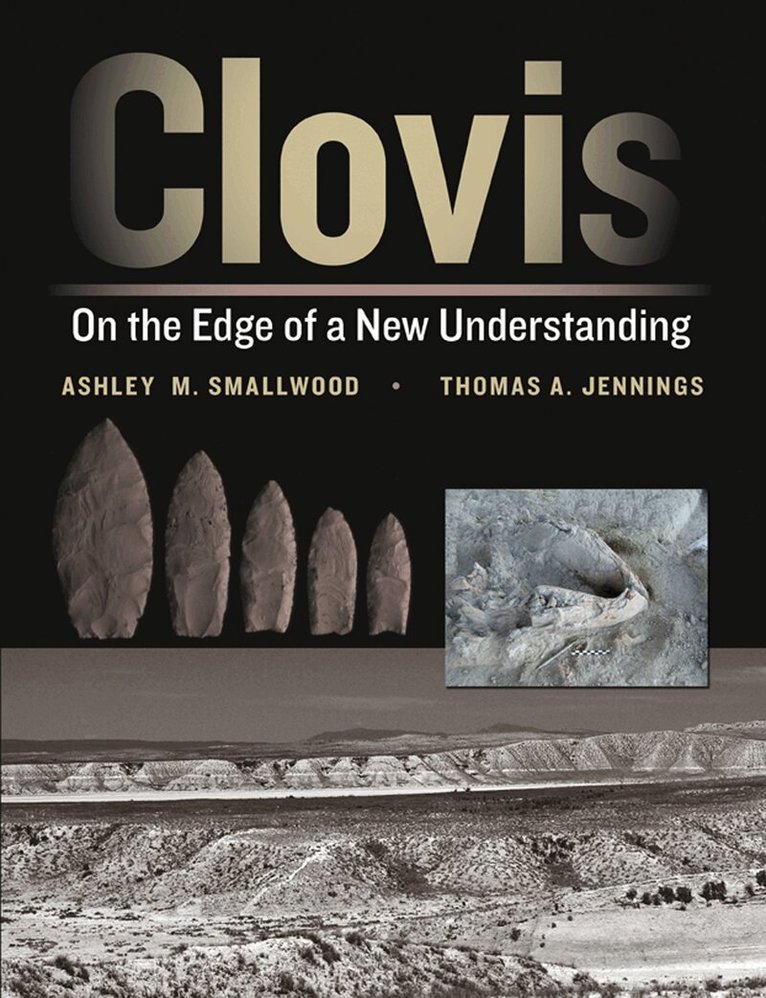
New research and the discovery of multiple archaeological sites predating the established age of Clovis (13,000 years ago) provide evidence that the Americas were first colonized at least one thousand to two thousand years before Clovis. These revelations indicate to researchers that the peopling of the Americas was perhaps a more complex process than previously thought.The Clovis culture remains the benchmark for chronological, technological, and adaptive comparisons in research on peopling of the Americas.In Clovis: On the Edge of a New Understanding, volume editors Ashley Smallwood and Thomas Jennings bring together the work of many researchers actively studying the Clovis complex. The contributing authors presented earlier versions of these chapters at the Clovis: Current Perspectives on Chronology, Technology, and Adaptations symposium held at the 2011 Society for American Archaeology meetings in Sacramento, California.In seventeen chapters, the researchers provide their current perspectives of the Clovis archaeological record as they address the question: What is and what is not Clovis?
Inbunden, Engelska, 2018
673 kr
Skickas inom 5-8 vardagar
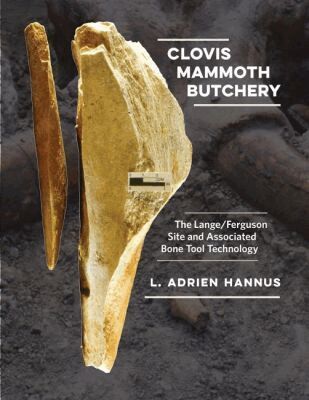
Thirteen millennia ago, in a small creek valley in western South Dakota, two mammoths perished. The mammoths, an adult and a juvenile, likely a cow and calf pair, died at the edge of an ancient pond.The Lange/Ferguson site is the earliest dated archaeological site in South Dakota and one of the few North American sites that provides evidence of a Clovis-period mammoth butchering event. In addition to the preserved remains of the two mammoths, the site yielded diagnostic Clovis weaponry—three Clovis projectile points recovered in context and stratigraphically associated with the mammoth bonebed—and flaked bone tools. The site offers a rare snapshot in time detailing early Paleoindian interactions with now-extinct megafauna nearly 13,000 years ago.In Clovis Mammoth Butchery: The Lange/Ferguson Site and Associated Bone Tool Technology, L. Adrien Hannus provides a comprehensive look at one of the few New World Clovis-era sites with in-place buried deposits exhibiting evidence for an expedient bone tool technology. Multidisciplinary investigations include paleoenvironmental and geochronological reconstructions—pollen and phytoliths, geology and geomorphology, diatoms and ostracodes, mollusks, and vertebrate paleontology—as well as taphonomic evaluations and a microwear analysis of the chipped stone tools.Clovis Mammoth Butchery offers readers a rare glimpse into a singular moment in prehistory that captures human interaction with extinct animals during a rapidly changing world for which there is no modern comparison. This book shares great insight into hunting and procurement strategies used by big game hunters during the Late Pleistocene and Early Holocene.
Inbunden, Engelska, 2020
839 kr
Skickas inom 5-8 vardagar
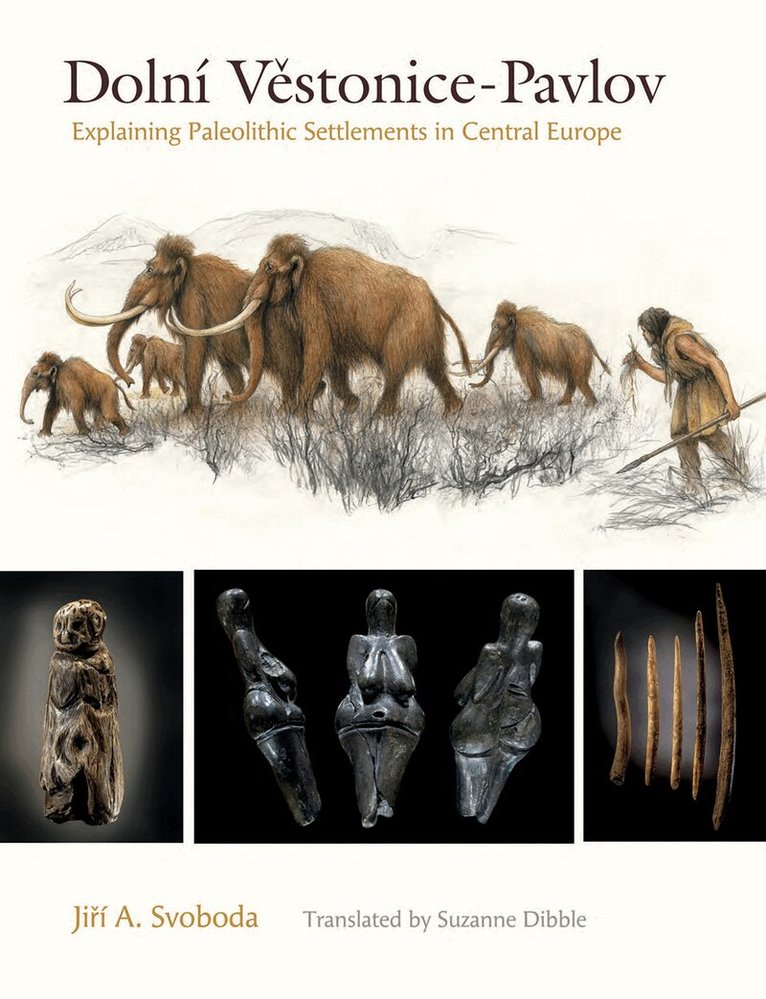
Perhaps the oldest modern human settlement in Europe, the archaeological site at DolnÍ Věstonice–Pavlov, located in the rolling, forested plains just north of the Danube River, has yielded a treasure trove of Ice Age artifacts since its first excavation in 1924. The earliest people who lived here some 26,000 years ago produced tools crafted from stone and bone and carved elaborate animal and human figurines fashioned of mammoth ivory and sculptures of fired clay, including the famous 'Venus of DolnÍ Věstonice,' one of the oldest known ceramic artifacts in the world. Interestingly, novelist Jean M. Auel took much of the inspiration for her popular novel, Clan of the Cave Bear, from the discoveries at DolnÍ Věstonice–Pavlov.Richly illustrated throughout, including beautiful color renderings of scenes from Paleolithic life suggested by Svoboda's research, this first English translation of DolnÍ Věstonice-Pavlov: Explaining Paleolithic Settlements in Central Europe is sure to provide not only vital information for scholars, researchers, and students but also insightful and thought-provoking background for interested general readers.
Inbunden, Engelska, 2022
723 kr
Skickas inom 11-20 vardagar
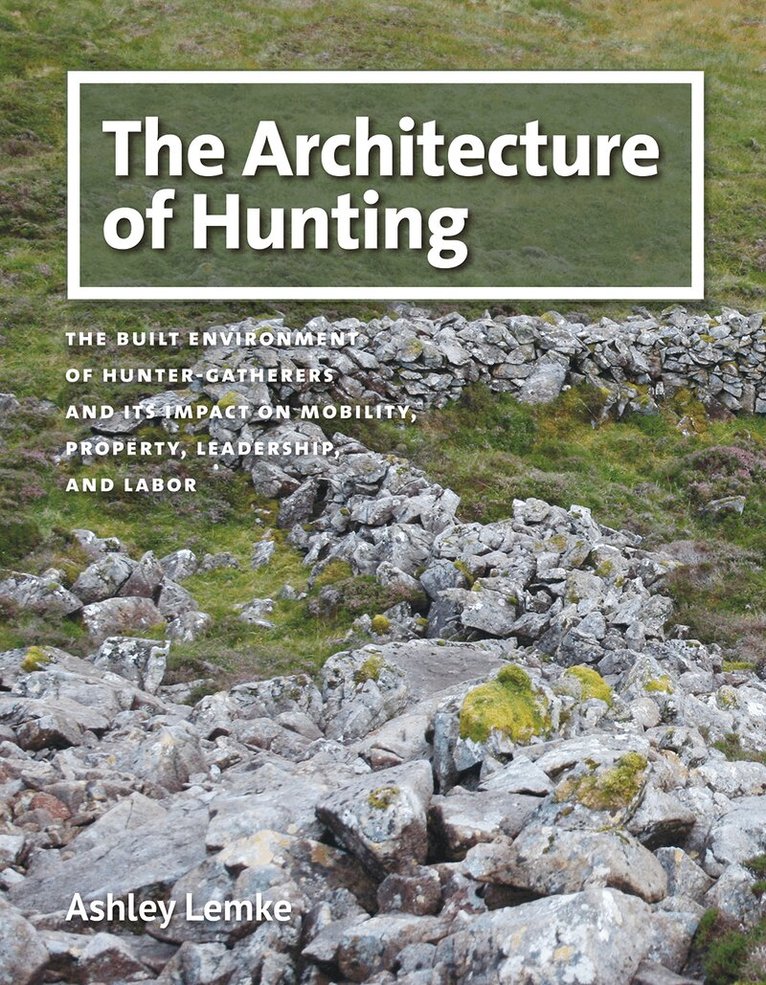
As one of the most significant economic innovations in prehistory, hunting architecture radically altered life and society for hunter-gatherers. The development of these structures indicates that foragers designed their environments, had a deep knowledge of animal behavior, and interacted with each other in complex ways that reach beyond previous assumptions.Combining underwater archaeology, terrestrial archaeology, and ethnographic and historical research, The Architecture of Hunting investigates the creation and use of hunting architecture by hunter-gatherers. Hunting architecture-including blinds, drive lanes, and fishing weirs-is a global phenomenon found across a broad spectrum of cultures, time, geography, and environments. Relying on similar behaviors in species such as caribou, bison, guanacos, antelope, and gazelles, cultures as diverse as Sami reindeer herders, the Inka, and ancient bison hunters on the North American plains have employed such structures, combined with strategically situated landforms, to ensure adequate food supplies while maintaining a nomadic way of life.Using examples of hunting architecture from across the globe and how they influence forager mobility, territoriality, property, leadership, and labor aggregation, Ashley Lemke explores this architecture as a form of human niche construction and considers the myriad ways such built structures affect hunter-gatherer lifeways. Bringing together diverse sources under the single category of 'hunting architecture,' The Architecture of Hunting serves as the new standard guide for anyone interested in hunter-gatherers and their built environment.
Inbunden, Engelska, 2023
922 kr
Skickas inom 5-8 vardagar
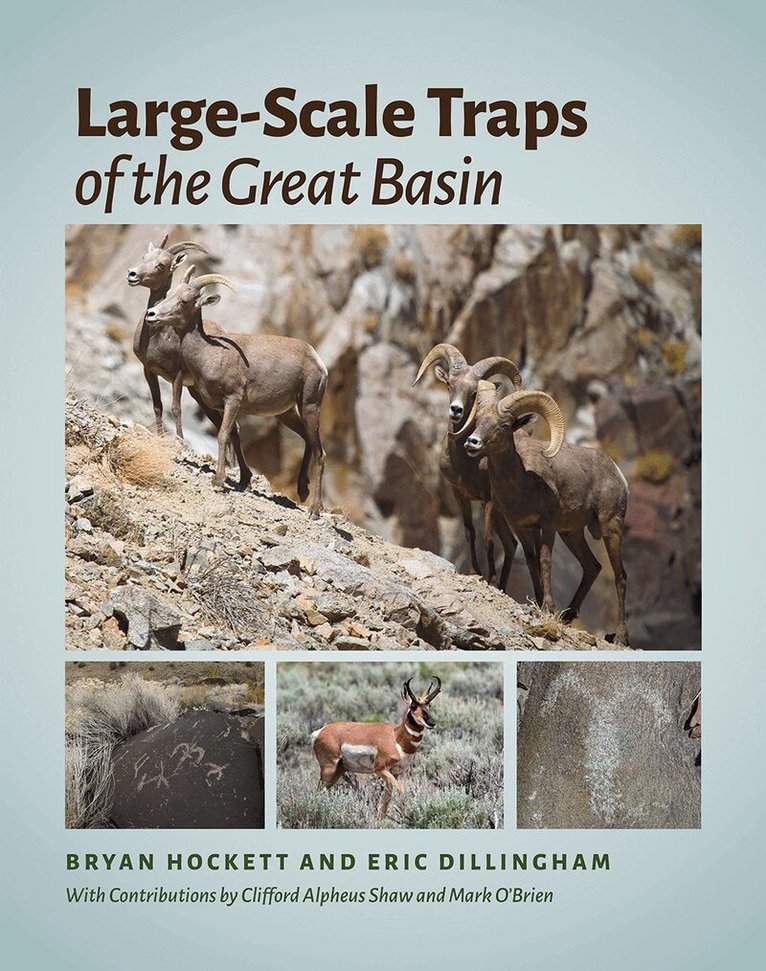
Early hunter-gatherers in North America spent significant time and energy to secure a reliable food supply. One means of doing so involved the use of large-scale traps—rock and/or wood features constructed through group or communal effort to trap or ambush migrating artiodactyls such as bighorn sheep or pronghorn antelope. Designed to concentrate large numbers of prey animals for easier slaughter, large-scale traps also open an important window for the study of prehistoric social patterns involved in the design, construction, and successful capture of large game en masse—alliance building, trade, revelry, match making, and other cultural activities.This important new research from Bryan Hockett and Eric Dillingham examines the archaeological evidence for large-scale traps over the past 9,000 years in North America’s Great Basin. The authors provide field identification methods, hard data, and archaeological examples of game trap features, focusing their inquiry on the Great Basin region of eastern California, western Utah, and Nevada. Large-scale trap features are found worldwide, and wherever they are found, they exhibit similar characteristics. The first comprehensive book devoted to describing large-scale traps across the entire Great Basin, this work is among the first to provide such a depth of research for any region, anywhere in the world.Ample color illustrations as well as informative maps, drawings, and tables enhance this careful study of ancient communal hunting practices. Offering important insights drawn from some of the oldest large-scale trap structures in the world, Large-Scale Traps of the Great Basin will occupy an important place in the literature of the early inhabitants of North America.
Inbunden, Engelska, 2026
1 839 kr
Kommande
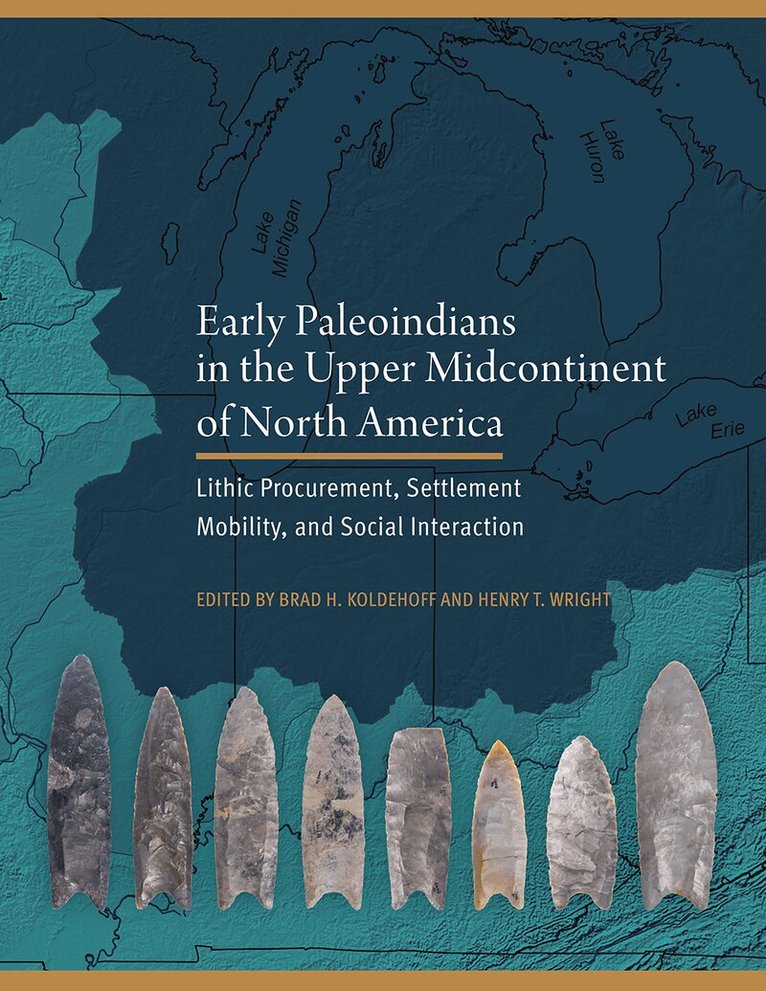
Based on decades of research centered on the earliest known fluted-point producing groups in the North American midcontinent, Early Paleoindians in the Upper Midcontinent of North America: Lithic Procurement, Settlement Mobility, and Social Interaction brings together a broad array of case studies from the United States and Canada that offers fresh perspectives on how early populations utilized the land and its resources, how and when they settled in particular locations, and how they interacted.With a focus on Clovis and Clovis-related sites dating from 11,500–10,800 years ago, the case studies encompass the lower Great Lakes region, the upper and middle Mississippi River valleys, and portions of the Middle South. By documenting the movement and distribution of chipped-stone artifacts from various sites, volume editors Brad H. Koldehoff and Henry T. Wright and their contributors discern patterns of long-distance settlement mobility. The case studies in most regions document movements of several hundred kilometers. These patterns of movement are not anomalous but represent routine and likely seasonal relocations. Early Paleoindians in the Upper Midcontinent of North America adds significant nuance and new information to our understanding of the early human populations of North America.
Inbunden, Engelska, 2026
815 kr
Skickas inom 3-6 vardagar
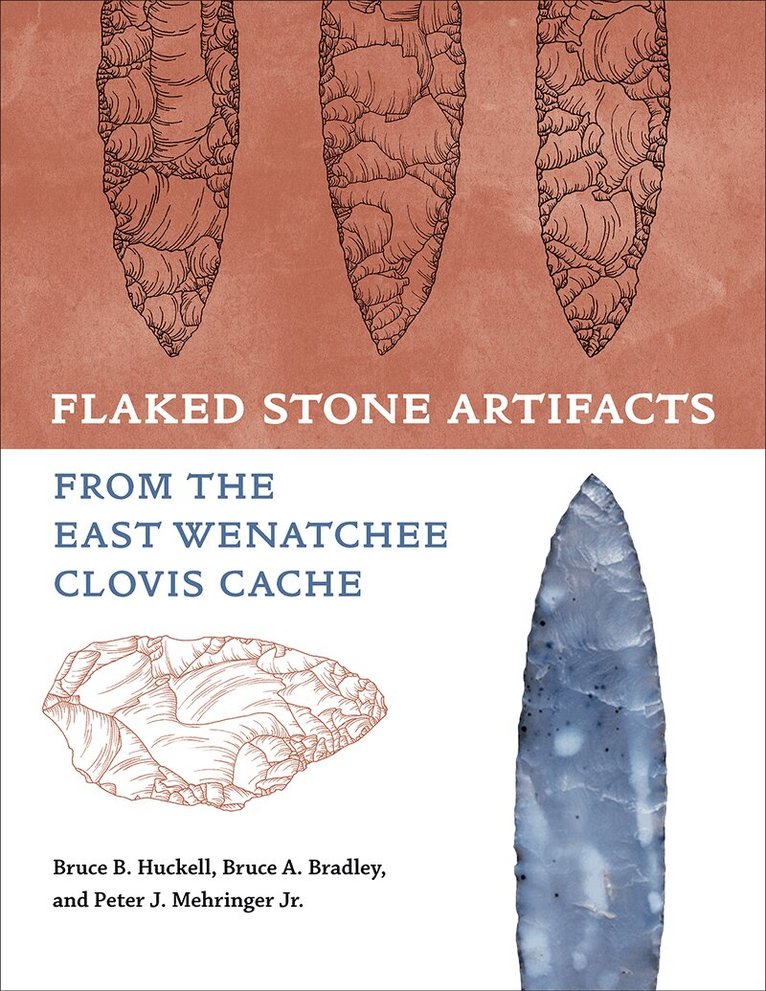
In 1987, workers installing irrigation pipes in an apple orchard in East Wenatchee, Washington, discovered a cache of Clovis materials. The uncovered bifaces—larger than most previously discovered Clovis artifacts with unmatched quality and quantity—had a lasting impact on archaeology. Flaked Stone Artifacts from the East Wenatchee Clovis Cache delineates not only the history of the site, but also describes the flaked stone artifacts, analyzes the manufacturing strategies indicated by their flaking patterns, and draws conclusions about potential patterns of Clovis biface production.Seasoned archaeologists and editors Bruce B. Huckell, Bruce A. Bradley, and Peter J. Mehringer note that the value of studying such caches lies in what they may reveal about transportation patterns among Paleolithic inhabitants of North America. Since lithic tools often provide evidence of initial quarrying at one location followed by finishing work and storage at another location, the caches where these technologies are unearthed permit inferences about the makers' routes between quarries and camps, as well as the characteristics of cache sites versus hunting camps and kill sites.In this heavily illustrated volume, readers can see for themselves the bifaces' size variance and technological sequences that allude to potential production strategies of the Clovis flint knappers. Unique to the site are the large fluted points that suggest ceremonial use because they're bigger than what scholars identify as "utilitarian." Flaked Stone Artifacts from the East Wenatchee Clovis Cache provides a detailed technological analysis of the specimens recovered, enlightening researchers on the lifeways and ideologies of some of the earliest North Americans.
Inbunden, Engelska, 2026
550 kr
Skickas inom 3-6 vardagar
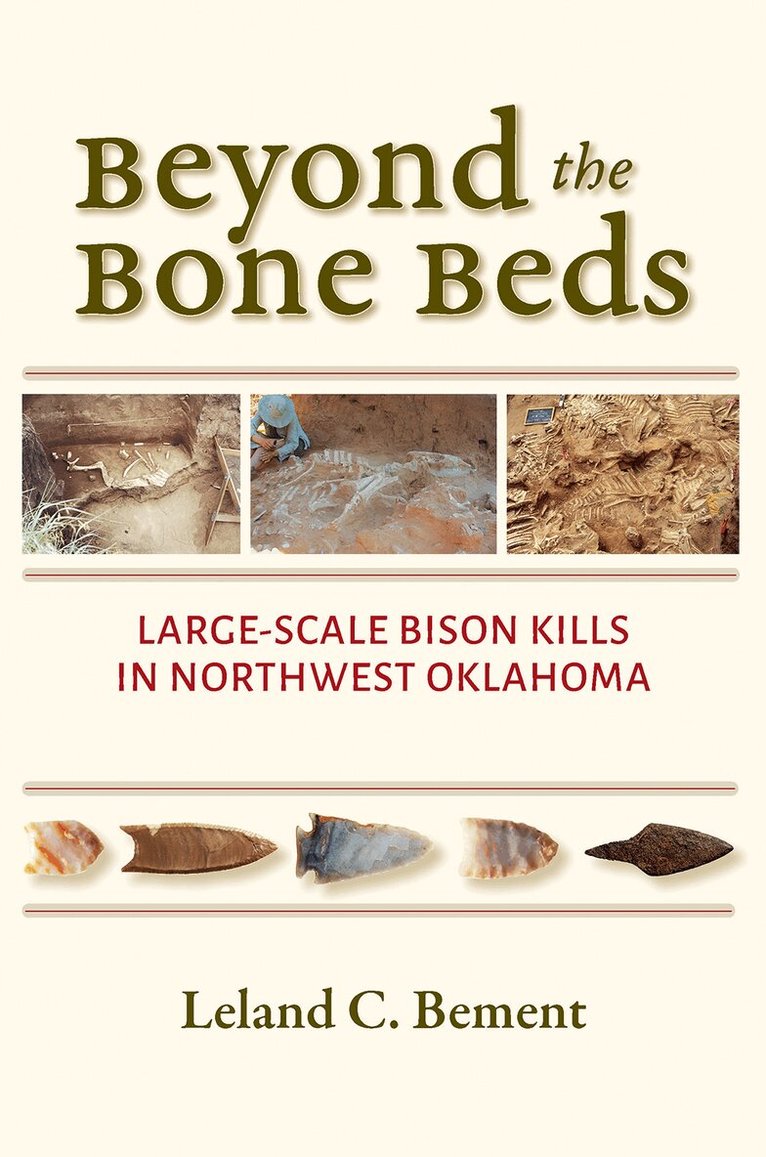
For those interested in the archaeology of prehistoric North America, author Leland C. Bement's Beyond the Bone Beds: Large-Scale Bison Kills in Northwest Oklahoma presents carefully researched technical data that will enlighten scholars, students, field researchers, and general readers alike. Bison are a keystone prey species of the grassland ecosystem, often migrating long distances. North American hunter-gatherers relied on large-scale bison hunting, which greatly influenced their culture. For over thirty years, senior research archaeologist Leland Bement has excavated and analyzed bison kill sites with his research teams, cataloging the faunal remains and associated artifacts.Embracing sites spanning 12,000 years of prehistory with artifacts from the Clovis, Folsom, Late Paleoindian, Late Archaic, and Late Prehistoric periods, the collection at the Courson Family Bison Research Center offers a uniquely broad palette for the study of these hunter-gatherers' relationships with and use of bison, and the development of hunting technologies. Bement has organized the sites, bones, and artifacts contained in the CFBRC chronologically. This important work makes possible the assessment of fluctuations in bison populations over the centuries, along with the influences of climate, human predation and changing hunting strategies.Bement presents his research with illustrative photographs, charts, and line art to engage both archaeological practitioners and well-informed laypersons. Beyond the Bone Beds offers its readers a new perspective on the prehistoric and later peoples of North America and their interactions with their environment.
Häftad, Engelska, 2026
598 kr
Skickas inom 10-15 vardagar
New research and the discovery of multiple archaeological sites predating the established age of Clovis (13,000 years ago) provide evidence that the Americas were first colonized at least one thousand to two thousand years before Clovis. These revelations indicate to researchers that the peopling of the Americas was perhaps a more complex process than previously thought.The Clovis culture remains the benchmark for chronological, technological, and adaptive comparisons in research on peopling of the Americas. In Clovis: On the Edge of a New Understanding, volume editors Ashley Smallwood and Thomas Jennings bring together the work of many researchers actively studying the Clovis complex. The contributing authors presented earlier versions of these chapters at the Clovis: Current Perspectives on Chronology, Technology, and Adaptations symposium held at the 2011 Society for American Archaeology meetings in Sacramento, California. In seventeen chapters, the researchers provide their current perspectives of the Clovis archaeological record as they address the question: What is and what is not Clovis?
Häftad, Engelska, 2026
373 kr
Skickas inom 10-15 vardagar
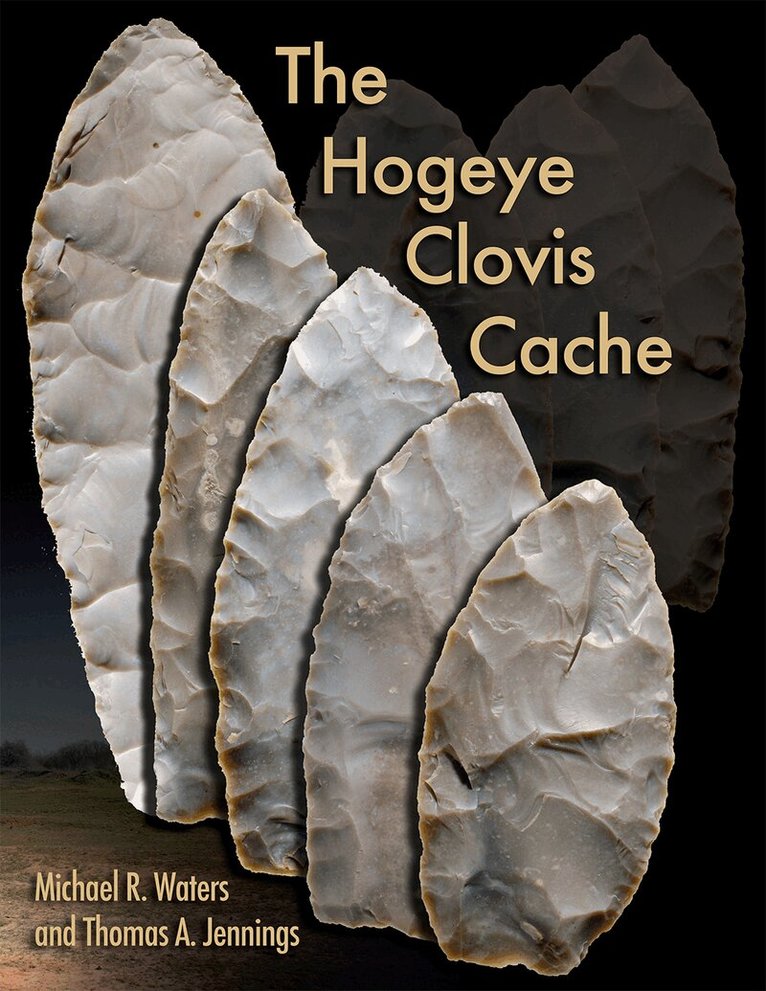
Roughly thirteen thousand years ago, Clovis hunters cached more than fifty projectile points, preforms, and knives at the toe of a gentle slope near present-day Elgin, Bastrop County, in central Texas. Over the next millennia, deposition buried the cache several meters below the surface. The entombed artifacts lay undisturbed until 2003. A circuitous path brought thirteen of the original thirty-seven Clovis bifaces and points through many hands before reaching the attention of Michael Waters at Texas A&M University. At the site of the original cache, Waters and coauthor Thomas A. Jennings conducted excavations, studied the geology, and dated the geological layers to reconstruct how the cache was buried. This book provides a well-illustrated, thoroughly analyzed description and discussion of the Hogeye Clovis cache, the projectile points and other artifacts from later occupations, and the geological context of the site, which has yielded evidence of multiple Paleoindian, Archaic, and Late Prehistoric occupations. The cache of tools and weapons at Hogeye, when combined with other sites, allows us to envision a snapshot of life at the end of the last Ice Age.
Häftad, Engelska, 2026
542 kr
Skickas inom 10-15 vardagar
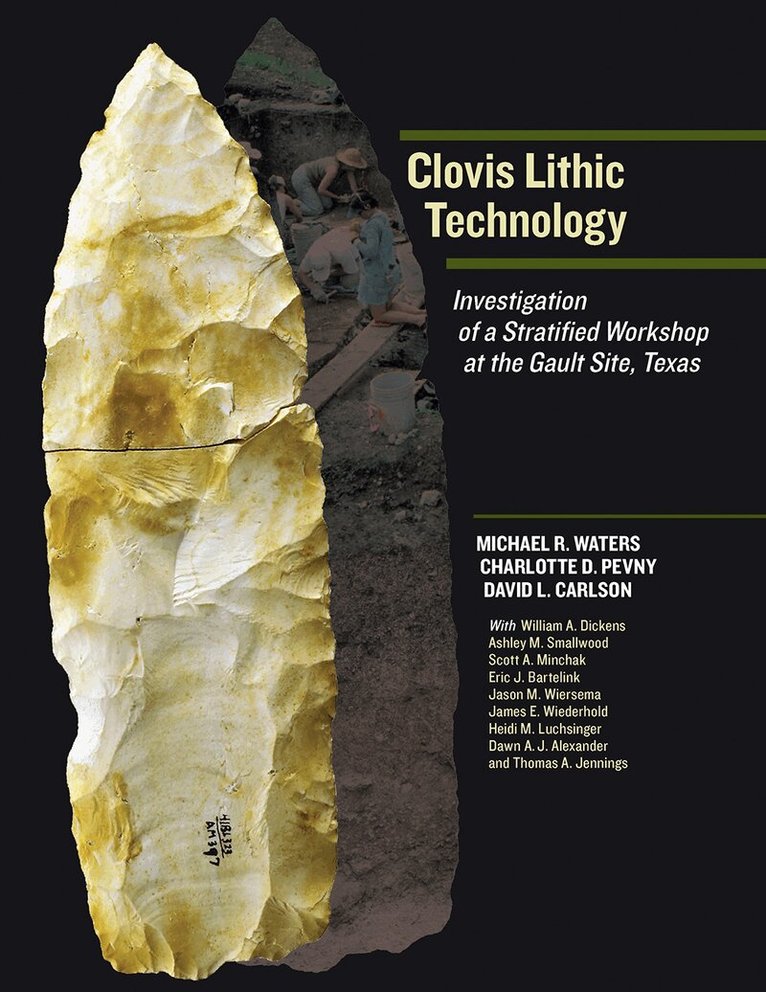
Some 13,000 years ago, humans were drawn repeatedly to a small valley in what is now Central Texas, near the banks of Buttermilk Creek. These early hunter-gatherers camped, collected stone, and shaped it into a variety of tools they needed to hunt game, process food, and subsist in the Texas wilderness. Their toolkit included bifaces, blades, and deadly spear points. Where they worked, they left thousands of pieces of debris, which have allowed archaeologists to reconstruct their methods of tool production. Along with the faunal material that was also discarded in their prehistoric campsite, these stone, or lithic, artifacts afford a glimpse of human life at the end of the last ice age during an era referred to as Clovis. The area where these people roamed and camped, called the Gault site, is one of the most important Clovis sites in North America. A decade ago a team from Texas A&M University excavated a single area of the site—formally named Excavation Area 8, but informally dubbed the Lindsey Pit—which features the densest concentration of Clovis artifacts and the clearest stratigraphy at the Gault site. Some 67,000 lithic artifacts were recovered during fieldwork, along with 5,700 pieces of faunal material. In a thorough synthesis of the evidence from this prehistoric “workshop,” Michael R. Waters and his coauthors provide the technical data needed to interpret and compare this site with other sites from the same period, illuminating the story of Clovis people in the Buttermilk Creek Valley.
Häftad, Engelska, 2026
646 kr
Kommande
Since the first Paleoamerican Odyssey conference, new research has deepened our understanding of the peopling of the Americas. Revolutionary genetic methodologies, combined with developments in archaeology, geology, and paleoecology, have generated new insights into the timing and patterns of early dispersal events and the technologies and lifeways of the first Americans during the late Pleistocene and early Holocene. We now know that humans first migrated from northeastern Asia, and upon arrival in North America, they moved south, either along the deglaciated Pacific coast, through the Ice Free Corridor, or both to what is now continental North and South America. However, as archaeologists continue to shed light onto the movements of the first Americans, the story becomes ever more complicated.Paleoamerican Odyssey, 100 Years Beyond Folsom presents twenty-nine original papers from experts at the 2026 Paleoamerican Odyssey conference. These works provide summaries of the late Pleistocene archaeology of every major region in the Americas and explore exciting new discoveries from newly reported and reinvestigated sites, new chronological models for major cultural complexes in North and South America, and cutting edge technologies and theoretical models for understanding the Indigenous first peoples on this continent.