Douglas W. Owsley – författare
Visar alla böcker från författaren Douglas W. Owsley. Handla med fri frakt och snabb leverans.
3 produkter
3 produkter
E-bok
PDF, Engelska, 2012534 kr
Läs direkt efter köp
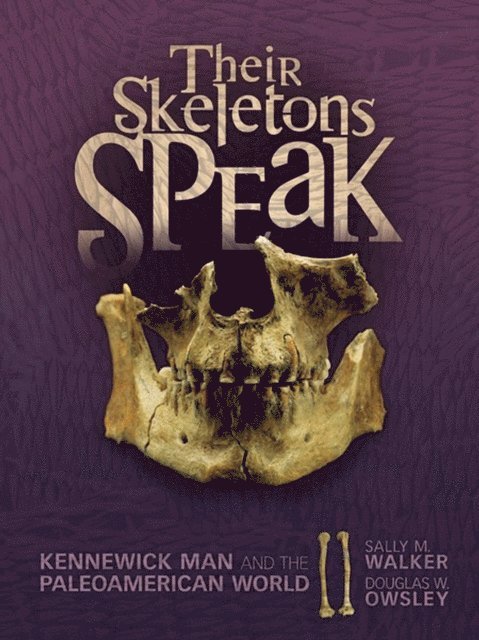
On July 28, 1996, two young men stumbled upon human bones in the shallow water along the shore of the Columbia River near Kennewick, Washington. Was this an unsolved murder? The remnants of some settler''s or Native American''s unmarked grave? What was the story behind this skeleton? Within weeks, scientific testing yielded astonishing news: the bones were more than 9,000 years old! The skeleton instantly escalated from interesting to extraordinary. He was an individual who could provide firsthand evidence about the arrival of humans in North America. The bones found scattered in the mud acquired a name: Kennewick Man. Authors Sally M. Walker and Douglas W. Owsley take you through the painstaking process of how scientists determined who Kennewick Man was and what his life was like. New research, never-before-seen photos of Kennewick Man''s remains, and a lifelike facial reconstruction will introduce you to one of North America''s earliest residents. But the story doesn''t end there. Walker and Owsley also introduce you to a handful of other Paleoamerican skeletons, exploring their commonalities with Kennewick Man. Together, their voices form a chorus to tell the complex tale of how humans came to North America—if we will only listen.
E-bok
Engelska, 2013143 kr
Läs direkt efter köp
On July 28, 1996, two young men stumbled upon human bones in the shallow water along the shore of the Columbia River near Kennewick, Washington. Was this an unsolved murder? The remnants of some settler''s or Native American''s unmarked grave? What was the story behind this skeleton? Within weeks, scientific testing yielded astonishing news: the bones were more than 9,000 years old! The skeleton instantly escalated from interesting to extraordinary. He was an individual who could provide firsthand evidence about the arrival of humans in North America. The bones found scattered in the mud acquired a name: Kennewick Man. Authors Sally M. Walker and Douglas W. Owsley take you through the painstaking process of how scientists determined who Kennewick Man was and what his life was like. New research, never-before-seen photos of Kennewick Man''s remains, and a lifelike facial reconstruction will introduce you to one of North America''s earliest residents. But the story doesn''t end there. Walker and Owsley also introduce you to a handful of other Paleoamerican skeletons, exploring their commonalities with Kennewick Man. Together, their voices form a chorus to tell the complex tale of how humans came to North America—if we will only listen.
Inbunden, Engelska, 2014
853 kr
Skickas inom 5-8 vardagar
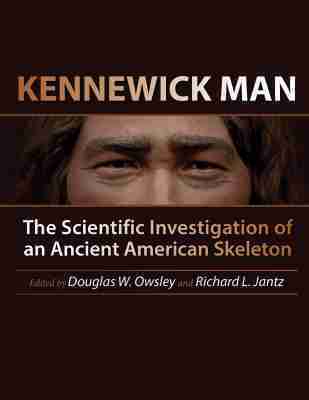
Almost from the day of its accidental discovery along the banks of the Columbia River in Washington State in July 1996, the ancient skeleton of Kennewick Man has garnered significant attention from scientific and Native American communities as well as public media outlets. This volume represents a collaboration among physical and forensic anthropologists, archaeologists, geologists, and geochemists, among others, and presents the results of the scientific study of this remarkable find. Scholars address a range of topics, from basic aspects of osteological analysis to advanced research focused on Kennewick Man’s origins and his relationships to other populations. Interdisciplinary studies, comprehensive data collection and preservation, and applications of technology are all critical to telling Kennewick Man’s story.Kennewick Man: The Scientific Investigation of an Ancient American Skeleton is written for a discerning professional audience, yet the absorbing story of the remains, their discovery, their curation history, and the extensive amount of detail that skilled scientists have been able to glean from them will appeal to interested and informed general readers. These bones lay silent for nearly nine thousand years, but now, with the aid of dedicated researchers, they can speak about the life of one of the earliest human occupants of North America.