Studies in Church and State – serie
Visar alla böcker i serien Studies in Church and State. Handla med fri frakt och snabb leverans.
4 produkter
4 produkter
798 kr
Skickas inom 3-6 vardagar
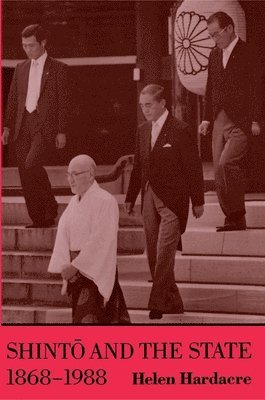
Helen Hardacre, a leading scholar of religious life in modern Japan, examines the Japanese state's involvement in and manipulation of shinto from the Meiji Restoration to the present. Nowhere else in modern history do we find so pronounced an example of government sponsorship of a religion as in Japan's support of shinto. How did that sponsorship come about and how was it maintained? How was it dismantled after World War II? What attempts are being made today to reconstruct it? In answering these questions, Hardacre shows why State shinto symbols, such as the Yasukuni Shrine and its prefectural branches, are still the focus for bitter struggles over who will have the right to articulate their significance. Where previous studies have emphasized the state bureaucracy responsible for the administration of shinto, Hardacre goes to the periphery of Japanese society.She demonstrates that leaders and adherents of popular religious movements, independent religious entrepreneurs, women seeking to raise the prestige of their households, and men with political ambitions all found an association with shinto useful for self-promotion; local-level civil administrations and parish organizations have consistently patronized shinto as a way to raise the prospects of provincial communities. A conduit for access to the prestige of the state, shinto has increased not only the power of the center of society over the periphery but also the power of the periphery over the center.
825 kr
Skickas inom 3-6 vardagar
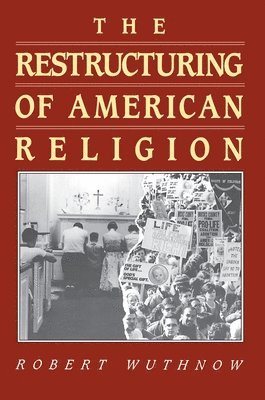
The description for this book, The Restructuring of American Religion: Society and Faith since World War II, will be forthcoming.
1 150 kr
Skickas inom 3-6 vardagar
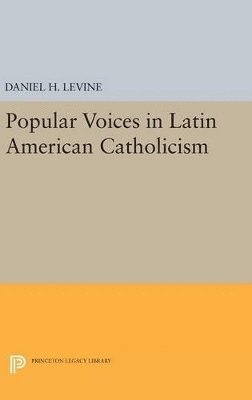
Throughout Latin America, observers and activists have found in religion a promise of deep and long-lasting democratization. But for religion to change culture and politics, religion itself must change. Such change is not only a matter of doctrine, ritual, or institutional arrangements but also arises out of the needs, values, and ideas of average believers. Combining rich interviews and community studies in Venezuela and Colombia with analysis of broad ideological and institutional transformations, Daniel Levine examines how religious and cultural change begins and what gives it substance and lasting impact. The author focuses on the creation of self-confident popular groups among hitherto isolated and dispirited individuals. Once silent voices come to light as peasants and urban barrio dwellers reflect on their upbringing and community, on poverty and opportunity, on faith, prayer, and the Bible, and on institutions like state, school, and church. Levine also interviews priests, sisters, and pastoral agents and explains how their efforts shape the links between popular groups and the larger society.The result is a clear understanding of how relations among social and cultural levels are maintained and transformed, how programs are implemented, why they succeed or fail, and how change appears both to elites and to ordinary people. Originally published in 1992. The Princeton Legacy Library uses the latest print-on-demand technology to again make available previously out-of-print books from the distinguished backlist of Princeton University Press. These editions preserve the original texts of these important books while presenting them in durable paperback and hardcover editions. The goal of the Princeton Legacy Library is to vastly increase access to the rich scholarly heritage found in the thousands of books published by Princeton University Press since its founding in 1905.
2 504 kr
Skickas inom 3-6 vardagar
Homelessness, black neighborhood development, problems of abortion and sex education--how does religion affect the politics of an American city confronting these and other concerns? And what differences have "church and state" issues made in these struggles? In answering such questions, A Bridging of Faiths conveys a feeling of the urgent social theater of Springfield, Massachusetts, and provides both a contemporary and historical sense of how power shapes and is shaped by the civic culture. Recalling the immediacy and provocativeness of classic community studies like Middletown and Yankee City, the work draws on the voices of Springfielders themselves, while it exposes tendencies that prevail throughout contemporary America. This is a tale of two establishments: Protestant for three centuries, Springfield has been for the last fifty years a Catholic city. In looking at its emerging demographic, political, and economic patterns, the book shows how church and state interact at the local level, where lives are actually lived, as opposed to how the law and public opinion say they ought to interact at the more abstract federal level.While religion is more politically influential than some social scientists might have expected, it does not possess the kind of power feared by many constitutionalists. Politicians are seeking to redefine themselves in relation to religion and in other ways, and religion as a whole faces subtle crises of mobility, authority, and secularization. From these complexities, new patterns of cultural and political authority have emerged in Springfield, similar to those now affecting other American communities and the nation. Originally published in 1992. The Princeton Legacy Library uses the latest print-on-demand technology to again make available previously out-of-print books from the distinguished backlist of Princeton University Press. These editions preserve the original texts of these important books while presenting them in durable paperback and hardcover editions. The goal of the Princeton Legacy Library is to vastly increase access to the rich scholarly heritage found in the thousands of books published by Princeton University Press since its founding in 1905.