Tech.edu: A Hopkins Series on Education and Technology – Serie
Visar alla böcker i serien Tech.edu: A Hopkins Series on Education and Technology. Handla med fri frakt och snabb leverans.
13 produkter
13 produkter
494 kr
Skickas
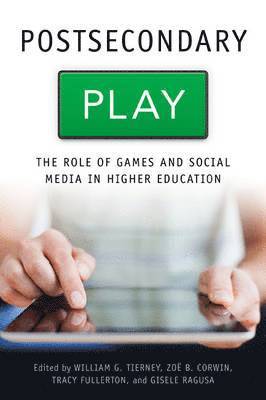
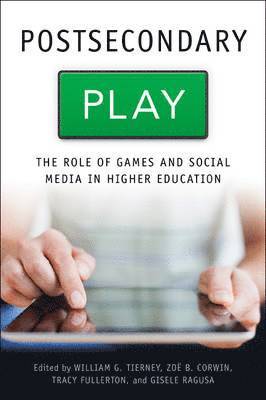
The college application process-which entails multiple forms, essays, test scores, and deadlines-can be intimidating. For students without substantial school and family support, the complexity of this process can become a barrier to access. William G. Tierney, Tracy Fullerton, and their teams at the University of Southern California approach this challenge innovatively. Using the tools of online games and social media, they have developed ways to make applying for college much less intimidating. While the vast majority of college students use social media and gaming in their everyday lives, colleges and universities have been slow to recognize and harness the power of either. Postsecondary Play explores the significance of games and social media in higher education, and particularly how they can be used to attract, retain, educate, and socialize students. Tierney, a past president of the American Educational Research Association, has gathered some of the best research on the emerging role of games and social media in the classroom and how these tools can boost student confidence and increase college access.Scholars writing from a wide variety of disciplines-college access, social media, game studies, and learning sciences-provide concrete examples to illustrate the new and complex ways in which students learn in response to social media and games. Tierney and the contributors find that, although games can be powerful tools for encouraging underserved students, quality game design and mastering the concept of play-the ability to develop skills while engaging in the game-are essential in the effective use of serious games in teaching and learning. Summarizing a decade of research in game design and learning, Postsecondary Play will appeal to higher education scholars and students of learning, online gaming, education, and the media.
355 kr
Skickas inom 7-10 vardagar
Since its launch in 2001, Wikipedia has been a lightning rod for debates about knowledge and traditional authority. It has come under particular scrutiny from publishers of print encyclopedias and college professors, who are skeptical about whether a crowd-sourced encyclopedia - in which most entries are subject to potentially endless reviewing and editing by anonymous collaborators whose credentials cannot be established - can ever truly be accurate or authoritative. In Wikipedia U, Thomas Leitch argues that the assumptions these critics make about accuracy and authority are themselves open to debate. After all, academics are expected both to consult the latest research and to return to the earliest sources in their field, each of which has its own authority. And when teachers encourage students to master information so that they can question it independently, their ultimate goal is to create a new generation of thinkers and makers whose authority will ultimately supplant their own. Wikipedia U offers vital new lessons about the nature of authority and the opportunities and challenges of Web 2.0.Leitch regards Wikipedia as an ideal instrument for probing the central assumptions behind liberal education, making it more than merely, as one of its severest critics has charged, "the encyclopedia game, played online."
336 kr
Tillfälligt slut
The allure of educational technology is easy to understand. Classroom instruction is an expensive and time-consuming process fraught with contradictory theories and frustratingly uneven results. Educators, inspired by machines' contributions to modern life, have been using technology to facilitate teaching for centuries. In Teaching Machines, Bill Ferster examines past attempts to automate instruction from the earliest use of the postal service for distance education to the current maelstrom surrounding Massive Open Online Courses. He tells the stories of the entrepreneurs and visionaries who, beginning in the colonial era, developed and promoted various instructional technologies. Ferster touches on a wide range of attempts to enhance the classroom experience with machines, from hornbooks, the Chautauqua movement, and correspondence courses to B. F. Skinner's teaching machine, intelligent tutoring systems, and eLearning. The famed progressive teachers, researchers, and administrators that the book highlights often overcame substantial hurdles to implement their ideas, but not all of them succeeded in improving the quality of education.Teaching Machines provides invaluable new insight into our current debate over the efficacy of educational technology.
570 kr
Tillfälligt slut
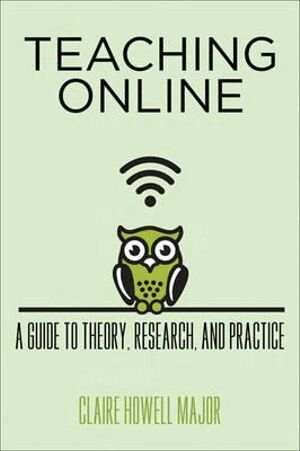
It is difficult to imagine a college class today that does not include some online component-whether a simple posting of a syllabus to course management software, the use of social media for communication, or a full-blown course offering through a MOOC platform. In Teaching Online, Claire Howell Major describes for college faculty the changes that accompany use of such technologies and offers real-world strategies for surmounting digital teaching challenges. Teaching with these evolving media requires instructors to alter the ways in which they conceive of and do their work, according to Major. They must frequently update their knowledge of learning, teaching, and media, and they need to develop new forms of instruction, revise and reconceptualize classroom materials, and refresh their communication patterns. Faculty teaching online must also reconsider the student experience and determine what changes for students ultimately mean for their own work and for their institutions.Teaching Online presents instructors with a thoughtful synthesis of educational theory, research, and practice as well as a review of strategies for managing the instructional changes involved in teaching online. In addition, this book presents examples of best practices from successful online instructors as well as cutting-edge ideas from leading scholars and educational technologists. Faculty members, researchers, instructional designers, students, administrators, and policy makers who engage with online learning will find this book an invaluable resource.
345 kr
Skickas inom 7-10 vardagar
It is difficult to imagine a college class today that does not include some online component-whether a simple posting of a syllabus to course management software, the use of social media for communication, or a full-blown course offering through a MOOC platform. In Teaching Online, Claire Howell Major describes for college faculty the changes that accompany use of such technologies and offers real-world strategies for surmounting digital teaching challenges. Teaching with these evolving media requires instructors to alter the ways in which they conceive of and do their work, according to Major. They must frequently update their knowledge of learning, teaching, and media, and they need to develop new forms of instruction, revise and reconceptualize classroom materials, and refresh their communication patterns. Faculty teaching online must also reconsider the student experience and determine what changes for students ultimately mean for their own work and for their institutions.Teaching Online presents instructors with a thoughtful synthesis of educational theory, research, and practice as well as a review of strategies for managing the instructional changes involved in teaching online. In addition, this book presents examples of best practices from successful online instructors as well as cutting-edge ideas from leading scholars and educational technologists. Faculty members, researchers, instructional designers, students, administrators, and policy makers who engage with online learning will find this book an invaluable resource.
Knowledge Games
How Playing Games Can Solve Problems, Create Insight, and Make Change
Inbunden, Engelska, 2016
570 kr
Skickas inom 3-6 vardagar
Imagine if new knowledge and insights came not just from research centers, think tanks, and universities but also from games, of all things. Video games have been viewed as causing social problems, but what if they actually helped solve them? This question drives Karen Schrier's Knowledge Games, which seeks to uncover the potentials and pitfalls of using games to make discoveries, solve real-world problems, and better understand our world. For example, so-called knowledge games-such as Foldit, a protein-folding puzzle game, SchoolLife, which crowdsources bullying interventions, and Reverse the Odds, in which mobile game players analyze breast cancer data-are already being used by researchers to gain scientific, psychological, and humanistic insights. Schrier argues that knowledge games are potentially powerful because of their ability to motivate a crowd of problem solvers within a dynamic system while also tapping into the innovative data processing and computational abilities of games.In the near future, Schrier asserts, knowledge games may be created to understand and predict voting behavior, climate concerns, historical perspectives, online harassment, susceptibility to depression, or optimal advertising strategies, among other things. In addition to investigating the intersection of games, problem solving, and crowdsourcing, Schrier examines what happens when knowledge emerges from games and game players rather than scientists, professionals, and researchers. This accessible book also critiques the limits and implications of games and considers how they may redefine what it means to produce knowledge, to play, to educate, and to be a citizen.
407 kr
Skickas inom 7-10 vardagar
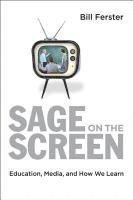
Since the days of Thomas Edison, technology has held the promise of lowering the cost of education. The fantasy of leveraging a fixed production cost to reach an unlimited number of consumers is an enticing economic proposition, one that has been repeatedly attempted with each new media format, from radio and television to MOOCs, where star academics make online video lectures available to millions of students at little cost. In Sage on the Screen, Bill Ferster explores the historical, theoretical, and practical perspectives of using broadcast media to teach by examining a century of efforts to use it at home and in the classroom. Along the way, he shares stories from teachers, administrators, entrepreneurs, and innovators who promoted the use of cutting-edge technology-while critically evaluating their motives for doing so. Taking a close look at the origins of various media forms, their interrelatedness, and their impact on education thus far, Ferster asks why broadcast media has been so much more successful at entertaining people than it has been at educating them.Accessibly written and full of explanatory art, Sage on the Screen offers fresh insight into the current and future uses of instructional technology, from K-12 through non-institutionally-based learning.
345 kr
Skickas inom 7-10 vardagar
The college application process-which entails multiple forms, essays, test scores, and deadlines-can be intimidating. For students without substantial school and family support, the complexity of this process can become a barrier to access. William G. Tierney, Tracy Fullerton, and their teams at the University of Southern California approach this challenge innovatively. Using the tools of online games and social media, they have developed ways to make applying for college much less intimidating. While the vast majority of college students use social media and gaming in their everyday lives, colleges and universities have been slow to recognize and harness the power of either. Postsecondary Play explores the significance of games and social media in higher education, and particularly how they can be used to attract, retain, educate, and socialize students. Tierney, a past president of the American Educational Research Association, has gathered some of the best research on the emerging role of games and social media in the classroom and how these tools can boost student confidence and increase college access.Scholars writing from a wide variety of disciplines-college access, social media, game studies, and learning sciences-provide concrete examples to illustrate the new and complex ways in which students learn in response to social media and games. Tierney and the contributors find that, although games can be powerful tools for encouraging underserved students, quality game design and mastering the concept of play-the ability to develop skills while engaging in the game-are essential in the effective use of serious games in teaching and learning. Summarizing a decade of research in game design and learning, Postsecondary Play will appeal to higher education scholars and students of learning, online gaming, education, and the media.
447 kr
Skickas inom 7-10 vardagar
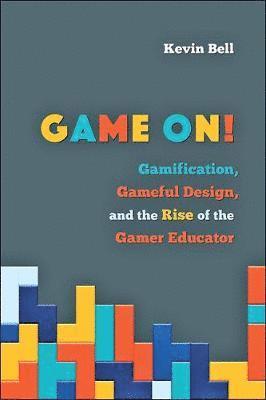
The changing student body in American higher education demands a new approach to teaching, one that moves toward inclusive, hyperpersonalized learning environments that have much in common with games and social media. Kevin Bell's Game On! presents dynamic case studies of gamer educators and game-derived techniques to help instructors creatively formulate their own teaching strategies. Breaking gamefully designed classes into their component parts, Bell analyzes what these classes are actually doing and explains why they work. He offers faculty a rubric to assess their own courses for their propensity to engage students, particularly those from low socioeconomic and high-risk populations. Bell explores how game design, pedagogy, and intrinsic motivators can level the playing field to produce rigorous learning environments that are as addictive to all participants as the latest apps and social media systems. He also discusses best practices, lays out the broader context of computer-mediated teaching and learning, and considers the challenges and opportunities that gamification presents.Instructors would do well to consider the key tenets of successful games if they are to engage and graduate the coming generations of learners. Bell's careful analysis of the theories behind gamification, cognitive science, and instructional design will help them to do just that.
380 kr
Skickas
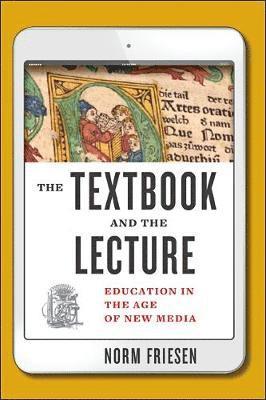
Why are the fundamentals of education apparently so little changed in our era of digital technology? Is their obstinate persistence evidence of resilience or obsolescence? Such questions can best be answered not by imagining an uncertain high-tech future, but by examining a well-documented past-a history of instruction and media that extends from Gilgamesh to Google. Norm Friesen looks to the combination and reconfiguration of oral, textual, and more recent media forms to understand the longevity of so many educational arrangements and practices. Friesen examines the interrelationship of reading, writing, and pedagogy in the case of the lecture and the textbook-from their premodern to their postmodern incarnations. Over hundreds of years, these two forms have integrated textual, oral, and (more recently) digital media and connected them with changing pedagogical and cultural priorities. The Textbook and the Lecture opens new possibilities for understanding not only mediated pedagogical practices and their reform but also gradual changes in our conceptions of the knowing subject and of knowledge itself.Drawing on wide-ranging scholarship in fields as diverse as media ecology and German-language media studies, Foucauldian historiography, and even archaeological research, The Textbook and the Lecture is a fascinating investigation of educational media.
337 kr
Skickas inom 5-8 vardagar
How does the digital divide affect the teaching and learning of historically underrepresented students?Many schools and programs in low-income neighborhoods lack access to the technological resources, including equipment and Internet service, that those in middle- and upper-income neighborhoods have at their fingertips. This inequity creates a persistent digital divide—not a simple divide in access to technology per se, but a divide in both formal and informal digital literacy that further marginalizes youths from low-income, minoritized, and first-generation communities.Diversifying Digital Learning outlines the pervasive problems that exist with ensuring digital equity and identifies successful strategies to tackle the issue. Bringing together top scholars to discuss how digital equity in education might become a key goal in American education, this book is structured to provide a framework for understanding how historically underrepresented students most effectively engage with technology—and how institutions may help or hinder students’ ability to develop and capitalize on digital literacies.This book will appeal to readers who are well versed in the diverse uses of social media and technologies, as well as less technologically savvy educators and policy analysts in educational organizations such as schools, afterschool programs, colleges, and universities. Addressing the intersection of digital media, race/ethnicity, and socioeconomic class in a frank manner, the lessons within this compelling work will help educators enable students in grades K–12, as well as in postsecondary institutions, to participate in a rapidly changing world framed by shifting new media technologies.Contributors: Young Whan Choi, Zoë B. Corwin, Christina Evans, Julie Flapan, Joanna Goode, Erica Hodgin, Joseph Kahne, Suneal Kolluri, Lynette Kvasny, David J. Leonard, Jane Margolis, Crystle Martin, Safiya Umoja Noble, Amanda Ochsner, Fay Cobb Payton, Antar A. Tichavakunda, William G. Tierney, S. Craig Watkins
447 kr
Skickas inom 7-10 vardagar
Giving higher education professionals the language and tools they need to seize new opportunities in digital learning.A quiet revolution is sweeping across US colleges and universities. As schools rethink how students learn - both inside and outside the classroom - technology is changing not only what should be taught but how best to teach it. From active learning and inclusive pedagogy to online and hybrid courses, traditional institutions are leveraging their fundamental strengths while challenging long-standing assumptions about how teaching and learning happen. At this intersection of learning, technology, design, and organizational change lies the foundation of a new academic discipline of digital learning. Coalescing around this new field of study is a common critical language, along with a set of theoretical frameworks, methodological practices, and shared challenges and goals. In Learning Innovation and the Future of Higher Education, Joshua Kim and Edward Maloney explore the context of this new discipline, show how it exists within a larger body of scholarship, and give examples of how this scholarship is being used on campuses.What Kim and Maloney demonstrate in this foundational text is an understanding that change is a complex dynamic between what happens in the classroom and the larger institutional structures and traditions at play. Ultimately, the authors make a compelling case not only for this turn to learning but also for creating new pathways for nonfaculty learning careers, understanding the limits of professional organizations and social media, and the need to establish this new interdisciplinary field of learning innovation.
345 kr
Skickas inom 7-10 vardagar
What's it really like to learn online?Learning Online: The Student ExperienceOnline learning is ubiquitous for millions of students worldwide, yet our understanding of student experiences in online learning settings is limited. The geographic distance that separates faculty from students in an online environment is its signature feature, but it is also one that risks widening the gulf between teachers and learners. In Learning Online, George Veletsianos argues that in order to critique, understand, and improve online learning, we must examine it through the lens of student experience.Approaching the topic with stories that elicit empathy, compassion, and care, Veletsianos relays the diverse day-to-day experiences of online learners. Each in-depth chapter follows a single learner's experience while focusing on an important or noteworthy aspect of online learning, tackling everything from demographics, attrition, motivation, and loneliness to cheating, openness, flexibility, social media, and digital divides. Veletsianos also draws on these case studies to offer recommendations for the future and lessons learned. The elusive nature of online learners' experiences, the book reveals, is a problem because it prevents us from doing better: from designing more effective online courses, from making evidence-informed decisions about online education, and from coming to our work with the full sense of empathy that our students deserve. Writing in an evocative, accessible, and concise manner, Veletsianos concretely demonstrates why it is so important to pay closer attention to the stories of students—who may have instructive and insightful ideas about the future of education.