Edward J. Maloney - Böcker
Visar alla böcker från författaren Edward J. Maloney. Handla med fri frakt och snabb leverans.
3 produkter
3 produkter
444 kr
Skickas inom 7-10 vardagar
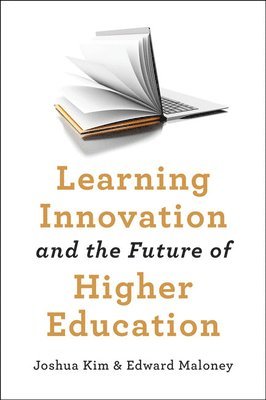
Giving higher education professionals the language and tools they need to seize new opportunities in digital learning.A quiet revolution is sweeping across US colleges and universities. As schools rethink how students learn - both inside and outside the classroom - technology is changing not only what should be taught but how best to teach it. From active learning and inclusive pedagogy to online and hybrid courses, traditional institutions are leveraging their fundamental strengths while challenging long-standing assumptions about how teaching and learning happen. At this intersection of learning, technology, design, and organizational change lies the foundation of a new academic discipline of digital learning. Coalescing around this new field of study is a common critical language, along with a set of theoretical frameworks, methodological practices, and shared challenges and goals. In Learning Innovation and the Future of Higher Education, Joshua Kim and Edward Maloney explore the context of this new discipline, show how it exists within a larger body of scholarship, and give examples of how this scholarship is being used on campuses.What Kim and Maloney demonstrate in this foundational text is an understanding that change is a complex dynamic between what happens in the classroom and the larger institutional structures and traditions at play. Ultimately, the authors make a compelling case not only for this turn to learning but also for creating new pathways for nonfaculty learning careers, understanding the limits of professional organizations and social media, and the need to establish this new interdisciplinary field of learning innovation.
164 kr
Skickas
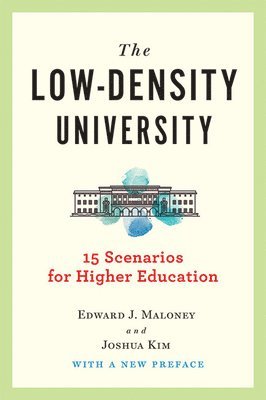
COVID-19 has placed American higher education at a crossroads. This book is the roadmap.COVID-19 triggered an existential crisis for American higher education. Faced with few safe choices, most colleges and universities switched to remote learning during the 2020 spring semester. The future, however, provides more choices about how institutions can fulfill their mission of teaching and research. But how do we begin to make decisions in an uncertain and shifting environment? In this concise guide, authors Edward J. Maloney and Joshua Kim lay out clear ways colleges and universities can move forward in safe and effective ways.The Low-Density University presents fifteen scenarios for how colleges and universities can address the current crisis from a fully online semester to others with students in residence and in the classroom. How can changing the calendar or shifting to hybrid models of blended classrooms impact teaching, learning, and the college experience? Could we emerge from this crisis with new models that are better and more adapted to today's world? The Low-Density University focuses primarily on teaching and learning, but student life (housing, athletics, health, etc.) are core to the college experience. Can we devise safe and effective ways to preserve the best of that experience? The lessons here extend beyond the classroom. Just as the pandemic will change American higher education, the choices we make now will change what college looks like for generations to come.
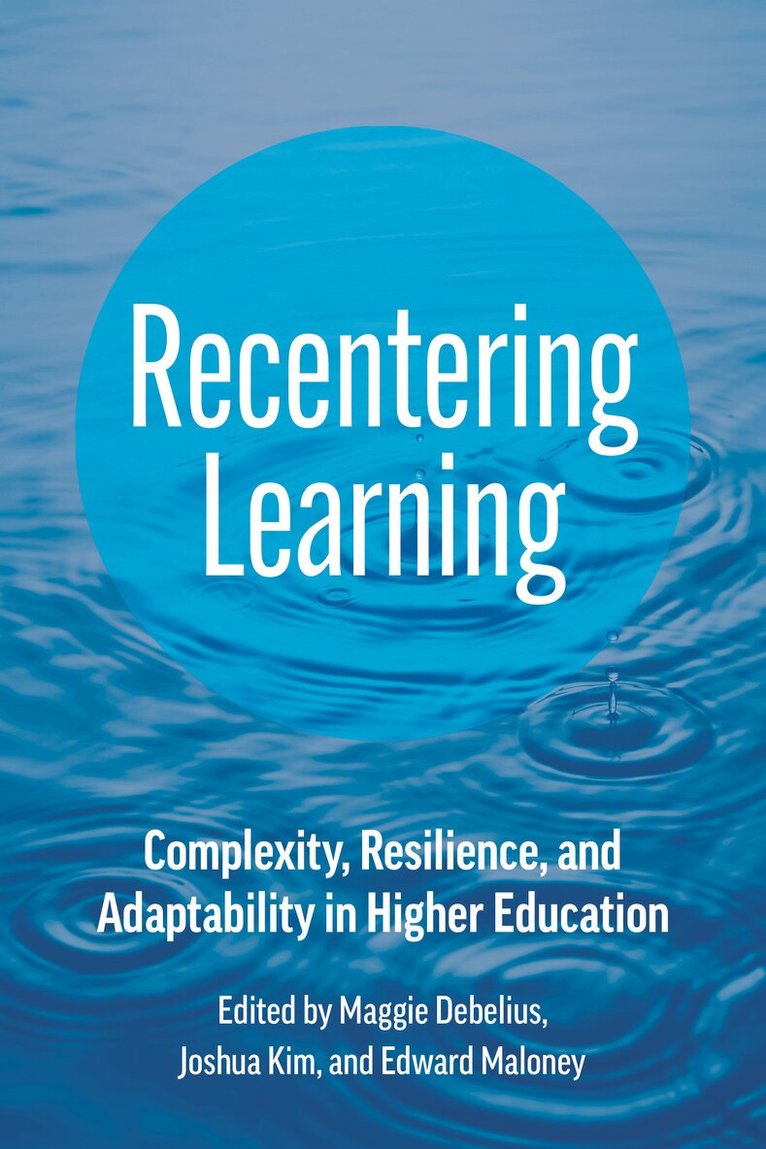
Recentering Learning
Complexity, Resilience, and Adaptability in Higher Education
Häftad, Engelska, 2025
414 kr
Skickas inom 7-10 vardagar
Is a renaissance of teaching and learning in higher education possible? One may already be underway.The COVID-19 pandemic fundamentally changed how colleges and universities manage teaching and learning. Recentering Learning unpacks the wide-reaching implications of disruptions such as the pandemic on higher education.Editors Maggie Debelius, Joshua Kim, and Edward Maloney assembled a diverse group of scholars and practitioners to assess the impacts of the pandemic, as well as to anticipate the effects of climate change, social unrest, artificial intelligence, financial challenges, changing demographics, and other forms of disruption, on teaching and learning. These contributors are leaders at their institutions and draw on both the Scholarship of Teaching and Learning (SoTL) as well as their lived experiences to draw important lessons for the wider postsecondary ecosystem. The collection features faculty, staff, and student voices from a range of public and private institutions of varying sizes and serving different populations.Covering timely topics such as institutional resiliency, how to create transformational change, digital education for access and equity, and the shifting institutional data landscape, these essays serve as a compelling guide for how colleges and universities can navigate inevitable changes to teaching and learning. Faculty and staff at centers for teaching excellence or centers for innovation, university leaders, graduate students in learning design programs, and anyone interested in the evolution of teaching and learning in the twenty-first century will benefit from this prescient volume.Contributors: Bryan Alexander, Drew Allen, Isis Artze-Vega, Betsy Barre, Randy Bass, MJ Bishop, Derek Bruff, Molly Chehak, Nancy Chick, Cynthia A. Cogswell, Jenae Cohn, Tazin Daniels, Maggie Debelius, David Ebenbach, Megan Eberhardt-Alstot, Kristen Eshleman, Peter Felten, Lorna Gonzalez, Michael Goudzwaard, Sophia Grabiec, Sean Hobson, Kashema Hutchinson, Amanda Irvin, Jonathan Iuzzini, Amy Johnson, Briana Johnson, Matthew Kaplan, Whitney Kilgore, Joshua Kim, Sujung Kim, Suzanna Klaf, Martin Kurzweil, Natalie Landman, Jill Leafstedt, Katie Linder, Sherry Linkon, Edward Maloney, Susannah McGowan, Isabel McHenry, Rolin Moe, Lillian Nagengast, Nancy O'Neill, Adashima Oyo, Matthew Rascoff, Libbie Rifkin, Katina Rogers, Catherine Ross, Annie Sadler, Monique L. Snowden, Elliott Visconsi, Mary Wright