The ANNALS of the American Academy of Political and Social Science Series – serie
Emotional Labor in the Service Economy
462 kr
Skickas inom 5-8 vardagar
In today's service economy, many jobs require that applicants have a smiling face, helpful disposition and the ability to interact in a friendly manner with others. Or in the case of law enforcement or bill collecting, an employee can be required to be less friendly and more harsh in his or her interaction with customers or criminals.
Jobs that require emotional labor typically necessitate contact with other people external to or within the organization, usually involving face-to-face or voice-to-voice contact, especially in service work. Emotional labor requires employees to give something of themselves to others with whom they have no ongoing personal relationship.
Emotional Labor in the Service Economy, a special issue of THE ANNALS, discusses the many aspects of emotional labor in a variety of job settings and cross-disciplinary examples. Articles in this important issue highlight:
· Emotional Demands at Work
· Financial Penalty for Doing Caring Work
· Psychological Consequences of Emotional Labor
· Rules Regulating Emotional Displays in Jobs or Job Requirements
Emotional labor has gained increased recognition as it grows to affect productivity and generates profit. This special issue of THE ANNALS is a valuable resource to researchers, scholars and professionals in all areas to provide insight into this important topic.
The Silent Crisis in U.S. Child Care
1 015 kr
Skickas inom 5-8 vardagar
In the 20th century we have witnessed the massive movement of women and young mothers into paid employment in the U.S. and other industrialized countries. By 1995 64% of married mothers with a preschool-aged child were in the labor force compared to 35% only 25 years earlier. Rising divorce rates and an increase in the percentage of female-headed households make more families dependent on the mother's earnings. These structural shifts, along with women's growing aspirations for careers and more independence, have changed social norms. Families increasingly depend on formally provided child care.
The child care crisis is easily overlooked. It is a silent, voiceless crisis. Three-, four-, and five-year-old children cannot speak for themselves. Low- and middle-income children and mothers, those most directly affected, have little economic or political power. What choices must we as a society make to aid our nation in raising its children?
The Silent Crisis in U.S. Child Care, a special issue of THE ANNALS, addresses the important debates and questions regarding child care:
· Regulating Child Care Quality
· Making Child Care Affordable in the United States
· Defining and Assessing Early Childhood Program Quality
· Who Should Pay for Child Care
The discussion of child care not only affects our society as a whole, but also influences the decisions of policymakers and politicians. The articles in this special issue are valuable to scholars, researchers, policymakers and those working in and with the child care system who seek to find answers and solutions to this timely and important problem.
The Silent Crisis in U.S. Child Care
462 kr
Skickas inom 5-8 vardagar
In the 20th century we have witnessed the massive movement of women and young mothers into paid employment in the U.S. and other industrialized countries. By 1995 64% of married mothers with a preschool-aged child were in the labor force compared to 35% only 25 years earlier. Rising divorce rates and an increase in the percentage of female-headed households make more families dependent on the mother's earnings. These structural shifts, along with women's growing aspirations for careers and more independence, have changed social norms. Families increasingly depend on formally provided child care.
The child care crisis is easily overlooked. It is a silent, voiceless crisis. Three-, four-, and five-year-old children cannot speak for themselves. Low- and middle-income children and mothers, those most directly affected, have little economic or political power. What choices must we as a society make to aid our nation in raising its children?
The Silent Crisis in U.S. Child Care, a special issue of THE ANNALS, addresses the important debates and questions regarding child care:
· Regulating Child Care Quality
· Making Child Care Affordable in the United States
· Defining and Assessing Early Childhood Program Quality
· Who Should Pay for Child Care
The discussion of child care not only affects our society as a whole, but also influences the decisions of policymakers and politicians. The articles in this special issue are valuable to scholars, researchers, policymakers and those working in and with the child care system who seek to find answers and solutions to this timely and important problem.
Will the Juvenile Court System Survive?
476 kr
Skickas inom 5-8 vardagar
The year 1999 marks the 100th anniversary of the juvenile court. At the time of its creation, the juvenile court was heralded as one of the greatest advancements in the cause for children. While few will argue with the fact that the juvenile court has been a constructive force in promoting the welfare of children, the court has also been the subject of ongoing and increasingly sever criticism. The problems and abuses that plagued the juvenile court eventually reached the United States Supreme Court, whose decisions transformed the juvenile court from a social welfare institution into a court of law for young people.
Now, the juvenile court is faced with legislative policy changes resulting in a loss of jurisdiction over serious, chronic, and in particular, violent delinquent acts. The juvenile court's centennial arrives at a time when the voices calling for its abolition are getting louder and gaining support.
Will the Juvenile Court System Survive?, a special issue of THE ANNALS, features articles written by some of the country's leading juvenile justice policymakers, practitioners, researchers and child advocates. Articles in this issue cover a diverse range of topics:
· Young women and the juvenile justice system
· The role of the juvenile court in children's mental health
· The future of youth corrections
· Reassessing the need for a separate juvenile justice court
As the turn of the century approaches, scholars and practitioners are asking the questions of whether the juvenile court will survive. This special issue features valuable discussions and debates on all aspects of the juvenile court and its future in the United States.
Civil Society and Democratization
1 045 kr
Skickas inom 5-8 vardagar
At the end of the Cold War, a renewed interest in civil society emerged. Today, civil society, trust, democratization, social capital, and volunteerism are a primary focus among the social sciences. The end of the Cold War meant such issues in the social sciences, neglected during many years of military confrontation, came back into prominence. Voluntary groups are being given large roles, and the state is being challenged by them.
The search is on for ways to encourage democracy. Free trade and globalization are part of the equation, but much attention is being focused on the role of NGOs (non-governmental organizations). The claim is that without a healthy voluntary sector, the long-term survival of a democratic society is doubtful.
Civil Society and Democratization, a special issue of THE ANNALS, features articles written by both domestic and international scholars on this ever growing area of discussion. Articles in this issue cover these important topics:
· Debates on civil society both in the United States and abroad · Civil society and political elections · Religion and civic engagement · Civil society and volunteerismThis special issue is a comprehensive discussion of how political confidence is built and eroded in a world that unimaginable only ten years ago. It is an indispensable guide to the problems of sustaining the gains made by democracy since the collapse of the Soviet Union and will be of great interest to academics and professionals concerned with processes of social change.
Civil Society and Democratization
476 kr
Skickas inom 5-8 vardagar
At the end of the Cold War, a renewed interest in civil society emerged. Today, civil society, trust, democratization, social capital, and volunteerism are a primary focus among the social sciences. The end of the Cold War meant such issues in the social sciences, neglected during many years of military confrontation, came back into prominence. Voluntary groups are being given large roles, and the state is being challenged by them.
The search is on for ways to encourage democracy. Free trade and globalization are part of the equation, but much attention is being focused on the role of NGOs (non-governmental organizations). The claim is that without a healthy voluntary sector, the long-term survival of a democratic society is doubtful.
Civil Society and Democratization, a special issue of THE ANNALS, features articles written by both domestic and international scholars on this ever growing area of discussion. Articles in this issue cover these important topics:
· Debates on civil society both in the United States and abroad · Civil society and political elections · Religion and civic engagement · Civil society and volunteerismThis special issue is a comprehensive discussion of how political confidence is built and eroded in a world that unimaginable only ten years ago. It is an indispensable guide to the problems of sustaining the gains made by democracy since the collapse of the Soviet Union and will be of great interest to academics and professionals concerned with processes of social change.
The Social Diffusion of Ideas and Things
1 045 kr
Skickas inom 5-8 vardagar
Americans once eyed the latest Paris fashions in the hope of being chic; now fashion cool is more likely to be found on the frames of kids from LA and London. In corporate boardrooms, managers and entrepreneurs seek to adopt new ideas from competitors. Government programs aim to combat assorted social ills spread within and between nations. Musical idioms flow between jazz, dance music, and symphony halls. All this commotion about the new, the chic, the cool, and the best prompt some ideas to spread, some ideas to be reinvented through contact with other ideas, and some ideas to languish or die.
This special issue of THE ANNALS, The Social Diffusion of Ideas and Things, devotes its attention to the hows and whys of the diffusion of ideas and things between people, organizations, and cultures. In this issue, discussion if diffusion covers a diverse range of topics:
· Fashionable clothing
· Community outreach
· Industrial pollution
· Political activism
· Morality policy
· Tobacco regulation
· Jazz music
· Diffusion theory
Studies in diffusion provide insights into social processes of innovation and communication of the transmission and adoption of new ideas, new practices, and new technologies. This special issue familiarizes readers with basic hypotheses on diffusion that guide contemporary scholarship and is a useful tool to any social scientist.
The Social Diffusion of Ideas and Things
476 kr
Skickas inom 5-8 vardagar
Americans once eyed the latest Paris fashions in the hope of being chic; now fashion cool is more likely to be found on the frames of kids from LA and London. In corporate boardrooms, managers and entrepreneurs seek to adopt new ideas from competitors. Government programs aim to combat assorted social ills spread within and between nations. Musical idioms flow between jazz, dance music, and symphony halls. All this commotion about the new, the chic, the cool, and the best prompt some ideas to spread, some ideas to be reinvented through contact with other ideas, and some ideas to languish or die.
This special issue of THE ANNALS, The Social Diffusion of Ideas and Things, devotes its attention to the hows and whys of the diffusion of ideas and things between people, organizations, and cultures. In this issue, discussion if diffusion covers a diverse range of topics:
· Fashionable clothing
· Community outreach
· Industrial pollution
· Political activism
· Morality policy
· Tobacco regulation
· Jazz music
· Diffusion theory
Studies in diffusion provide insights into social processes of innovation and communication of the transmission and adoption of new ideas, new practices, and new technologies. This special issue familiarizes readers with basic hypotheses on diffusion that guide contemporary scholarship and is a useful tool to any social scientist.
School Violence
1 015 kr
Skickas inom 5-8 vardagar
At the mention of Columbine High School in Littleton, Colorado, most Americans shudder to remember the violent massacre of 12 students and a teacher, as well as the deaths of the two students who committed the crime. Although this tragedy alerted the public that American education would never be the same, it was not an isolated incident. Tragedies of similar proportions at schools in Kentucky, Arkansas, Pennsylvania and Oregon by students ranging in age from 11 to 15 demonstrate that the problem is widespread geographically. Educators, researchers and parents all struggle to understand why violent crime by school-aged children has increased since 1989, while crime in society has declined.
This special issue of THE ANNALS, School Violence, explores the roots of school violence and how to create systems to prevent it. This issue aims to develop short- and long-term strategies to address school violence. Articles in this issue discuss the following:
· Gangs in Schools
· Effects of School Climate on School Disorder
· School Discipline
· Poverty, Inequality, and Youth Violence
· Juvenile Corrections
· Creating Peaceable Schools
The several contributors to this volume bring together their critical and analytical skills to address what is clearly one of the most pressing problems facing American society as we enter the 21st century. This issue is a valuable resource for both academics and researchers exploring the nature, scope, causes and policy implications of the growing trend to school violence.
School Violence
462 kr
Skickas inom 5-8 vardagar
At the mention of Columbine High School in Littleton, Colorado, most Americans shudder to remember the violent massacre of 12 students and a teacher, as well as the deaths of the two students who committed the crime. Although this tragedy alerted the public that American education would never be the same, it was not an isolated incident. Tragedies of similar proportions at schools in Kentucky, Arkansas, Pennsylvania and Oregon by students ranging in age from 11 to 15 demonstrate that the problem is widespread geographically. Educators, researchers and parents all struggle to understand why violent crime by school-aged children has increased since 1989, while crime in society has declined.
This special issue of THE ANNALS, School Violence, explores the roots of school violence and how to create systems to prevent it. This issue aims to develop short- and long-term strategies to address school violence. Articles in this issue discuss the following:
· Gangs in Schools
· Effects of School Climate on School Disorder
· School Discipline
· Poverty, Inequality, and Youth Violence
· Juvenile Corrections
· Creating Peaceable Schools
The several contributors to this volume bring together their critical and analytical skills to address what is clearly one of the most pressing problems facing American society as we enter the 21st century. This issue is a valuable resource for both academics and researchers exploring the nature, scope, causes and policy implications of the growing trend to school violence.
The African American Male in American Life and Thought
1 045 kr
Skickas inom 5-8 vardagar
No longer can scholars and practitioners ignore the influence the African American male has on all facets of American culture and academia. Currently, there are over 16.6 million African American Males in the U.S. population who are largely ignored and misrepresented. This volume of The Annals of the American Academy of Political and Social Science is being published to help rectify that problem.
"Dope addicts", "welfare pimps", home boys", "bloods" - the images of the African American male portrayed throughout the American media have been distorted to say the least. The neglected part of the story is that black males in America are products of a rich African heritage. They are sons of African kings and queens and have made enormous and valuable contributions to Western civilization. African American men are not only pioneers in sport , but have proven themselves in all walks of life including the sciences, medicine, law, engineering, and the American Armed Forces. It is clearly time for African American male studies to be realized as a legitimate field of academic inquiry.
The African American Male in American Life and Thought addresses several questions in relation to this: Who are the black males? How do we define this population? What are their demographic characteristics? What impact does the black American male have on American life and thought?
To examine these and related questions, a group of nationally recognized scholars and practitioners has been assembled, and represent several disciplines and areas of expertise in American studies. In this volume, scholarly research has been combined with thoughtful original essays to bring together a well-rounded view of the African American male experience within the context of American life and history.
The African American Male in American Life and Thought
476 kr
Skickas inom 5-8 vardagar
No longer can scholars and practitioners ignore the influence the African American male has on all facets of American culture and academia. Currently, there are over 16.6 million African American Males in the U.S. population who are largely ignored and misrepresented. This volume of The Annals of the American Academy of Political and Social Science is being published to help rectify that problem.
"Dope addicts", "welfare pimps", home boys", "bloods" - the images of the African American male portrayed throughout the American media have been distorted to say the least. The neglected part of the story is that black males in America are products of a rich African heritage. They are sons of African kings and queens and have made enormous and valuable contributions to Western civilization. African American men are not only pioneers in sport , but have proven themselves in all walks of life including the sciences, medicine, law, engineering, and the American Armed Forces. It is clearly time for African American male studies to be realized as a legitimate field of academic inquiry.
The African American Male in American Life and Thought addresses several questions in relation to this: Who are the black males? How do we define this population? What are their demographic characteristics? What impact does the black American male have on American life and thought?
To examine these and related questions, a group of nationally recognized scholars and practitioners has been assembled, and represent several disciplines and areas of expertise in American studies. In this volume, scholarly research has been combined with thoughtful original essays to bring together a well-rounded view of the African American male experience within the context of American life and history.
Dimensions of Globalization
1 045 kr
Skickas inom 5-8 vardagar
In this volume of The Annals, the contributors explore their individual subjects within common understanding of the term "globalization". There is agreement that the term refers to the consequences of two phenomena that, in combination, have resulted in what David Harvey calls the global "compression of time and space". The first phenomenon is technological changes in the processing and dissemination of information related to finance and production. The second is the international spread of the technical competence necessary to use these advances efficiently.
The articles in this volume of The Annals are presented to illuminate important dimensions of the globalization process. While this collection is not proposed to be a definitive presentation in the range of subjects covered or in the treatment that is accorded them, it is intended that these articles provide perspective on globalization at a time when it is subject of intense public scrutiny.
The first three articles are broad in scope, tracing the origins of globalization to new technologies, assessing globalization's impact on human well-being, and analyzing the effect of the global economy on Southeast Asia. The impact of globalization on migration and labor is the subject of the next three contributions, followed by three articles addressing important problems with regard to international trade. The last group of articles considers cultural and other changes associated with globalization.
Dimensions of Globalization
476 kr
Skickas inom 5-8 vardagar
In this volume of The Annals, the contributors explore their individual subjects within common understanding of the term "globalization". There is agreement that the term refers to the consequences of two phenomena that, in combination, have resulted in what David Harvey calls the global "compression of time and space". The first phenomenon is technological changes in the processing and dissemination of information related to finance and production. The second is the international spread of the technical competence necessary to use these advances efficiently.
The articles in this volume of The Annals are presented to illuminate important dimensions of the globalization process. While this collection is not proposed to be a definitive presentation in the range of subjects covered or in the treatment that is accorded them, it is intended that these articles provide perspective on globalization at a time when it is subject of intense public scrutiny.
The first three articles are broad in scope, tracing the origins of globalization to new technologies, assessing globalization's impact on human well-being, and analyzing the effect of the global economy on Southeast Asia. The impact of globalization on migration and labor is the subject of the next three contributions, followed by three articles addressing important problems with regard to international trade. The last group of articles considers cultural and other changes associated with globalization.
Feminist Views of the Social Sciences
1 045 kr
Skickas inom 5-8 vardagar
Among the many achievements of the feminist movement of the 1970s was the unprecedented influx of women into academia. Over the last 25 years, women have entered the social sciences in huge numbers - bringing with them new perspectives and new insights into the social world.
This special issue of The Annals reflects on this multivocal, richly textured, and dynamic revolution. From anthropology to psychology to geography to criminology and more, leading feminists reflect on the most significant contributions of feminist activism and feminist research to their fields. Two main themes run through this volume: the relationship between feminist scholarship and feminist activism, and the enduring controversies and future direction of feminist social science.
The contributions run the gamut from the impact of feminism on specific social science disciplines such as family studies, archaeology, political science, and media studies to the influence of feminist thought on specific topics such as federally funded social science, migration, media practices, and sexuality. The main conclusion of this volume is that, "where reigning paradigms are strong and the accepted methodologies are limited, feminist perspectives tend to be marginalized. On the other hand, fields that are theoretically eclectic and interdisciplinary appear to be the most welcoming to feminist influence."
Feminist Views of the Social Sciences
476 kr
Skickas inom 5-8 vardagar
Among the many achievements of the feminist movement of the 1970s was the unprecedented influx of women into academia. Over the last 25 years, women have entered the social sciences in huge numbers - bringing with them new perspectives and new insights into the social world.
This special issue of The Annals reflects on this multivocal, richly textured, and dynamic revolution. From anthropology to psychology to geography to criminology and more, leading feminists reflect on the most significant contributions of feminist activism and feminist research to their fields. Two main themes run through this volume: the relationship between feminist scholarship and feminist activism, and the enduring controversies and future direction of feminist social science.
The contributions run the gamut from the impact of feminism on specific social science disciplines such as family studies, archaeology, political science, and media studies to the influence of feminist thought on specific topics such as federally funded social science, migration, media practices, and sexuality. The main conclusion of this volume is that, "where reigning paradigms are strong and the accepted methodologies are limited, feminist perspectives tend to be marginalized. On the other hand, fields that are theoretically eclectic and interdisciplinary appear to be the most welcoming to feminist influence."
Presidential Campaigns
Sins of Omission
1 045 kr
Skickas inom 5-8 vardagar
It is a truism that the issues politicians discuss in campaigns deserve study, but what about the issues they do not discuss? The question of what gets on a presidential campaign's radar screen, what does not, and why is central to understanding how effectively campaigns function as tools of self-government.
This issue of The Annals examines dimensions of these questions through articles originally commissioned for two conferences at the National Press Club in Washington, D.C. If these articles together amount to a catalogue of complaints about the quality of America's presidential debate, perhaps that is to be expected. Views on what candidates ought to discuss will always lie in the eye of the beholder. What the contributors to this volume share, however, is the conviction that campaign discourse matters and that defining the campaign agenda is central to democracy.
So long as candidates seek to win 50 percent of the vote plus one, while citizens struggle to find expression of and answers for their concerns, the question "Whose campaign is it anyway?" will be with us.
Presidential Campaigns
Sins of Omission
476 kr
Skickas inom 5-8 vardagar
It is a truism that the issues politicians discuss in campaigns deserve study, but what about the issues they do not discuss? The question of what gets on a presidential campaign's radar screen, what does not, and why is central to understanding how effectively campaigns function as tools of self-government.
This issue of The Annals examines dimensions of these questions through articles originally commissioned for two conferences at the National Press Club in Washington, D.C. If these articles together amount to a catalogue of complaints about the quality of America's presidential debate, perhaps that is to be expected. Views on what candidates ought to discuss will always lie in the eye of the beholder. What the contributors to this volume share, however, is the conviction that campaign discourse matters and that defining the campaign agenda is central to democracy.
So long as candidates seek to win 50 percent of the vote plus one, while citizens struggle to find expression of and answers for their concerns, the question "Whose campaign is it anyway?" will be with us.
Culture and Development
International Perspectives
1 045 kr
Skickas inom 5-8 vardagar
The origin of this special issue of The Annals lies in a conference on the interaction between economics and other disciplines held under the auspices of the Society for the Advancement of Behavioral Economics at San Diego State University. One example of fruitful interaction between economics and other disciplines is found in the study of economic development and cultural institutions such as language, prescribed gender roles, and ethnic identity. The articles in this volume offer fresh perspectives on the possible effects of cultural institutions on economic performance and politics. Many of the articles also investigate reasons why particular institutions arise and, in particular, how economic development affects cultural institutions.
This issue of The Annals offers new perspectives on various aspects of culture related to politics and the economy, including democracy, corruption, women's rights, wedding expenditures, and ethnic cleansing. The articles show that the analyses of economists can be useful in these new areas of application. To the extent that these are empirical analyses, research by economists does not necessarily differ from that performed by political scientists or sociologists studying similar issues. Some of the contributions to this volume show that some ideas found in economic theories, even though they were developed in the West, are applicable universally and can help us understand cultural institutions.
While the articles in this collection indicate that applying economic analysis to the study of culture is a productive avenue for research, this special issue raises more questions than it answers. We are still very far from understanding why cultures differ so dramatically. There is room for much further research into the multiple interrelationships between various economic, political, and cultural institutions. In this endeavor, we may benefit not only from more economic analysis but also from sociological and anthropological analysis and from cooperation between disciplines.
We also need more studies of investments in cultural capital by individuals, firms, families, and other groups, in part because such studies can help up design strategies and policies that work effectively to promote economic and social development. It is hoped that this volume of The Annals reveals the inevitability of dealing with cultural differences between countries and cultural changes over time.
Culture and Development
International Perspectives
476 kr
Skickas inom 5-8 vardagar
The origin of this special issue of The Annals lies in a conference on the interaction between economics and other disciplines held under the auspices of the Society for the Advancement of Behavioral Economics at San Diego State University. One example of fruitful interaction between economics and other disciplines is found in the study of economic development and cultural institutions such as language, prescribed gender roles, and ethnic identity. The articles in this volume offer fresh perspectives on the possible effects of cultural institutions on economic performance and politics. Many of the articles also investigate reasons why particular institutions arise and, in particular, how economic development affects cultural institutions.
This issue of The Annals offers new perspectives on various aspects of culture related to politics and the economy, including democracy, corruption, women's rights, wedding expenditures, and ethnic cleansing. The articles show that the analyses of economists can be useful in these new areas of application. To the extent that these are empirical analyses, research by economists does not necessarily differ from that performed by political scientists or sociologists studying similar issues. Some of the contributions to this volume show that some ideas found in economic theories, even though they were developed in the West, are applicable universally and can help us understand cultural institutions.
While the articles in this collection indicate that applying economic analysis to the study of culture is a productive avenue for research, this special issue raises more questions than it answers. We are still very far from understanding why cultures differ so dramatically. There is room for much further research into the multiple interrelationships between various economic, political, and cultural institutions. In this endeavor, we may benefit not only from more economic analysis but also from sociological and anthropological analysis and from cooperation between disciplines.
We also need more studies of investments in cultural capital by individuals, firms, families, and other groups, in part because such studies can help up design strategies and policies that work effectively to promote economic and social development. It is hoped that this volume of The Annals reveals the inevitability of dealing with cultural differences between countries and cultural changes over time.
Cross-National Drug Policy
1 076 kr
Skickas inom 5-8 vardagar
While citizens experiment with illegal drugs, their governments experiment with regulations to prohibit drugs. Scholars, analysts, and policy makers who know what legal prohibitions other countries have tried and found successful will have a better chance of crafting effective drug policy for their countries. This special issue of The Annals describes the experiences of eleven countries: Australia, Canada, Columbia, Denmark, France, Iran, Jamaica, Mexico, Portugal, Russia, and Sweden. Articles are grouped by geography and wealth: the wealthy West, the western hemisphere, and the transition countries.
The drug problems of wealthy Western nations have generally worsened since the 1960s. Some have no clearly articulated vision behind their drug policy (e.g. Denmark); others have tough policies (e.g. Sweden). France and Portugal both recently instituted sharp changes in drug policy. While no outcome results are yet available from Portugal, France has experience a huge increase in the number of users in treatment. Australia's strong harm-reduction policy remains in place despite increasing heroin deaths and other drug-related problems.
U.S. consumption and U.S. international drug policies affect western hemisphere countries' policy as well as generate problems for them. Although Mexican drug use remains at modest levels, the country faces violent and powerful criminal groups. The groups' creation is related to Mexico's role as the principal source and primary transshipment route for drugs bound for the U.S. IN Jamaica, another route for cocaine shipped to the U.S. and another focus of U.S. international drug policy, drug trafficking has exacerbated the long-standing problem of politically related gang violence by increasing the moneys and weapons involved. Drug use is a relatively minor concern of Columbian policy, also under U.S. pressure; instead, it focuses on trafficking and related corruption and violence.
Iran and Russia are countries in transition. Contending with fundamental economic and social change following the collapse of the Soviet Union, Russia has had little political debate regarding its highly intolerant drug policy. Iran's drug policies have frequently shifted during its long history of dealing with opiate abuse, from harsh punishment to regulation of use and back again. Most recently, more therapeutically oriented approaches have been tried.
Two articles address geographically broader issues. One shows how U.S. politicians distorted results from a study of needle exchange in Vancouver. The other discusses creation of a new regulatory regime for governing developed nations' banking systems, in the belief that illegal drugs account for a substantial fraction of suspicious financial transactions, particularly across national borders.
Cross-National Drug Policy
490 kr
Skickas inom 5-8 vardagar
While citizens experiment with illegal drugs, their governments experiment with regulations to prohibit drugs. Scholars, analysts, and policy makers who know what legal prohibitions other countries have tried and found successful will have a better chance of crafting effective drug policy for their countries. This special issue of The Annals describes the experiences of eleven countries: Australia, Canada, Columbia, Denmark, France, Iran, Jamaica, Mexico, Portugal, Russia, and Sweden. Articles are grouped by geography and wealth: the wealthy West, the western hemisphere, and the transition countries.
The drug problems of wealthy Western nations have generally worsened since the 1960s. Some have no clearly articulated vision behind their drug policy (e.g. Denmark); others have tough policies (e.g. Sweden). France and Portugal both recently instituted sharp changes in drug policy. While no outcome results are yet available from Portugal, France has experience a huge increase in the number of users in treatment. Australia's strong harm-reduction policy remains in place despite increasing heroin deaths and other drug-related problems.
U.S. consumption and U.S. international drug policies affect western hemisphere countries' policy as well as generate problems for them. Although Mexican drug use remains at modest levels, the country faces violent and powerful criminal groups. The groups' creation is related to Mexico's role as the principal source and primary transshipment route for drugs bound for the U.S. IN Jamaica, another route for cocaine shipped to the U.S. and another focus of U.S. international drug policy, drug trafficking has exacerbated the long-standing problem of politically related gang violence by increasing the moneys and weapons involved. Drug use is a relatively minor concern of Columbian policy, also under U.S. pressure; instead, it focuses on trafficking and related corruption and violence.
Iran and Russia are countries in transition. Contending with fundamental economic and social change following the collapse of the Soviet Union, Russia has had little political debate regarding its highly intolerant drug policy. Iran's drug policies have frequently shifted during its long history of dealing with opiate abuse, from harsh punishment to regulation of use and back again. Most recently, more therapeutically oriented approaches have been tried.
Two articles address geographically broader issues. One shows how U.S. politicians distorted results from a study of needle exchange in Vancouver. The other discusses creation of a new regulatory regime for governing developed nations' banking systems, in the belief that illegal drugs account for a substantial fraction of suspicious financial transactions, particularly across national borders.
Global Perspectives on Complementary and Alternative Medicine
1 076 kr
Skickas inom 5-8 vardagar
Once labeling complementary and alternative medicine (CAM) as quackery or fraud, the biomedical community is becoming increasingly complex as it struggles to cope with the explosion of alternative treatments seen in the United States. With the establishment of the National Center for Complementary and Alternative Medicine along with an increase in departments or courses on alternative medicine seen in major American medical schools, CAM has nudged its way into mainstream medicine.
Now that it has gained a foothold in the biomedical community, several questions arise about its impact on our culture. This issue of the ANNALS sheds light on the political-economic role as well as socio-cultural influences of CAM over the past 20 years. This collection of articles also addressees the global and cross-cultural dimensions of CAM.
With ever-changing messages in the media about CAM and biomedicine, the task of evaluating it is daunting. Yet the contributors to this issue - social scientists devote to researching the effects of Cam on our society - are able to provide insight and a thorough commentary on the meanings of health, illness and modes of healing.
Community Colleges
New Environments, New Directions
462 kr
Skickas inom 5-8 vardagar
Community colleges have experienced a dramatic shift in focus and direction over the past 25 years. The impact of federal policy that emphasizes employment over education and the increased pressure for community colleges to meet the needs of local industries has led experts to ask whether or not contemporary community colleges are best serving their students.
As a bridge between public K-12 schools and higher education, community colleges were designed as a gateway for groups of students who would otherwise be excluded from higher education, most notably poorer and minority students. Ideally, this education sector should be a democratizing force in American society. Yet community colleges continue to struggle with their mission, and a variety of factors make it increasingly difficult to meet it.
The articles in this special issue of the ANNALS examine the role of community colleges and how they respond to an emerging set of challenges. Three basic themes are threaded throughout the journal: recent changes in federal policy and how it affects community colleges; societal factors that have contributed to the movement of community colleges away from their traditional academic mission; and how well specific community college practices serve the academic and employment needs of their students.
All of the authors agree that community colleges are, overall, increasingly responsive to the industry and business sector rather than to the students enrolled in their courses.
Scholars, community college leaders, and policymakers will find these insights a valuable resource as the effort to define and meet the goals of community colleges continue.
Community Colleges
New Environments, New Directions
1 015 kr
Skickas inom 5-8 vardagar
Community colleges have experienced a dramatic shift in focus and direction over the past 25 years. The impact of federal policy that emphasizes employment over education and the increased pressure for community colleges to meet the needs of local industries has led experts to ask whether or not contemporary community colleges are best serving their students.
As a bridge between public K-12 schools and higher education, community colleges were designed as a gateway for groups of students who would otherwise be excluded from higher education, most notably poorer and minority students. Ideally, this education sector should be a democratizing force in American society. Yet community colleges continue to struggle with their mission, and a variety of factors make it increasingly difficult to meet it.
The articles in this special issue of the ANNALS examine the role of community colleges and how they respond to an emerging set of challenges. Three basic themes are threaded throughout the journal: recent changes in federal policy and how it affects community colleges; societal factors that have contributed to the movement of community colleges away from their traditional academic mission; and how well specific community college practices serve the academic and employment needs of their students.
All of the authors agree that community colleges are, overall, increasingly responsive to the industry and business sector rather than to the students enrolled in their courses.
Scholars, community college leaders, and policymakers will find these insights a valuable resource as the effort to define and meet the goals of community colleges continue.
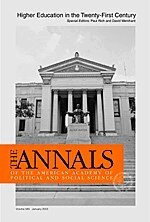
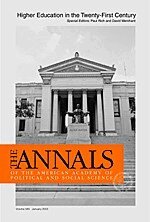
Higher Education in the Twenty-First Century
1 015 kr
Skickas inom 5-8 vardagar
Higher education plays a significant role in shaping our cultural identity. Yet, in this ever-changing world, it's important to consider what adjustments American universities are making-or need to make-to meet the dynamic societal requirements.
Change is often challenging for large institutions, and academia is no different. The contributors to this issue of The Annals take a hard look at current changes in higher education and propose further modification for the American university in the coming decades.
The issue opens with a blueprint for change that looks at the impact of current social concerns and ways that universities can respond to those concerns. The remaining articles include topics on land-grant universities, urban universities, the corporatization of the university, the focus on institution management, equal opportunity for higher education, the influence of fraternities and sororities, trends in postsecondary science, distance learning, the social context of applied science, tertiary education in Europe, reengineering of education, and a review of literature of higher education.
It's fitting that this issue of The Annals, which examines the transformations of higher education, includes some changes of its own. Beginning with this first issue of 2003, The Annals has launched a new layout and design. Readers will find the journal easier to use; and the design changes also signify undergoing transformations within the academy itself. The academy has renewed and reinvigorated its commitment-as its 1891 charter proclaims-to "promote the progress of the political and social sciences."
Victor Hugo has been attributed with the quotation, "Change your opinions, keep to your principles; change your leaves, keep intact your roots." This issue is devoted to change in the American university; and the improvements to the design and layout of The Annals reflect the academy's dedication to its core philosophy.
Higher Education in the Twenty-First Century
462 kr
Skickas inom 5-8 vardagar
Higher education plays a significant role in shaping our cultural identity. Yet, in this ever-changing world, it's important to consider what adjustments American universities are making-or need to make-to meet the dynamic societal requirements.
Change is often challenging for large institutions, and academia is no different. The contributors to this issue of The Annals take a hard look at current changes in higher education and propose further modification for the American university in the coming decades.
The issue opens with a blueprint for change that looks at the impact of current social concerns and ways that universities can respond to those concerns. The remaining articles include topics on land-grant universities, urban universities, the corporatization of the university, the focus on institution management, equal opportunity for higher education, the influence of fraternities and sororities, trends in postsecondary science, distance learning, the social context of applied science, tertiary education in Europe, reengineering of education, and a review of literature of higher education.
It's fitting that this issue of The Annals, which examines the transformations of higher education, includes some changes of its own. Beginning with this first issue of 2003, The Annals has launched a new layout and design. Readers will find the journal easier to use; and the design changes also signify undergoing transformations within the academy itself. The academy has renewed and reinvigorated its commitment-as its 1891 charter proclaims-to "promote the progress of the political and social sciences."
Victor Hugo has been attributed with the quotation, "Change your opinions, keep to your principles; change your leaves, keep intact your roots." This issue is devoted to change in the American university; and the improvements to the design and layout of The Annals reflect the academy's dedication to its core philosophy.
Islam
Enduring Myths and Changing Realities
1 045 kr
Skickas inom 5-8 vardagar
With the end of the Cold War, the American political establishment perceived Islam as the new enemy. The 1993 explosion at the World Trade Center, the 1998 bombing of the American embassies in Africa, and the events of 9/11 - all culminated in substantiating this perception.
The War on Terrorism has raised several complicated issues surrounding the relationship between the United States and Islam. With America's increasing involvement in the Middle East, it is imperative for Muslims to understand America; but at the same time, Americans must learn to understand Islam. The progress of civilization hangs on the ability for cooperation and understanding between these cultures.
Although this challenge of removing the "clash" between these two cultures is indeed pressing, it is not new. Negative images of Islam have persisted in the United States throughout its history.
This volume of The Annals reflects on how damaging images of Islam have endured in the United States and how Americans' perceptions and misconceptions about Islam is inexorably linked to United States' policy in the Middle East.
The articles in this special issue will spark intriguing debate and discussion as well as shed light on the complex concerns engulfing Americans' ideas about Islam and Muslim states and how this relationship influences global politics.
With the end of the Cold War, the American political establishment perceived Islam as the new enemy. The 1993 explosion at the World Trade Center, the 1998 bombing of the American embassies in Africa, and the events of 9/11 - all culminated in substantiating this perception.
The War on Terrorism has raised several complicated issues surrounding the relationship between the United States and Islam. With America's increasing involvement in the Middle East, it is imperative for Muslims to understand America; but at the same time, Americans must learn to understand Islam. The progress of civilization hangs on the ability for cooperation and understanding between these cultures.
Although this challenge of removing the "clash" between these two cultures is indeed pressing, it is not new. Negative images of Islam have persisted in the United States throughout its history.
This volume of The Annals reflects on how damaging images of Islam have endured in the United States and how Americans' perceptions and misconceptions about Islam is inexorably linked to United States' policy in the Middle East.
The articles in this special issue will spark intriguing debate and discussion as well as shed light on the complex concerns engulfing Americans' ideas about Islam and Muslim states and how this relationship influences global politics.
Islam
Enduring Myths and Changing Realities
476 kr
Skickas inom 5-8 vardagar
With the end of the Cold War, the American political establishment perceived Islam as the new enemy. The 1993 explosion at the World Trade Center, the 1998 bombing of the American embassies in Africa, and the events of 9/11 - all culminated in substantiating this perception.
The War on Terrorism has raised several complicated issues surrounding the relationship between the United States and Islam. With America's increasing involvement in the Middle East, it is imperative for Muslims to understand America; but at the same time, Americans must learn to understand Islam. The progress of civilization hangs on the ability for cooperation and understanding between these cultures.
Although this challenge of removing the "clash" between these two cultures is indeed pressing, it is not new. Negative images of Islam have persisted in the United States throughout its history.
This volume of The Annals reflects on how damaging images of Islam have endured in the United States and how Americans' perceptions and misconceptions about Islam is inexorably linked to United States' policy in the Middle East.
The articles in this special issue will spark intriguing debate and discussion as well as shed light on the complex concerns engulfing Americans' ideas about Islam and Muslim states and how this relationship influences global politics.
With the end of the Cold War, the American political establishment perceived Islam as the new enemy. The 1993 explosion at the World Trade Center, the 1998 bombing of the American embassies in Africa, and the events of 9/11 - all culminated in substantiating this perception.
The War on Terrorism has raised several complicated issues surrounding the relationship between the United States and Islam. With America's increasing involvement in the Middle East, it is imperative for Muslims to understand America; but at the same time, Americans must learn to understand Islam. The progress of civilization hangs on the ability for cooperation and understanding between these cultures.
Although this challenge of removing the "clash" between these two cultures is indeed pressing, it is not new. Negative images of Islam have persisted in the United States throughout its history.
This volume of The Annals reflects on how damaging images of Islam have endured in the United States and how Americans' perceptions and misconceptions about Islam is inexorably linked to United States' policy in the Middle East.
The articles in this special issue will spark intriguing debate and discussion as well as shed light on the complex concerns engulfing Americans' ideas about Islam and Muslim states and how this relationship influences global politics.
Misleading Evidence and Evidence-Led Policy
Making Social Science More Experimental
1 045 kr
Skickas inom 5-8 vardagar
Research evidence can and should have an important role in shaping public policy. Just as much of the medical community has embraced the concept of "evidence-based medicine," increasing numbers of social scientists and government agencies are calling for an evidence-based approach to determine which social programs work and which ones don't. It is an irony not lost on the social scientists writing for the September volume of The Annals that the first use of experimental methods in medicine (to test the effects of Streptomycin on tuberculosis in the late 1940s) was actually conducted by an economist. But while more than one million clinical trials in medicine have been conducted since that time, only about 10,000 have been conducted to evaluate whether social programs achieve their intended effects.
Authors of the September volume argue that this level of investment in the "gold standard" of research designs is insufficient for a wide range of reasons. Randomized controlled trials, for example, are far better at controlling selection biases and chance effects than are other observational methods, while econometric and statistical techniques that seek to correct for bias fall short of their promise. The volume dramatically demonstrates that alternative methods generate different (and often substantially wrong) estimates of program effects. Some research based on nonexperimental research designs actually mislead policy makers and practitioners into supporting programs that don't work, while ignoring others that do.
Authors of this volume also directly address critiques of experimental designs, which range from questions about their practicality to their ethics. Some of these arguments are well taken, but addressable. The authors, however, reject other arguments against controlled tests as unfounded and damaging to social science..
Policymakers will find these articles invaluable in better understanding how alternative research methods can mislead as much as enlighten. Students and researchers will be confronted with powerful arguments that question the use of nonexperimental techniques to estimate program effects.
This volume throws the gauntlet down. We challenge you to pick it up.