The Greater War – serie
Visar alla böcker i serien The Greater War. Handla med fri frakt och snabb leverans.
19 produkter
19 produkter
Häftad, Engelska, 2015
558 kr
Skickas inom 7-10 vardagar
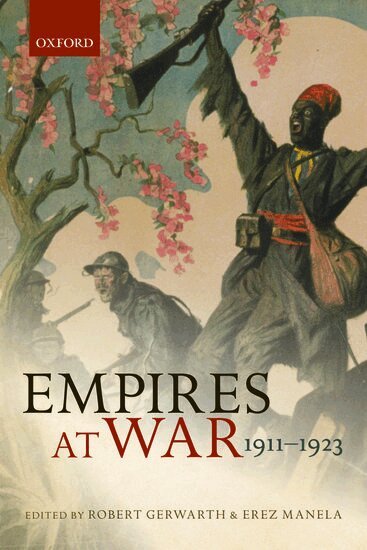
Empires at War, 1911-1923 offers a new perspective on the history of the Great War. It expands the story of the war both in time and space to include the violent conflicts that preceded and followed the First World War, from the 1911 Italian invasion of Libya to the massive violence that followed the collapse of the Ottoman, Russian, and Austrian empires until 1923. It also presents the war as a global war of empires rather than a a European war between nation-states.This volume tells the story of the millions of imperial subjects called upon to defend their imperial governments' interest, the theatres of war that lay far beyond Europe, and the wartime roles and experiences of innumerable peoples from outside the European continent. Empires at War covers the broad, global mobilizations that saw African solders and Chinese labourers in the trenches of the Western Front, Indian troops in Jerusalem, and the Japanese military occupying Chinese territory. Finally, the volume shows how the war set the stage for the collapse not only of specific empires, but of the imperial world order writ large.
Inbunden, Engelska, 2025
376 kr
Skickas
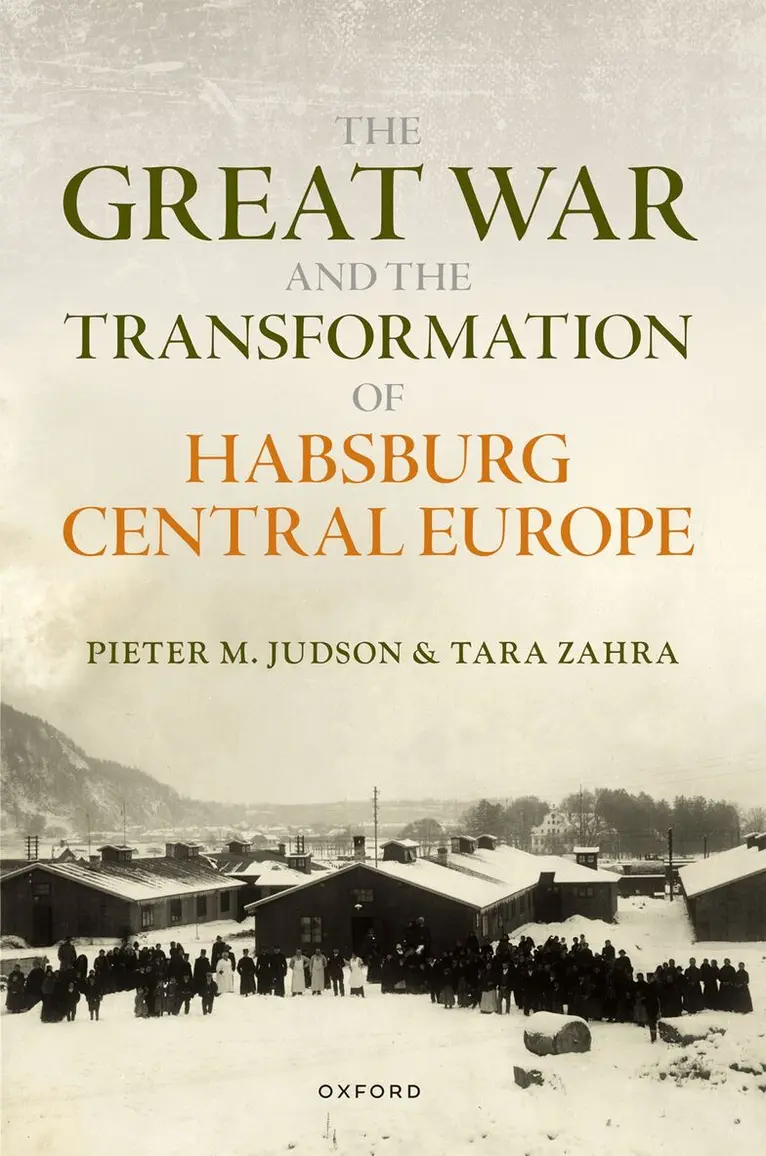
The world's eyes were on Austria-Hungary on June 28, 1914. But both inside and outside of Austria, few could imagine the dramatic consequences of the events in Sarajevo. The popular shock and anger that greeted the assassination did not mean war was a likely or necessary outcome - or, moreover, that the Monarchy itself was destined to disintegrate. The Great War and the Transformation of Habsburg Central Europe examines how the First World War transformed the multinational Austro-Hungarian Monarchy into a fractured landscape of mistrust, scarcity, and dissolution and laid the foundation for the new postwar world. The outcome of the war is not, it argues, evidence of the inherent fragility of multinational polities, and Austria-Hungary was not inevitably doomed to collapse on the eve of the war. Instead, it contends that the Habsburg state laid the groundwork for its own dissolution by turning on its citizens. By imposing military rule, suspending civil rights, fostering suspicions among its citizens based on the languages they spoke, and failing to secure enough food to feed the population, the Habsburg state both created new and exacerbated existing regional, local, religious, and national antagonisms. Over time, severe hardships on the home front, in occupied territories, and in refugee and prisoner-of-war camps spurred widespread resentment and eroded loyalty to the monarchy. But even as the empire frayed, the war inspired innovative institutions, social welfare measures, and new understandings of citizenship that continued to influence postwar Europe.By analyzing these experiences at multiple scales - local, imperial, and international - award-winning historians Pieter Judson and Tara Zahra here reframe the history of the late Habsburg Monarchy. Taking a deliberately broad chronology, they demonstrate that the war can no longer be treated as a mere postscript to Austria-Hungary's biography. Instead, the war was a constitutive factor in the Empire's dissolution, in the domestic relations that structured society in the successor states, and in the birth of the new world order institutionalized by the Paris Peace Conferences. Both the experience and outcome of the First World War in the Habsburg Monarchy held implications that extended far beyond its borders, and beyond the lives of its forty-eight million citizens.
Häftad, Engelska, 2022
405 kr
Skickas inom 5-8 vardagar
The First World War did not end in Central Europe in November 1918. The armistices marked the creation of the Second Polish Republic and the first shot of the Central European Civil War which raged from 1918 to 1921. The fallen German, Russian, and Austrian Empires left in their wake lands with peoples of mixed nationalities and ethnicities. These lands soon became battle grounds and the ethno-political violence that ensued forced those living within them to decide on their national identity. Civil War in Central Europe seeks to challenge previous notions that such conflicts which occurred between the First and Second World Wars were isolated incidents and argues that they should be considered as part of a European war; a war which transformed Poland into a nation.
Inbunden, Engelska, 2022
668 kr
Skickas inom 5-8 vardagar
On 24 July 1923 the last Treaty ending hostilities in the Great War was signed at Lausanne in Switzerland. That Treaty closed a decade of violence. Jay Winter tells the story of what happened on that day. On the shores of Lake Geneva, diplomats, statesmen, and soldiers came from Ankara and Athens, from London, Paris, and Rome, and from other capital cities to affirm that war was over. The Treaty they signed fixed the boundaries of present-day Greece and Turkey, and marked a beginning of a new phase in their history. That was its major achievement, but it came at a high price. The Treaty contained within it a Compulsory Population Exchange agreement. By that measure, Greek-Orthodox citizens of Turkey, with the exception of those living in Constantinople, lost the right of citizenship and residence in that state. So did Muslim citizens of Greece, except for residents of Western Thrace. This exchange of nearly two million people, introduced to the peace conference by Nobel Prize winner and humanitarian Fridtjof Nansen, provided a solution to the immense refugee problem arising out of the Greek-Turkish war. At the same time, it introduced into international law a definition of citizenship defined not by language or history or ethnicity, but solely by religion. This set a precedent for ethnic cleansing followed time and again later in the century and beyond.The second price of peace was the burial of commitments to the Armenian people that they would have a homeland in the lands from which they had been expelled, tortured and murdered in the genocide of 1915. This book tells the story of the peace conference, and its outcome. It shows how peace came before justice, and how it set in motion forces leading to the global war that followed in 1939.
Inbunden, Engelska, 2022
1 555 kr
Skickas inom 5-8 vardagar
Paths out of the Apocalypse uses violence as a prism through which to investigate the profound social, cultural, and political changes experienced by (post-) Habsburg Central Europe during and immediately after the Great War. It compares attitudes toward, and experiences and practices of, physical violence in the mostly Czech-speaking territories of Bohemia and Moravia, the German-speaking territories that would constitute the Republic of Austria after 1918, and the mostly German-speaking region of South Tyrol. Based on research in national and local archives and copious secondary literature, the study argues that, in the context of total war, physical violence became a predominant means of conceptualizing and expressing social-political demands as well as a means of demarcating various notions of community and belonging. The authors apply an interdisciplinary understanding of violence informed by sociological and psychological theories as well as by rigorous empirical historiographical approach. First, they examine the most severe kind of physical violence - murder - against the backdrop of shifting scientific and media discourses during the war and its immediate aftermath. Second, the authors use numerous cases of collective violence, ranging from less serious everyday conflicts to massive hunger demonstrations and riots, to unravel its 'language', thus deciphering the attitudes and values shared among an ever-growing group of perpetrators. Paths out of the Apocalypse thus fundamentally rethinks some key topics currently debated in the scholarship on early twentieth-century Central Europe, the First World War, violence, nationalism, and modern European comparative social and cultural history.
Inbunden, Engelska, 2014
1 218 kr
Skickas inom 5-8 vardagar
Empires at War, 1911-1923 offers a new perspective on the history of the Great War, looking at the war beyond the generally-accepted 1914-1918 timeline, and as a global war between empires, rather than a European war between nation-states.The volume expands the story of the war both in time and space to include the violent conflicts that preceded and followed World War I, from the 1911 Italian invasion of Libya to the massive violence that followed the collapse of the Ottoman, Russian, and Austrian empires until 1923. It argues that the traditional focus on the period between August 1914 and November 1918 makes more sense for the victorious western front powers (notably Britain and France), than it does for much of central-eastern and south-eastern Europe or for those colonial troops whose demobilization did not begin in November 1918. The paroxysm of 1914-18 has to be seen in the wider context of armed imperial conflict that began in 1911 and did not end until 1923.If we take the Great War seriously as a world war, we must, a century after the event, adopt a perspective that does justice more fully to the millions of imperial subjects called upon to defend their imperial governments' interest, to theatres of war that lay far beyond Europe including in Asia and Africa and, more generally, to the wartime roles and experiences of innumerable peoples from outside the European continent. Empires at War also tells the story of the broad, global mobilizations that saw African soldiers and Chinese labourers in the trenches of the Western front, Indian troops in Jerusalem, and the Japanese military occupying Chinese territory. Finally, the volume shows how the war set the stage for the collapse not only of specific empires but of the imperial world order.
Häftad, Engelska, 2015
503 kr
Skickas inom 5-8 vardagar
Imperial Apocalypse describes the collapse of the Russian Empire during World War One. Drawing material from nine different archives and hundreds of published sources, this study ties together state failure, military violence, and decolonization in a single story. Joshua Sanborn excavates the individual lives of soldiers, doctors, nurses, politicians, and civilians caught up in the global conflict along the way, creating a narrative that is both humane and conceptually rich.The volume opens by laying out the theoretical relationship between state failure, social collapse, and decolonization, and then moves chronologically from the Balkan Wars of 1912-13 through the fierce battles and massive human dislocations of 1914-16 to the final collapse of the empire in the midst of revolution in 1917-18. >Imperial Apocalypse is the first major study which treats the demise of the Russian Empire as part of the twentieth-century phenomenon of modern decolonization, and provides a readable account of military activity and political change throughout this turbulent period of war and revolution. Sanborn argues that the sudden rise of groups seeking national self-determination in the borderlands of the empire was the consequence of state failure, not its cause. At the same time, he shows how the destruction of state institutions and the spread of violence from the front to the rear led to a collapse of traditional social bonds and the emergence of a new, more dangerous, and more militant political atmosphere.
Inbunden, Engelska, 2018
724 kr
Skickas inom 7-10 vardagar
The First World War did not end in Central Europe in November 1918. The armistices marked the creation of the Second Polish Republic and the first shot of the Central European Civil War which raged from 1918 to 1921. The fallen German, Russian, and Austrian Empires left in their wake lands with peoples of mixed nationalities and ethnicities. These lands soon became battle grounds and the ethno-political violence that ensued forced those living within them to decide on their national identity. Civil War in Central Europe seeks to challenge previous notions that such conflicts which occurred between the First and Second World Wars were isolated incidents and argues that they should be considered as part of a European war; a war which transformed Poland into a nation.
Inbunden, Engelska, 2021
591 kr
Skickas inom 7-10 vardagar
The Italian Empire and the Great War brings an imperial and colonial perspective to the Italian experience of the First World War. Italy's decision for war in 1915 built directly on Italian imperial ambitions from the late nineteenth century onwards, and its conquest of Libya in 1911–12. The Italian empire was conceived both as a system of overseas colonies under Italian sovereignty, and as an informal global empire of emigrants; both were mobilized to support the war in 1915–18. The war was designed to bring about 'a greater Italy' both literally and metaphorically. In pursuit of global status, Italy fought a global war, sending troops to the Balkans, Russia, and the Middle East, though with limited results. Italy's newest colony, Libya, was also a theatre of the war effort, as the anti-colonial resistance there linked up with the Ottoman Empire, Germany, and Austria to undermine Italian rule. Italian race theories underpinned this expansionism: the book examines how Italian constructions of whiteness and racial superiority informed a colonial approach to military occupation in Europe as well as the conduct of its campaigns in Africa. After the war, Italy's failures at the Peace Conference meant that the 'mutilated victory' was an imperial as well as a national sentiment. Events in Paris are analysed alongside the military occupations in the Balkans and Asia Minor as well as efforts to resolve the conflicts in Libya, to assess the rhetoric and reality of Italian imperialism.
Häftad, Engelska, 2019
708 kr
Skickas inom 3-6 vardagar
The collapse of the Ottoman Empire was by no means a singular event. After six hundred years of ruling over the peoples of North Africa, the Balkans and Middle East, the death throes of sultanate encompassed a series of wars, insurrections, and revolutions spanning the early twentieth century. This volume encompasses a full accounting of the political, economic, social, and international forces that brought about the passing of the Ottoman state. In surveying the many tragedies that transpired in the years between 1908 and 1922, Fall of the Sultanate explores the causes that eventually led so many to view the legacy of the Ottomans with loathing and resentment.The volume provides a retelling of this critical history as seen through the eyes of those who lived through the Ottoman collapse. Drawing upon a large gamut of sources in multiple languages, Ryan Gingeras strikes a critical balance in presenting and interpreting the most impactful experiences that shaped the lives of the empire's last generation. The story presented here takes into account the perspectives of the empire's diverse population as well as the leaders who piloted the state to its end. In surveying the personal, communal and national struggles that defined Italy's invasion of Libya, the Balkan War, the Great War, and the Turkish War of Independence, Fall of the Sultanate presents readers with a fresh and comprehensive exposition of how and why Ottoman imperial rule ended in bloodshed and disillusionment.
Inbunden, Engelska, 2020
1 682 kr
Skickas inom 3-6 vardagar
Paramilitarism in the Balkans analyses the origins and manifestations of paramilitary violence in three neighbouring Balkan countries - Yugoslavia, Bulgaria, and Albania - after the First World War. It shows the role of paramilitarism in internal and external policies in all three states, focusing on the main actors and perpetrators of paramilitary violence, their social backgrounds, motivations, and future career trajectories. Dmitar Tasić places the region into the broader European context of booming paramilitarism that came as the result of the first global conflict, dissolution of old empires, the creation of nation-states, and simultaneous revolutions. While paramilitarism in most post-Great War European states was the product of violence of the First World War and brutalization which societies of both victorious and defeated countries went through, paramilitarism in the Balkans was closely connected with the already existing traditions originating from the period of armed struggle against Ottoman rule, and state and nation building projects of the late-nineteenth and early-twentieth centuries. Paramilitary traditions were so strong that in all subsequent crises and military conflicts in the Balkans the legacy of paramilitarism remained alive and present.
Inbunden, Engelska, 2020
1 289 kr
Skickas inom 5-8 vardagar
Mary S. Barton explores counterterrorism in the years between World War I and World War II, starting with the attempted assassination of French Prime Minister George Clemenceau in 1919, and taking the story up to and beyond the double assassination of King Alexander I of Yugoslavia and French Foreign Minister Jean Louis Barthou in 1934. In telling the story of counterterrorism over this period, Barton gives particular emphasis to Britain's attempts to quell revolutionary nationalist movements in India and throughout its empire, and to the Great Powers' combined efforts to counter the activities of the Communist International. Further to this, Barton discusses the establishment of the tools and infrastructure of modern intelligence, including the cooperation between the United Kingdom and United States which would evolve into the Five Eyes intelligence alliance. She gives weight to forgotten terrorism and arms traffic conventions, and explores the facilitating role which the Paris Peace Conference and the League of Nations played in this context. The stories told in Counterterrorism Between the Wars play out across the world, from the remains of the Austro-Hungarian, German, and Russian empires, to the Northwest Frontier and the Bengal Province of British India.A century after the Paris Peace Conference of 1919, Counterterrorism Between the Wars is the first comprehensive study to fit together the mass production of weapons during the Great War with the diplomacy of the interwar era and the rise of state-sponsored terrorism during the 1920s and 1930s.
Inbunden, Engelska, 2014
1 167 kr
Skickas inom 3-6 vardagar
Imperial Apocalypse describes the collapse of the Russian Empire during World War One. Drawing material from nine different archives and hundreds of published sources, this study ties together state failure, military violence, and decolonization in a single story. Joshua Sanborn excavates the individual lives of soldiers, doctors, nurses, politicians, and civilians caught up in the global conflict along the way, creating a narrative that is both humane and conceptually rich. The volume opens by laying out the theoretical relationship between state failure, social collapse, and decolonization, and then moves chronologically from the Balkan Wars of 1912-13 through the fierce battles and massive human dislocations of 1914-16 to the final collapse of the empire in the midst of revolution in 1917-18. Imperial Apocalypse is the first major study which treats the demise of the Russian Empire as part of the twentieth-century phenomenon of modern decolonization, and provides a readable account of military activity and political change throughout this turbulent period of war and revolution. Sanborn argues that the sudden rise of groups seeking national self-determination in the borderlands of the empire was the consequence of state failure, not its cause. At the same time, he shows how the destruction of state institutions and the spread of violence from the front to the rear led to a collapse of traditional social bonds and the emergence of a new, more dangerous, and more militant political atmosphere.
Inbunden, Engelska, 2012
1 696 kr
Skickas inom 5-8 vardagar
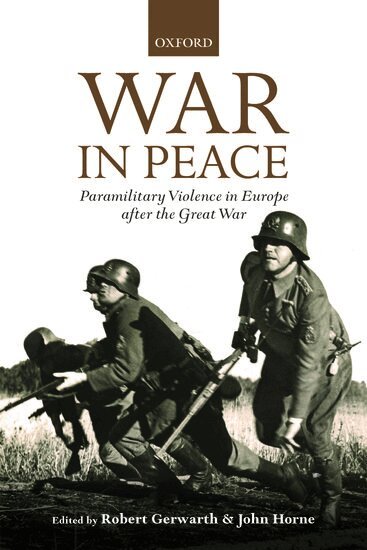
The First World War did not end in November 1918. In Russia and Eastern Europe it finished up to a year earlier, and both there and elsewhere in Europe it triggered conflicts that lasted down to 1923. Paramilitary formations were prominent in this continuation of the war. They had some features of formal military organizations, but were used in opposition to the regular military as an instrument of revolution or as an adjunct or substitute for military forces when these were unable by themselves to put down a revolution (whether class or national). Paramilitary violence thus arose in different contexts. It was an important aspect of the violence unleashed by class revolution in Russia. It structured the counter-revolution in central and Eastern Europe, including Finland and Italy, which reacted against a mythic version of Bolshevik class violence in the name of order and authority. It also shaped the struggles over borders and ethnicity in the new states that replaced the multi-national empires of Russia, Austria-Hungary and Ottoman Turkey. It was prominent on all sides in the wars for Irish independence. In many cases, paramilitary violence was charged with political significance and acquired a long-lasting symbolism and influence. War in Peace explores the differences and similarities between these various kinds of paramilitary violence within one volume for the first time. It thereby contributes to our understanding of the difficult transitions from war to peace. It also helps to re-situate the Great War in a longer-term context and to explain its enduring impact.
Inbunden, Engelska, 2016
803 kr
Skickas inom 7-10 vardagar
There is no single volume that shines a light on Asia's collective involvement in the First World War, and the impact that war had on its societies. Moreover, no volume in any language explores the experiences Asian countries shared as they became embroiled, with divergent results, in the war and its repercussions. Asia and the Great War moves beyond the national or even international level by presenting a 'shared' history from non-national and transnational perspectives. Asian involvements make the Great War not only a true 'world' war but also a 'great' war. The war generated forces that would transform Asia both internally and externally. Asian involvement in the First World War is a unique chapter in both Asian and world history, with Asian participation transforming the meaning and implications of the broader conflict.Asia and the Great War also takes steps to recover memories of the war and re-evaluate the war in its Asian contexts. Asia's part in the war and the part the war played in the collective development of Asia represent the first steps of the long journey to full national independence and international recognition. This volume aims to bring the Great War more fully into Asian history and the people of Asia into the international history of the war, in the hope that the shared history could lay the groundwork for a shared future.
Inbunden, Engelska, 2018
1 890 kr
Skickas inom 3-6 vardagar
In this book, Tomas Balkelis explores how the Lithuanian state was created and shaped by the Great War from its onset in 1914 to the last waves of violence in 1923. As the very notion of independent Lithuania was constructed during the war, violence is seen as an essential part of the formation of Lithuanian state, nation, and identity. War was much more than simply the historical context in which the tectonic shift from empire to nation-state took place. It transformed people, policies, institutions, and modes of thought in ways that would continue to shape the nation for decades after the conflict subsided.In telling the story of the post-WWI conflict in Lithuania, War, Revolution, and Nation-Making in Lithuania, 1914-1923 focuses on the soldiers and civilians involved in the conflict, rather than the strategies and acts of politicians, generals, or diplomats. The volume's two main themes are the impact of military, social, and cultural mobilizations on the local population, and different types of violence that were so characteristic of the region throughout the period. The actors in this story are people displaced by war and mobilized for war: refugees, veterans, volunteers, peasant conscripts, POWs, paramilitary fighters, and others who took to guns, not diplomacy, to assert their power. This is the story of how their lives were changed by war and how they shaped the society that emerged after war.
Inbunden, Engelska, 2016
1 006 kr
Skickas inom 5-8 vardagar
The collapse of the Ottoman Empire was by no means a singular event. After six hundred years of ruling over the peoples of North Africa, the Balkans and Middle East, the death throes of sultanate encompassed a series of wars, insurrections, and revolutions spanning the early twentieth century. This volume encompasses a full accounting of the political, economic, social, and international forces that brought about the passing of the Ottoman state. In surveying the many tragedies that transpired in the years between 1908 and 1922, Fall of the Sultanate explores the causes that eventually led so many to view the legacy of the Ottomans with loathing and resentment.The volume provides a retelling of this critical history as seen through the eyes of those who lived through the Ottoman collapse. Drawing upon a large gamut of sources in multiple languages, Ryan Gingeras strikes a critical balance in presenting and interpreting the most impactful experiences that shaped the lives of the empire's last generation. The story presented here takes into account the perspectives of the empire's diverse population as well as the leaders who piloted the state to its end. In surveying the personal, communal and national struggles that defined Italy's invasion of Libya, the Balkan War, the Great War, and the Turkish War of Independence, Fall of the Sultanate presents readers with a fresh and comprehensive exposition of how and why Ottoman imperial rule ended in bloodshed and disillusionment.
Inbunden, Engelska, 2018
891 kr
Skickas inom 5-8 vardagar
We have known for many decades that the Paris Peace Conference of 1919 "failed", in the sense that it did not prevent the outbreak of World War II. This book investigates not whether the Paris Peace Conference succeeded or failed, but the historically specific international system it created. It explores the rules under which that system operated, and the kinds of states and empires that inhabited it. Deepening the dialogue between history and international relations theory makes it possible to think about sovereignty at the Paris Peace Conference in new ways. Sovereignty in 1919 was about not just determining of answers demarcating the international system, but also the questions. Sovereignty in 1919 was about remaking the world.Most histories of the Paris Peace Conference stop with the signing of the Treaty of Versailles with Germany on 28 June 1919. Sovereignty at the Paris Peace Conference of 1919 considers all five treaties produced by the conference as well as the Treaty of Lausanne with Turkey in 1923. It is organized not chronologically or geographically, but according to specific problems of sovereignty. A peace based on "justice" produced a criminalized Great Power in Germany, and a template problematically applied in the other treaties. The conference sought to unmix lands and peoples in the defeated multinational empires by drawing boundaries and defining ethnicities. The conference sought not so much to oppose revolution as to instrumentalize it in the new international system. The League of Nations, so often taken as the supreme symbol of the failure of the conference, is better considered as a continuation of the laboratory of sovereignty established in Paris.
Häftad, Engelska, 2013
736 kr
Skickas inom 7-10 vardagar
The First World War did not end in November 1918. In Russia and Eastern Europe it finished up to a year earlier, and both there and elsewhere in the world it triggered conflicts that lasted down to 1923. Paramilitary formations were prominent in this continuation of the war.Paramilitary violence was an important ingredient in the clashes unleashed by class revolution in Russia. It structured the counter-revolution in central and Eastern Europe, including Finland and Italy, which in the name of order and authority reacted against a mythic version of Bolshevik class violence. It also shaped the struggles over borders and ethnicity in the new states that replaced the multi-national empires of Russia, Austria-Hungary, and Ottoman Turkey. It was prominent on all sides in the wars for Irish independence. Paramilitary violence was charged with political significance and acquired a long-lasting symbolism and influence. War in Peace explores the differences and similarities between these various kinds of paramilitary violence within one volume for the first time. It contributes to our understanding of the difficult transitions from war to peace, re-situates the Great War in a longer-term context, and explains its enduring impact.